The Daquan Line has a large power load, with numerous and scattered load points along the section. Each load point has a small capacity, with an average of one load point every 2-3 km, so two 10 kV power through lines should be adopted for power supply. High-speed railways use two lines for power supply: primary through line and comprehensive through line. The power sources of the two through lines are taken from the dedicated bus sections fed by the voltage regulators installed in each power distribution room. Communication, signaling, integrated dispatching systems and other facilities related to train operation along the line are mainly supplied by the primary through line and standby supplied by the comprehensive power through line.
1. Route of Power Line Circuits
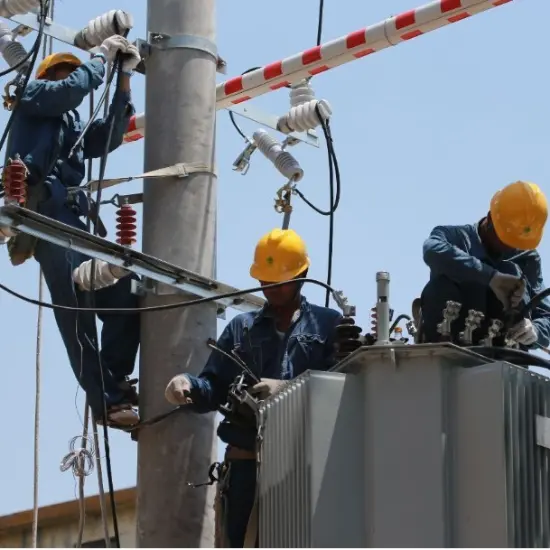
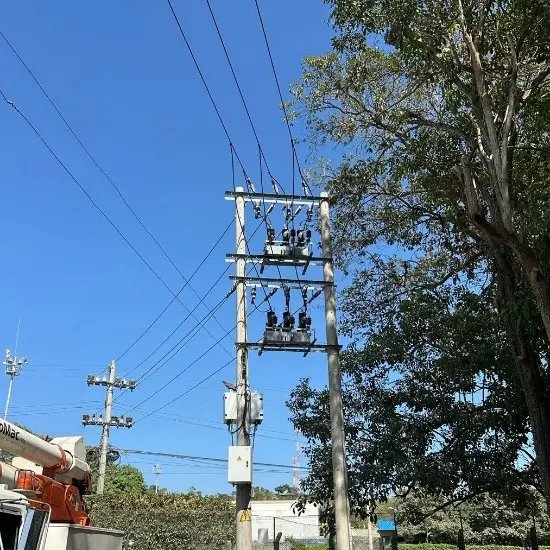
In conventional-speed railways, the two 10 kV power lines, automatic block signaling power lines and power through lines are all overhead lines (some sections limited by terrain can be converted to cable lines), and the line routes are basically outside the railway clearance. During operation, the automatic block signaling lines usually adopt LGJ-50mm² overhead lines, which supply power for primary loads such as railway signaling, communication equipment and 5T systems. The through system mainly adopts LGJ-70mm² overhead lines, which also supply power for primary loads including railway signaling, communication equipment and 5T systems, and at the same time provide effective power supply for railway sections and various facilities. However, since overhead lines are the main operating lines in use, they have small capacitance and small single-phase grounding current. When a ground fault occurs, the arc can be automatically extinguished. Therefore, the ungrounded neutral point mode is usually selected in circuit design.
2. Requirements for Switching On/Off of Automatic Reclosing and Standby Power Auto-Input Functions in Power Distribution Rooms for High-Speed and Conventional-Speed Railways
Due to the differences in the routes and laying methods of power lines between high-speed railways and conventional-speed railways, their requirements for the switching on/off functions of line standby power auto-input and automatic reclosing in power distribution rooms are also different.
Most of the power lines along high-speed railways are laid with cables. Once a fault occurs, most of them are permanent faults. Activating standby power auto-input or automatic reclosing under permanent fault conditions will only aggravate the secondary impact on circuit breakers and other equipment, and even lead to power supply breakdown, thereby expanding the power outage range. Therefore, standby power auto-input or automatic reclosing should generally not be activated for high-speed railway power lines. After a fault occurs, due to the dual-circuit power supply, equipment inspection should be arranged when one power source is available, and power supply should be restored only after finding the fault cause to ensure safe power supply of equipment.
Most of the conventional-speed railway power lines are overhead lines, erected along the railway line in the open air. Limited by terrain and affected by natural weather such as rain, snow, wind, fog and lightning strikes, most faults are instantaneous. For instantaneous faults, standby power auto-input or automatic reclosing functions should be set to deal with instantaneous faults conveniently and ensure uninterrupted power supply for railways.
3. Conclusion
With the continuous development of the railway system, the 10 kV power through and automatic block signaling lines of power distribution rooms involved in the railway power supply system are changing in terms of name, circuit and laying method, and the operation mode is also changing accordingly. However, no matter how the changes are made, the purpose is to ensure the safe, stable and reliable operation of railway power supply.