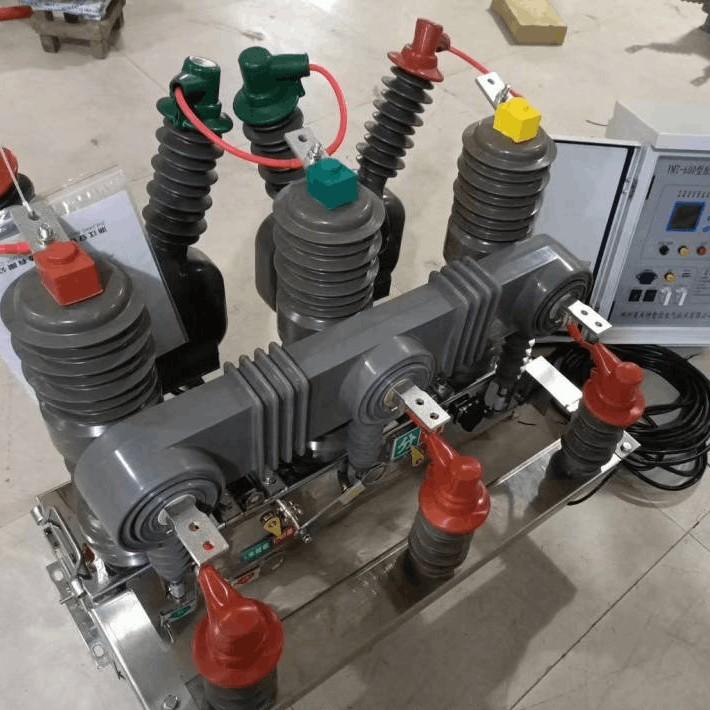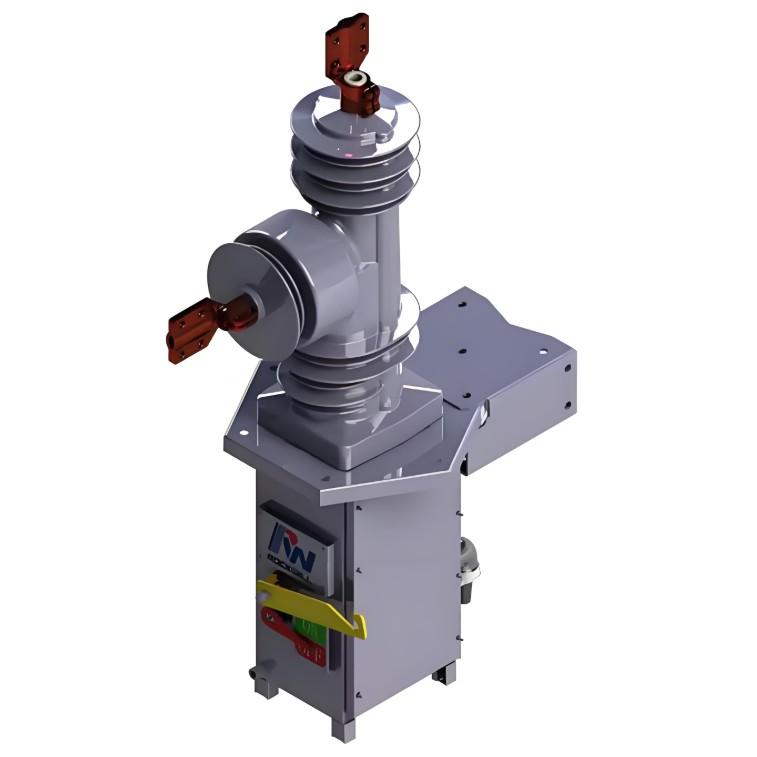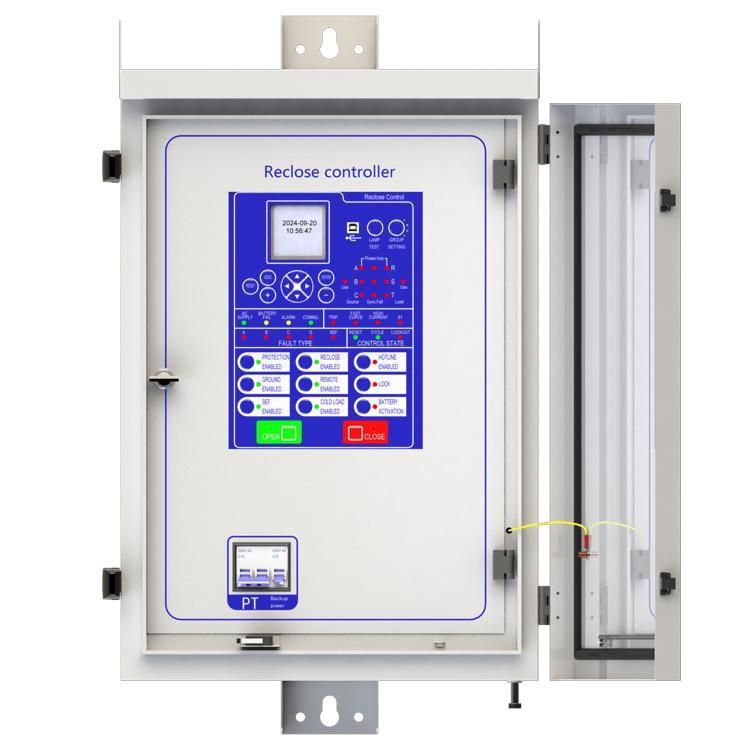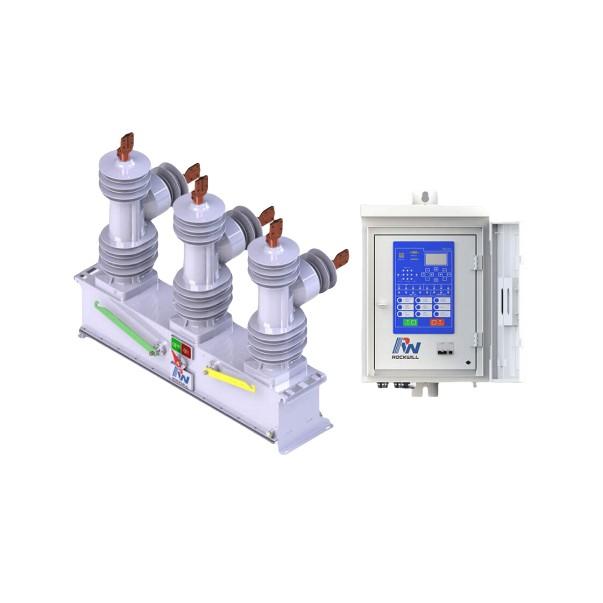
I. Paghunahon sa Vacuum Circuit Breakers Sa Normal nga Operasyon
1. Paghunahon sa Closed (ON) Position
Ang operasyon mechanism dapat naa sa closed position;
Ang main shaft roller dapat wala naka-engage sa oil damper;
Ang opening spring dapat naa sa charged (stretched) energy-stored state;
Ang length sa moving contact rod sa vacuum interrupter nga nagpakita sa ilalum sa guide plate dapat mga 4–5 mm;
Ang bellows sa sulod sa vacuum interrupter dapat makita (wala niini sa ceramic-tube interrupters);
Ang temperature-indicating stickers sa itaas ug ubos nga brackets dapat walay significant change.
2. Paghunahon sa Conductive Parts
External connection bolts sa itaas ug ubos nga brackets;
Bolts nga nag-fix sa vacuum interrupter sa itaas nga bracket;
Bolts sa ubos nga bracket's conductive clamp.
Tanang bolts sa itaas dili dapat loose.
3. Paghunahon sa Transmission Components
Tulo ka pivot shafts nga nag-connect sa linkage arm ug moving end sa interrupter, kasama ang retaining clips sa duha nga end;
Lock nuts ug jam nuts nga nag-secure sa pull rod sa linkage arm;
Seksyon M20 bolts nga nag-fix sa support insulators (sa frame sa vacuum circuit breaker);
Installation bolts nga nag-secure sa vacuum circuit breaker;
Lock nut ug jam nut nga nag-connect sa mechanism main shaft sa linkage arm sa breaker;
Welded joints sa transmission connecting rods para sa cracks o fractures;
Shaft pins sa main drive shaft para sa looseness o detachment.
Dili mag-place og anumang objects sa static frame sa vacuum circuit breaker, aron malihok ang mga sila ug mabati ang vacuum interrupter.
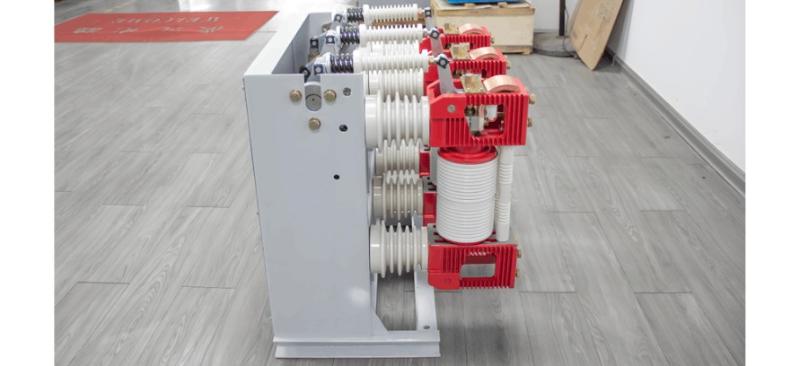
4. Internal Paghunahon sa Vacuum Interrupter
Paghunahon sa Contact Erosion
Pagkatapos og daghang interruptions sa short-circuit currents, ang contacts sa vacuum interrupter mahimong mogamit erosion tungod sa arcing. Ang contact loss dili dapat mogamit higayon 3 mm. Ang methods sa paghunahon kinahanglan: pagsukol sa contact gap sa interrupter ug pag-compare sa previous results; pagsukol sa loop resistance gamit ang DC resistance method; pag-check sa obvious changes sa compression travel. Kon adunay erosion sa contact apan ang adjustments mosuporta sa parameters back within specifications, ang interrupter mahimo molabay sa serbisyo (subject to comprehensive assessment).
Paghunahon sa Vacuum Integrity sa Interrupter
Visual inspection sa glass (o ceramic) envelope sa vacuum interrupter para sa cracks o damage; pag-check sa welded joints sa duha nga end sa interrupter para sa deformation, displacement, o detachment. I-disconnect ang pin sa pagitan sa pull rod ug linkage arm, pagkatapos manually i-pull ang contact rod para check kung automatic ma-return—ensuring ang moving contact remains self-held sa closed position (tungod sa external atmospheric pressure). Kon weak ang holding force o wala'y return movement, ang vacuum integrity mahimong mobaba.
Gamiton ang power-frequency withstand voltage test para sa qualitative verification. Tumong, kon 10kV vacuum circuit breaker nagpakita sa insulation strength below 42 kV, kini nagpakita sa reduced vacuum level ug ang interrupter kinahanglan i-replace.
II. Paghunahon sa Vacuum Circuit Breakers Sa Abnormal nga Operasyon
1. Damage sa Vacuum Chamber
Kon adunay damage sa vacuum chamber gipagtambong sa patrol inspection, ug wala pa'y grounding o short-circuit, immediately i-report sa dispatch, transfer ang load sa alternate line, ug disable ang reclosing relay link.
2. Abnormal Vacuum Level Sa Operasyon
Ang vacuum circuit breakers gigamit og high vacuum para sa insulation ug arc extinguishing tungod sa iyang high dielectric strength. Sila nagpakita og excellent arc-quenching performance, require minimal maintenance, long service life, support frequent operation, reliable operation, ug suitable sa switching sa high-voltage motors, capacitor banks, ug uban pang indoor 6–35 kV equipment. Ang contacts typical nga gihimo sa copper-chromium alloy, rated currents up to 1000–3150 A, ug rated breaking currents up to 25–40 kA.
Full-capacity breaking capability mahimo mogamit 30–50 operations. Daghan equipped sa electromagnetic o spring-operated mechanisms. Ang vacuum level sa interrupter kinahanglan maintain above 1.33 × 10⁻² Pa para sa reliable operation. Kon mobaba ang vacuum level below this value, dili masiguro ang arc extinction. Tungod kay field measurement sa vacuum level mahirap, qualification general nga determine sa passing sa power-frequency withstand voltage test.Sa routine inspection, observe ang color sa shield (screen) para sa abnormal changes. Special attention sa arc color sa pag-open sa breaker. Sa normal conditions, ang arc appears pale blue; kon mobaba ang vacuum level, ang arc turns orange-red—indicating ang need sa request shutdown, inspection, ug replacement sa vacuum interrupter.
Main causes sa reduced vacuum level include: poor material selection, inadequate sealing, defective metal bellows sealing, over-travel exceeding the bellows’ design range during commissioning, o excessive impact force.
Additional, check for reduction in overtravel (i.e., measure contact wear). When cumulative wear exceeds the specified limit (4 mm), the vacuum interrupter must be replaced.
III. Common Faults ug Troubleshooting sa Vacuum Circuit Breakers
1. Failure to Close Electrically
Cause: Detachment between the solenoid core and pull rod.
Solution: Adjust the position of the solenoid core—remove the stationary core to make adjustment—so that manual closing becomes possible. At the end of closing, ensure a 1–2 mm clearance exists between the latch and the roller.
2. Closing Without Latching ("Empty Close")
Cause: Insufficient latching distance—the latch fails to pass the toggle point.
Solution: Turn the adjusting screw outward to ensure the latch passes the toggle point. After adjustment, tighten the screw and seal it with red paint.
3. Failure to Trip Electrically
Excessive latching engagement. Turn the screw inward and tighten the locknut.
Disconnected wiring in the trip coil. Reconnect and secure the terminals.
Low operating voltage. Adjust the control voltage to the specified level.
4. Burnout of Closing or Tripping Coils
Cause: Poor contact at auxiliary switch contacts.
Solution: Clean the contacts with sandpaper or replace the auxiliary switch; replace the faulty closing or tripping coil as needed.