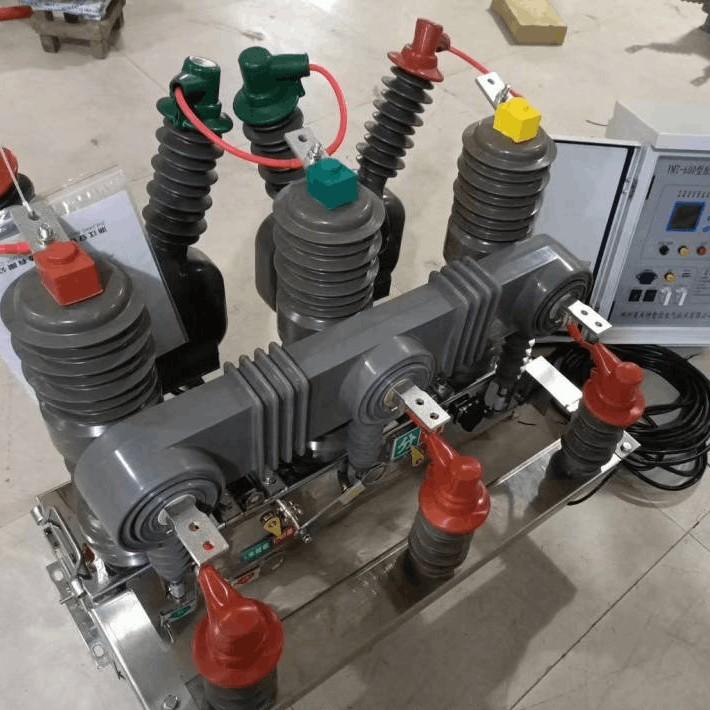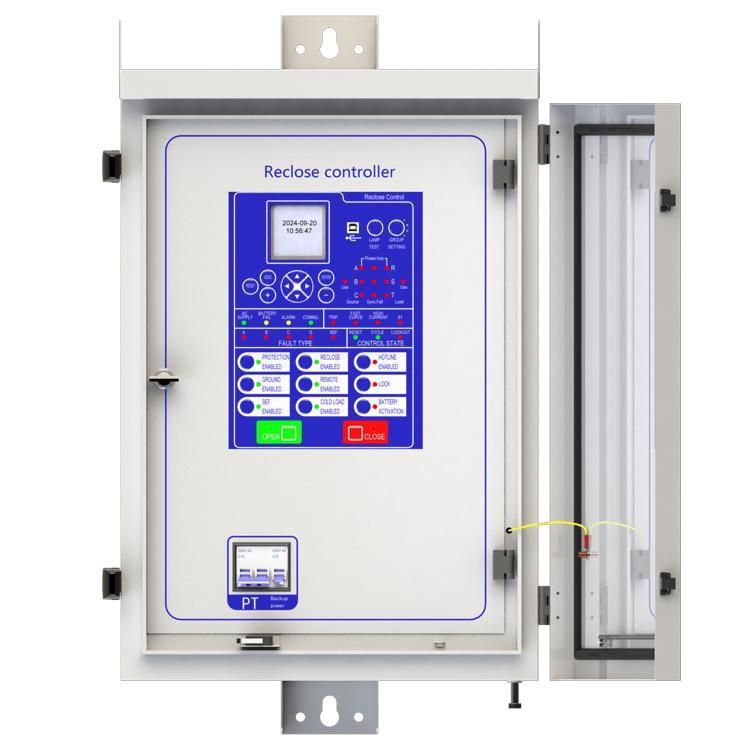
Ang Automatic Circuit Recloser mao ang usa ka high-voltage switching device nga may built-in control (ang mga kaugalingong pagkakataon sa detection sa fault current, operation sequence control, ug execution functions nga walay gikinahanglan nga daghang relay protection o operating devices) ug mga kapanguhaan sa proteksyon. Kini makakita sa automatic sa kasamtangan nga kuryente ug boltaje sa iyang circuit, makaputli sa automatic sa fault currents batas sa inverse-time protection characteristics isip adunay mga fault, ug makapaghatag og multiple reclosures batas sa pre-determined time delays ug sequences.
1.Prinisipyo ug Katungod sa Feeder Automation nga Gipatuman pinaagi sa Automatic Circuit Recloser Scheme
Ang automation sa overhead distribution lines gamit ang Automatic Circuit Recloser scheme naglalambigit sa paggamit sa capacity sa recloser nga magputli sa short-circuit currents ug ang integrated functions sa proteksyon, monitoring, ug communication. Wala gyud gikinahanglan ang protective actions sa substation switchgear, kini nga scheme makakita ug maputli sa automatic sa mga fault pinaagi sa coordination sa protection settings ug timing sa mga reclosers, efektibong pag-extend sa substation bus hangtod sa distribution line. Sa main feeder, ang Automatic Circuit Reclosers nagsilbi isip mga protective devices, makapaghatag og rapid segmentation sa mga fault ug automatic isolation sa branch-line faults.
Ang primary function sa Automatic Circuit Recloser scheme mao ang pagpatuman sa feeder automation. Kini makaputli sa automatic sa mga fault wala pa man ang communication-based automation system, mahimo ang overall automation project nga mapatuman sa stages. Kapag may kondisyon, ang communication ug automation systems mahimo nga mailhan sa dili pa molambo aron masayran ang full automation functionality.
Ang Automatic Circuit Recloser-based feeder automation maayo para sa relatively simple network structures, sama sa dual-power “hand-in-hand” looped networks. Sa configuration, duha ka feeders gitigom pinaagi sa intermediate tie switch. Sa normal nga operasyon, ang tie switch open, ug ang sistema nagoperar sa open-loop mode. Kapag adunay fault sa usa ka bahin, ang network reconfiguration makapaghatag og load transfer aron maprotektahan ang power supply sa non-faulted sections, significant improvement sa supply reliability. Kapag ang distance sa duha ka power sources dili mosobra sa 10 km, considerando ang number of segments ug automation coordination, gi-recommend ang three-recloser (Automatic Circuit Recloser), four-segment configuration, uban ang average length sa bawat segment nga humoltor 2.5 km.

Tumong ang wiring diagram sa Figure 1 isip e.g.: B1 ug B2 mao ang outgoing circuit breakers gikan sa substations; R0 hangtod sa R2 mao ang line sectionalizing switches (Automatic Circuit Reclosers). Sa normal nga kondisyon, ang B1, B2, R1, ug R2 closed, pero ang R0 open.
Fault sa Section ①: Para sa transient faults, ang power mahimo mopauli pinaagi sa first or second reclosing operation sa B1. Para sa permanent faults, human sa B1 performa og reclose ug lock out (opens ug blocks further reclosing), ang R1 makakita sa sustained loss of voltage sa Section ①. Human sa preset dead-time duration t₁, ang R1 opens. Subsequently, ang R0 makakita sa sustained loss of voltage sa Section ② for a longer duration t₂ (t₂ > t₁) ug automatically closes successfully, thereby isolating the fault within Section ①.
Fault sa Section ②: Ang transient faults cleared pinaagi sa reclosing action sa R1 (protection coordination prevents B1 from tripping). Para sa permanent faults, human sa R1 recloses ug lock out, ang R0 makakita sa sustained loss of voltage sa Section ② for duration t₂ ug automatically closes. Upon closing onto the faulted line, it immediately trips ug lock out, isolating the fault within Section ②. The fault isolation ug restoration process for the two sections on the opposite side of the tie switch follows the same logic.
Additional considerations in application include:
Para implementar ang fault isolation using the Automatic Circuit Recloser scheme, ang instantaneous overcurrent (zero-time) protection function sa substation outgoing breaker kinahanglan disable ug replace with time-delayed instantaneous protection.
Kapag adunay transient or permanent faults sa branch lines, cleared sila pinaagi sa branch-mounted Automatic Circuit Reclosers. Ang protection settings ug operating times sa branch reclosers kinahanglan lower ug shorter, respectively, konpare sa upstream main-line reclosers.
A distribution automation system using local control can improve supply reliability with relatively low investment. Furthermore, since modern Automatic Circuit Reclosers are microprocessor-based and intelligent, they provide interfaces for future remote monitoring expansion. When communication infrastructure and master station systems become available, the system can seamlessly transition to a master-station-controlled feeder automation scheme.
2. How to Improve Power Supply Reliability and Reduce Line Outage Duration
Use a high-performance PLC (Programmable Logic Controller) as the control center of the Automatic Circuit Recloser.
Rapidly clear transient faults to minimize outage time. In power systems, more than 70% of line faults are transient. If transient faults are treated the same as permanent faults, prolonged outages result. Therefore, an initial fast reclosing function has been added to Automatic Circuit Reclosers, which can clear transient faults within 0.3–1.0 seconds (settings vary depending on line conditions), greatly reducing outage duration for transient events.
Simultaneous lockout at both ends of the faulted section. Traditional circuit breakers can only lock out one end of a faulted line upon fault occurrence. In contrast, Automatic Circuit Reclosers can simultaneously isolate both ends of a permanently faulted section, preventing outages in non-faulted areas, shortening restoration time, reducing the number of reclosing attempts, and minimizing stress on the grid.
3.Application Principles of Automatic Circuit Reclosers in Distribution Networks
Pamatasan sa Pag-operasyon: Dili kasagaran ang tanang pagkamalas kay dapat ibutang sa listahan isip transient nga pagkamalas, aron malikayan ang sayong pag-operasyon tungod sa inrush current. Ang lockout human sa tripping dili kasagaran mahimong magbutang kung adunay permanenteng pagkamalas.
Pilia ug ipatuman ang Automatic Circuit Reclosers nang ekonomiko ug rasonable batas sa magnitude sa load ug length sa line.
Pilia ang rated current, breaking capacity, short-circuit current rating, ug dynamic/thermal withstand current sa Automatic Circuit Recloser batas sa iyang installation location. Ang pinakataas nga short-circuit current rating dili kasagaran mas taas sa 16 kA aron makomportable sa patulob nga nagdugay-dugay nga grid capacity.
Properly coordinate protection settings, including trip current, number of reclosing attempts, and time-delay characteristics.
Coordinate between upstream and downstream Automatic Circuit Reclosers: the number of allowed fault current operations should decrease level by level, and the time delay for reclosing should increase level by level (typically set to 8 seconds per stage).