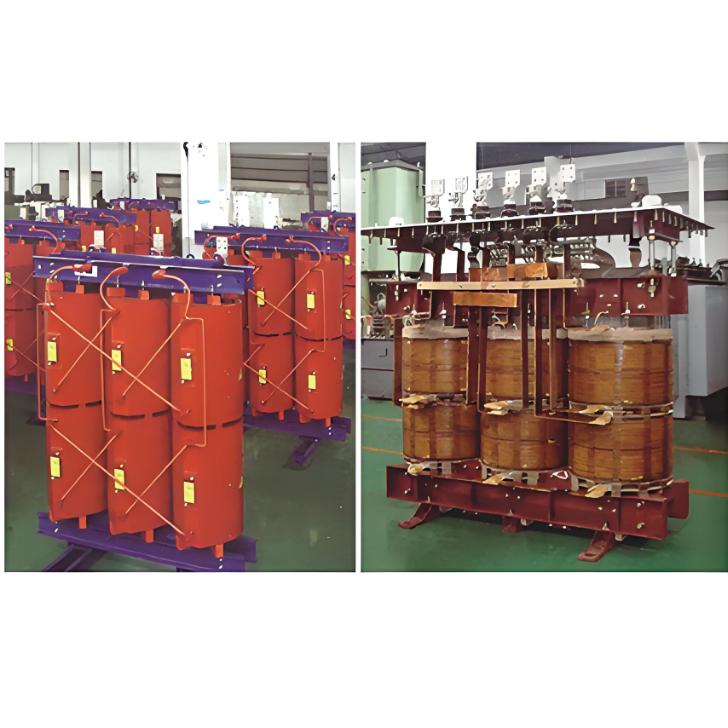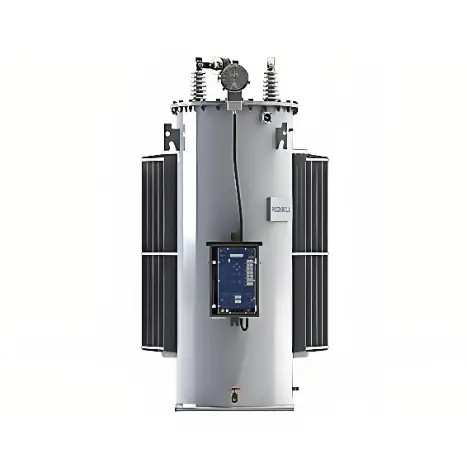
Copper loss, also known as I²R loss, occurs in the winding of an autotransformer just as it does in other types of transformers. This loss arises due to the resistance of the copper conductors in the windings. When current flows through the winding, electrical energy is converted into heat as a result of this resistance.
In an autotransformer, which uses a single winding for both primary and secondary functions, copper loss is still present. The copper loss is calculated using the formula:
P = I²R,
where:
P is the copper loss in watts (W),
I is the current flowing through the winding in amperes (A),
R is the resistance of the winding in ohms (Ω).
Since the common winding carries the combined current (the sum of the primary and secondary load currents), the total current in the shared section is higher. However, due to the autotransformer’s design and voltage transformation principle, the actual copper loss is typically lower than that in an equivalent two-winding transformer, not higher, because less current flows through part of the winding and the overall conductor length is reduced.
Nonetheless, minimizing copper loss remains a key design objective. This is achieved by using low-resistance conductors and optimizing winding design. Effective heat dissipation is essential to ensure the transformer operates within safe temperature limits.