• Product
  • Suppliers
  • Manufacturers
  • Solutions
  • Free tools
  • Knowledges
  • Experts
  • Communities
Search


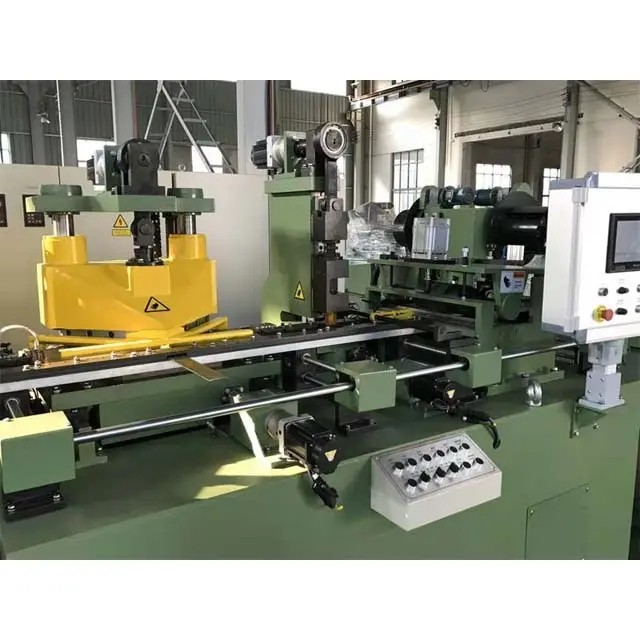
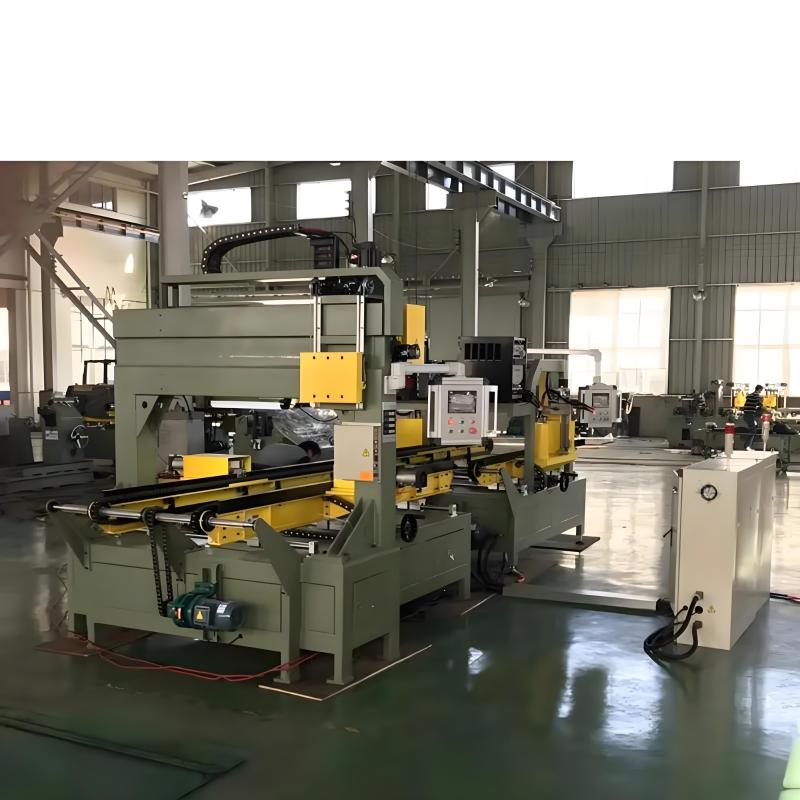
Transformer Corrugated tank forming and welding machine

  • Transformer Corrugated tank forming and welding machine

Key attributes

Brand Switchgear parts
Model NO. Transformer Corrugated tank forming and welding machine
Corrugation fin width 350-1300mm
Corrugation fin thickness 1.0~1.5mm
Corrugation fin height 50~400mm
Length of sheet ≥290mm
Series BBX

Product descriptions from the supplier

Description

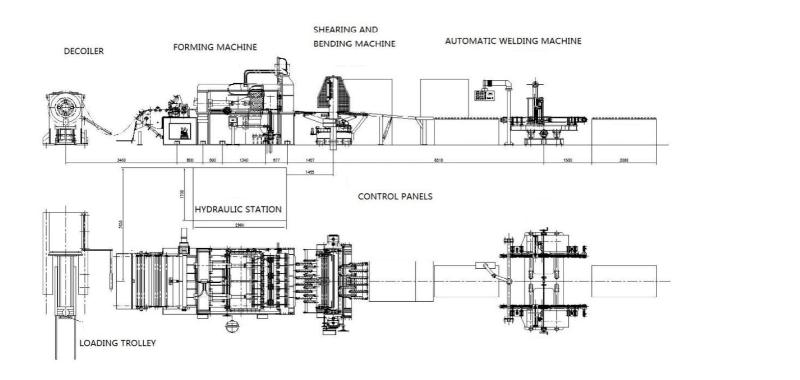
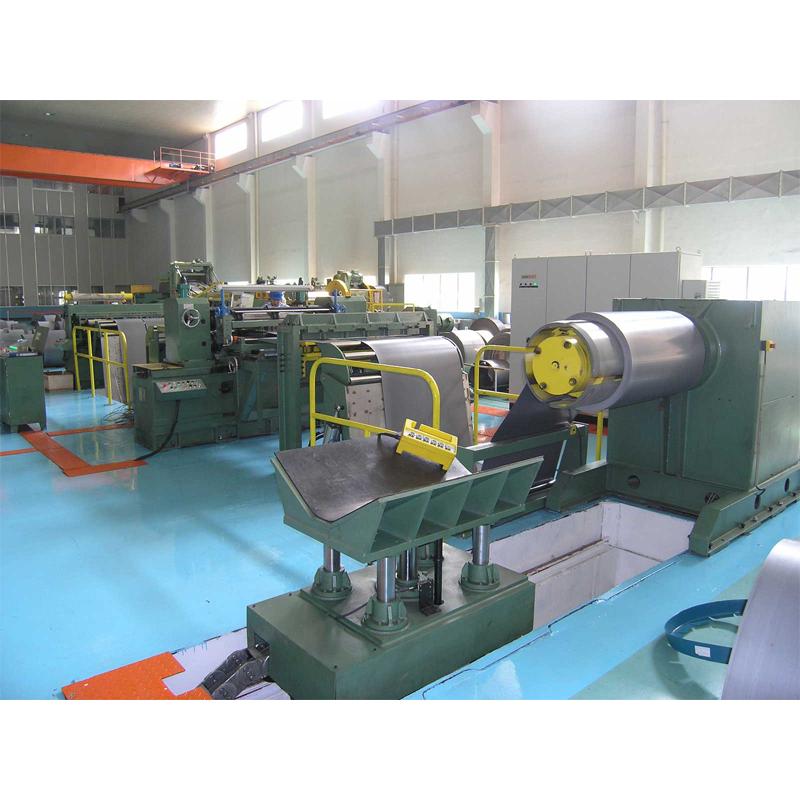
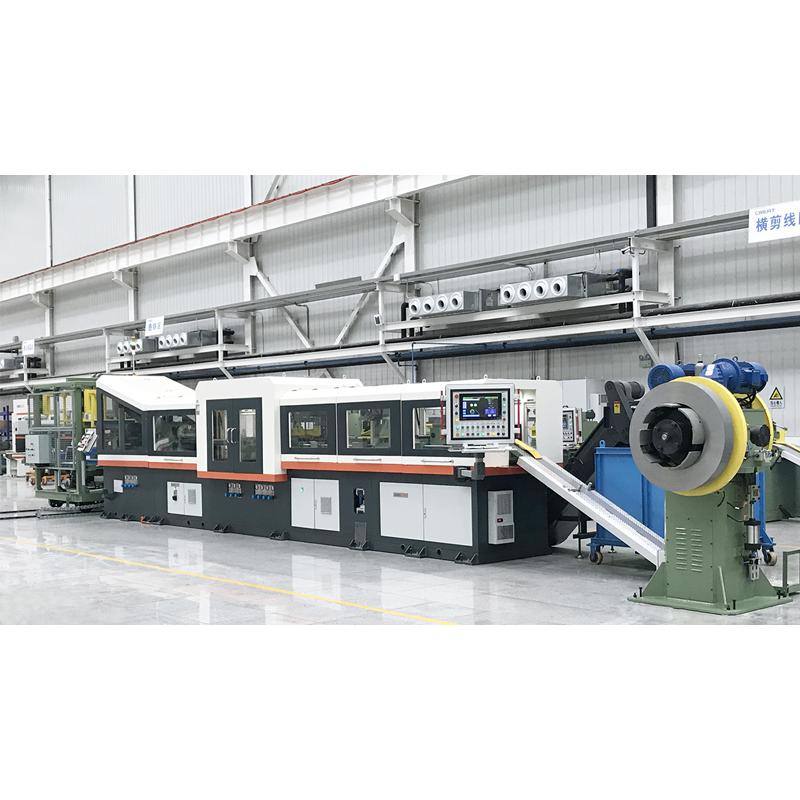
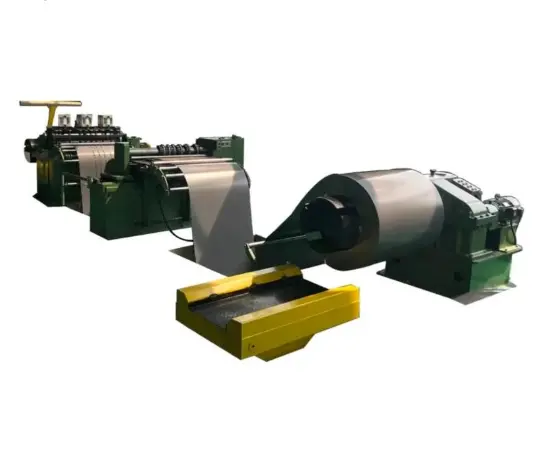
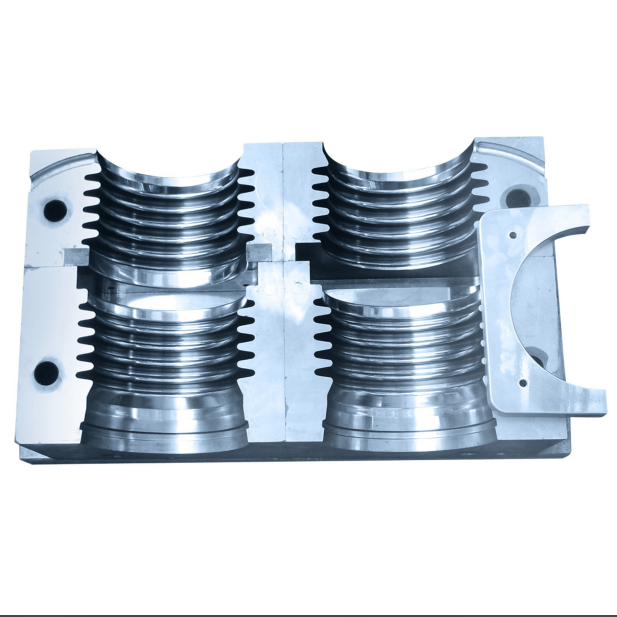
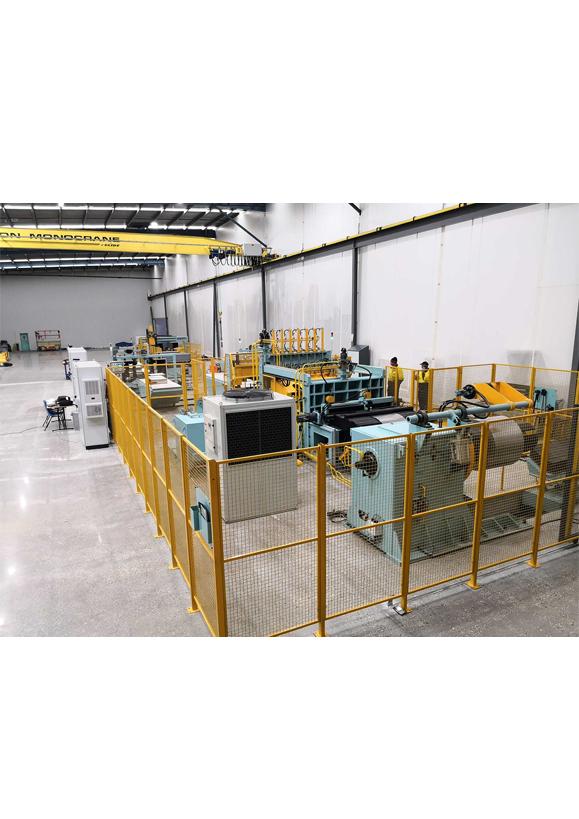
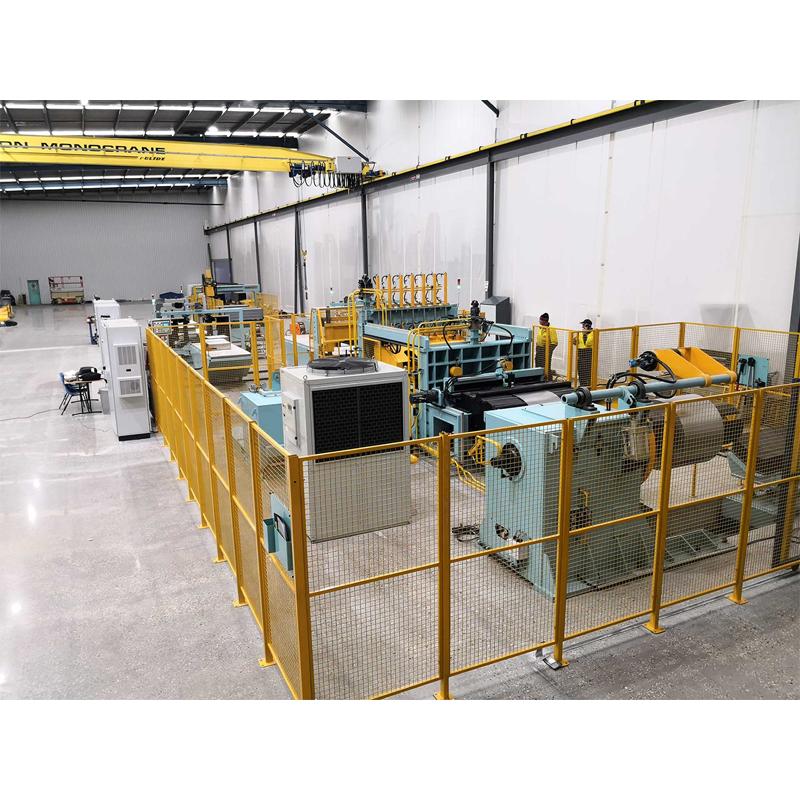
Corrugated Tank Forming and Welding Machine is an integrated production equipment designed specifically for the manufacturing of transformer oil tanks. It integrates core functions such as cutting, forming, and automatic welding, and is equipped with supporting components such as electrical control cabinets, hydraulic stations, and loading vehicles. It provides a complete solution for the precise mass production of oil immersed transformer corrugated oil tanks.

This equipment is a key production equipment in the transformer manufacturing industry, mainly used for processing corrugated oil tanks of oil immersed distribution transformers, power transformers, and special transformers (such as rectifier transformers and traction transformers). Its stable hydraulic drive system and high-precision electronic control system can not only meet the mass production needs of small and medium-sized transformer oil tanks, but also adapt to the production of customized specifications of oil tanks, helping transformer manufacturing enterprises optimize production line processes, reduce labor costs, while ensuring the heat dissipation performance and structural strength of oil tanks, laying the foundation for the safe and stable operation of transformers.

Structure and specification

Items

BBX-1300

BBX-1600

Fin Width(mm)

350-1300

350-1600

Plate thickness (mm)

1.0-1.5

1.0-1.5

Length of plate(mm)

≥290

≥290

Fin height (mm)

50-400

50-400

Fin pitch(mm)

40-80

40-80

pitch accuracy(mm)

±0.25

±0.25

Inner gap (mm)

6

6

Documentation Resource Library
Public.
Corrugated tank forming and welding machine
Catalogue
English
FAQ
Q: What is the core precision control indicator of this device, and what is the key impact of this indicator on the performance of the transformer oil tank?
A:

The core indicator of precision control is the fin pitch accuracy (0.25mm). Key impact: ① Structural stability: Consistent fin pitch ensures even stress distribution in the corrugated structure of the fuel tank, avoiding deformation or damage caused by local stress concentration; ② Sealing performance: Accurate pitch can ensure the fit of corrugated sheet metal during splicing, reduce welding gaps, and lower the risk of oil tank leakage; ③ Heat dissipation efficiency: Uniform ripple pitch can ensure consistent heat dissipation area of the oil tank, avoiding uneven local heat dissipation caused by pitch deviation, which affects the heat dissipation effect and operational stability of the transformer.
Q: What are the core differences between BBX-1300 and BBX-1600 models, and how should companies choose based on their own production needs?
A:

The core difference lies in the range of fin width adaptation: BBX-1300 has a fin width of 350-1300mm, BBX-1600 has a fin width of 350-1600mm, and the other technical parameters (plate thickness, fin height/pitch, etc.) are completely consistent. Selection suggestion: ① If producing small and medium-sized transformer oil tanks (fin width ≤ 1300mm), BBX-1300 can be selected, which has better equipment investment and operating costs; ② If a large transformer oil tank (with fin width of 1300-1600mm) needs to be produced, BBX-1600 should be selected. Its wider fin adaptation range can meet the processing requirements of large-sized oil tanks.

Q: What are the core components of the corrugated oil tank forming welding machine, and what roles do each component play in the manufacturing process of transformer oil tanks?
A:

The core components include a shearing machine, a corrugated forming machine, a bending machine, an automatic welding machine, an electrical control cabinet, a hydraulic station, and a loading truck. Function division: ① Loading truck: responsible for conveying sheet materials and ensuring continuous loading; ② Shear machine: Cut the sheet into the target size to prepare for subsequent processing; ③ Ripple forming machine: Process the cut sheet into the corrugated structure required for the fuel tank; ④ Bending machine: bending and shaping corrugated sheets to match the overall contour of the fuel tank; ⑤ Automatic welding machine: completes the welding and splicing of various components of the fuel tank to form a complete finished product; ⑥ Electric control cabinet: controls the operation parameters and process coordination of the entire equipment; ⑦ Hydraulic station: provides power support for cutting, forming, bending and other processes.

Know your supplier
Online store
On-time delivery rate
Response time
100.0%
≤4h
Company overview
Workplace: 1000m² Total staff: Highest Annual Export(usD): 300000000
Workplace: 1000m²
Total staff:
Highest Annual Export(usD): 300000000
Services
Business Type: Sales
Main Categories: Low Voltage Electrical Apparatus/Instrument meters/Production equipment/Tester/High Voltage Electrical Apparatus/Electrical fittings/Equipment Parts
Whole life care manager
Whole-life care management services for equipment procurement, use, maintenance, and after-sales, ensuring safe operation of electrical equipment, continuous control, and worry-free electricity consumption.
The equipment supplier has passed platform qualification certification and technical evaluation, ensuring compliance, professionalism, and reliability from the source.

Related Products

Related Knowledges

  • Impact of DC Bias in Transformers at Renewable Energy Stations Near UHVDC Grounding Electrodes
    Impact of DC Bias in Transformers at Renewable Energy Stations Near UHVDC Grounding ElectrodesWhen the grounding electrode of an Ultra-High-Voltage Direct Current (UHVDC) transmission system is located close to a renewable energy power station, the return current flowing through the earth can cause a rise in ground potential around the electrode area. This ground potential rise leads to a shift in the neutral-point potential of nearby power transformers, inducing DC bias (or DC offset) in their
    01/15/2026
  • HECI GCB for Generators – Fast SF6 Circuit Breaker
    1.Definition and Function1.1 Role of the Generator Circuit BreakerThe Generator Circuit Breaker (GCB) is a controllable disconnect point located between the generator and the step-up transformer, serving as an interface between the generator and the power grid. Its primary functions include isolating generator-side faults and enabling operational control during generator synchronization and grid connection. The operating principle of a GCB is not significantly different from that of a standard c
    01/06/2026
  • Distribution Equipment Transformer Testing, Inspection, and Maintenance
    1.Transformer Maintenance and Inspection Open the low-voltage (LV) circuit breaker of the transformer under maintenance, remove the control power fuse, and hang a “Do Not Close” warning sign on the switch handle. Open the high-voltage (HV) circuit breaker of the transformer under maintenance, close the grounding switch, fully discharge the transformer, lock the HV switchgear, and hang a “Do Not Close” warning sign on the switch handle. For dry-type transformer maintenance: first clean the porcel
    12/25/2025
  • How to Test Insulation Resistance of Distribution Transformers
    In practical work, insulation resistance of distribution transformers is generally measured twice: the insulation resistance between thehigh-voltage (HV) windingand thelow-voltage (LV) winding plus the transformer tank, and the insulation resistance between theLV windingand theHV winding plus the transformer tank.If both measurements yield acceptable values, it indicates that the insulation among the HV winding, LV winding, and transformer tank is qualified. If either measurement fails, pairwise
    12/25/2025
  • Design Principles for Pole-Mounted Distribution Transformers
    Design Principles for Pole-Mounted Distribution Transformers(1) Location and Layout PrinciplesPole-mounted transformer platforms should be located near the load center or close to critical loads, following the principle of “small capacity, multiple locations” to facilitate equipment replacement and maintenance. For residential power supply, three-phase transformers may be installed nearby based on current demand and future growth projections.(2) Capacity Selection for Three-Phase Pole-Mounted Tr
    12/25/2025
  • Transformer Noise Control Solutions for Different Installations
    1.Noise Mitigation for Ground-Level Independent Transformer RoomsMitigation Strategy:First, conduct a power-off inspection and maintenance of the transformer, including replacing aged insulating oil, checking and tightening all fasteners, and cleaning dust from the unit.Second, reinforce the transformer foundation or install vibration isolation devices—such as rubber pads or spring isolators—selected based on the severity of vibration.Finally, strengthen sound insulation at weak points of the ro
    12/25/2025
Haven't found the right supplier yet? Let matching verified suppliers find you. Get Quotation Now
Haven't found the right supplier yet? Let matching verified suppliers find you.
Get Quotation Now
Send inquiry
+86

IEE Business will not sell or share your personal information.

Download
Get the IEE Business Application
Use the IEE-Business app to find equipment, obtain solutions, connect with experts, and participate in industry collaboration anytime, anywhere—fully supporting the development of your power projects and business.