Why Does the Transformer Core Need to Be Grounded?
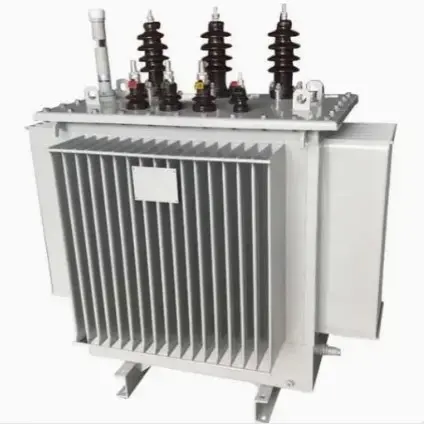
During operation, the transformer core, along with the metal structures, parts, and components that fix the core and windings, are all situated in a strong electric field. Under the influence of this electric field, they acquire a relatively high potential with respect to ground. If the core is not grounded, a potential difference will exist between the core and the grounded clamping structures and tank, which may lead to intermittent discharge.
In addition, during operation, a strong magnetic field surrounds the windings. The core and various metal structures, parts, and components are located in a non-uniform magnetic field, and their distances from the windings differ. Consequently, the electromotive forces induced in these metal parts by the magnetic field are unequal, resulting in potential differences among them. Although these potential differences are small, they can still break down very small insulation gaps, possibly causing continuous micro-discharges.
Both the intermittent discharges caused by potential differences and the continuous micro-discharges resulting from breakdown of tiny insulation gaps are unacceptable, and it is extremely difficult to locate the exact positions of such intermittent discharges.
The effective solution is to reliably ground the core and all metal structures, parts, and components that fix the core and windings, so that they are all at earth potential together with the tank. The grounding of the transformer core must be single-point grounding—and only single-point grounding. This is because the silicon steel laminations of the core are insulated from each other to prevent large eddy currents. Therefore, it is absolutely prohibited to ground all laminations or to implement multi-point grounding; otherwise, large eddy currents would be generated, causing severe core heating.
Typically, grounding the transformer core means grounding any one lamination of the core. Although the laminations are insulated from each other, their inter-lamination insulation resistance is quite low. Under the influence of non-uniform strong electric and magnetic fields, high-voltage charges induced in the laminations can flow through the laminations to the grounding point and then to earth, while the insulation between laminations effectively blocks eddy currents from flowing from one lamination to another. Therefore, grounding any single lamination effectively grounds the entire core.
It should be noted: the transformer core must be grounded at exactly one point—it cannot be grounded at two points, let alone multiple points—because multi-point grounding is one of the common faults in transformers.
Why Can’t the Transformer Core Be Multi-Point Grounded?
The reason the transformer core laminations can only be grounded at one point is that if there are two or more grounding points, a closed loop may form between these grounding points. When the main magnetic flux passes through this closed loop, circulating currents will be induced, causing internal overheating and potentially leading to accidents. Localized melting of the core can create short circuits between laminations, increasing core losses significantly and severely affecting the transformer’s performance and normal operation. In such cases, the damaged silicon steel laminations must be replaced for repair. Therefore, transformers do not allow multi-point grounding—only one and exactly one grounding point is permitted.
Multi-point grounding easily forms circulating currents and causes overheating.
During operation, the transformer core and its clamping metal parts are all subjected to a strong electric field. Electrostatic induction generates floating potentials on the core and metal parts, which may discharge to ground—an unacceptable condition. Hence, the core and its clamping parts (except for through-core bolts) must be properly and reliably grounded. However, the core is allowed only one grounding point. If there are two or more grounding points, the core, the grounding points, and the earth will form a closed loop. During operation, magnetic flux passing through this closed loop will induce so-called circulating currents, leading to localized core overheating and even burning of metal parts and insulation.
In summary: the transformer core must be grounded at only one point—it cannot be grounded at two or multiple points.