| Brand | Xinyouxiang |
| Model NO. | Transformer expandable mandrel |
| Max length distance | 1100mm |
| Max outer diameter | 200mm |
| Series | EM-200 |
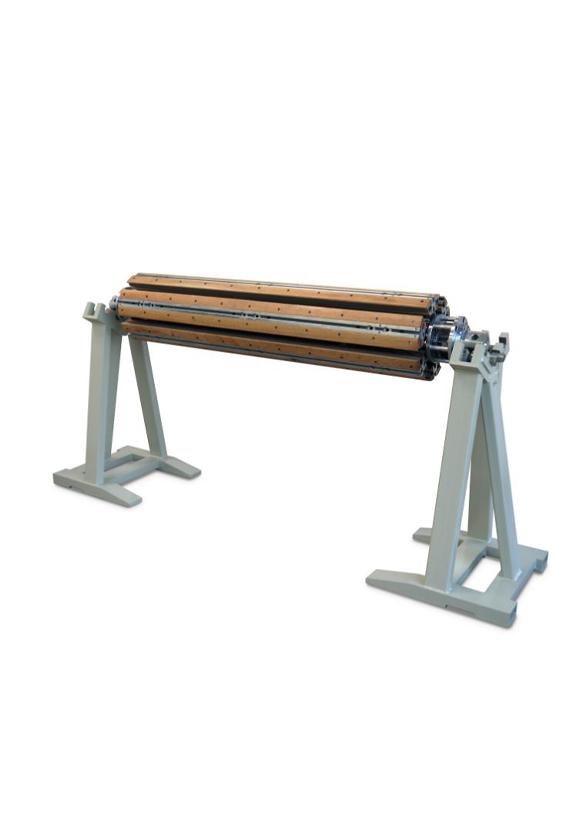
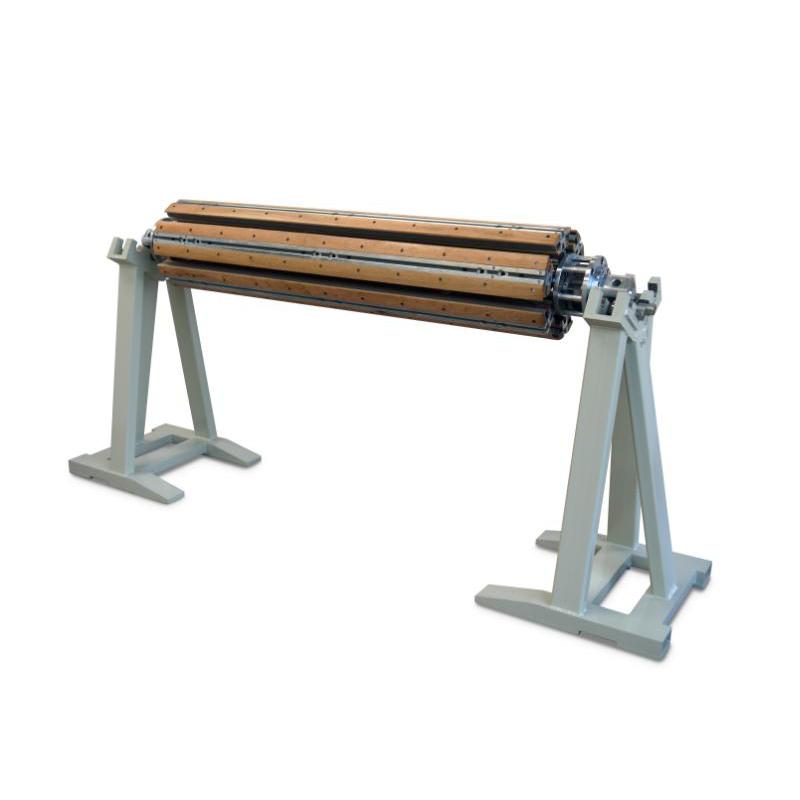
Expandable Mandrel is the core auxiliary equipment of winding machines, designed specifically for the coil winding process of electromagnetic components such as transformers and reactors. Through precise matching of coil size and customized production, it provides stable support and positioning for coil forming.
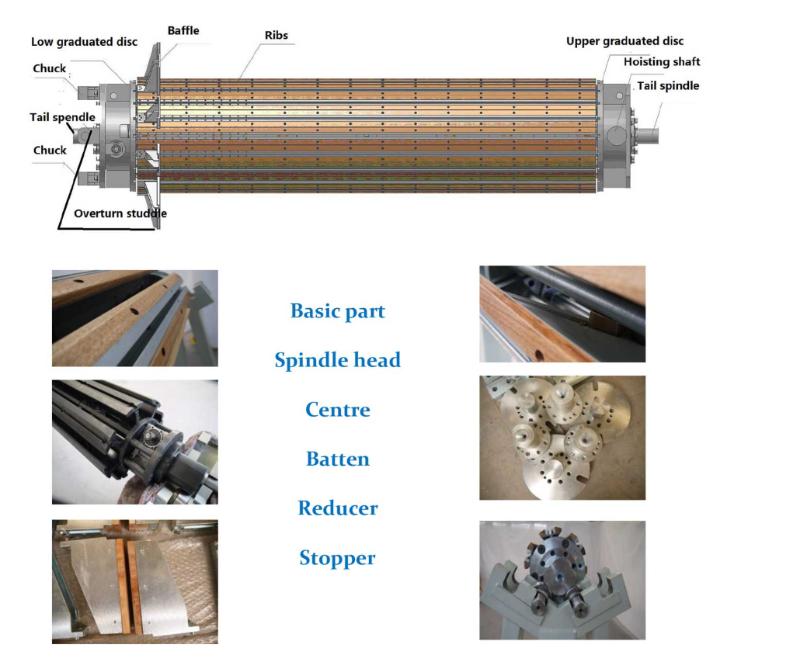
This expansion and contraction core shaft is compatible with three structural types: rectangular, elliptical, and circular, and can adapt to different coil shape requirements. The core size parameters (L1=1515.5mm, L2=1313.5mm, L3=1100mm, D2=200mm, etc.) can meet the processing requirements of various specifications of coils. The equipment works together through the main shaft head, central Flat noodles, reducer and other basic components, and is equipped with upper and lower dials, baffles, chucks and other components to achieve accurate positioning, clamping and fixation during the coil winding process, effectively avoid coil offset and looseness, and ensure uniform winding density.
In practical applications, this expansion and contraction core shaft can be used in conjunction with various automatic conductor winding machines and interlayer insulation winding machines, and is widely used in the production of coils for dry-type transformers, oil immersed transformers, and special transformers power transformers(rectification, traction transformers, etc.). Whether it is the round or flat wire winding of copper and aluminum conductors, or the forming of foil coils, their stable expansion and contraction clamping performance can improve the accuracy and production efficiency of coil winding. At the same time, they are suitable for small batch customization and large-scale production scenarios, and are key auxiliary equipment for coil processing in the power equipment manufacturing industry.
Machine composition
The core working principle is to uniformly expand the clamping element of the core shaft radially through manual or power drive, achieving clamping support for the workpiece/coil; After processing/winding is completed, the core shaft shrinks to reduce its diameter, making it easier to quickly demold. Compared to traditional fixed core shafts, it solves three major pain points: ① Traditional fixed core shafts are difficult to disassemble, which can easily cause damage to the coil/workpiece, while expandable core shafts can be removed without damage by shrinking and demolding; ② Traditional core shafts have poor adaptability, with only one type of workpiece corresponding to one specification. The expandable core shaft has a wide clamping range (4mm-120mm) and also supports non-standard customization; ③ The traditional core shaft clamping and debugging time is long, and the expandable core shaft expansion sleeve can be quickly replaced, greatly reducing the setting time and improving batch production efficiency.
The differences and selection logic are as follows: (1) Manual drive type (such as Gerber 110/120 series): the clamping range is relatively small in parameters (4mm-100mm), the expansion amount is moderate (0.05-0.09mm), the performance focuses on precision clamping, and the operation relies on manual labor. It is suitable for small batch precision part processing, small coil winding, or scenarios with low automation in the workshop; (2) Power driven type (such as SMW Autoblok EMX-C series): with a larger clamping range (25mm-120mm) and higher expansion capacity (1.0-1.2mm) in terms of parameters, the maximum transmission torque can reach 400Nm, and the performance focuses on high efficiency and heavy load. It has a high degree of automation and is suitable for large-scale production, large workpiece processing, high-capacity coil winding, or workshop automation assembly line scenarios. When selecting, priority should be given to matching one's own production capacity and workpiece specifications (size/weight), and then making decisions based on the level of workshop automation
High precision is mainly reflected in two core indicators: coaxiality (0.002-0.005mm) and end face runout control. The direct impact is as follows: ① Accurate coaxiality can ensure the winding density and roundness during transformer coil winding, avoiding insulation performance degradation or conductivity efficiency reduction caused by interlayer misalignment; For precision workpieces such as gears and cutting tools, it can ensure that the dimensional tolerances after machining meet the standard and avoid fitting deviations during assembly; ② Accurate control of end face jumping can ensure that the two ends of the coil are flat, reducing gap errors during subsequent assembly; For processing workpieces, it can avoid tilting and unevenness in end face processing, ensuring the assembly accuracy and stability of the workpiece.








 Login
Login