Transformer Common Faults Diagnostic Measures and Temperature Monitoring

1.Common Faults and Diagnostic Measures
1.1 Transformer Oil Leakage
1.1.1 Oil Leakage from Tank Weld Seams
For oil leakage at flat joints, direct welding is applicable. For leakage at corners or joints reinforced with stiffeners, the exact leakage point is often difficult to locate, and re-leakage may occur after welding due to internal stress. For such cases, repair welding with an added iron plate is recommended: for two-surface joints, the iron plate can be cut into a spindle shape for welding; for three-surface joints, the iron plate should be cut into a triangular shape based on the actual configuration.
1.1.2 Bushing Oil Leakage
Bushing oil leakage is typically caused by bushing cracking or fractures, incorrect installation or aging of sealing gaskets, or loosening of the bushing clamping screws. If the first two conditions are present, replacement of the components is required; if the screws are loose, they should be re-tightened.
1.2 Multi-point Grounding of the Core
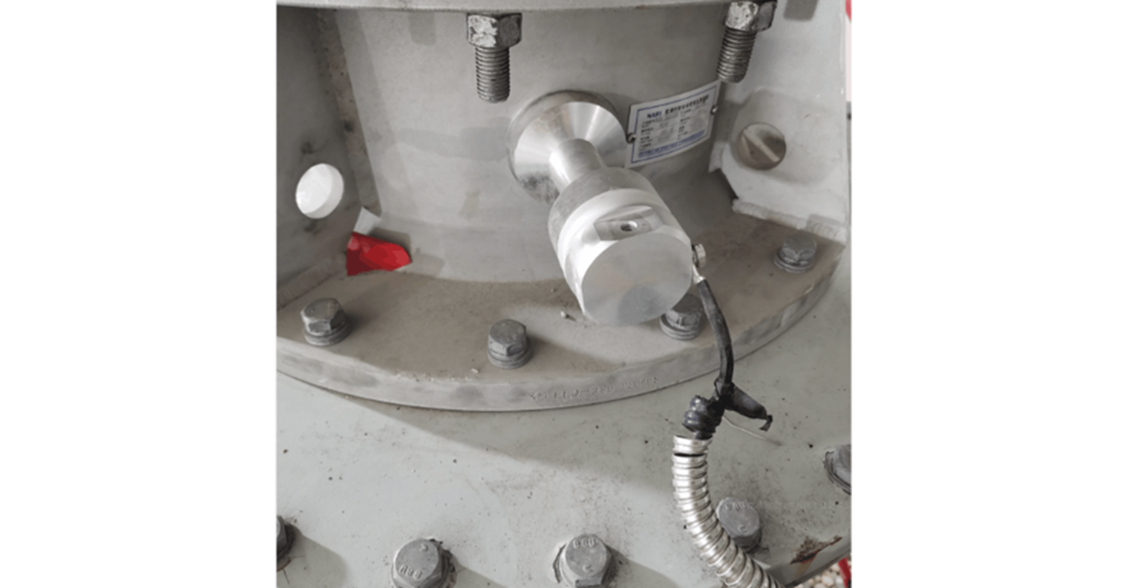
1.2.1 DC Current Surge Method
Disconnect the transformer core grounding wire and apply a DC voltage between the core and the tank for a short-duration high-current surge. Typically, 3–5 surges effectively burn off the unintended grounding points, significantly eliminating multi-point grounding faults.
1.2.2 Internal Inspection
For multi-point grounding caused by failure to flip or remove the positioning pin on the tank cover after installation, the pin should be flipped or removed. If the insulating paper between the clamp pad and the yoke has fallen off or been damaged, it should be replaced with new paper of appropriate thickness according to insulation specifications. If the clamp leg is too close to the core, causing bent laminations to touch it, adjust the clamp leg and straighten the bent laminations to ensure the required insulation clearance. Remove metallic foreign matter, particles, and impurities from the oil, clean oil sludge from all parts of the tank, and, if possible, perform vacuum drying on the transformer oil to remove moisture.
1.3 Overheating at Connections
1.3.1 Connection of Conductive Rod Terminal
Transformer lead-out terminals are typically made of copper. In outdoor or humid environments, aluminum conductors must not be bolted directly to copper terminals. When moisture containing dissolved salts (electrolyte) infiltrates the contact surface between copper and aluminum, an electrochemical reaction occurs due to galvanic coupling, leading to severe corrosion of the aluminum. This rapidly damages the contact, causing overheating and potentially leading to serious accidents. To prevent this, direct copper-aluminum connections should be avoided.
2.Transformer Temperature Monitoring
2.1 Infrared Thermography
Infrared thermography uses an infrared detector to capture the infrared radiation emitted by the target, amplifies and processes the signal, converts it into a standard video signal, and then displays the thermal image on a monitor. Localized overheating in the conductive circuit, caused by poor contact in transformer leads, overload operation, or core multi-point grounding, can be effectively detected using this method.
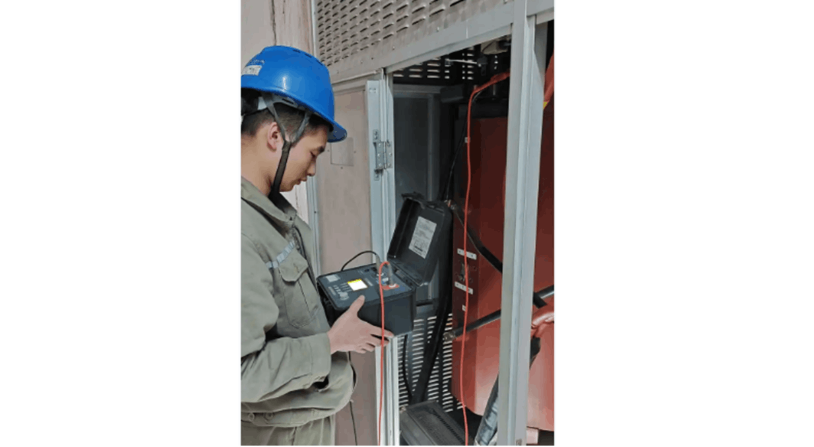
2.2 Oil Surface Temperature Indication
The oil surface temperature indicator monitors the temperature of the transformer oil, provides alarm signals when limits are exceeded, and initiates protective tripping when necessary.
3.Conclusion
In the 21st century, with increasing societal dependence on power systems and their continued expansion, fault diagnosis and condition-based maintenance of power transformers have become crucial measures for advancing the transformation of China’s power system and improving the scientific management of electrical equipment. These practices represent a key direction and focus for future development in power generation.