Comprehensive Guide to Transformer Fault Diagnosis & Testing
Optimized Guide to Transformer Fault Diagnosis and Advanced Testing Techniques
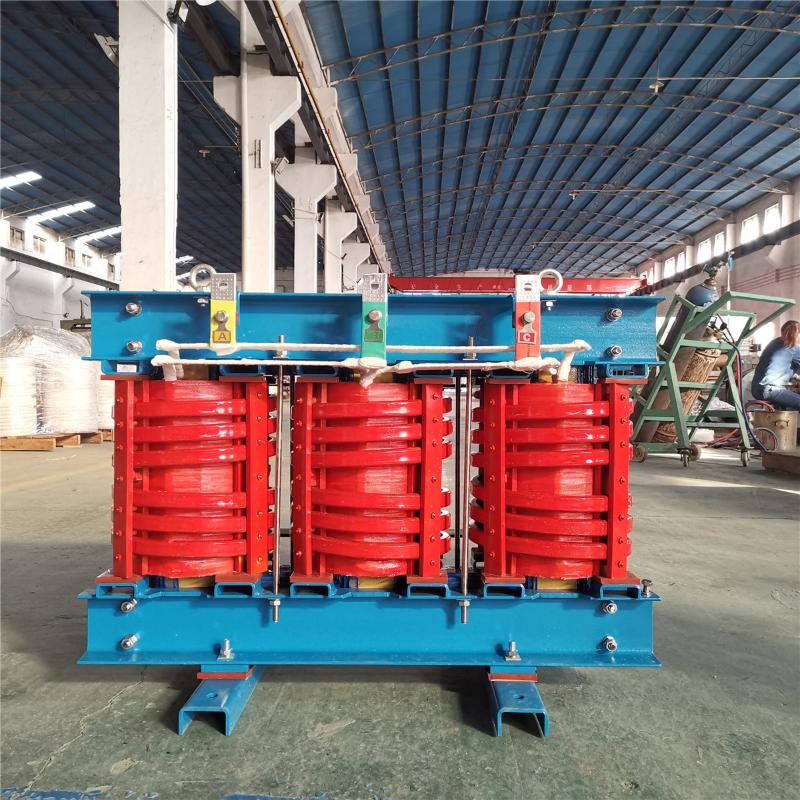
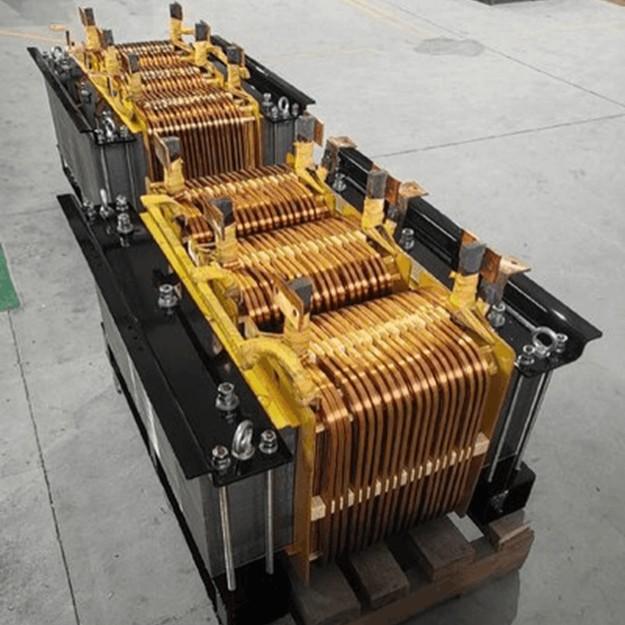
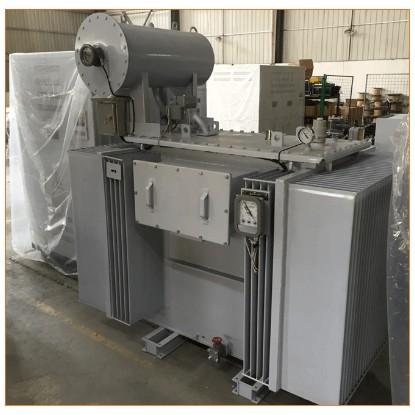
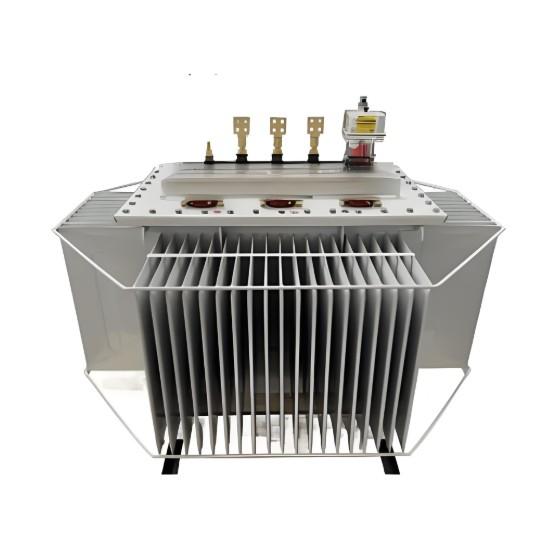
Transformers are core components in power systems, and their operational reliability directly impacts power supply safety. Common types include oil-immersed and dry-type transformers. Failures typically occur in the windings, core, connections, and insulation oil, with typical issues such as inter-turn short circuits, insulation aging, overheated joints, and multi-point core grounding.
1. Common Fault Indicators
Immediate attention is required if a transformer exhibits any of the following symptoms:
Severe overheating or abnormal temperature rise
Unusual noises (e.g., humming, arcing)
Three-phase voltage/current imbalance
Darkened oil color, acidic odor, or sludge formation
Frequent protective relay operations or tripping
2. Routine Maintenance Items
To ensure long-term stable operation, the following basic tests should be performed regularly:
| Test Item | Purpose | Common Method |
| Insulation Resistance Test | Assess overall insulation condition | Use megohmmeter to measure R60s, R15s; calculate Dielectric Absorption Ratio (DAR) and Polarization Index (PI) |
| DC Resistance Test | Check winding integrity and connections | Micro-ohmmeter measures DC resistance per phase to detect turn-to-turn shorts or poor contacts |
| No-Load Test | Evaluate core performance and losses | Measure no-load current and no-load losses |
| Core Lifting Inspection | Full internal inspection (during major overhaul) | Visual check for winding deformation, insulation damage, loose core |
| Oil Quality Test (oil-immersed) | Assess insulation oil aging | Includes physicochemical analysis and Dissolved Gas Analysis (DGA) |
3. Advanced Diagnostic Techniques
3.1 ALL-Test – Comprehensive Winding Condition Assessment
Principle
Uses high-frequency, low-voltage signals (not high voltage) to excite windings and measure key parameters:
DC Resistance (R)
Impedance (Z)
Inductance (L)
Phase Angle Tangent (tgφ)
Current-to-Frequency Ratio (I/F)
Multi-parameter analysis enables high-sensitivity detection of early winding defects.
Key Advantages
Non-destructive: Low-voltage testing avoids aggravating existing flaws;
High Precision: Resolution up to 0.001Ω, capable of detecting minor inter-turn faults;
Fast On-Site Diagnosis: Internal condition assessed without core lifting;
Trend-Based Monitoring: Data can be stored and trended for predictive maintenance;
Multi-Parameter Cross-Validation: Enhances diagnostic accuracy through parameter correlation.
3.2 Evaluation Criteria (Empirical)
| Parameter | Normal Range | Warning Level | Failure Indication |
| R (DC Resistance) | Phase difference ≤5% (R>0.25Ω)≤7.5% (R≤0.2Ω) | Exceeds above limits | Inter-turn short, poor contact |
| Z (Impedance) | Phase difference ≤5% | >5% | Winding deformation/displacement |
| L (Inductance) | Phase difference ≤5% | >5% | Magnetic circuit fault, shorted turns |
| tgφ (Phase Angle) | Phase difference ≤1 digit (e.g., 0.1 vs 0.2) | ≥0.2 difference | Insulation degradation |
| I/F (Current/Freq Ratio) | Phase difference ≤2 digits (e.g., 1.23 vs 1.25) | >0.03 difference | Winding inconsistency or local short |
3.2 Case Comparison
| Test Parameter | Healthy Transformer (2500kVA) | Faulty Transformer (500kVA) |
| R (Ω) | 0.096–0.103 | 48.5–116.1 (severe imbalance) |
| Z (Ω) | 14–15 | 1406–4972 (H₁-H₂ abnormal) |
| L (mH) | 2 | 2237–7911 (H₁-H₂ significantly high) |
| Conclusion | Healthy condition | Severe inter-turn short or open circuit in H₁-H₂ phase |
3.3 Turns Ratio Test (TTR)
Purpose
Verifies actual turns ratio against nameplate value to detect:
Inter-turn short circuits
Open circuits
Wiring errors
Winding deformation
Acceptance Criteria
Deviation > ±0.5%: Requires further investigation;
Unbalanced three-phase ratios: Indicates localized damage;
No reading: Possible severe short or open circuit.
Best Practices
Use dedicated TTR tester (accuracy ≥0.1%);
De-energize and discharge fully before test;
Record all three phases and compare historically.
3.4 Transformer Oil Quality Testing
For oil-immersed transformers, insulating oil acts as the "lifeblood" — its condition reflects overall equipment health.
Routine Physicochemical Tests
| Parameter | New Oil Standard | In-Service Oil Standard | Test Method |
| Water-Soluble Acid (pH) | >5.4 | ≥4.2 | GB7598 |
| Acid Value (mgKOH/g) | ≤0.03 | ≤0.1 | GB7599 / GB264 |
| Flash Point (Closed Cup, °C) | >140 、>135 | Not <5°C below new oil value | GB261 |
| Mechanical Impurities | None | None | Visual |
| Free Carbon | None | None | Visual |
4. Dissolved Gas Analysis (DGA) – The “Gold Standard” of Fault Diagnosis
Principle
Gas chromatography analyzes types and concentrations of dissolved gases in oil to identify fault type and severity — even while energized.
Key Gases and Associated Faults
| Fault Type | Primary Gases | Secondary Gases |
| Localized Overheating (<300°C) | CH₄, C₂H₆ | CO, CO₂ |
| Severe Overheating (>700°C) | C₂H₄, H₂ | CH₄, C₂H₆ |
| Partial Discharge | H₂, CH₄ | Trace C₂H₂ |
| Arcing | C₂H₂, H₂ | C₂H₄, CH₄ |
| Moisture/Decomposition | H₂ (significantly elevated) | — |
4.1 Judgment Thresholds (by Volume)
| Gas | Normal | Caution | Fault |
| Total Combustible Gases | <0.1% | 0.1%–0.5% | >0.5% |
| H₂ (Hydrogen) | <0.01% | 0.01%–0.02% | >0.02% |
| C₂H₂ (Acetylene) | <0.0005% | — | >0.001% |
4.2 Recommended Integrated Diagnostic Strategy
| Method | Application | Advantage | Suggested Frequency |
| ALL-Test | Rapid winding assessment | High sensitivity, non-invasive | Critical units: Monthly |
| Turns Ratio Test | Post-installation / overhaul | Fast detection of wiring errors | After commissioning, after major repair |
| Oil Testing | Routine maintenance (oil-filled) | Comprehensive oil health check | Every 6 months |
| DGA | Early warning & precision diagnosis | “Gold standard” for incipient faults | Every 3–6 months; more frequent if abnormal |
5. Summary & Recommendations
Prevention over Repair: Establish regular testing schedules to prevent unexpected failures;
Multi-Method Integration: Combine ALL-Test, DGA, and TTR for cross-validated, reliable diagnosis;
Data-Driven Decisions: Maintain equipment health records and monitor parameter trends;
Smart Upgrades: Consider online monitoring (e.g., continuous DGA, temperature sensors) for predictive maintenance;
Personnel Training: Ensure staff understand basic criteria and emergency response procedures.