• Product
  • Suppliers
  • Manufacturers
  • Solutions
  • Free tools
  • Knowledges
  • Experts
  • Communities
Search


Causes of Transformer Differential Current and Hazards of Transformer Bias Current

Edwiin
Edwiin
Field: Power switch
China

Causes of Transformer Differential Current and Hazards of Transformer Bias Current

Transformer differential current is caused by factors such as incomplete symmetry of the magnetic circuit or insulation damage. Differential current occurs when the primary and secondary sides of the transformer are grounded or when the load is unbalanced.

Firstly, transformer differential current leads to energy waste. Differential current causes additional power loss in the transformer, increasing the load on the power grid. Moreover, it generates heat, further increasing energy losses and reducing transformer efficiency. Therefore, differential current increases grid losses and lowers energy utilization efficiency.

Secondly, transformer differential current produces leakage flux, leading to unstable operation. The differential current generates extra magnetic flux, part of which leaks into the air as stray flux. This leakage flux causes instability in the transformer’s operating voltage, affecting the normal operation of electrical equipment.

In addition, transformer differential current may cause equipment overload. Differential current induces current in the transformer windings; excessive differential current can exceed the rated current of the equipment, resulting in overload and potential damage. This not only damages the transformer itself but also impacts the entire power grid and may even cause fire hazards.
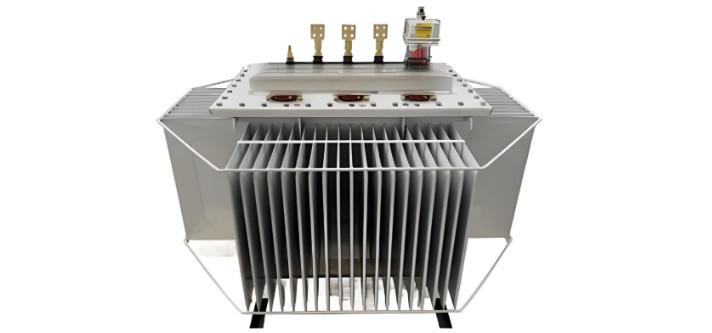
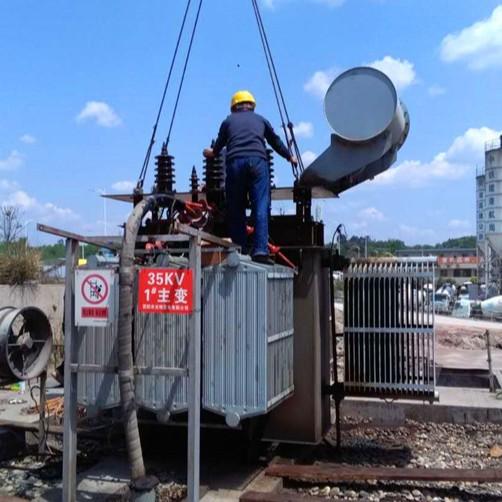
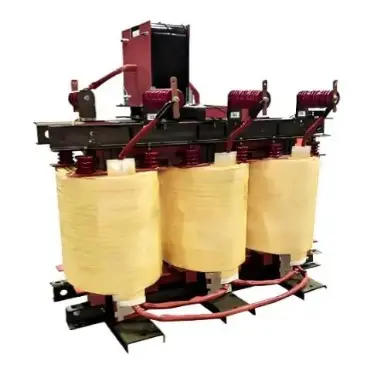
Power transformer..jpg

The hazards of transformer bias current also include resonance phenomena. Harmonic currents within the differential current can cause resonance between internal inductance and capacitance in the transformer, leading to equipment oscillation, increased noise, and other issues that disrupt normal operation.

Furthermore, differential current may accelerate insulation aging. Currents in the differential flow generate localized intense thermal effects in windings, core, and insulation components, causing insulation layers to degrade more quickly and reducing insulation performance. When insulation ages to a critical point, insulation breakdown may occur, leading to electrical accidents or even fires.

Additionally, differential current may cause environmental pollution. Harmful substances such as acids or alkalis may be present in the differential current, contaminating the surrounding environment.

In summary, although transformer differential current is unavoidable, it results in increased energy waste, equipment damage, resonance, insulation aging, and environmental pollution. Therefore, measures should be taken to minimize the generation and impact of transformer differential current to ensure the safe and stable operation of the power grid.
Give a tip and encourage the author!
Recommended
Innovative & Common Winding Structures for 10kV High-Voltage High-Frequency Transformers
1.Innovative Winding Structures for 10 kV-Class High-Voltage High-Frequency Transformers1.1 Zoned and Partially Potted Ventilated Structure Two U-shaped ferrite cores are mated to form a magnetic core unit, or further assembled into series/series-parallel core modules. Primary and secondary bobbins are mounted on the left and right straight legs of the core, respectively, with the core mating plane serving as the boundary layer. Windings of the same type are grouped on the same side. Litz wire i
Noah
12/05/2025
How to Increase Transformer Capacity? What Needs to Be Replaced for Transformer Capacity Upgrade?
How to Increase Transformer Capacity? What Needs to Be Replaced for Transformer Capacity Upgrade?Transformer capacity upgrade refers to improving the capacity of a transformer without replacing the entire unit, through certain methods. In applications requiring high current or high power output, transformer capacity upgrades are often necessary to meet demand. This article introduces methods for transformer capacity upgrade and the components that need to be replaced.A transformer is a critical
Echo
12/04/2025
How to Diagnose and Eliminate Transformer Core Grounding Faults
The windings and core of a transformer are the primary components responsible for transmitting and transforming electromagnetic energy. Ensuring their reliable operation is a major concern. Statistical data shows that core-related issues account for the third-highest cause of transformer failures. Manufacturers have paid increasing attention to core defects and have implemented technical improvements regarding reliable core grounding, core ground monitoring, and ensuring single-point grounding.
Felix Spark
12/04/2025
Hazard Points in Transformer Operation and Their Prevention Measures
The main hazard points in transformer operation are: Switching overvoltages that may occur during the energizing or de-energizing of no-load transformers, endangering transformer insulation; No-load voltage rise in transformers, which may damage transformer insulation.1. Preventive Measures Against Switching Overvoltages During No-Load Transformer SwitchingGrounding the transformer neutral point is primarily aimed at preventing switching overvoltages. In 110 kV and higher large-current grounding
Felix Spark
12/04/2025
Related Products
Send inquiry
Download
Get the IEE Business Application
Use the IEE-Business app to find equipment, obtain solutions, connect with experts, and participate in industry collaboration anytime, anywhere—fully supporting the development of your power projects and business.