• Product
  • Suppliers
  • Manufacturers
  • Solutions
  • Free tools
  • Knowledges
  • Experts
  • Communities
Search


Causes of Transformer Differential Current and Hazards of Transformer Bias Current

Edwiin
Field: Power switch
China

Causes of Transformer Differential Current and Hazards of Transformer Bias Current

Transformer differential current is caused by factors such as incomplete symmetry of the magnetic circuit or insulation damage. Differential current occurs when the primary and secondary sides of the transformer are grounded or when the load is unbalanced.

Firstly, transformer differential current leads to energy waste. Differential current causes additional power loss in the transformer, increasing the load on the power grid. Moreover, it generates heat, further increasing energy losses and reducing transformer efficiency. Therefore, differential current increases grid losses and lowers energy utilization efficiency.

Secondly, transformer differential current produces leakage flux, leading to unstable operation. The differential current generates extra magnetic flux, part of which leaks into the air as stray flux. This leakage flux causes instability in the transformer’s operating voltage, affecting the normal operation of electrical equipment.

In addition, transformer differential current may cause equipment overload. Differential current induces current in the transformer windings; excessive differential current can exceed the rated current of the equipment, resulting in overload and potential damage. This not only damages the transformer itself but also impacts the entire power grid and may even cause fire hazards.
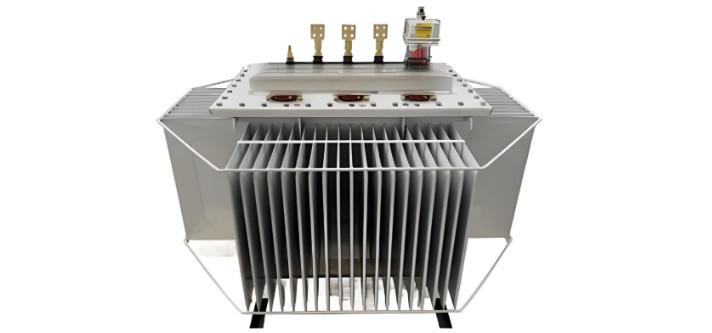
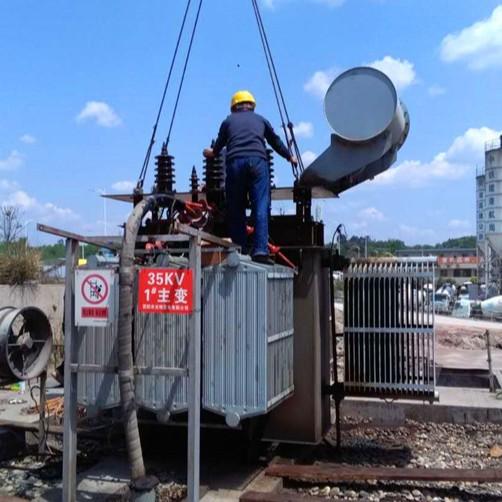
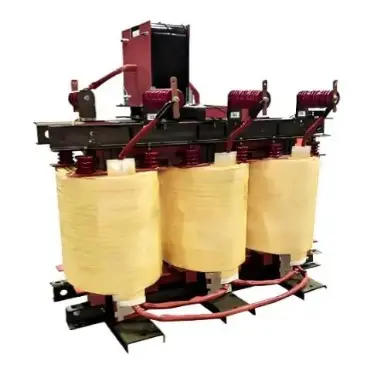
Power transformer..jpg

The hazards of transformer bias current also include resonance phenomena. Harmonic currents within the differential current can cause resonance between internal inductance and capacitance in the transformer, leading to equipment oscillation, increased noise, and other issues that disrupt normal operation.

Furthermore, differential current may accelerate insulation aging. Currents in the differential flow generate localized intense thermal effects in windings, core, and insulation components, causing insulation layers to degrade more quickly and reducing insulation performance. When insulation ages to a critical point, insulation breakdown may occur, leading to electrical accidents or even fires.

Additionally, differential current may cause environmental pollution. Harmful substances such as acids or alkalis may be present in the differential current, contaminating the surrounding environment.

In summary, although transformer differential current is unavoidable, it results in increased energy waste, equipment damage, resonance, insulation aging, and environmental pollution. Therefore, measures should be taken to minimize the generation and impact of transformer differential current to ensure the safe and stable operation of the power grid.
Give a tip and encourage the author!
Recommended
Analysis of Four Major Power Transformer Burnout Cases
Case OneOn August 1, 2016, a 50kVA distribution transformer at a power supply station suddenly sprayed oil during operation, followed by burning and destruction of the high-voltage fuse. Insulation testing revealed zero megohms from the low-voltage side to ground. Core inspection determined that damage to the low-voltage winding insulation had caused a short circuit. Analysis identified several primary causes for this transformer failure:Overloading: Load management has historically been a weak
12/23/2025
Power Transformer Condition Monitoring: Reducing Outages & Maintenance Costs
1. Definition of Condition-Based MaintenanceCondition-based maintenance refers to a maintenance approach where repair decisions are determined by the real-time operational status and health condition of equipment. There are no fixed schedules or predetermined maintenance dates. The prerequisite for condition-based maintenance is the establishment of equipment parameter monitoring systems and comprehensive analysis of various operational information, enabling reasonable maintenance decisions base
12/22/2025
Oriented Silicon Steel Impact on Transformer Efficiency & Noise
1. Development Trends of Power Transformer Manufacturing Technology in ChinaPower transformers are primarily developing in two directions:First, development toward extra-large ultra-high voltage transformers, with voltage levels advancing from 220kV, 330kV, and 500kV toward 750kV and 1000kV.Second, development toward energy-saving, miniaturized, low-noise, high-impedance, and explosion-proof types. These products are mainly small and medium-sized transformers, such as the new S13 and S15 distrib
12/22/2025
Power Transformer Conservator Tank Failure: Case Study and Repair
1. Judgment and Analysis of Abnormal Transformer SoundsDuring normal operation, a transformer typically emits a uniform and continuous AC humming sound. If abnormal sounds occur, they are generally caused by internal arcing/discharge or external instantaneous short circuits.Increased but uniform transformer sound: This may be caused by single-phase grounding or resonance in the power grid, resulting in overvoltage. Both single-phase grounding and resonant overvoltage in the grid will increase th
12/22/2025
Related Products
Send inquiry
+86
Click to upload file

IEE Business will not sell or share your personal information.

Download
Get the IEE Business Application
Use the IEE-Business app to find equipment, obtain solutions, connect with experts, and participate in industry collaboration anytime, anywhere—fully supporting the development of your power projects and business.