• Product
  • Suppliers
  • Manufacturers
  • Solutions
  • Free tools
  • Knowledges
  • Experts
  • Communities
Search


Inverter Overvoltage: Causes & Solutions Explained

Felix Spark
Field: Failure and maintenance
China

Overvoltage Fault Analysis in Inverter Voltage Detection

The inverter is the core of modern electric drive systems, enabling precise motor speed control. To ensure safe and stable operation, it continuously monitors key parameters—voltage, current, temperature, and frequency. This article analyzes overvoltage faults in inverter voltage detection circuits.

Inverter overvoltage refers to the DC bus voltage exceeding a safe threshold, risking component damage and triggering protective shutdown. Under normal operation, the DC bus voltage is the rectified and filtered average of the three-phase AC input. For a 380V AC supply, the theoretical DC bus voltage is:
Ud = 380V × √2 ≈ 537V.

During overvoltage events, the main DC bus capacitor charges and stores energy, causing voltage to rise. When it approaches the capacitor’s rated value (typically ~800V), the inverter activates overvoltage protection and shuts down. Failure to respond may lead to performance degradation or permanent damage.

Overvoltage faults are primarily caused by two factors:

1. Excessively High Input AC Voltage

Grid surges, transformer faults, incorrect cabling, or overvoltage from diesel generators can raise input voltage beyond allowable limits. In such cases, disconnect the power supply, identify and correct the fault, and restart only after voltage normalizes.

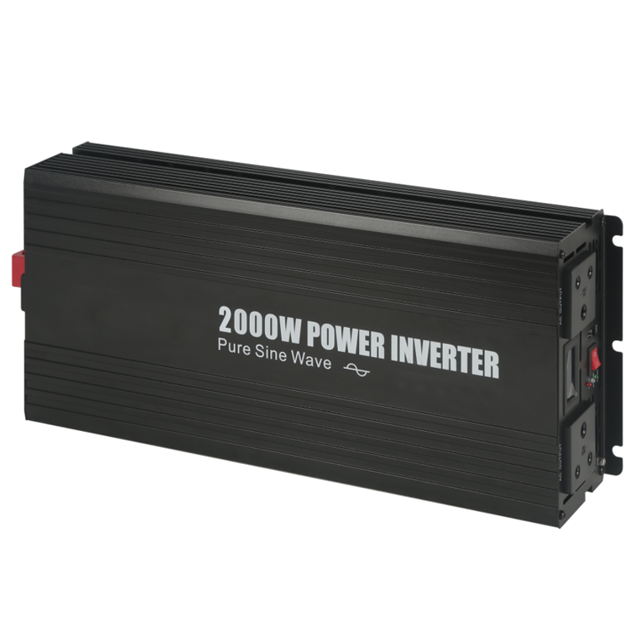
Inverter.jpg

2. Regenerative Energy from the Load

Common in high-inertia systems, when the motor’s synchronous speed exceeds the inverter’s output speed, the motor acts as a generator, feeding energy back into the DC bus and causing voltage to rise.

Solutions include:

  • Extend Deceleration Time: Slower deceleration prevents the motor from entering regenerative mode by keeping the inverter’s output frequency above the motor’s actual speed.

  • Enable Overvoltage Stall Prevention: This function detects rising DC bus voltage and automatically slows the frequency ramp-down to avoid regeneration.

  • Use Dynamic Braking (Braking Resistor): Dissipates regenerative energy as heat via an external resistor, limiting bus voltage rise.

  • Additional Measures:

    • Install a regenerative feedback unit to return energy to the grid.

    • Use a common DC bus configuration: connect multiple inverters’ DC buses in parallel, allowing regenerating inverters to feed energy to motoring ones, stabilizing voltage.
Give a tip and encourage the author!

Recommended

Classification of Equipment Defects for Relay Protection and Safety Automatic Devices in Substations
In daily operations, various equipment defects are inevitably encountered. Whether maintenance personnel, operation and maintenance staff, or specialized management personnel, all must understand the defect classification system and adopt appropriate measures according to different situations.According to Q/GDW 11024-2013 "Operation and Management Guide for Relay Protection and Safety Automatic Devices in Smart Substations," equipment defects are classified into three levels based on severity an
12/15/2025
Under What Conditions Will the Line Circuit Breaker Auto-Reclosing Signal Be Locked Out?
The line circuit breaker auto-reclosing signal will be locked out if any of the following conditions occur:(1) Low SF6 gas pressure in circuit breaker chamber at 0.5MPa(2) Insufficient energy storage in circuit breaker operating mechanism or low oil pressure at 30MPa(3) Busbar protection operation(4) Circuit breaker failure protection operation(5) Line distance protection zone II or zone III operation(6) Short lead protection operation of circuit breaker(7) Presence of remote tripping signal(8)
12/15/2025
Application of Auto-Reclosing Residual Current Protective Devices in Lightning Protection for Communication Power Supplies
1. Power Interruption Problems Caused by RCD False Tripping During Lightning StrikesA typical communication power supply circuit is shown in Figure 1. A residual current device (RCD) is installed at the power supply input terminal. The RCD primarily provides protection against electrical equipment leakage currents to ensure personal safety, while surge protective devices (SPDs) are installed on power supply branches to protect against lightning intrusions. When lightning strikes occur, the senso
12/15/2025
Reclosing Charge Time: Why Does Reclosing Require Charging? What Effects Does Charging Time Have?
1. Function and Significance of Reclosing ChargingReclosing is a protective measure in power systems. After faults such as short circuits or circuit overloads occur, the system isolates the faulty circuit and then restores normal operation through reclosing. The function of reclosing is to ensure continuous operation of the power system, improving its reliability and safety.Before performing reclosing, the circuit breaker must be charged. For high-voltage circuit breakers, the charging time is g
12/15/2025
Related Products
Send inquiry
+86
Click to upload file
Download
Get the IEE Business Application
Use the IEE-Business app to find equipment, obtain solutions, connect with experts, and participate in industry collaboration anytime, anywhere—fully supporting the development of your power projects and business.