What’s the Difference Between a Recloser and a Pole-Mounted Breaker?

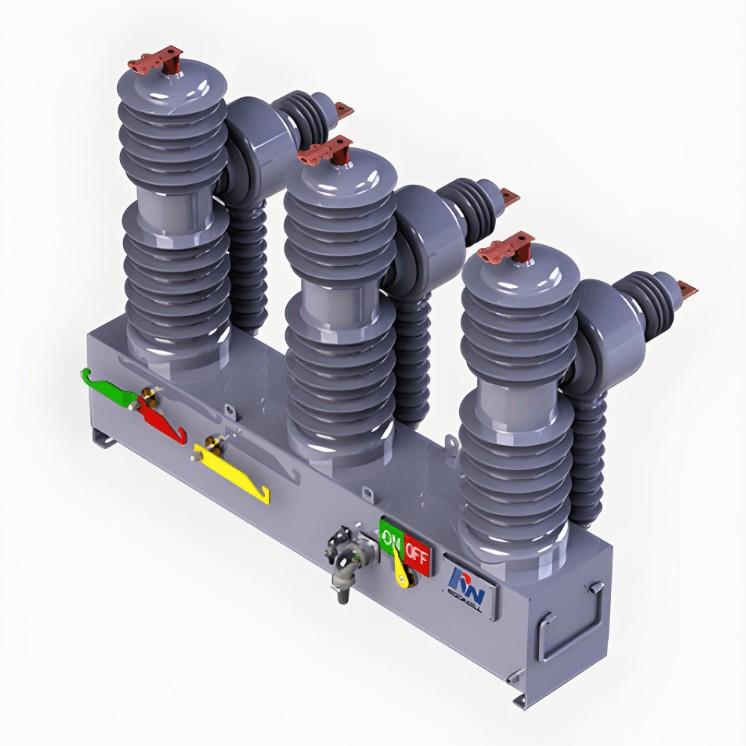
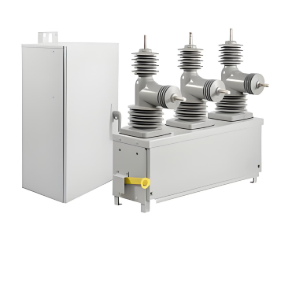
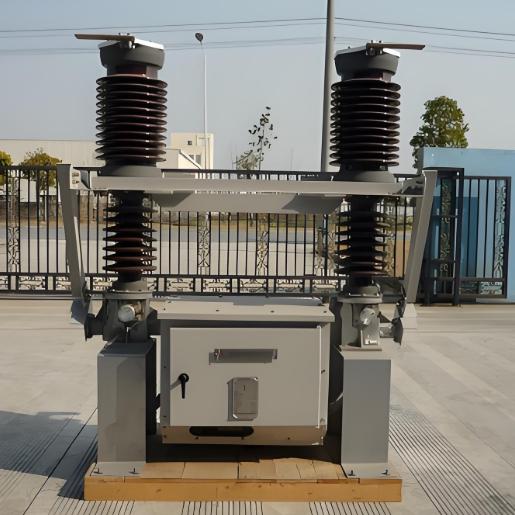
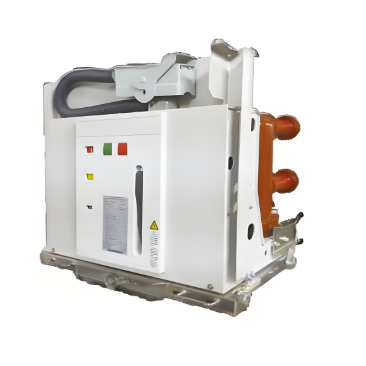
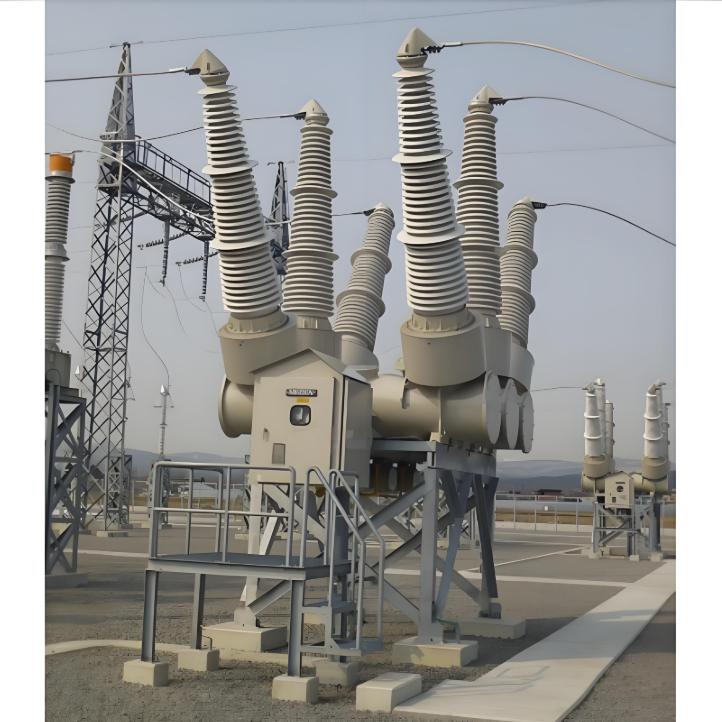
Many people have asked me: “What’s the difference between a recloser and a pole-mounted circuit breaker?” It’s hard to explain in one sentence, so I’ve written this article to clarify. In fact, reclosers and pole-mounted circuit breakers serve very similar purposes—they are both used for control, protection, and monitoring on outdoor overhead distribution lines. However, there are significant differences in the details. Let’s examine them one by one.
1.Different Markets
This may be the biggest distinction. Reclosers are widely used on overhead lines outside China, whereas China has adopted a model based on pole-mounted circuit breakers paired with Feeder Terminal Units (FTUs). This approach artificially separates primary and secondary equipment, leading only recently to efforts toward deep integration of primary and secondary systems. In contrast, international practice has always featured deeply integrated primary-secondary design from the outset.
China once issued a national standard for reclosers—GB 25285-2010—based on IEC 62271-111:2005. Do not refer to this standard, as the 2005 edition of IEC 62271-111 has been almost entirely rewritten; relying on it can lead you astray.
Historically, China’s power industry focused on technology importation rather than original innovation. Later, standardization strategies from State Grid and China Southern Power Grid resulted in highly homogeneous products across manufacturers, with low innovation capacity and largely symbolic product management roles.
Internationally, major brands differentiate themselves clearly—each offers distinct designs, features, and unique value propositions. From this perspective, China’s distribution equipment sector still has a long way to go before breaking free from a “copycat” mindset and achieving genuine independent innovation.
2. Product Composition
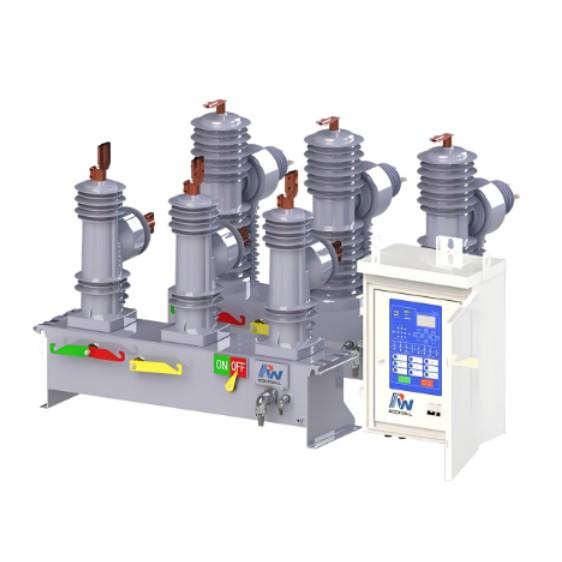
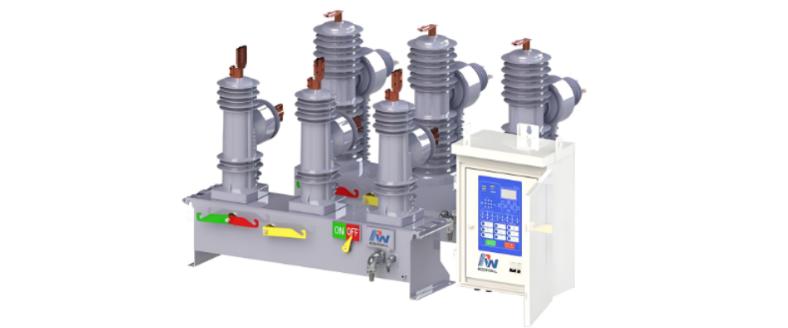
Reclosers inherently include a controller—without it, they simply cannot function. In contrast, pole-mounted circuit breakers typically use spring-operated mechanisms and can operate with just a manual mechanism plus an overcurrent trip coil. Fundamentally, a recloser is a deeply integrated primary-secondary device, while a circuit breaker and FTU are treated as two separate products.
This distinction has caused persistent confusion in China. Even today, most companies (and engineers) fail to recognize that a recloser is, by nature, a tightly integrated system—both organizationally and technically—and have not restructured their teams accordingly.
3. Voltage Sensors
Early pole-mounted circuit breakers generally did not include voltage sensors, whereas reclosers typically came standard with six voltage sensors. With the recent push for deep primary-secondary integration in China, this gap has largely closed.
4. Standards
Reclosers comply with IEC 62271-111 (equivalent to ANSI/IEEE C37.60), while circuit breakers follow IEC 62271-100. These different standards result in significant differences in product specifications and type tests.
Crucially, during type testing, a recloser’s short-circuit tripping is fully controlled by its own integrated controller, not by external signals from a substation. In other words, per the standard, a circuit breaker is not a self-protecting device—it requires an external trip command—whereas a recloser is inherently self-protecting.
5. Operating Mechanism
Reclosers typically use permanent-magnet mechanisms, while pole-mounted circuit breakers usually employ spring mechanisms.
Even when comparing a recloser to a permanent-magnet pole-mounted circuit breaker paired with an FTU, key differences remain.
6. Reclosing Sequence and Logic
Reclosers support fast, configurable reclosing sequences—for example: O–0.5s–CO–2s–CO–2s–CO (three opens, four operations). In contrast, typical Chinese pole-mounted breakers only support slower sequences like O–0.3s–CO–180s–CO.
The core functional difference lies in the controller software. Although both are protective devices, the software in international reclosers and domestic FTUs has diverged significantly over time.
Reclosing logic in global reclosers is the result of decades of R&D by international manufacturers. To meet diverse customer needs, this logic is open and fully configurable. For instance, each "O" (open) operation can be assigned multiple protection functions:
First O: 50-1 (instantaneous overcurrent, 600A) + 51-1 (time-overcurrent, 200A, inverse-time curve)
Second O: …
In contrast, FTU reclosing logic and protection settings in China are rigidly customized for State Grid or Southern Grid requirements. The logic is essentially a black box—parameters are hard-coded, and any modification requires changes to the underlying firmware. This outdated software architecture remains common across the domestic industry.
7. Protection Functions
A detailed comparison isn’t feasible here, but protection philosophies differ greatly due to grid structure and operational habits.
For example, inverse-time overcurrent protection is widely used internationally—with hundreds of available curves (including Kyle curves and user-defined options)—not just the four standard IEC curves. China rarely uses these.
International reclosers typically provide two to four instances of each protection function (e.g., 50-1, 50-2, 50-3, 50-4) to enable flexible configuration across multiple reclose attempts. Similarly, Sensitive Earth Fault (SEF) protection—common abroad—is seldom used in China.
8. Communication Protocols
DNP3.0 is extremely popular overseas but virtually unused in China. Moreover, DNP3.0 in international applications requires user-configurable point lists, meaning reclosers must fully support custom data mapping—a demanding development requirement.
Finally, here’s an image shared with me by Victor, a pioneer in China’s power equipment export community. It shows numerous global recloser brands—but not a single Chinese one.
Yet I firmly believe that within the next 20 years, a Chinese brand will rise to become a globally recognized leader in reclosers. And that company won’t be one excelling merely in switchgear hardware—but one with strong capabilities in intelligent control, software, and digital integration.