1. מבוא
תקלות בשורות העברה ניתן לחלק לשני סוגים בהתאם לטבען: תקלות זמניות ותקלות קבועות. נתונים סטטיסטיים מראים שרוב תקלות שורות ההעברה הן זמניות (בגלל פגיעות ברק, תקריות הקשורות לציפורים וכדומה), מה שהופך לבערך 90% מכלל התקלות. לכן, אחרי שורה נחתכת עקב תקלה, ניסיון איחוי מחדש יכול להגביר משמעותית את האמינות של אספקת החשמל. הפונקציה של איחוי אוטומטי של מתג חשמלי שנחתך עקב תקלה נקראת איחוי אוטומטי.
אחרי שאיחוי אוטומטי משיב את המתג החשמלי: אם התקלה הזמנית על השורה הוסרה (לדוגמה, הברק עבר, הציפור שגרמה לתקלה נפלה), מכשירי הגנה לא יפעלו שוב והמערכת תחזור מיד לתפעול הנורמלי. אם קיימת תקלה קבועה (לדוגמה, נפילת מגדל, חיבור לمدار מוקף) התקלה תימשך אחרי האיחוי ומכשירי ההגנה יצאו את המתג החשמלי שוב.
שיטות איחוי אוטומטי כוללות:
בדיקת חוסר מתח בשורה
בדיקת סינכרוניזציה (השוואת ההבדלים בין זוויות המופע בין מתח האוטובוס למתח השורה עבור מופעים זהים כדי להבטיח שהם נשארים בטווחים המוגדרים)
בדיקת חוסר מתח בשורה ומתח קיים באוטובוס
בדיקת חוסר מתח באוטובוס ומתח קיים בשורה
בדיקת חוסר מתח בשורה ובאוטובוס
איחוי ללא בדיקה
2. בדיקת חוסר מתח בשורה ובדיקה של סינכרוניזציה באיחוי
עבור קו ההעברה MN המוצג בתמונה שלהלן, הקצה M משתמש בשיטת "בדיקת חוסר מתח בשורה" לאיחוי, בעוד הקצה N משתמש בשיטת "בדיקה של סינכרוניזציה" לאיחוי.
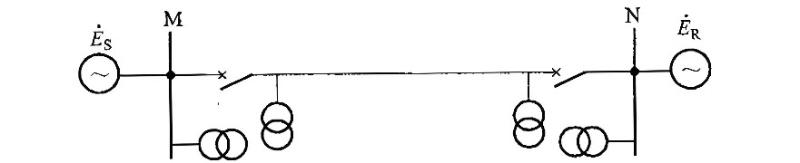
כאשר מתרחשת קצרה בקו MN ומחזור שלושה פאזה מתבצע בשני הקצוות, מתח שלושת הפאזה על הקו הופך לאפס. לפיכך, הקצה M אינו מאתר מתח על הקו, מקיים את תנאי הביקורת שלו ומפיק פקודה לאיחוי אחרי עיכוב זמן פעולת האיחוי. לאחר מכן, הקצה N מאתר מתח גם באוטובוס וגם על הקו; וההבדל הזוויות בין המופעים המשויכים (בדרך כלל מופע A) של מתח האוטובוס למתח הקו נופל בתוך הטווח המותר המוגדר בהגדרות. זה אומר שהאיחוי של הקצה N מקיים את תנאי הסינכרוניזציה והוא יכול לפקוד איחוי אחרי עיכוב זמן פעולת האיחוי שלו.
הערה: מהתהליך התפעול שמתואר למעלה, ניתן לראות שהקצה המבצע בדיקת חוסר מתח תמיד מאיחי ראשון. לכן, ייתכן שהקצה הזה יאיחי על קו תקוע ויצא שוב. לכן, המתג החשמלי של הקצה הזה עשוי להפסיק זרם קצרה פעמיים תוך זמן קצר, מה שמוביל לתנאי פעולה קשים יחסית. הקצה המבצע בדיקת סינכרוניזציה מאיחי רק אחרי אישור מתח על הקו והיענות לתנאי הסינכרוניזציה, כך שהוא בוודאות מאיחי על קו בריא, מה שמוביל לתנאי פעולה טובים יותר למתג החשמל שלו. כדי להישאר במאזן, אפשר לסובב באופן מחזורי את הפונקציות של בדיקת חוסר מתח ובדיקה של סינכרוניזציה בין שני הקצוות.
כדי לאפשר איחוי כדי לתקן מצבים בהם המתג החשמלי "נגנב" (נחתך בטעות), בדרך כלל מפעילים את פונקציית בדיקת הסינכרוניזציה גם בקצה המבצע בדיקת חוסר מתח; אחרת, אחרי "ניפוץ גנוב", האיחוי לא יוכל לפקוד איחוי כי תמיד יהיה מתח על הקו. אחרי启用自动重合闸功能后,如果线路没有电压,则可以发出重合命令。在同步检查终端上,不能启用线路无电压检查功能。否则,如果两端都有线路无电压检查能力,在两端断路器跳闸后都可能同时尝试闭合,导致非同步闭合。
对于不存在同步问题的线路,在三相跳闸后可以使用非检查重合方法。例如,单端供电线路上的重合可以使用这种方法。对于这种重合方法,激活后只需经过延时即可发出闭合命令。
线路无电压且母线有电压检查:此方法可用于双电源系统中需要先重合的一侧。
母线无电压且线路有电压检查:此方法可用于单端电源系统的接收端,即在电源端成功重合后,接收端再进行重合。
3. 线路和母线均无电压检查
此方法要求在线路和母线均无电压的情况下才能重合,适用于单端电源系统中接收端希望先重合的情况。
4. 上述三种方法的组合
当同时启用“线路无电压且母线有电压”和“线路和母线均无电压”检查时,这成为线路无电压检查方法。在这种情况下,母线是否有电压并不重要,但线路必须无电压才能满足检查条件。
【注意事项】
- 严格按照语种翻译要求的书写体进行翻译输出。
- 若是没有语种书写体要求,且存在多种书写体的语种,则按目标语种的书写体输出使用人数最多的字体输出,若是有字体差不多选择最为官方权威的标准书写体进行翻译输出。
- 禁止出现任何解释说明,只输出最终翻译结果,不得多语种混合特备注意不能出现夹杂中文。
- 必须完整翻译内容,完整输出译文,禁止省略、总结。
【输出规范】
- 输出仅为纯译文,无任何前缀、后缀、标点(除非原文自带)、解释或注释。
- 仅输出翻译结果,无任何前缀、后缀、解释、注释、思考过程或多余字符。
- 保持原文结构完整有序:换行、段落、列表、样式等必须100%保留。
- 语句通顺、术语准确、风格专业,符合电力科技行业语境,不得省略输出,内容必须输出完整翻译内容。
- 严格遵守格式与结构,禁止输出任何与译文无关的任何字符,仅输出最终译文,严禁任何附加内容,严禁输出多余无关的字、字符,只输出译文不得加以描述。
请根据上述规则重新翻译以下内容:
```html
1. Introduction Transmission line faults can be classified into two types based on their nature: transient faults and permanent faults. Statistical data shows that most transmission line faults are transient (caused by lightning strikes, bird-related incidents, etc.), accounting for approximately 90% of all faults. Therefore, after a line is disconnected due to a fault, attempting reclosure once can significantly improve power supply reliability. The function of automatically reclosing a circuit breaker that has tripped due to a fault is called auto-reclosing. After auto-reclosing restores the circuit breaker:If the transient fault on the line has cleared (e.g., lightning has passed, the bird causing the fault has fallen away), protection devices will not operate again, and the system immediately returns to normal operation.If a permanent fault exists (e.g., tower collapse, energizing onto a grounded circuit), the fault persists after reclosing, and protection devices will trip the circuit breaker again. Auto-reclosing methods include: Line no-voltage check Synchronism check (comparing phase angle differences between bus voltage and line voltage for identical phases to ensure they remain within specified limits) Line no-voltage & bus voltage present check Bus no-voltage & line voltage present check Both line and bus no-voltage check Non-check reclosing 2. Line No-Voltage Check and Synchronism Check Reclosing For the MN transmission line shown in the figure below, terminal M employs the "line no-voltage check" reclosing method, while terminal N uses the "synchronism check" reclosing method. When a short circuit occurs on the MN line and three-phase tripping happens at both ends, the three-phase voltage on the line becomes zero. Therefore, terminal M detects no voltage on the line, satisfying its checking condition, and issues a closing command after the reclosing operation time delay. Subsequently, terminal N detects voltage on both the bus and the line; and the phase angle difference between the identically-named phases (typically phase A) of the bus voltage and line voltage falls within the allowable range specified in the settings. This means terminal N's reclosing satisfies synchronism conditions, and it can issue a closing command after its reclosing operation time delay. Note: From the above operation process, it can be seen that the line no-voltage check terminal always recloses first. Therefore, this terminal might reclose onto a faulted line and trip again. Consequently, the circuit breaker at this terminal might need to interrupt short-circuit current twice within a short period, resulting in relatively harsh operating conditions. The synchronism check terminal only recloses after confirming voltage on the line and meeting synchronism conditions, so it definitely recloses onto a healthy line, resulting in relatively better operating conditions for its circuit breaker. To balance the burden, the line no-voltage check and synchronism check functions at the two terminals can be periodically swapped. To enable reclosing to remedy situations where the circuit breaker "steals trip" (trips inadvertently), the synchronism check function is typically also enabled at the line no-voltage check terminal; otherwise, after a "steal trip," the reclosing would be unable to issue a closing command because the line always has voltage. After enabling the synchronism check function, reclosing can be performed using the synchronism check method. However, at the synchronism check terminal, the line no-voltage check function cannot be enabled. Otherwise, if both terminals have line no-voltage check capability, both might attempt to close simultaneously after tripping of circuit breakers at both ends, causing non-synchronous closing. Non-check Reclosing Method For lines where synchronism issues do not exist, non-check reclosing method can be used after three-phase tripping. For example, reclosing on single-ended power supply lines can use this method. For this reclosing method, after activation, a closing command is issued simply after a time delay. Line No-Voltage & Bus Voltage Present and Other Methods 01 Line No-Voltage & Bus Voltage Present Check This method can be used in dual power source systems for the side required to reclose first. Bus No-Voltage & Line Voltage Present Check This method can be used on the receiving end side of single-ended power source systems, where the receiving end recloses after the power supply side has successfully reclosed first. 3.Both Line and Bus No-Voltage Check This method requires no voltage on both line and bus before reclosing, and can be used in single-ended power source systems when the receiving end wishes to reclose first. 4.Combinations of the Above Three Methods When both "Line No-Voltage & Bus Voltage Present" and "Both Line and Bus No-Voltage" checks are enabled simultaneously, this becomes the line no-voltage check method. In this case, bus voltage presence or absence doesn't matter, but the line must have no voltage to satisfy the checking condition. כאשר הבדיקות "אין מתח באוטובוס ומתח קיים בקו" ו"אין מתח הן בקו והן באוטובוס" מופעלות בו-זמנית, זה הופך למבחן של אין מתח באוטובוס. במקרה זה, לא משנה אם יש או אין מתח בקו, אבל על האוטובוס להיות ללא מתח כדי לקיים את תנאי המבחן. כאשר הבדיקות "אין מתח בקו ומתח קיים באוטובוס", "אין מתח באוטובוס ומתח קיים בקו" ו"אין מתח הן בקו והן באוטובוס" מופעלות בו-זמנית, זה הופך למבחן של "אין מתח או בקו או באוטובוס". מצב זה מתקיים כאשר אין מתח בקו, או שאין מתח באוטובוס, או שאין מתח הן בקו והן באוטובוס. מצב זה שקול למבחן של אין מתח המשמש להגנה על קו במתחים של 220kV ומעלה.