1. Tittafi na Aiki
A cikin tafin harkokin ɗaya maimaita 110kV GIS ya ƙasa saboda kisan ɗaya a ɗan wasu PT. Idan abin da ya ƙasa ya fi shi, amma yadda ake magana ita ce mai karfi, wanda ya bukata masu lura.
2. Yadda Aikin Ya Faru
A ranar da aka fara jiragen:
An yi jiragen daga ƙasar zuwa 110kV GIS (wani babban zuba).
Bayan 20s don samun ɗan wasu mai gaba da kuma ƙarin ɗan wasu 110kV bus, an samu ɗan wasu mai ƙarami a nan bayan PT compartment da control cabinet.
Bayan ɗaya ɗaya, ɗan wasu PT GIS compartment ya ƙasa. An samu ɗan wasu mai gaba; ɗan wasu PT compartment disc insulator ya ƙasa, kuma an samu fragments da gas SF₆ a kan GIS room.
3. Tabbacin Dalilai
3.1 Bincike a Gida
PT 110kV (Shanghai MWB, electromagnetic type) ya haɗa:
1 basic secondary winding: 100/√3 V (150VA, 0.2 class).
1 auxiliary secondary winding: 100V (150VA, 3P class), ba a yi amfani da shi ba (routed to the control cabinet terminal block, no external connection).
Abubuwa masu muhimmanci:
Phase C: PT secondary winding insulation ta ƙasa; basic winding conductor ta ƙasa. Auxiliary winding conductor insulation ta ƙasa; insulation cylinder between auxiliary winding & iron core ta ƙasa. Insulation resistance between basic & auxiliary windings = 0.
Phase B: Basic secondary winding outer insulation ta ƙasa; internal paint film intact. Auxiliary winding surface insulation ta ƙasa.
Phase A: Slight basic secondary winding surface insulation ta ƙasa; other conductors/insulation intact.
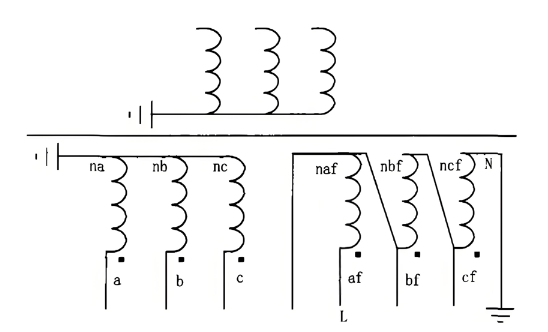
: PT secondary circuit short-circuit, likely in B/C phase auxiliary windings.
Binciken ɗaya ɗaya control cabinet: B/C phase auxiliary windings an ƙasa a nan. Design-intended connections (C-ncf to terminal 11, B-nbf to terminal 15) an misrouted (C-ncf to 12, shorting to 14-cf; B-nbf to 16, shorting to 18-bf).
3.2 Yadda Aikin Ya Samu Karfi
Short-circuit start: Bayan samun primary system, B/C phase auxiliary windings (cf, ncf; bf, nbf) an ƙasa → B/C voltage drop.
B phase short-circuit end: Bayan 20s, B phase short-circuit an samu (primary lead burned by arc). Short time caused only B auxiliary winding overheating.
C phase consequence: 43s short-circuit (per accident recording) overheated C phase secondary conductor → insulation melt/char. White smoke came from this.
Insulation failure: PT auxiliary winding insulation melt degraded SF₆ gas in the PT chamber → lower insulation level.
Discharges: Reduced insulation + close phase-to-ground distances → A/B/C phases discharged to GIS shell.
Explosion: Arc energy raised gas chamber pressure → PT disc insulator burst.
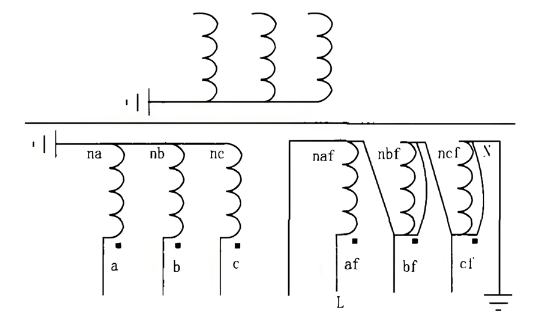
3.3 Abin Da Ake Iya Amfani Da Ita
A cikin tafin harkokin:
Technicians rechecked PT polarity/insulation.
For convenience, they removed the PT secondary circuit from the control cabinet terminal block.
Mistakenly shorted B/C phase auxiliary winding ends; failed to verify → B/C auxiliary windings shorted.
4. Hukumomin Da Za A Yi Don Ba Aikin Ya Faru Ba
4.1 PT Secondary Circuit Safety
Short-circuits in PT secondary circuits damage components or burn PTs. Installed in a closed GIS chamber, PT faults cause explosions (risking injury, delaying repairs). Thus, GIS PT installation/wiring demands strict attention.
4.2 Secondary Circuit Protocols
“Electrical Safety Work Regulations” and “Relay Protection On-site Work Security Regulations” mandate secondary work safety tickets for disassembly/wiring. Using these (and integrating risk control) could have prevented wrong wiring amid workload/time pressures.
4.3 Pre-energization Testing
Strengthen pre-energization PT tests (standardized, documented). Enforce strict test execution to avoid errors from careless work.
4.4 Organizational & Protection Measures
Protect commissioned equipment (lock cabinets, use seals). Modify only post-approval; have supervised restoration.
4.5 Unused Circuit Removal
Remove unused secondary circuits (reduce error risks). Here, the unused auxiliary winding (routed to the control cabinet) caused the accident via miswiring.
4.6 PT Body Air Switch
Install secondary air switches in PT body wiring boxes (current setup in control cabinets can’t protect GIS-to-PT circuits). This isolates faults below the PT secondary outlet.By reconstructing the accident, analyzing causes, and proposing 6 preventive measures, a roadmap for GIS secondary circuit safety is established.