• Product
  • Suppliers
  • Manufacturers
  • Solutions
  • Free tools
  • Knowledges
  • Experts
  • Communities
Search


Transformer Core-Lifting Inspection: Procedures, Safety, and Environmental Requirements

Rockwell
Field: Manufacturing
China

1.Environmental Requirements for Transformer Core-Lifting Inspection

1.1 General Environmental Conditions

Core - lifting operations are preferably carried out indoors. For large transformers that have to be operated outdoors due to specific conditions, sufficient measures must be taken to prevent moisture and dust contamination.

Core - lifting should not be conducted during rainy or snowy weather or when the relative humidity exceeds 75%.

The ambient air temperature during core - lifting should not be lower than 0°C, and the core temperature should not be lower than the surrounding air temperature. If the core temperature is lower, the transformer should be heated until its core temperature is approximately 10°C higher than the ambient temperature before the core - lifting can be carried out.

1.2 Air Exposure Time Limit

The exposure time of the core to air should be minimized. From the start of oil draining to oil refilling, the core's contact time with air must not exceed the following limits:
  • 16 hours when the relative humidity does not exceed 65%.

  • 12 hours when the relative humidity does not exceed 75%.

2 Transformer Core - Lifting Method
2.1 Preparation and Safety Checks

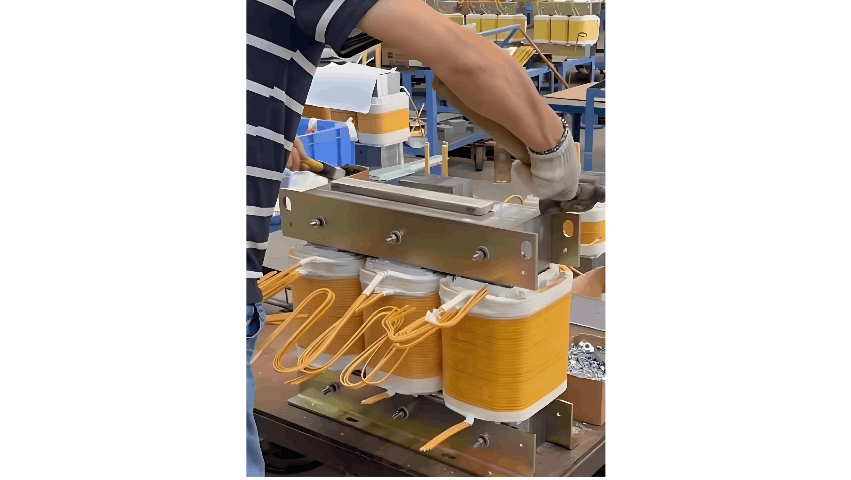
Before lifting the core, thoroughly check the strength of the steel wire ropes and the reliability of their connections. The angle between each lifting rope and the vertical line must not exceed 30°. If this requirement cannot be met, or if the lifting slings touch the core components, auxiliary lifting beams should be used to avoid excessive tension on the ropes or deformation of the lifting plates or rings. Lifting operations must be supervised by a designated person, and personnel should monitor all four corners of the tank to prevent collisions and damage to the core, windings, or insulation components.

  • Partial Oil Draining:Before lifting the core, drain some oil from the tank to prevent spillage when the top cover bolts are removed.

  • Inspection and Preparation:Remove the top cover to observe the internal condition. Record the position of the tap changer and mark it for reference. Dismantle the movable parts of the no - load tap changer.

  • Component Removal:Dismantle the bushings, oil conservator, protective pipes, fan motors, radiators, tap changer operating mechanisms, oil purifier, thermometer, and top cover bolts.

  • Disconnection of Core Components:Remove the transformer top cover, ensuring that all connections between the core and the top cover are detached before lifting the top cover.

  • Core Lifting:If the lifting equipment is mobile, the core can be lifted to the designated inspection location. If the lifting equipment is fixed, move the tank away after lifting the core and lower the core for inspection.

  • Removal of Insulating Wrapping:If present, remove the insulation wrapping on the core (mark it beforehand for reassembly).

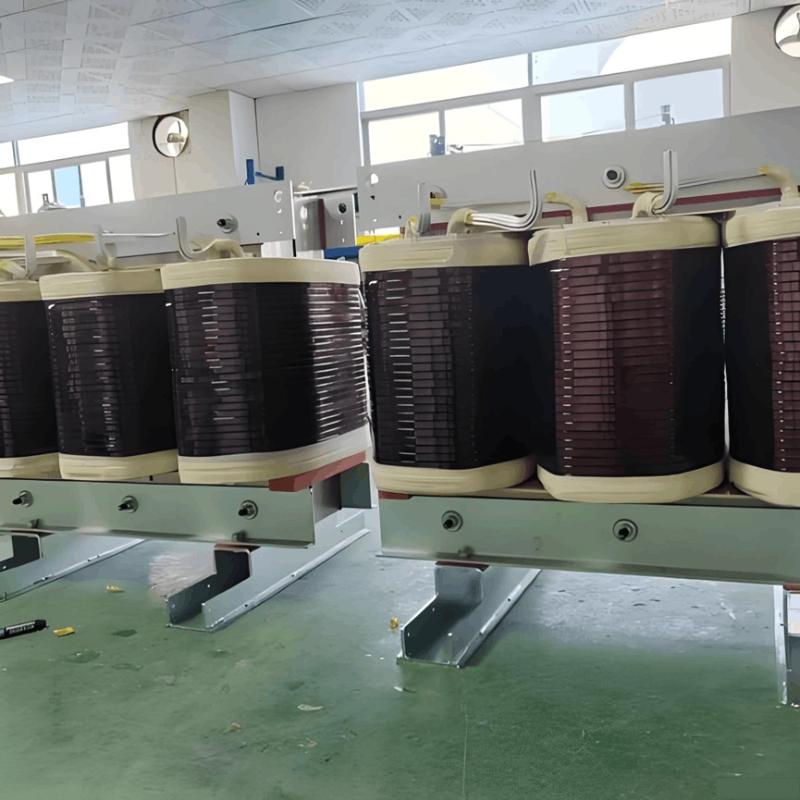
  • Cleaning and Inspection:Use clean cloths to wipe the windings, core supports, and insulation barriers, checking for metal debris such as iron filings adhering to the core.

3 Inspection Items During Transformer Core - Lifting
3.1 Core Inspection

  • Inspect the tightening bolts and nuts on the silicon steel sheets and the structural steel securing the core yoke. Ensure all nuts are fastened securely.

  • Check the effectiveness of the core's single - point grounding connection copper strip.

  • For large transformers, inspect the longitudinal cooling channels in the core columns and remove any blockages.

3.2 Winding Inspection

  • Inspect the axial compression of the windings.

  • Ensure the inter - layer spacers are secure, with no looseness, deformation, or displacement.

  • Verify that the high and low - voltage windings are symmetrical, free from adhesive contamination, and that the insulation layers are intact without discoloration, cracking, or breakdown defects.

3.3 Core Insulation Inspection

  • Check the physical integrity of core insulation, including paper insulation on winding surfaces and lead insulation wrapping.

  • Clean the core insulation surface of oil sludge and dirt, if present.

  • Inspect inter - phase and inter - coil insulation barriers.

  • For aged transformers, test for insulation aging. Signs include cracks under finger pressure, hardened and brittle texture, and darker color. Severe aging may cause insulation to shatter and become carbonized under pressure, indicating the need for replacement.

4. Lead and Support Structure Inspection
  • Ensure the insulation distance of leads meets requirements.

  • Check the tightness of clamping parts to maintain lead insulation distance.

  • Inspect the insulation on lead surfaces and ensure that soldering and connections are secure without any broken strands.

5. No - Load Tap Changer Inspection

  • Inspect the contact pressure between moving and stationary contacts, which should be 25–50 N.

  • Ensure good contact at all switching positions, particularly the position in use.

  • Check for overheating signs at contact points, and verify the tap changer's overall stability and the flexibility of the mechanical operating device.

6. Oil Tank Cleaning and Inspection

  • Ensure the oil tank bottom is clean and free from sludge or debris, with no internal corrosion.

  • After core inspection, flush the tank with qualified transformer oil, then open the tank drain to remove residual oil. Immediately reinstall the core and refill the tank with oil to the normal level.

Give a tip and encourage the author!
Recommended
What Is a Magnetic Levitation Transformer? Uses & Future
In today’s rapidly advancing technological era, the efficient transmission and conversion of electric power have become continuous goals pursued across various industries. Magnetic levitation transformers, as an emerging type of electrical equipment, are gradually demonstrating their unique advantages and broad application potential. This article will thoroughly explore the application fields of magnetic levitation transformers, analyze their technical characteristics and future development tren
Baker
12/09/2025
How Often Should Transformers Be Overhauled?
1. Transformer Major Overhaul Cycle The main transformer shall undergo a core-lifting inspection before being put into service, and thereafter a core-lifting overhaul shall be performed every 5 to 10 years. Core-lifting overhaul shall also be carried out if a fault occurs during operation or if issues are identified during preventive tests. Distribution transformers operating continuously under normal load conditions may be overhauled once every 10 years. For on-load tap-changing transformers, t
Felix Spark
12/09/2025
Low-Voltage Distribution Lines and Power Distribution Requirements for Construction Sites
Low-voltage distribution lines refer to the circuits that, through a distribution transformer, step down the high voltage of 10 kV to the 380/220 V level—i.e., the low-voltage lines running from the substation to the end-use equipment.Low-voltage distribution lines should be considered during the design phase of substation wiring configurations. In factories, for workshops with relatively high power demand, dedicated workshop substations are often installed, where transformers supply power direc
James
12/09/2025
How does the oil in oil-immersed power transformers clean itself?
The self-cleaning mechanism of transformer oil is typically achieved through the following methods: Oil Purifier FiltrationOil purifiers are common purification devices in transformers, filled with adsorbents such as silica gel or activated alumina. During transformer operation, convection caused by oil temperature changes drives the oil to flow downward through the purifier. Moisture, acidic substances, and oxidation byproducts in the oil are absorbed by the adsorbent, thereby maintaining oil c
Echo
12/06/2025
Related Products
Send inquiry
Download
Get the IEE Business Application
Use the IEE-Business app to find equipment, obtain solutions, connect with experts, and participate in industry collaboration anytime, anywhere—fully supporting the development of your power projects and business.