Mafiya-mafiyar tansufa da kuma hanyoyin sauyin su.
1. Tansufa Yake Yawan Gida
Yawan gida yana da darasi mai yawa ga tansufa. Mafiya-mafiyar daga cikin tansufa suna nuna kan yawan gida. Yawan gida yana haifar da zama da kyau na tsarin daidai da kuma kayan daidai. IEC 354, Guidance for Loading of Transformers, ce idan harin tansufa yake wuce zuwa 140°C, za su faru faduwar mai yawan gida a kuli. Wadannan faduwar za su haifar da kyau na tsarin daidai ko kuma zai iya haifar da flashover, wanda ya fi shafi da tansufa.
Yawan gida yana da darasi mai yawa ga tsari ga tansufa. Idan an yi la'akari na tansufa 6°C, a tsari na 80-140°C, har da 6°C a yawan gida, zama da kyau na tsari na daidai na tansufa yana duba. Standard na kasar GB1094 ta bayyana cewa limitin yawan gida na windings na tansufa mai kuli yana 65K, yawan gida na kuli yana 55K, kuma core da tank yana 80K.
Yawan gida a tansufa yana nuna canza mai yawa ga kuli. Sababon da suke da su: (1) tansufa yana da muhimmanci; (2) sababu da systemin sauye-sauye ba (ko kuma systemin sauye-sauye ba ta kula); (3) mafiya a cikin tansufa; (4) bayanin yawan gida bace.
Idan a samu canza mai yawa ga kuli a tansufa, yawancin sababon da suke da su zai iya faɗa. Hanyoyin da suke da su:
(1) Idan alamun yadda ake amfani da tansufa yana nuna muhimmanci, kuma bayanan yawan gida na uku phases a single-phase transformer bank suka nuna ma'ana (da lalace da karamin mutane), kuma tansufa da systemin sauye-sauye suna ci gaba, wannan yake canza mai yawa ga muhimmanci. A nan, ya kamata a yi lafiyar da tansufa (muhimmanci, yawan gida, tsari), a yi tabbacin daƙilin daƙilin kaɗansu, kuma a yi takarda don kudeta muhimmanci da kafin da ita.
(2) Idan yawan gida yana nuna sababu da systemin sauye-sauye ba ta kula, ya kamata a yi kula systemin. Idan systemin sauye-sauye ya fito, ya kamata a samu sababon da suke da su da kuma a yi kula. Idan ban da aiki da kula, ya kamata a yi lafiyar da yawan gida da muhimmanci, a yi tabbacin daƙilin kaɗansu, kuma a yi kudeta muhimmanci, kuma a yi amfani da tansufa da kyau.
(3) Idan alamun yadda ake amfani da tansufa yana nuna alarm mai yawa ga yawan gida, kuma bayanan yawan gida na ilimi yana nuna ma'ana, kuma babu sababon da suke da su, wannan yake alarm mai yawa ga yawan gida. Wannan za a iya yi kula a lokacin da ya ba da zaman.
(4) Idan a tansufa uku phases, yawan gida na phase waɗanda yake wuce zuwa ma'ana mai yawa, kuma systemin sauye-sauye da bayanan yawan gida suka ci gaba, wannan yake yawan gida yana nuna mafiya a cikin tansufa. Ya kamata a tuntubi masu ilimi don a yi sample da kuli don chromatographic analysis, don in iya samun sababon da suke da su. Idan chromatographic analysis yana nuna mafiya, ko kuma yawan gida yana wuce zuwa ma'ana mai yawa, ya kamata a yi kudeta tansufa.
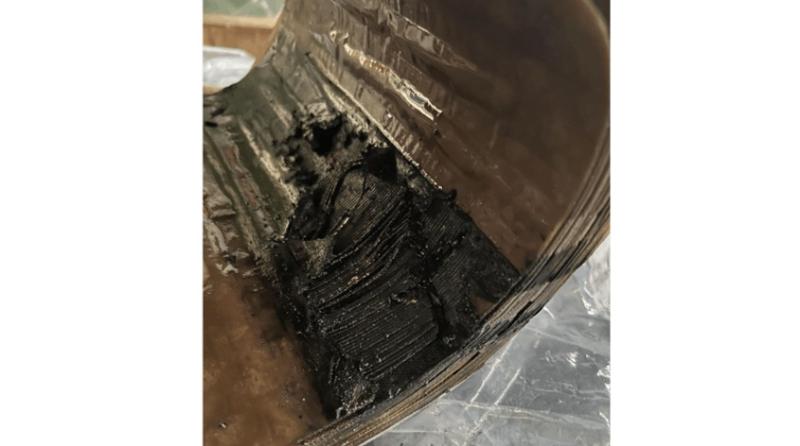
2. Sababu da Systemin Sauye-Sauye Ba Ta Kula
Systemin sauye-sauye yana taimaka wajen kula heat da ke faru a windings da core a tansufa. 500kV main transformers suna amfani da forced oil circulation with forced air cooling. Idan systemin sauye-sauye yana ci gaba, wannan yana da muhimmanci ga tansufa. Sababu da systemin sauye-sauye ba ta kula yana daya daga cikin mafiya-mafiyar tansufa. Idan systemin sauye-sauye ya fito, yawan gida na tansufa yana wuce zuwa, kuma zama da kyau na tsari na daidai.
A lokacin da systemin sauye-sauye ya fito, ya kamata a yi lafiyar da yawan gida da muhimmanci, a yi tabbacin daƙilin kaɗansu. Idan muhimmanci ya wuce zuwa ma'ana mai yawa, ya kamata a yi kudeta muhimmanci.
Ya kamata a sanin cewa a lokacin da yawan gida na kuli yake wuce, core da windings yana wuce zuwa ma'ana mai yawa. Yawan gida na kuli yana wuce zuwa ma'ana mai yawa, kuma core da winding temperatures yana wuce zuwa ma'ana mai yawa. Idan oil pumps ya fito, yawan gida na windings yana wuce zuwa ma'ana mai yawa.
A lokacin da yawan gida na kuli yana wuce, core da winding temperatures yana wuce zuwa ma'ana mai yawa. Don haka, idan systemin sauye-sauye ya fito, ya kamata a yi lafiyar da yawan gida da kuli, kuma a yi lafiyar da muhimmanci da tsari, kuma a yi tabbacin daƙilin kaɗansu.
Don in samun sababu da systemin sauye-sauye ba ta kula, ya kamata a sanin cewa fan ko oil pump an fito, ko kuma sababu da systemin control circuit diagram, don in iya samun sababon da suke da su, kuma a yi kula systemin.
Idan fan ko oil pump an fito, sababon da suke da su:
Phase waɗanda yake fito a three-phase power supply to the fan or oil pump (fuse an fito, poor contact, ko broken wire), wanda yake haifar da current na motor, thermal relay operation, ko kuma motor burnout;
Sababu da bearing ko mechanical failure a fan or oil pump;
Sababu da control relay, contactor, ko kuma component da ke systemin control circuit, ko kuma circuit break (e.g., loose terminal, poor contact);
Thermal relay setting too low, wanda yake haifar da false operation.
Idan sababon da suke da su power supply ko circuit, ya kamata a yi kula broken wire, a yi kula fuses, kuma a yi kula power and circuit. Idan control relay an fito, ya kamata a yi kula spare. Idan fan or oil pump an fito, ya kamata a yi maintenance.
Idan group (ko kuma several) fans or oil pumps an fito, sababon da suke da su power supply fault, blown fuse, thermal relay operation, ko kuma damaged control relay. Ya kamata a yi kula standby fan or oil pump, kuma a yi kula fault.
Idan all fans or oil pumps an fito, sababon da suke da su power supply fault. A nan, ya kamata a sanin cewa standby power supply an kula. Idan ba, ya kamata a yi kula manually, kuma a yi kula fault.
A lokacin da a yi kula power supply faults, ya kamata a sanin cewa:
Idan a yi kula fuses, ya kamata a yi open circuit power and load-side switch or isolator. A lokacin da a yi live fuse replacement, idan second phase an kula, three-phase motor yana receive two-phase power, wanda yake haifar da large current, wanda zai iya blow newly installed fuse.
A yi kula fuses da specifications and capacity matching the design.
A lokacin da a yi kula power and restarting cooling equipment, ya kamata a yi start in steps or groups, kuma a sanin cewa a yi start all fans and oil pumps, wanda yake haifar da current surge, wanda zai iya blow fuses again.
Idan three-phase power an kula, idan fans or oil pumps ba su kula, sababon da suke da su thermal relay has not been reset. A nan, ya kamata a yi reset thermal relay. Idan ba da fault a cooling equipment, ya kamata a kula normally.
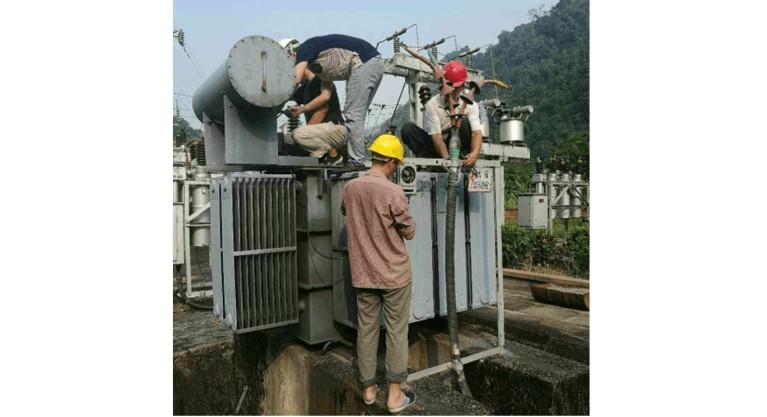
3. Abnormal Oil Level
Abnormal transformer oil level includes abnormal main tank oil level and abnormal on-load tap changer (OLTC) oil level. 500kV transformers generally use oil reservoirs with diaphragms or bladders, with pointer-type oil level gauges indicating the oil level. The oil level of both can be observed via the gauge.
If transformer oil level is low, the cause should be investigated. If low oil level is due to low ambient temperature or light load causing oil temperature drop to the minimum oil level line, oil should be added promptly. If oil level drops due to serious oil leakage, measures should be taken immediately to stop the leak and add oil.
High transformer oil level may be caused by:
excessive oil filling, with oil level rising with temperature during high ambient temperature or high load;
cooling system failure;
internal transformer fault.
When oil level is too high, check the load and oil temperature, confirm cooling system normality, verify all valve positions are correct, and check for any signs of internal faults. If oil level is excessively high or oil overflows, and no other faults are present, a small amount of transformer oil may be drained appropriately.
High oil level in the OLTC oil reservoir, besides oil temperature, may also be caused by overheating of electrical joints or other reasons causing seal failure in the OLTC compartment, allowing insulating oil from the main tank to leak into the OLTC compartment, causing abnormal rise in OLTC oil level. When OLTC oil level rises abnormally and continuously, even overflowing from the OLTC oil reservoir breather, immediately report to the dispatching department, have professionals conduct testing and analysis, request taking the faulty transformer out of service for maintenance.
500kV transformers generally use oil reservoirs with diaphragms or bladders and pointer-type oil level gauges, which indicate oil level based on the position of the diaphragm or bladder bottom. The following conditions may cause inaccurate pointer indication:
Gas accumulated under the diaphragm or bladder causes it to float above the actual oil level, resulting in higher oil level indication;
Breather blockage prevents air from entering when oil level drops, causing higher oil level indication;
Rupture of the bladder or diaphragm allows oil to enter the space above, possibly causing lower oil level indication.
These three situations may lead to incorrect oil level indication, requiring operators to carefully observe and analyze during normal operation.
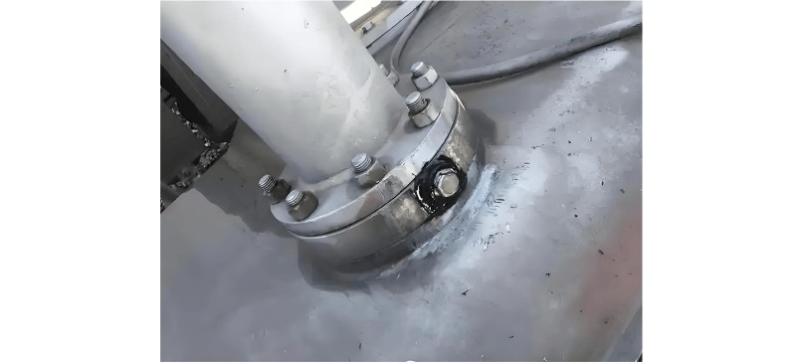
4. Light Gas Relay Operation
When the light gas relay operates, it indicates abnormal transformer operation and should be inspected and handled immediately. Methods are as follows:
(1) Inspect the transformer’s appearance, sound, temperature, oil level, and load. If severe oil leakage is found and oil level is below the 0 mark on the gauge, possibly below the gas relay level that triggers alarm signals, the transformer should be immediately taken out of service and the leak repaired promptly.
If abnormal temperature rise or unusual operating sound is detected, there may be an internal fault. Transformer abnormal noise comes in two types: one caused by mechanical vibration, the other by partial discharge. A listening rod (or flashlight) can be used—press one end firmly against the casing and listen with the ear at the other end—to determine if noise originates from internal components (mechanical vibration or partial discharge). Discharge noise usually has a rhythmic pattern similar to corona noise on high-voltage bushings. If suspicious internal discharge noise is detected, immediately perform oil chromatographic analysis and intensify monitoring.
(2) Extract gas sample for analysis. Usually, on-site qualitative judgment is combined with laboratory quantitative analysis.
For gas sampling, use a syringe of appropriate volume. Remove the needle and attach a short piece of plastic or oil-resistant rubber tubing. Before sampling, fill the syringe and tubing with transformer oil to expel air, then push the plunger fully to expel the oil. Connect the tubing to the gas relay’s vent valve (ensure airtight connection). Open the gas relay vent valve and slowly pull back the syringe plunger to draw gas into the syringe.
Bring a flame near the syringe needle and slowly push the plunger to release the gas, observing whether the gas is flammable. Simultaneously, send the gas to the lab for gas composition analysis for accurate judgment.
If the gas is found flammable or chromatographic analysis confirms an internal fault, the transformer should be immediately taken out of service.
If the gas is colorless, odorless, and non-flammable, and chromatographic analysis identifies it as air, the gas relay alarm may be a false alarm due to secondary circuit fault. The circuit should be inspected and repaired promptly.
During gas sampling, use a colorless transparent syringe for easy observation of gas color. The procedure must be conducted under strict supervision, maintaining safe distance from live parts.
5. Transformer Tripping
When a transformer trips automatically, a comprehensive inspection should be conducted immediately to identify the cause before taking action. Specific inspection items include:
(1) Based on protective relay signals, fault recorder, and other monitoring device displays or printouts, determine which protection operated.
(2) Check load, oil level, oil temperature, oil color, and whether there is oil spraying, smoking, bushing flashover or rupture, pressure relief valve operation, or other obvious fault signs before tripping, and whether gas is present in the gas relay.
(3) Analyze the fault recorder waveform.
(4) Understand system conditions: whether short-circuit faults occurred inside or outside the protection zone, whether system operations or switching overvoltages occurred, or inrush current during closing.
If inspection shows the automatic trip was not caused by a transformer fault, the transformer may be re-energized after external faults are cleared.
If any of the following conditions are found, internal transformer fault should be suspected. The cause must be identified, the fault eliminated, and electrical tests, chromatographic analysis, and other targeted tests must confirm the fault is resolved before re-energizing:
(1) Gas extracted from the gas relay is confirmed flammable by analysis; (2) Obvious internal fault signs in the transformer, such as tank deformation, abnormal oil level, severe oil spraying; (3) Obvious flashover marks or damage, breakage on transformer bushings; (4) Two or more protective relays (differential, gas, pressure) operated.
6. Abnormal Noise
(1) If the noise is loud and noisy, it may be due to transformer core issues. For example, loose clamps or core-tightening bolts. Instrument readings are generally normal, and oil color, temperature, and level show no significant change. In this case, stop transformer operation and conduct inspection.
(2) If the noise contains a boiling water sound or "gurgling" bubble sound, it may indicate a serious winding fault causing nearby parts to overheat and vaporize oil. Poor contact in the tap changer causing local overheating or winding turn-to-turn short circuit can both produce this sound. Immediately stop transformer operation and perform maintenance.
(3) If the noise contains loud, irregular explosion-like sounds, it may indicate insulation breakdown in the transformer body. Stop operation and perform maintenance.
(4) If the noise contains a "zizi" discharge sound, it may be due to surface partial discharge on the transformer body or bushings. If it is a bushing issue, corona glow or small blue/purple sparks may be visible in poor weather or at night. Clean the bushing surface and apply silicone oil or silicone grease. Stop the transformer, and check whether core grounding and clearances between live parts and ground meet requirements.
(5) If the noise contains continuous, rhythmic knocking or rubbing sounds, it may be due to mechanical contact caused by vibration of certain components, or abnormal noise caused by electrostatic discharge.
7. Oil Spraying and Explosion
Oil spraying and explosion occur when internal fault short-circuit currents and high-temperature arcs rapidly age the transformer oil, and the protective relay fails to cut off power in time, allowing the fault to persist and internal tank pressure to continuously increase. High-pressure oil and gas then spray out from the explosion-proof pipe or other weak points of the tank, causing an accident.
(1) Insulation damage: Local overheating such as turn-to-turn short circuits damages insulation; transformer water ingress causes insulation moisture and damage; overvoltage such as lightning strikes damages insulation—these are basic factors leading to internal short circuits.
(2) Wire breakage causing arcing: Poor welding of winding conductors or loose lead connections may cause wire breakage under high current surge. High-temperature arcs at the break point vaporize oil, increasing internal pressure.
(3) Tap changer failure: In distribution transformers, the high-voltage winding tap section is connected via the tap changer. The tap changer contacts are in series in the high-voltage winding circuit and carry load and short-circuit currents. If the moving and stationary contacts overheat, spark, or arc, the tap section winding may short circuit.
8. Emergency Shutdown of Transformer
A running transformer should be immediately stopped if any of the following conditions are observed:
(1) Abnormal or significantly increased internal noise; (2) Severe damage and discharge on bushings; (3) Smoke, fire, or oil spraying from the transformer; (4) The transformer has a fault, but the protection device fails to operate or operates incorrectly; (5) Fire or explosion nearby poses a serious threat to the transformer.
In case of transformer fire, immediately disconnect the power, stop fans and oil pumps, summon fire personnel immediately, and activate fire extinguishing equipment. If the fire is caused by insulating oil overflowing and burning on the top cover, open the lower drain valve to release oil to an appropriate level to stop overflow, preventing oil level from dropping below the cover and causing internal fire. If the fire is due to an internal fault, oil must not be drained, to prevent air from entering and forming an explosive mixture that could cause a severe explosion.
In summary, when a transformer fault occurs, accurate judgment and proper handling are essential—preventing fault escalation while avoiding unnecessary shutdowns. This requires improved diagnostic capability and accumulated operational experience to correctly identify and promptly handle transformer faults, preventing accident expansion.
Factors causing abnormal transformer noise are numerous, and fault locations vary. Only by continuously accumulating experience can accurate judgments be made.