1. System Configuration and Operating Conditions
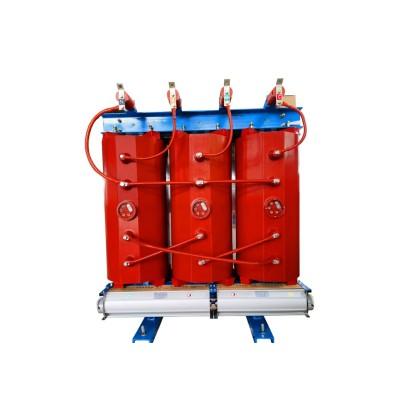
The main transformers at Zhengzhou Rail Transit’s Convention & Exhibition Center Main Substation and Municipal Stadium Main Substation adopt a star/delta winding connection with a non-grounded neutral point operation mode. On the 35 kV bus side, a Zigzag grounding transformer is used, connected to ground through a low-value resistor, and also supplies station service loads. When a single-phase ground short-circuit fault occurs on a line, a path is formed through the grounding transformer, grounding resistor, and grounding grid, generating zero-sequence current.
This enables high-sensitivity, selective zero-sequence protection within the faulted section to operate reliably and immediately trip the corresponding circuit breakers, thereby isolating the fault and limiting its impact. If the grounding transformer is disconnected, the system becomes an ungrounded system. In this condition, a single-phase ground fault would severely threaten system insulation and equipment safety. Therefore, upon operation of the grounding transformer protection, not only must the grounding transformer itself be tripped, but the associated main transformer must also be interlocked and tripped.
2. Limitations of Existing Protection Schemes
In the power supply systems of the Convention & Exhibition Center Main Substation and Municipal Stadium Main Substation of Zhengzhou Rail Transit, the existing protection for the grounding station service transformer only includes overcurrent protection. When a fault causes the grounding transformer to trip and be removed from service, it only trips its own switchgear without interlocking to trip the corresponding incoming power feeder breaker.
This results in the affected bus section operating for an extended period without a grounding point. In the event of a single-phase ground fault under such conditions, overvoltage may occur or the protection system may fail to detect zero-sequence current, causing zero-sequence protection to malfunction or fail to operate—potentially escalating the incident and compromising overall power system safety.
Additionally, during bus tie automatic transfer (bus tie auto-switching) operations, the grounding station service transformer on the de-energized bus section is not interlocked to trip. This may cause both bus sections to become interconnected via the bus tie breaker, resulting in a two-point grounding condition within the system. Such a two-point grounding scenario can lead to two serious issues: (1) misclassification of zero-sequence current during ground faults, causing protection refusal to operate or false tripping; and (2) circulating currents induced by zero-sequence current, leading to equipment overheating and insulation damage.
The current protection logic has significant limitations. Conventional protection devices only monitor the operational status of the grounding transformer and do not establish interlocking logic with the incoming power feeder breakers or the bus tie breaker—lacking necessary blocking/interlock mechanisms.
3. Recommendations for Improving Existing Protection Limitations
3.1 Proposed Improvement Measures
Add “Grounding Station Service Transformer Trip Interlock” Soft Logic
Trigger Condition:The circuit breaker of the grounding station service transformer opens.If the system uses low-resistance grounding, disappearance of grounding resistor current may be added as an additional criterion.
Interlock Trip Logic Design:Trip the incoming power feeder breaker: If the grounding station service transformer is removed and no other grounding point exists on the bus section, interlock-trip the incoming power feeder breaker to force load transfer to another bus.Trip the bus tie breaker: If both bus sections are operating in parallel via the bus tie breaker, interlock-trip the bus tie breaker to isolate the ungrounded bus section.
Technical Implementation Recommendation:Add zero-sequence current protection. Upon overcurrent or zero-sequence current operation, the protection device should trip its local breaker and simultaneously send interlock-trip commands to the corresponding incoming feeder breaker and bus tie breaker. Protection device manufacturers should modify the interlock logic diagram accordingly and perform software upgrades based on this logic.
3.2 Protection Upgrade Based on Zero-Sequence Voltage
Zero-Sequence Overvoltage Blocking/Tripping Function:Add zero-sequence overvoltage protection to the bus protection scheme as a backup when the grounding station service transformer is out of service. If zero-sequence voltage exceeds the set threshold for longer than the preset time delay, automatically trip the incoming feeder or bus tie breaker.
Coordination with Grounding Transformer Status:Link the zero-sequence voltage protection function with the operational status signal of the grounding station service transformer:When the grounding transformer is operating normally, zero-sequence voltage protection operates in alarm mode.When the grounding transformer is out of service, zero-sequence voltage protection switches to trip mode.
Implementation Notes – Anti-Maloperation Measures:Add time delay to avoid false tripping due to transient disturbances.Use “AND” logic criteria (e.g., zero-sequence voltage + grounding transformer off-status) to enhance reliability.
3.3 Control Circuit Modification (Hardware Enhancement)
Add hardwired interlock circuits between the grounding station service transformer protection device and the incoming feeder breaker protection device. When the grounding transformer trips, the trip signal from its protection device’s output terminal → triggers the incoming feeder protection device’s output terminal → trips the incoming feeder breaker.
During bus tie auto-transfer operation, when the bus tie protection device sends a signal to trip the incoming feeder breaker, it simultaneously sends a signal via its interlock output terminal → to the grounding station service transformer switch protection device’s output terminal → to trip the grounding transformer breaker.
3.4 On-Site Retrofit Implementation
As shown in Table 1, both Option 1 and Option 2 require modification and upgrading of protection devices. However, the Convention & Exhibition Center Main Substation and Municipal Stadium Main Substation are aging substations whose equipment is well beyond warranty. Implementing Option 1 or Option 2 would require the original protection device manufacturer to perform software upgrades, involving significant manpower and financial investment. Therefore, operational personnel have opted for Option 3—implementing on-site modifications by adding hardwired interlock circuits.
| Scheme | Advantages | Disadvantages | Applicable Scenarios |
| Protection Logic Upgrade (Scheme 1/2) | High flexibility; no hardware modification needed | Relies on protection device function support | Substations where protection devices can be upgraded |
| Hard-Wiring Interlock (Scheme 3) | High reliability; fast response | Requires power outage for modification; poor flexibility | Old substations or emergency rectification |
When the grounding transformer is tripped due to a fault, it is required to interlock-trip the incoming power feeder breaker. Upon inspection, it was found that spare outputs 1, 2, and 3 were all unused. After train operations ended, maintenance personnel applied to the equipment dispatcher for a work permit ("request for work authorization"). The dispatcher performed load transfer according to operational requirements and approved the work permit once conditions were suitable for construction.
For the interlock trip circuit: the spare output 2 (terminals 517/518) on the 5# signal plug-in board of the WCB-822C protection device—normally open contacts—was connected in series into a newly added hardwired interlock circuit. This circuit then routed to the normally open terminals of output 5 (terminals 13/14) on the 4# output plug-in board of the WBH-818A protection device for the incoming power feeder switchgear. After the output signal from the terminal block, the incoming feeder breaker tripped. The hardwiring was installed between the grounding transformer switchgear and the incoming feeder switchgear, and integrated into the hardwired blocking circuit via a physical pressure plate link. Engaging or disengaging this hard pressure plate determines whether the blocking function is active.
The modification points for the other bus section are identical to the above. During the retrofit of both bus sections, sectionalized incoming feeders were used to ensure uninterrupted power supply to the respective service areas, thereby minimizing the impact on post-operational equipment maintenance.
After completion of the modifications, protection relay testing was conducted to verify the interlock-trip functionality. Once verified as normal, the system was placed directly into service.
Regarding the interlock trip of the grounding station service transformer on the de-energized bus during bus tie auto-transfer (BATS) operation: upon inspection, spare outputs 3 through 7 were found to be unused. After train operations ended, maintenance personnel applied to the equipment dispatcher for a work permit. The dispatcher executed load switching per operational needs and granted approval once construction conditions were met.
For the on-site retrofit of the Section I bus grounding station service transformer: a new hardwired circuit was added. The spare output 3 (terminals 519/520) on the 5# signal plug-in board of the WBT-821C protection device—normally open contacts—was connected in series into the new hardwired circuit, which then routed to the normally open terminals of spare output 1 (terminals 514/515) on the 5# output plug-in board of the WCB-822C protection device in the Section I grounding station service transformer switchgear. After the terminal output, the grounding transformer breaker tripped. The new hardwired circuit was installed at the secondary cabinet doors of both the grounding transformer switchgear and the bus tie switchgear, and connected into the hardwired blocking circuit via a physical pressure plate link. The blocking function can be enabled or disabled by engaging or disengaging the hard pressure plate.
For the on-site retrofit of the Section II bus grounding station service transformer: a new hardwired circuit was added. The spare output 4 (terminals 311/312) on the 3# expansion plug-in board of the WBT-821C protection device—normally open contacts—was connected in series into the new hardwired circuit, which then routed to the normally open terminals of spare output 1 (terminals 514/515) on the 5# output plug-in board of the WCB-822C protection device in the Section II grounding station service transformer switchgear. After the terminal output, the grounding transformer breaker tripped. The new hardwired circuit was installed at the secondary cabinet doors of both the grounding transformer switchgear and the bus tie switchgear, and connected into the hardwired blocking circuit via a physical pressure plate link. The blocking function can be enabled or disabled by engaging or disengaging the hard pressure plate.
The modification of the interlock-trip signal for the grounding station service transformer on the de-energized bus during bus tie auto-transfer startup was completed during the aforementioned single-bus retrofit process for the corresponding bus section.
4. Conclusion
As an artificially introduced neutral point in power systems with non-grounded neutral configurations, the grounding transformer plays a critical role in ensuring system safety and stable operation. The improvements described above significantly enhance system safety when the grounding transformer is removed from service, effectively avoiding risks of overvoltage and equipment damage caused by operating without a grounding point. Prior to actual implementation, detailed verification must be performed based on specific equipment models and system parameters.