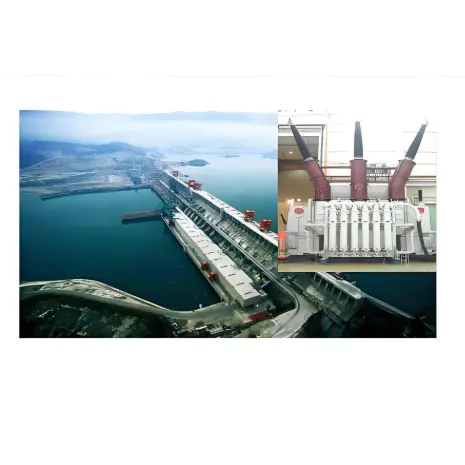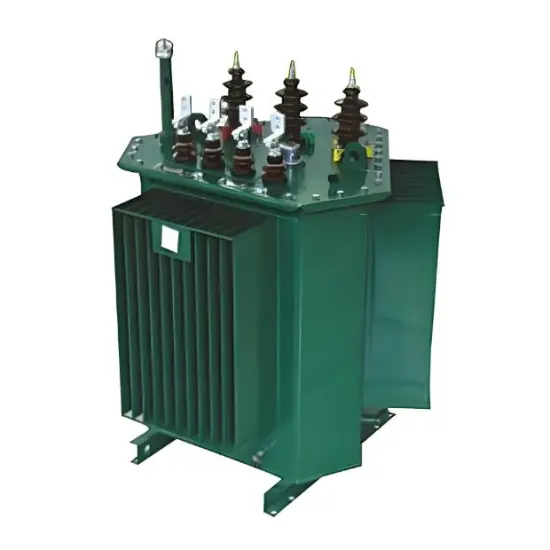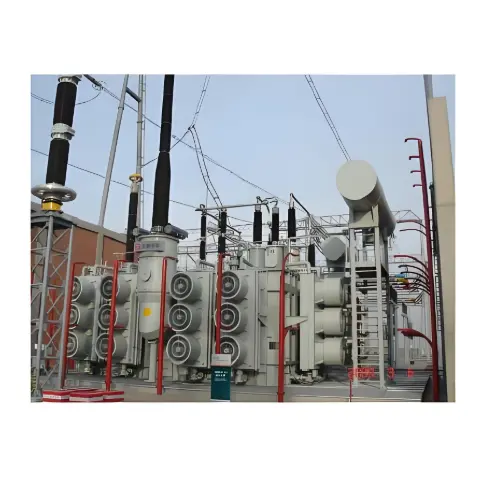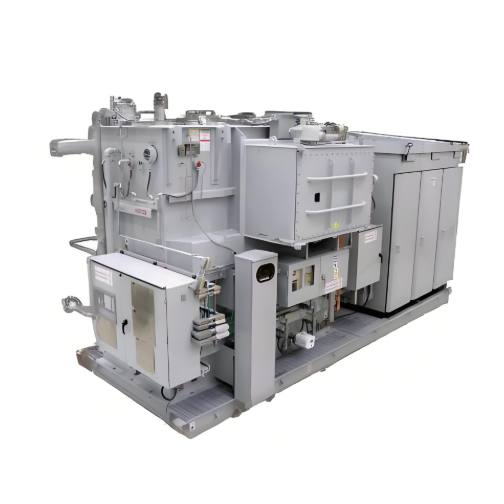
The Most Widely Used Power Transformers: Oil-Immersed and Dry-Type Resin Transformers
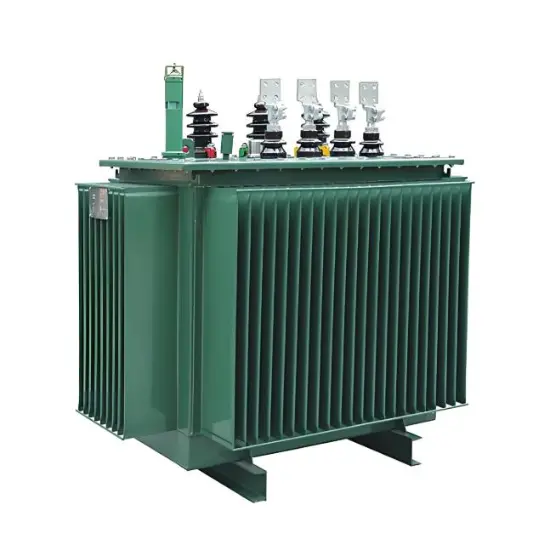
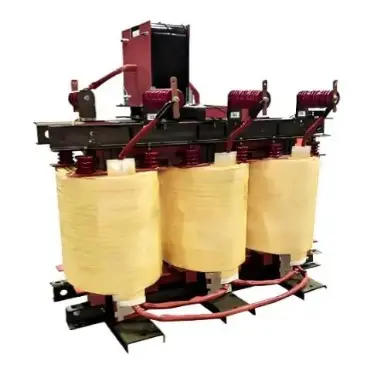
The two most widely used power transformers today are oil-immersed transformers and dry-type resin transformers. The insulation system of a power transformer, composed of various insulating materials, is fundamental to its proper operation. A transformer's service life is primarily determined by the lifespan of its insulating materials (oil-paper or resin).
In practice, most transformer failures result from damage to the insulation system. Statistics show that insulation-related failures account for over 85% of all transformer accidents. Properly maintained transformers with attention to insulation management can achieve exceptionally long service lives. Therefore, protecting normal transformer operation and strengthening reasonable maintenance of the insulation system can largely ensure longer transformer lifespans, with preventive and predictive maintenance being key to improving transformer longevity and power supply reliability.
1.Solid Paper Insulation Failures
In oil-immersed transformers, the main insulating materials are insulating oil and solid insulating materials including insulating paper, pressboard, and wooden blocks. Transformer insulation aging refers to the decomposition of these materials due to environmental factors, resulting in reduced or lost insulating strength.
Solid paper insulation is one of the primary components of oil-immersed transformer insulation systems, including insulating paper, boards, pads, rolls, and binding tapes. Its main component is cellulose with the chemical formula (C6H10O5)n, where n represents the degree of polymerization (DP). New paper typically has a DP of around 1300, which decreases to approximately 250 when mechanical strength has diminished by more than half.
When extremely aged with a DP of 150-200, the material reaches its end of life. As insulating paper ages, its DP and tensile strength gradually decrease while producing water, CO, CO2, and furfural (furan aldehyde). These aging byproducts are largely harmful to electrical equipment, reducing the breakdown voltage and volume resistivity of insulating paper while increasing dielectric loss and decreasing tensile strength, potentially corroding metal components.
Solid insulation exhibits irreversible aging characteristics, with mechanical and electrical strength degradation being unrecoverable. Since transformer lifespan primarily depends on insulating material lifespan, oil-immersed transformer solid insulation materials must possess excellent electrical insulation properties and mechanical characteristics, with slow performance degradation over years of operation—indicating good aging characteristics.
1.1 Properties of Paper Fiber Materials
Insulating paper fiber material is the most important insulating component in oil-immersed transformers. Paper fiber is the basic solid tissue component of plants. Unlike metal conductors with abundant free electrons, insulating materials have virtually no free electrons, with minimal conduction current primarily from ionic conduction. Cellulose consists of carbon, hydrogen, and oxygen. Due to hydroxyl groups in its molecular structure, cellulose has the potential to form water, giving paper fiber moisture-absorbing characteristics.
Additionally, these hydroxyl groups can be considered centers surrounded by various polar molecules (such as acids and water), bonded by hydrogen bonds, making fibers susceptible to damage. Paper fibers also typically contain approximately 7% impurities, including moisture. Due to the colloidal nature of fibers, this moisture cannot be completely removed, affecting paper fiber performance.
Polar fibers easily absorb moisture (water being a strongly polar medium). When paper fibers absorb water, the interaction between hydroxyl groups weakens, causing mechanical strength to deteriorate rapidly under unstable fiber structure conditions. Therefore, paper insulation components typically undergo drying or vacuum drying treatment followed by impregnation with oil or insulating varnish before use.
The purpose of impregnation is to keep fibers moist, ensuring higher insulation and chemical stability along with improved mechanical strength. Additionally, sealing paper with varnish reduces moisture absorption, prevents material oxidation, and fills voids to minimize bubbles that could affect insulation performance and cause partial discharge and electrical breakdown. However, some believe that varnish impregnation followed by oil immersion may cause some varnish to gradually dissolve into the oil, affecting oil performance, requiring careful attention to such paint applications.
Naturally, different fiber material compositions and varying quality levels of the same composition fibers have different impacts and properties. For example, cotton has the highest fiber content, hemp has the strongest fibers, and certain imported insulating pressboards with better processing exhibit significantly superior performance compared to some domestic paperboards. Most transformer insulation materials use various forms of paper (such as paper tape, pressboard, and pressure-molded paper components) for insulation.
Therefore, selecting quality fiber-based insulating paper materials is crucial during transformer manufacturing and maintenance. Fiber paper offers special advantages including practicality, low cost, convenient processing, simple forming and treatment at moderate temperatures, light weight, moderate strength, and easy absorption of impregnating materials (such as insulating varnish and transformer oil).
1.2 Mechanical Strength of Paper Insulation Materials
For oil-immersed transformers selecting paper insulation materials, the most important factors beyond fiber composition, density, permeability, and uniformity include mechanical strength requirements such as tensile strength, puncture strength, tear strength, and toughness:
Tensile Strength: The maximum stress paper fibers can withstand under tensile load without breaking.
Puncture Strength: A measure of paper fibers' ability to withstand pressure without fracturing.
Tear Strength: The force required to tear paper fibers must meet relevant standards.
Toughness: The strength of paper when folded or pressboard when bent must satisfy corresponding requirements.
Solid insulation performance can be assessed by sampling to measure the degree of polymerization of paper or pressboard, or by using high-performance liquid chromatography to measure furfural content in oil.
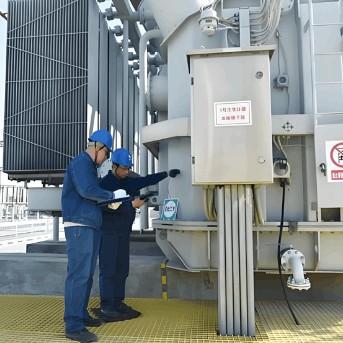
This helps analyze whether internal transformer faults involve solid insulation or if low-temperature overheating is causing localized aging of winding insulation, or to determine the aging degree of solid insulation. For paper fiber insulation materials during operation and maintenance, attention should be paid to controlling transformer rated load, ensuring good air circulation and heat dissipation in the operating environment, preventing excessive transformer temperature rise and oil deficiency in the tank. Measures should also prevent oil contamination and deterioration that could accelerate fiber aging, compromising transformer insulation performance, service life, and safe operation.
1.3 Degradation of Paper Fiber Materials
This primarily includes three aspects:
Fiber Embrittlement: Excessive heat causing moisture to separate from fiber materials accelerates fiber embrittlement. Brittle, peeling paper can lead to insulation failure and electrical accidents under mechanical vibration, electrodynamic stress, and operational wave impacts.
Decreased Mechanical Strength of Fiber Materials: The mechanical strength of fiber materials decreases with extended heating time. When transformer heating causes moisture to be expelled from insulation materials again, insulation resistance values might increase, but mechanical strength will significantly decrease, rendering insulating paper unable to withstand mechanical forces from short-circuit currents or impulse loads.
Contraction of Fiber Materials: After embrittlement, fiber materials contract, reducing clamping force and potentially causing shifting movement. This may lead to transformer winding displacement and friction under electromagnetic vibration or impulse voltage, damaging insulation.
2. Liquid Oil Insulation Failures
The oil-immersed transformer was invented by American scientist Thompson in 1887 and promoted for power transformer applications by General Electric and others in 1892. The liquid insulation referred to here is transformer oil insulation.
2.1 Characteristics of Oil-Immersed Transformers:
① Significantly improves electrical insulation strength, shortens insulation distance, and reduces equipment volume; ② Greatly enhances effective heat transfer and dissipation, increasing allowable current density in conductors, reducing equipment weight. Heat from the operating transformer core is transferred through thermal circulation of transformer oil to the transformer casing and radiator for dissipation, thus improving effective cooling; ③ Oil immersion and sealing reduce oxidation of certain internal components and assemblies, extending service life.
2.2 Properties of Transformer Oil
Operating transformer oil must possess stable, excellent insulating and thermal conductivity properties. Key properties include insulation strength (tan δ), viscosity, pour point, and acid value. Insulating oil refined from petroleum is a mixture of various hydrocarbons, resins, acids, and other impurities with properties that aren't entirely stable. Under temperature, electric field, and photo effects, oil continuously oxidizes. Under normal conditions, this oxidation process proceeds slowly; with proper maintenance, oil can maintain required quality without aging for up to 20 years. However, metals, impurities, and gases mixed into the oil accelerate oxidation, deteriorating oil quality, darkening color, clouding transparency, and increasing moisture content, acid value, and ash content, thereby degrading oil properties.
Transformer oil deterioration can be divided into contamination and degradation stages based on severity.
Contamination refers to moisture and impurities mixing into the oil—these are not oxidation products. Contaminated oil experiences deteriorated insulation performance, reduced breakdown electric field strength, and increased dielectric loss angle.
Degradation results from oil oxidation. This oxidation doesn't refer solely to hydrocarbon oxidation in pure oil, but rather involves impurities in the oil accelerating the oxidation process, particularly copper, iron, and aluminum metal particles.
Oxygen originates from air inside the transformer. Even in fully sealed transformers, approximately 0.25% oxygen remains present. Oxygen has high solubility, thus occupying a high proportion among dissolved gases in oil.
During transformer oil oxidation, moisture acting as a catalyst and heat as an accelerator cause transformer oil to produce sludge. This affects performance primarily through: large precipitate particles under electric field influence; impurity precipitation concentrating in regions of strongest electric field, forming conductive "bridges" across transformer insulation; uneven precipitation forming separate elongated strips that may align with electric field lines, impeding heat dissipation, accelerating insulation material aging, and causing decreased insulation resistance and reduced insulation levels.
During oil degradation, primary byproducts include peroxides, acids, alcohols, ketones, and sludge.
Early degradation stage: Oil generates peroxides that react with insulating fiber materials to form oxidized cellulose, reducing mechanical strength of insulating fibers, causing embrittlement and insulation shrinkage. Generated acids are viscous fatty acids. Though less corrosive than mineral acids, their growth rate and impact on organic insulating materials are significant.
Later degradation stage: Sludge formation occurs when acids corrode copper, iron, insulating varnish, and other materials, reacting to form sludge—a viscous, asphalt-like polymeric conductive substance. It moderately dissolves in oil and rapidly forms under electric field influence, adhering to insulating materials or transformer tank edges, depositing on oil pipes and radiator fins, increasing transformer operating temperature and reducing dielectric strength.
The oil oxidation process consists of two main reaction conditions: first, excessively high acid value in the transformer, making oil acidic; second, oxides dissolved in oil transform into compounds insoluble in oil, gradually deteriorating transformer oil quality.
2.5 Transformer Oil Analysis, Assessment, and Maintenance
① Insulating Oil Deterioration: Both physical and chemical properties change, degrading electrical performance. Testing oil acid value, interfacial tension, sludge precipitation, and water-soluble acid value can determine if this defect type exists. Oil regeneration treatment may eliminate deterioration products, though the process might also remove natural antioxidants.
② Insulating Oil Water Contamination: Water is a strongly polar substance that easily ionizes and decomposes under electric fields, increasing conductive current in insulating oil. Even minute moisture significantly increases dielectric loss in insulating oil. Testing oil moisture content can identify this defect type. Pressure vacuum oil filtration generally eliminates moisture.
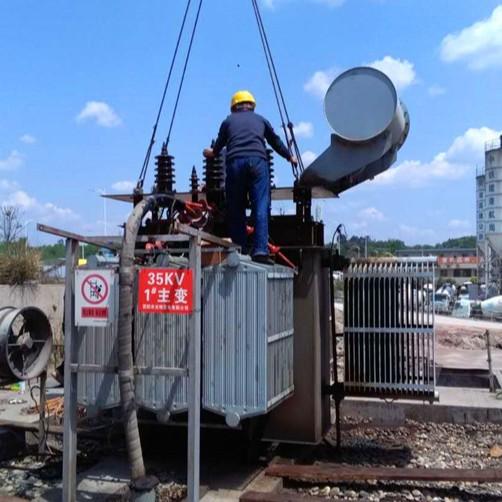
③ Microbial Contamination of Insulating Oil: During main transformer installation or core hoisting, insects on insulating components or human sweat residue may carry bacteria, contaminating the insulating oil; or the oil itself may already be infected with microorganisms. Main transformers typically operate in 40-80°C environments, highly favorable for microbial growth and reproduction. Since minerals and proteins in microorganisms and their excretions have far lower insulation properties than insulating oil, they increase oil dielectric loss. This defect is difficult to address with on-site circulation treatment, as some microorganisms always remain on solid insulation. After treatment, transformer insulation may temporarily recover, but the operating environment favors microbial regrowth, causing insulation to deteriorate year by year.
④ Alkyd Resin Insulating Varnish with Polar Substances Dissolving in Oil: Under electric field influence, polar substances undergo dipole relaxation polarization, consuming energy during AC polarization processes, increasing oil dielectric loss. Though insulating varnish undergoes curing before leaving the factory, incomplete treatment may remain. After operating for some time, incompletely treated varnish gradually dissolves in oil, progressively degrading insulation performance. The occurrence time of this defect relates to the thoroughness of varnish treatment; one or two adsorption treatments can achieve certain effectiveness.
⑤ Oil Contaminated Only with Water and Impurities: This contamination doesn't change oil's basic properties. Moisture can be removed through drying; impurities can be cleared through filtration; air in oil can be removed through vacuum pumping.
⑥ Mixing Two or More Different Sources of Insulating Oil: Oil properties should meet relevant specifications; oil specific gravity, freezing temperature, viscosity, and flash point should be similar; and mixed oil stability should meet requirements. For degraded mixed oil, chemical regeneration methods are needed to separate deterioration products and restore properties.
3. Dry-Type Resin Transformer Insulation and Characteristics
Dry-type transformers (referring here to epoxy resin insulated transformers) are primarily used in locations with high fire safety requirements, such as high-rise buildings, airports, and oil depots.
3.1 Types of Resin Insulation
Epoxy resin insulated transformers can be classified into three types based on manufacturing process characteristics: epoxy-quartz sand mixture vacuum casting type, epoxy-alkali-free glass fiber reinforced vacuum differential pressure casting type, and alkali-free glass fiber wrapping impregnation type.
① Epoxy-Quartz Sand Mixture Vacuum Casting Insulation: These transformers use quartz sand as filler for epoxy resin. Coils wrapped and treated with insulating varnish are placed in casting molds and vacuum-cast with an epoxy resin and quartz sand mixture. Due to casting process challenges in meeting quality requirements—such as residual bubbles, local non-uniformity of mixture, and potential local thermal stress cracking—these insulated transformers are unsuitable for humid, hot environments and areas with significant load variations.
② Epoxy Alkali-Free Glass Fiber Reinforced Vacuum Differential Pressure Casting Insulation: This uses short alkali-free glass fibers or glass mat as outer layer insulation between winding layers. The outermost insulation wrapping thickness is typically a thin insulation of 1-3mm. After mixing with epoxy resin casting material in proper proportions, air bubbles are removed under high vacuum before casting. Since the wrapping insulation thickness is thin, poor impregnation can easily form partial discharge points. Therefore, the casting material mixture must be complete, vacuum degassing must be thorough, and low viscosity and casting speed must be controlled to ensure high-quality impregnation of coil packages during casting.
③ Alkali-Free Glass Fiber Wrapping Impregnation Insulation: These transformers complete layer insulation treatment and coil impregnation simultaneously during winding. They don't require winding forming molds needed in the previous two impregnation processes, but require low-viscosity resin that shouldn't retain micro-bubbles during winding and impregnation.
3.2 Insulation Characteristics and Maintenance of Resin Transformers
The insulation level of resin transformers isn't significantly different from oil-immersed transformers; the key differences lie in temperature rise and partial discharge measurements.
① Temperature Rise Characteristics: Resin transformers have higher average temperature rise levels than oil-immersed transformers, requiring higher heat-resistant grade insulation materials. However, average temperature rise doesn't reflect the hottest spot temperature in windings. When insulation material heat resistance grade is selected based only on average temperature rise, or selected improperly, or resin transformers operate under long-term overload conditions, transformer service life will be affected.
Since measured transformer temperature rise often doesn't reflect the hottest spot temperature, when possible, infrared thermometers should check the hottest spots of resin transformers under maximum load operation. Cooling fan direction and angle should be adjusted accordingly to control local temperature rise and ensure safe transformer operation.
② Partial Discharge Characteristics: The magnitude of partial discharge in resin transformers relates to electric field distribution, resin mixture uniformity, and whether residual bubbles or resin cracking exist. Partial discharge magnitude affects resin transformer performance, quality, and service life. Therefore, measuring and accepting partial discharge levels serves as a comprehensive assessment of manufacturing process and quality. Partial discharge measurements should be performed during resin transformer handover acceptance and after major repairs, with changes in partial discharge used to evaluate quality and performance stability.
As dry-type transformers become increasingly widespread, when selecting transformers, the manufacturing process structure, insulation design, and insulation configuration should be thoroughly understood. Products from manufacturers with complete production processes, strict quality assurance systems, rigorous production management, and reliable technical performance should be selected to ensure transformer product quality and thermal life, thereby improving safe operation and power supply reliability.
4. Main Factors Affecting Transformer Insulation Failures
Main factors affecting transformer insulation performance include: temperature, humidity, oil protection methods, and overvoltage effects.
4.1 Temperature Effects
Power transformers use oil-paper insulation with different equilibrium relationships between moisture content in oil and paper at different temperatures. Generally, when temperature increases, moisture in paper migrates to oil; conversely, paper absorbs moisture from oil. Therefore, at higher temperatures, micro-water content in transformer insulating oil is greater; conversely, micro-water content is smaller.
Different temperatures cause varying degrees of cellulose ring opening, chain breaking, and accompanying gas production. At a specific temperature, CO and CO2 production rates remain constant, meaning oil CO and CO2 content increases linearly with time. As temperature continuously rises, CO and CO2 production rates often increase exponentially. Therefore, CO and CO2 content in oil directly relates to thermal aging of insulating paper and can serve as one criterion for judging abnormalities in paper layers of sealed transformers.
Transformer lifespan depends on insulation aging degree, which in turn depends on operating temperature. For example, an oil-immersed transformer at rated load has an average winding temperature rise of 65°C and hottest spot temperature rise of 78°C. With an average ambient temperature of 20°C, the hottest spot temperature reaches 98°C, allowing 20-30 years of operation. If the transformer operates overloaded with increased temperature, lifespan shortens accordingly.
The International Electrotechnical Commission (IEC) states that for Class A insulation transformers operating between 80-140°C, for every 6°C temperature increase, the rate of transformer insulation effective lifespan reduction doubles—known as the 6°C rule, indicating stricter thermal limitations than the previously accepted 8°C rule.
4.2 Humidity Effects
Moisture presence accelerates cellulose degradation. Therefore, CO and CO2 production relates to cellulose material moisture content. At constant humidity, higher moisture content produces more CO2; conversely, lower moisture content produces more CO.
Trace moisture in insulating oil is a significant factor affecting insulation characteristics. Trace moisture in insulating oil greatly harms both electrical and physicochemical properties of the insulating medium. Moisture can reduce spark discharge voltage in insulating oil, increase dielectric loss factor (tan δ), accelerate insulating oil aging, and deteriorate insulation performance. Equipment moisture exposure not only reduces operational reliability and lifespan of power equipment but can also cause equipment damage and even endanger personal safety.
4.3 Oil Protection Method Effects
Oxygen in transformer oil accelerates insulation decomposition reactions, with oxygen content related to oil protection methods. Additionally, different protection methods cause different dissolution and diffusion conditions for CO and CO2 in oil. For example, CO has low solubility, allowing it to easily diffuse to oil surface space in open-type transformers, generally limiting CO volume fraction to no more than 300×10-6. In sealed transformers, since the oil surface is isolated from air, CO and CO2 don't easily volatilize, resulting in higher content levels.
4.4 Overvoltage Effects
① Transient Overvoltage Effects: Three-phase transformers operating normally produce phase-to-ground voltage at 58% of phase-to-phase voltage. However, during single-phase faults, main insulation voltage increases by 30% in neutral-grounded systems and by 73% in ungrounded neutral systems, potentially damaging insulation.
② Lightning Overvoltage Effects: Lightning overvoltages have steep wavefronts causing highly uneven voltage distribution across longitudinal insulation (turn-to-turn, layer-to-layer, disk-to-disk), potentially leaving discharge traces on insulation and damaging solid insulation.
③ Switching Overvoltage Effects: Switching overvoltages have relatively gradual wavefronts, resulting in nearly linear voltage distribution. When switching overvoltage waves transfer from one winding to another, voltage is approximately proportional to the turn ratio between the two windings, easily causing deterioration and damage to main insulation or phase-to-phase insulation.
4.5 Short-Circuit Electrodynamic Effects
Electrodynamic forces during outgoing short circuits may deform transformer windings and displace leads, altering original insulation distances, causing insulation heating, accelerating aging or damage resulting in discharge, arcing, and short-circuit faults.
5.Conclusion
In summary, understanding power transformer insulation performance and implementing reasonable operation and maintenance directly impacts transformer safety, service life, and power supply reliability. As critical main equipment in power systems, power transformer operation, maintenance personnel, and managers must understand and master transformer insulation structure, material properties, process quality, maintenance methods, and scientific diagnostic technologies. Only through optimized and reasonable operational management can power transformer efficiency, lifespan, and power supply reliability be guaranteed.