1. Judgment and Analysis of Abnormal Transformer Sounds
During normal operation, a transformer typically emits a uniform and continuous AC humming sound. If abnormal sounds occur, they are generally caused by internal arcing/discharge or external instantaneous short circuits.
Increased but uniform transformer sound: This may be caused by single-phase grounding or resonance in the power grid, resulting in overvoltage. Both single-phase grounding and resonant overvoltage in the grid will increase the transformer's sound, making it sharper than normal. In such cases, comprehensive judgment should be made in conjunction with voltmeter readings. It could also be due to transformer overload, especially when the transformer supplies loads such as arc furnaces or silicon-controlled rectifiers. Due to harmonic components, the transformer may momentarily emit "wow-wow" sounds or intermittent "clicking" noises. If the transformer load exceeds the allowable normal overload value, the load should be reduced according to on-site regulations.
Increased and uneven transformer sound: When large-capacity power equipment starts up, the significant load variation can cause the transformer sound to increase. Similarly, when ferromagnetic resonance occurs in the system, the transformer may produce uneven noise with varying intensity.
Discharge sounds from transformer: This indicates severe contamination of porcelain components or poor contact at equipment clamps. If crackling discharge sounds are heard from the transformer, and blue corona or sparks are visible near the transformer bushings during nighttime or rainy weather, this suggests poor internal contact or insulation breakdown. If the discharge occurs internally, it could be static discharge from ungrounded components, inter-turn discharge in windings, or discharge due to poor contact at the tap changer. The transformer emits "crackling" or "buzzing" sounds that vary with distance from the fault point. In such cases, further testing or shutdown of the transformer for inspection is required.
Explosive sounds from transformer: When system short circuits or ground faults occur, large short-circuit currents flow through the transformer, causing "crackling" noises. In severe cases, a loud roaring sound may be heard, indicating insulation breakdown either inside the transformer or on its surface. The transformer should be immediately taken out of service for inspection.

Boiling water sounds from transformer: If the transformer emits sounds resembling boiling water, accompanied by rapid temperature changes and rising oil level, this should be diagnosed as severe overheating caused by short circuits in transformer windings or poor contact at the tap changer. The transformer should be immediately taken out of service for inspection.
Miscellaneous noise from transformer: This may be caused by vibration from loose individual components on the transformer or forgotten parts on the iron core. If accompanied by significantly increased transformer noise while current and voltage show no obvious abnormalities, it could be due to loose core-penetrating screws or loosened bolts that press the core, causing increased vibration of silicon steel sheets. This results in the transformer emitting strong, uneven "noise" or sounds resembling "hammering" and "wind blowing."
In summary, transformer faults can be categorized in various ways based on their causes. Since transformer faults involve a wide range of aspects, they can be divided according to circuits: electrical circuit faults, magnetic circuit faults, and oil circuit faults. Electrical circuit faults mainly refer to winding and lead wire failures, commonly including: insulation aging and moisture ingress in windings, poor contact in tap changers, poor material quality and manufacturing processes, faults caused by overvoltage impacts and secondary system short circuits. Magnetic circuit faults generally refer to failures occurring in the core, yoke, and clamping components, commonly including: short circuits in silicon steel sheets, insulation damage between core-penetrating screws and yoke clamps and the core, and discharges caused by poor core grounding.
Transformer faults are not reflections of a single factor but involve many factors, and sometimes even false phenomena may appear. Therefore, when necessary, transformer characteristic tests and comprehensive analysis must be performed to accurately and reliably identify the fault cause, determine the fault nature, propose a more complete treatment method, and ensure the safe operation of the transformer.
2. Transformer Maintenance Case Study
Diagnosis and Handling of Conservator Tank Failure
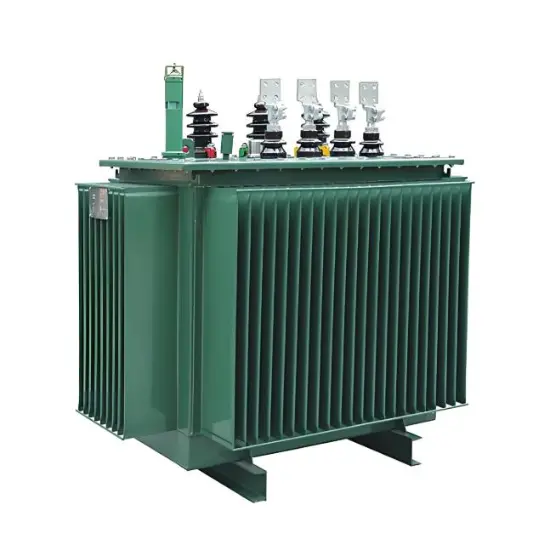
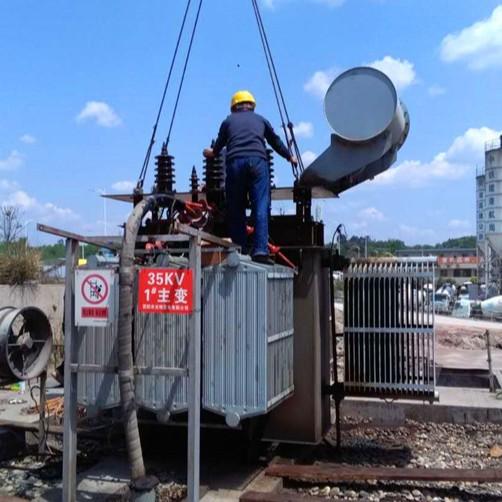
When the conservator tank shows a full oil level with transformer oil spraying out from the breather, but the gas protection (Buchholz relay), pressure release valve, and differential protection have not activated, electrical tests conducted after shutting down the transformer yield normal results. When the inspection window of the conservator is opened, no oil is visible. In this situation, it can be determined that the conservator tank has failed.
The transformer conservator tank has a capsule-type structure. When the inspection window end cover is opened, oil should normally be visible through the glass window. When the oil temperature in the tank rises, the expanded oil enters the conservator. At this time, the breather expels air from the capsule, and the oil level rises with indication. Conversely, when the oil temperature in the tank decreases, the oil in the conservator flows back to the tank due to contraction, and the capsule draws in air as the oil level drops. The function of the capsule is to isolate air from the oil, preventing insulation oil aging.
When the capsule ruptures, oil sprays out from the breather. Through the observation window, no insulating oil is visible because air exists between the capsule and the conservator tank body. Further opening the conservator side cover and extracting the capsule for inspection will reveal cracks at the bottom of the capsule.
Handling method: Replace the capsule. Open the conservator's exhaust port and inject oil through the conservator valve until oil appears at the exhaust port, then stop oil injection and tighten the exhaust port screw. Then drain oil from the valve until the oil level is normal. At this point, the capsule will automatically draw in dry air through the breather. In this way, the conservator tank fault is promptly resolved.