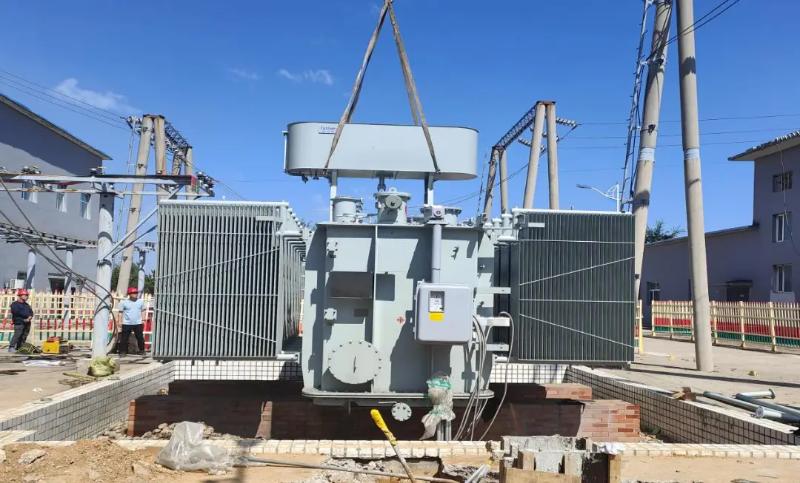
Subariga da 110kV a kan gurbin da na yi kawo da kuma yin amfani da shi a watan Fabrairu 2005. Ingantaccen 110kV ta yi amfani da ZF4-126\1250-31.5 girman SF6 GIS (Gas-Insulated Switchgear) daga Beijing Switchgear Factory, wanda ya haɗa da bayan 7 bays da 29 tashar gas SF6, ciki har da bayan 5 bays da suka fito circuit breakers. Kowane bayi da suka fito circuit breaker ana da shi gas density relay. A gurbin da na yi amfani da MTK-1 model oil-filled density relays da ake fadada da Shanghai Xinyuan Instrument Factory. Waɗannan relays suna da duwatsuwa -0.1 zuwa 0.5 MPa da kuma -0.1 zuwa 0.9 MPa, tare da shi ko biyu contacts. Suna yi amfani da Bourdon tube da bimetallic strip a matsayin elements na jin dadin. Idan gas leakage ya samu darasi mai kyau, zai iya faɗa a tsakanin alarm ko lockout signals, wanda ke taimakawa a yi hanyoyin inganta. A ranar 17 ga Oktoba 2015, a lokacin da an yi nuna masu karfi, electricians masu shekarar rana suna samun gas leakage a cikin density relays daga bay 11, 19, da 22. Wannan abin da ya faru ya ba da muhimmanci game da alamun dalilai masu karfi a cikin density relays.
1. Dalilai Masu Karfi Game Da Oil Leakage a Cikin Density Relays
Oil leakage a cikin density relays ya ba da muhimmanci saboda dalilai masu karfi:
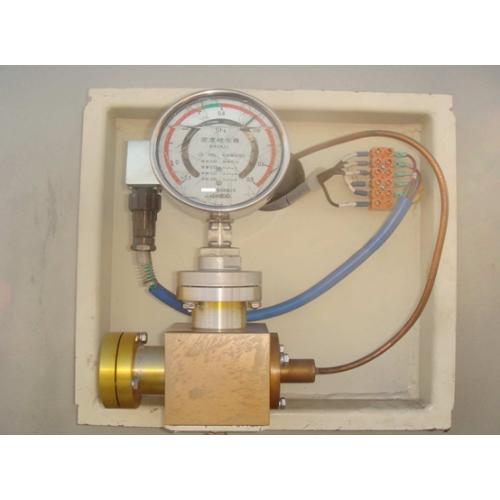
1.1 Idan anti-seismic oil a cikin density relay ya kama, damar yadda ake yi shock-absorbing ya koma. Idan circuit breaker ya yi amfani (open or close) a cikin wannan yanayi, zai iya ba da contact failure, excessive deviation from standard values, pointer jamming, da sauransu (tuntuƙi Figure 1: Oil-filled density relay).
1.2 Saboda mutanen contacts a cikin SF6 density relays—low contact force da operational duration—contact oxidation zai iya faru a lokacin da lokaci, wanda ke taimaka waɗannan contacts suka zama poor or interrupted. A cikin SF6 density relays da suka kama oil, magnetic-assisted electrical contacts suna samun exposure to air, wanda ke taimaka oxidation and dust accumulation, wanda ke taimaka poor contact at the contact points. A lokacin da amfani, an samu cewa 3% daga SF6 density relay contacts ba su iya conduct effectively, domin lack of anti-seismic oil. Idan pointer a cikin SF6 density relay ya kama stuck, ko idan contacts suka fail ko ba su iya conduct properly, zai iya ba da karfin da shi ne da kuma inganci na grid.

2. Dalilai Masu Karfi Game Da Oil Leakage a Cikin SF6 Density Relays
Dalilai masu karfi mafi yawan oil leakage a cikin SF6 density relays shine kasa a duk shugaban terminal base da surface, da kuma seal between the glass and the case. Wannan kasa shine mafi yawan aging of the sealing rings. Anti-seismic oil seals a cikin SF6 density relays suna da shi nitrile rubber (NBR). NBR shine synthetic elastomer copolymer da ke samu butadiene, acrylonitrile, da emulsion, tare da molecular structure da ke cikin unsaturated carbon chain. Acrylonitrile content ke taimaka properties of NBR: high acrylonitrile content ke taimaka resistance to oil, solvents, and chemicals, as well as strength, hardness, wear resistance, and heat resistance, amma ke koma low-temperature flexibility, elasticity, and increases gas impermeability. Factors affecting the aging of NBR seals can be categorized into internal and external factors.
2.1 Internal Factors
2.1.1 Molecular Structure of Nitrile Rubber
NBR ba ce saturated hydrocarbon rubber; polymer chains sun cika da unsaturated double bonds. A cikin duk external influences, oxygen ke react at these double bonds, forming oxides. These oxides further decompose into rubber peroxides, leading to molecular chain scission. Simultaneously, small amounts of active groups are generated, promoting cross-linking of rubber molecules. This significantly increases cross-linking density, making the rubber brittle and hard. The number of double bonds directly influences the rate of aging.
2.1.2 Rubber Compounding Agents
The selection of vulcanizing agents during rubber manufacturing is critical. An increase in sulfur cross-linking concentration accelerates the aging process of the rubber.
2.2 External Factors
2.2.1 Oxygen is a primary cause of rubber aging. Oxygen molecules cause chain scission and re-cross-linking. Another factor is ozone, which is highly reactive. Ozone attacks the double bonds in rubber molecules, forming ozonides that decompose and break the polymer chains. Since the anti-seismic oil seal is in direct contact with air, and oxygen/ozone can dissolve into the oil, they participate in aging reactions within the oil.
2.2.2 Thermal Energy accelerates the oxidation rate. Typically, a 10°C increase in temperature doubles the oxidation rate. Additionally, heat accelerates reactions between rubber chains and compounding agents, causing volatile components in the rubber to evaporate, significantly degrading rubber performance and shortening its service life.
2.2.3 Mechanical Fatigue. Under sustained stress, rubber undergoes strain, leading to mechanical-oxidative effects. Combined with thermal energy, this accelerates oxidation. Over its service life, rubber gradually loses elasticity, leading to mechanical aging. Aged rubber seals lose their sealing capability, resulting in oil leakage.
2.2.4 Insufficient Initial Compression of the Seal. Rubber seals rely on deformation during installation to create a tight fit between the seal and the sealing surface, preventing leakage. Insufficient initial compression is most likely to cause leakage. Design issues—such as selecting a seal with a small cross-section, using an oversized installation groove, or improperly tightening the case cover during installation—can all result in inadequate initial compression. In practice, tightening the relay case cover is often done by feel, making it difficult to achieve the optimal position, thus leading to insufficient compression. Moreover, rubber has a cold-shrink coefficient more than ten times greater than metal. At low temperatures, the rubber seal cross-section contracts and the material hardens, further reducing compression.
2.2.5 Excessive Compression Rate. To ensure sealing performance, rubber O-rings require a certain compression rate. However, this cannot be increased blindly. Excessive compression can cause permanent deformation during installation, generate high equivalent stress in the seal, lead to material failure, shorten service life, and ultimately cause oil leakage. Again, the practice of tightening the relay cover by feel often results in excessive compression due to difficulty in achieving the correct position.
3. ZDM-Type Oil-Free, Anti-Seismic Density Relay
3.1 Shock Absorption and Operating Principle of the ZDM-Type Relay
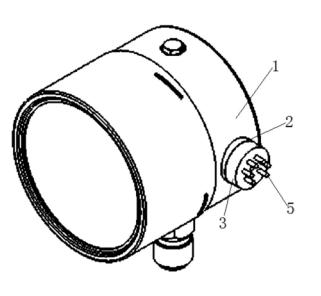
The ZDM-type oil-free, anti-seismic density relay (see Figure 2) achieves shock absorption by incorporating a shock-absorbing pad between the connector and the case. This pad buffers vibrations generated during circuit breaker operation. The impact and vibration from the switch operation are transmitted through the connector to the shock-absorbing pad, which then dampens the energy before passing it to the relay case. Due to this buffering effect, the vibrational and impact energy reaching the relay case is greatly reduced, resulting in excellent anti-seismic performance.
Additionally, the operating principle of the ZDM-type relay relies on a spring tube as the elastic element, with a temperature compensation strip correcting for pressure and temperature variations to reflect changes in SF6 gas density. The output contacts use a micro-switch mechanism. The control of the micro-switch signal is performed by the temperature compensation strip and spring tube, combined with the buffering effect of the shock-absorbing pad. This design prevents false signals due to vibration, ensuring reliable and effective system operation. It significantly enhances the anti-seismic performance of the pointer-type density relay, making it a high-performance device.
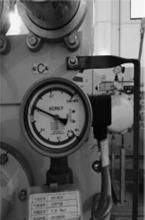
3.2 Features of the ZDM-Type Oil-Free, Anti-Seismic Density Relay
3.2.1 Full stainless steel enclosure with excellent waterproof and corrosion-resistant properties, and an attractive appearance;
3.2.2 Accuracy: 1.0 class (at 20°C), 2.5 class (at -30°C to 60°C);
3.2.3 Operating ambient temperature: -30°C to +60°C; operating ambient humidity: ≤95% RH;
3.2.4 Anti-seismic performance: 20 m/s²; anti-impact performance: 50g, 11ms; sealing performance: ≤10⁻⁸ mbar·L/s;
3.2.5 Contact rating: AC/DC 250V, 1000VA/500W;
3.2.6 Enclosure protection rating: IP65;
3.2.7 Oil-free design, resistant to vibration and impact, and permanently leak-proof;
3.2.8 Stable and highly consistent performance of the temperature-sensing element.
The above features demonstrate that the ZDM-type oil-free, anti-seismic density relay completely eliminates the problem of oil leakage. By utilizing a unique structural design and shock-absorbing pads instead of anti-seismic oil, it fundamentally prevents oil leakage during operation.
4. Conclusion
The main causes of oil leakage in density relays stem from manufacturing, operation, and maintenance issues. When equipment density decreases, not only is the dielectric insulation strength reduced, but the circuit breaker’s interrupting capacity is also compromised. Therefore, timely replacement of oil-leaking density relays is essential. To ensure safe and reliable operation, it is recommended to use ZDM-type oil-free, anti-seismic density relays or similar devices in future applications.