Cabinet Structure and Process Characteristics of Low-Voltage Switchgear

I. Introduction
The cabinet structure forms the fundamental basis of low-voltage switchgear, making cabinet manufacturing technology the foundation of all foundations. As a structural enclosure, the cabinet must not only meet the functional integration requirements of various electrical units (such as standardized types, modular combinations, and functional distribution), but also satisfy inherent cabinet requirements (such as robustness, reliability, neat appearance, and ease of adjustment). Due to variations in cabinet structural requirements and manufacturing capabilities among different producers, manufacturing processes cannot be rigidly standardized. However, certain universally applicable and critical technological characteristics exist in cabinet production. These key features are briefly introduced below in conjunction with cabinet structural selection.
II. Cabinet Structure and Technological Characteristics
Cabinet structures and their manufacturing processes can generally be differentiated by structural form, connection methods, and material selection.
1. Classification by Structural Form
(1) Fixed-Type:
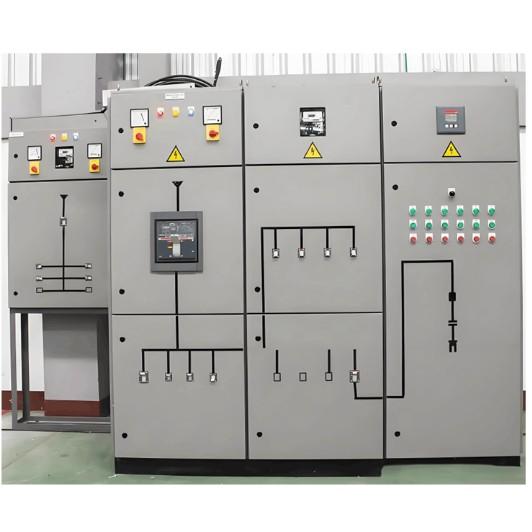
This design ensures reliable fixation of each electrical component in its designated position within the cabinet. Cabinet shapes are typically cuboid (e.g., panel or box type), though trapezoidal forms (e.g., console type) are also used. Such cabinets can be arranged as single units or in rows.
To ensure dimensional and geometric accuracy, components are usually assembled in stages—typically by first forming two side panels or left-right sections, then assembling them into the full cabinet, or by first meeting external dimensional requirements and then sequentially connecting internal components. The length of parts forming the cabinet’s edges must be precisely correct (with tolerances taken as negative values) to ensure overall geometric dimensions and external appearance. For the two side panels, no bulging should occur in the middle to accommodate proper alignment during arrangement.
From an installation perspective, the base surface must not exhibit any sagging. During alignment and installation, a level foundation is essential, but both foundation flatness and the cabinet itself have inherent tolerances. During alignment, lateral deviations should be minimized and not allowed to accumulate, as accumulated errors can cause cabinet deformation, affect busbar connections, lead to misaligned component installation, create stress concentration, and even shorten the lifespan of electrical equipment. Therefore, during alignment, the highest foundation point should be used as the reference, and subsequent units should be gradually leveled and extended. When base flatness is ideal and predictable, expansion from the center outward may also be used to evenly distribute accumulated errors.
To facilitate adjustment and compensate for tolerance accumulation, cabinet width tolerances are generally specified as negative values. After assembling all cabinet components, shaping may be required to meet dimensional and geometric requirements. For standardized or high-volume cabinet production, appropriate jigs and fixtures should be fully considered to ensure structural consistency. The fixture’s reference surface should ideally be the cabinet base, and positioning blocks within the fixture should be arranged for easy access and operation. External doors and similar parts, which are prone to deformation during transport and installation, are typically adjusted uniformly during final installation.
(2) Withdrawable (Drawer-Type):
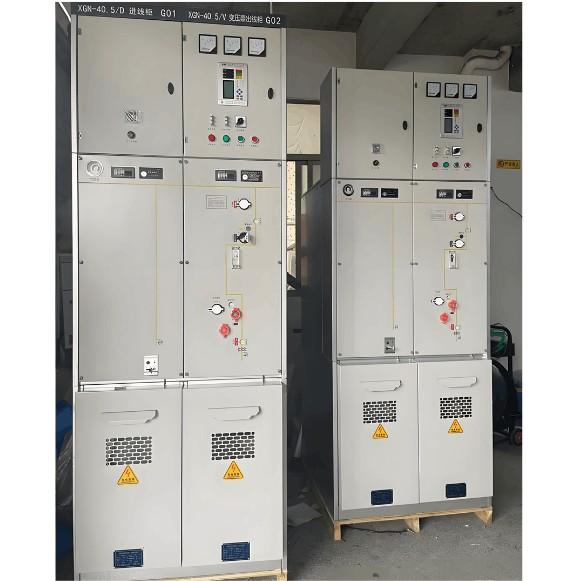
Withdrawable switchgear consists of a fixed cabinet body and a removable unit containing main electrical components such as circuit breakers. The removable unit must be easy to handle during insertion and withdrawal, reliably positioned when installed, and interchangeable with other units of the same type and specification. The cabinet portion of withdrawable switchgear is manufactured similarly to fixed cabinets. However, due to interchangeability requirements, the cabinet must have higher precision, and related structural parts must allow sufficient adjustment.
The manufacturing characteristics of withdrawable low-voltage switchgear are: (1) the fixed and movable parts must share a common reference datum; (2) related components must be adjusted to optimal positions using dedicated standard tooling, including standard cabinet frames and standard drawers; (3) critical dimensions must not exceed allowable tolerances; (4) interchangeability of identical drawer types and specifications must be reliable.
2. Classification by Connection Method
(1) Welded Construction:
Advantages include ease of processing, high strength, and reliability. Disadvantages are large tolerances, susceptibility to deformation, difficulty in adjustment, poor aesthetics, and the inability to pre-plate workpieces. Additionally, welding fixtures have specific requirements:
High rigidity, not easily affected by workpiece deformation;
Slightly larger than nominal workpiece dimensions to compensate for post-weld shrinkage;
Flat, simple, and easy to operate, minimizing rotating mechanisms to prevent damage;
Supports must be carefully selected to prevent weld corrosion and allow for easy inspection and adjustment, with anti-corrosion pads added where necessary.
Welding deformation occurs due to thermal expansion of molecules at the weld zone, causing microscopic displacement during cooling that results in residual stress. To mitigate deformation, shaping processes must be considered. Common methods include:
Predicting deformation range through testing and pre-deforming the workpiece in the opposite direction before welding;
Correcting over-adjustment after welding;
Hammering or pressing the relatively contracted areas to balance stresses;
Heating the relatively bulged areas after welding to achieve uniform shrinkage;
Performing overall heat treatment when necessary.
Additionally, weld point selection, weld seam orientation, welding sequence, and spot welding positioning all influence post-weld deformation. Proper handling can reduce deformation, though this depends on specific conditions.
(2) Fastener Connection:
Advantages include suitability for pre-plated parts, ease of adjustment and aesthetic finishing, standardized component design, pre-production inventory, and small dimensional tolerances in the frame. Disadvantages include lower strength compared to welding, higher precision requirements for components, and relatively higher manufacturing costs. Fasteners are typically standard parts, including common screws, nuts, rivets, blind rivets, adjustable clamp nuts, pre-tensioned pull nuts, and self-tapping screws. Special-purpose fasteners (such as those used in many imported low-voltage cabinets) are also available.
Technological characteristics: Fixtures are used for shaping, and tooling for positioning. Pressure washers may be used as needed. Riveting usually requires pre-drilling, and care must be taken to protect plating on pre-plated parts. For components machined with precision CNC centers or dedicated equipment, if connection hole diameters maintain a slight clearance with fastener diameters, assembly can be completed without fixtures in a single step. For fastening guide and positioning components, dedicated measuring tools should first establish position, followed by inspection with standard tooling.
(3) Hybrid Connection (Welding and Fastening):
This method combines the advantages of both above methods. Welding is typically used at cabinet connection points, while fasteners are used for variable or adjustable sections. Large cabinets are difficult to plate after welding, so surfaces are often painted. For outdoor cabinets made from pre-plated materials that require welding, the welded areas can be treated with thermal metal spraying.
3. Classification by Component Material
(1) Sectional Materials:
These include angle steel, channel steel, special-shaped steel tubes, and special channel steel. Components made of angle or channel steel are typically joined by welding. During processing, connection ends must fit tightly with minimal gaps; otherwise, weld quality and deformation will be affected.
Special-shaped steel tubes can be connected by either welding or fasteners. Connection parts usually require dedicated fittings that must be strong and precise; otherwise, cabinet appearance will be compromised. Using uniform special-shaped steel tubes with uniformly spaced (modular) holes and standard connectors allows modular cabinet assembly, simplifying design, component preparation, and production planning. However, this method involves many holes, most of which remain unused, and limits spatial flexibility.
Manufacturing characteristics: Ensure universality and precision of components and connectors. The basic cabinet structure is often reinforced with panels. Besides special-shaped steel tubes, C-shaped channels or ribbed rectangular tubes made from sheet steel are also used. C-shaped channels are suitable for plating, while ribbed rectangular tubes may rust after plating due to residual acid from pickling, so selection should be cautious.
(2) Sheet Metal Components (excluding C-channels and ribbed rectangular tubes)
These can be formed entirely according to requirements, without limitations from pre-formed profiles. This structural design involves higher engineering effort, but once standardized, variations are minimal. Main structural parts are usually welded, while variable or adjustable areas use fasteners (e.g., low-voltage control boxes and consoles).
Since sheet metal structures are mostly welded and formed in one piece, welding-induced shrinkage or bulging must be addressed. Welding points should be evenly spaced, weld seams smooth, post-weld shaping performed, edges straight, and the middle of both sides must not protrude beyond the front and rear edges. If internal partitions exist, they should be welded after the two sides are properly shaped.
Console-type control cabinets are best suited for sheet metal components. When multiple units are arranged in a row, the tabletop should be aligned and positioned only after the entire row is in place.
III. Conclusion
As analyzed above, the selection of cabinet structures must be determined not only by the functional requirements of the switchgear but also by manufacturing process constraints. The level of manufacturing technology directly influences cabinet structural design and material selection.