• Product
  • Suppliers
  • Manufacturers
  • Solutions
  • Free tools
  • Knowledges
  • Experts
  • Communities
Search


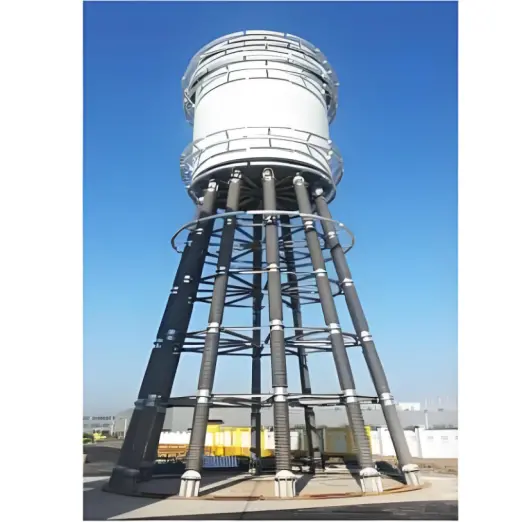
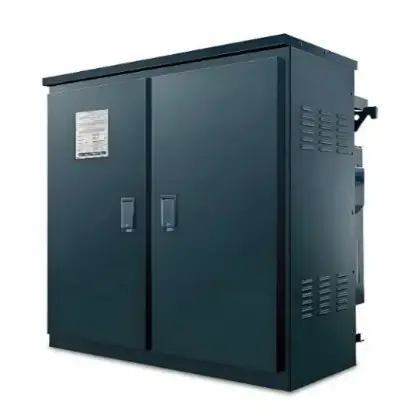
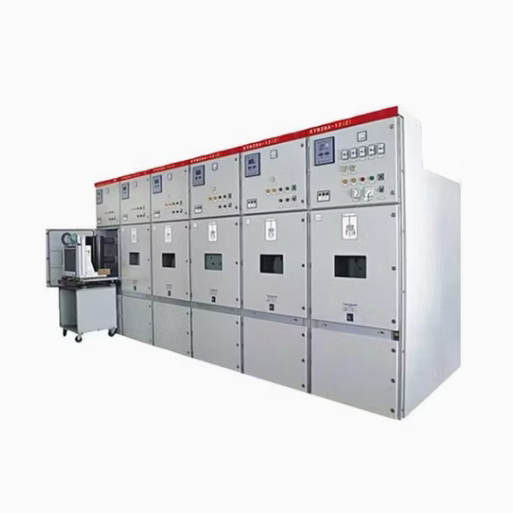
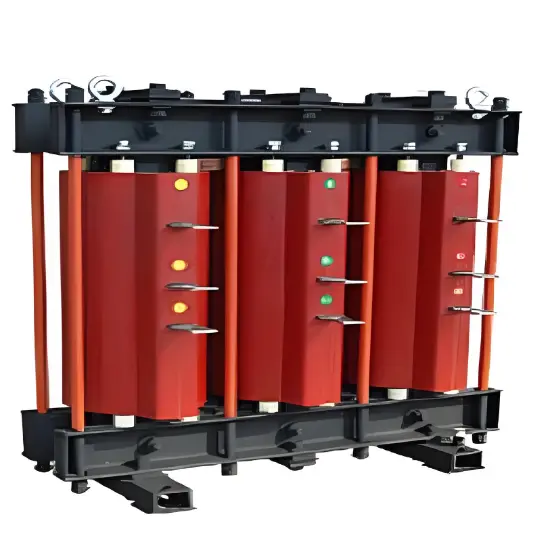
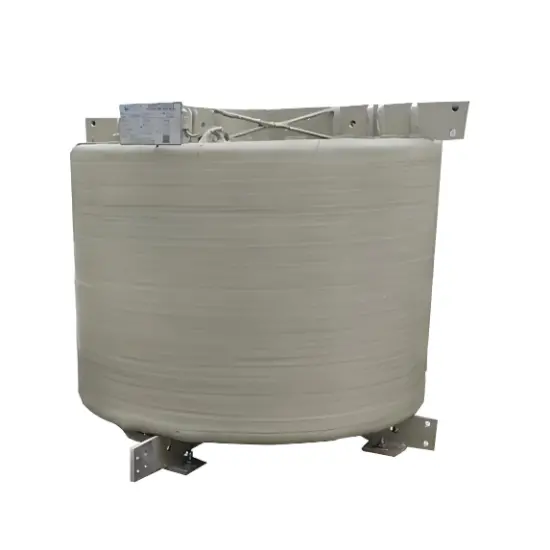
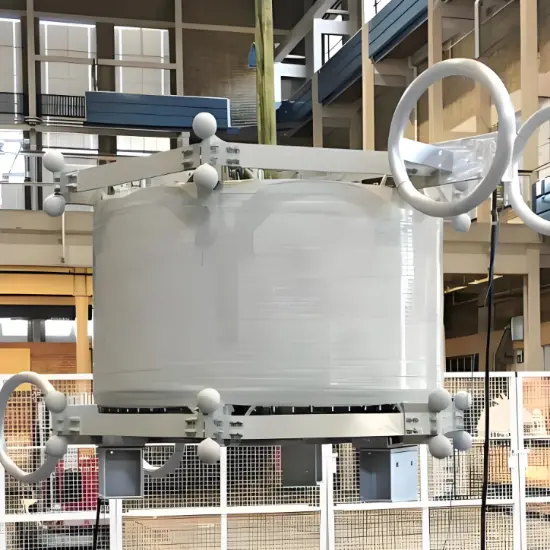
6kV 10kV High-voltage starting reactor with F Insulation Class

  • 6kV 10kV High-voltage starting reactor with F Insulation Class

Key attributes

Brand POWERTECH
Model NO. High-voltage starting reactor
Starting current 112A
Starting capacity 410KVar
Series QKSG
Description

Description:

When the AC asynchronous motor is started at the rated voltage, the initial starting current is very large, often exceeding many times of the rated current (generally 5~7 times). In order to reduce the starting current and not affect the power grid, the AC asynchronous motor is usually started by reducing the voltage, and the commonly used step-down method is to use a reactor or autotransformer, and the starting process of the AC motor is very short (generally a few seconds to two minutes), and the reactor or autotransformer used for step-down start-up is cut off after starting.

Feature:

  • The core is made of silicon steel sheet, the core column is divided into uniform small sections through multiple air gaps, the air gap is isolated by epoxy plates, and high-temperature binders are used to ensure that the air gap does not change under the long-term operation of the reactor.

  • The end face of the iron core is made of silicon steel sheet end glue, so that the silicon steel sheet is firmly combined, which greatly reduces the noise during operation and has good corrosion resistance.

  • The coil wrapping structure, the main insulation of the coil is impregnated with glass fiber epoxy resin, and the coil is impregnated with high-temperature insulating paint under vacuum after hot baking and curing, the coil not only has good insulation performance, but also has high mechanical strength, and can withstand the large current impact and cold and hot shock when the motor is started without cracking.

Parameters:

Rated voltage: 6kV, 10kV

Rated frequency: 50Hz, 60Hz

Insulation grade: F

class Starting time: 120S, after 120S, it should be cooled for 6 hours before starting again

企业微信截图_1733189802375.png

企业微信截图_17331897371535.png

Standard:

image.png

Conditions for the use:

  • The altitude does not exceed 2000m.

  • Ambient temperature -25~+45°C, relative humidity ≤90%.

  •  There are no harmful gases around, no flammable and explosive materials.

  •  The waveform of the supply voltage is similar to that of a sine wave.

  • The surrounding environment should be well ventilated, if installed in the cabinet, ventilation equipment should be installed.

  •  Indoors.


What are the differences in the working methods of different types of reactors?

Shunt Reactors:

  • Shunt reactors are primarily used to compensate for capacitive currents, improve power factor, and stabilize grid voltage. They are connected in parallel with the grid and absorb reactive power to regulate the reactive power balance in the grid.

Series Reactors:

  • Series reactors are connected in series within the circuit and are used to limit short-circuit currents, improve the transient stability of the power system, and other purposes. For example, in high-voltage transmission systems, series reactors can limit the short-circuit current during faults, protecting electrical equipment. In power electronic circuits, series reactors can smooth the input current and reduce harmonic distortion.
 

Know your supplier

Online store
On-time delivery rate
Response time
100.0%
≤4h
Company overview
Workplace: 580000m² Total staff: 100+ Highest Annual Export(usD): 120000000
Services
Business Type: Design/Manufacture/Sales
Main Categories: High Voltage Electrical Apparatus
Related Products
Related Knowledges
  • How has g3 technology changed the global climate?
    The Alternative to SF6 for High Voltage ApplicationsRemoving Greenhouse Gases from the GridNineteen of the warmest years on record have occurred since 2000, where greenhouse gases (GHGs) are at the root cause of climate change. Sulfur hexafluoride (SF₆), an insulating gas used in high-voltage switchgear, is estimated to contribute 23,500 times more than carbon dioxide (CO₂) to the greenhouse effect and can remain in the atmosphere for 3,200 years. Previously, Power Generation and Transmission ut
    05/09/2026
  • Difference Between Maintenance Earthing Switches and Fast Earthing Switches?
    Maintenance earthing switches and fast earthing switches (FES) are two types of switches with distinct characteristics.Maintenance Earthing SwitchesThese are typically configured alongside the disconnectors on both sides of a circuit breaker. Their sole purpose is to provide safety grounding on both sides of the circuit breaker during equipment maintenance.Fast Earthing Switches (FES)These are positioned on the line side of the outgoing disconnector in an outgoing circuit. They serve two primary
    05/08/2026
  • SiC MOSFET Solid State Circuit Breakers for Low Voltage Protection
    1. Core Principle SummaryIn simple terms, its core principle can be summarized as a three-step AC-DC-AC conversion, with the key step being to increase the frequency first, then transform the voltage.2. Working PrincipleRectification:First, the input line-frequency AC power (e.g., 50 Hz or 60 Hz) is rectified into DC power using power electronic devices (such as IGBTs). This step converts low-frequency AC into stable DC, preparing it for subsequent processing.High-Frequency Chopping (Inversion):
    05/03/2026
  • Solid-State Circuit Breakers Set to Revolutionize Circuit Protection
    Custom modules built with SiC MOSFETs minimize the impacts of short circuits and overloadsNearly every electrical engineer has wondered at some point whether it is possible to design a non-mechanical circuit breaker. There are plenty of reasons for this line of thought: would it not be better to use semiconductors to interrupt faults or handle overload conditions?However, deeper investigation inevitably reveals major obstacles. For one thing, the breakdown voltage of familiar power devices is ar
    05/03/2026
  • 2025 Complete Guide to Solar Cell Selection-Scenario Adaptation
    Solar Panel – Comprehensive Guide to Solar Cell SelectionA systematic selection reference for photovoltaic engineers and technicians, covering technical principles, key parameters, application scenarios and development trends.Data baseline: 2024–2025 industrial mass-production levels (CPIA data)1. The Role of Solar Cells in Photovoltaic SystemsMore than 90% of the conversion efficiency and power generation performance of PV modules are determined by solar cells. As the core semicondu
    05/03/2026
  • Technological Evolution of Silicon Carbide (SiC) Based DC Solid-State Circuit Breakers
    1. Introduction: Protection Challenges in the DC Distribution EraAs the global energy transition accelerates, DC microgrids, high-voltage DC (HVDC) power supplies for data centers, and large-scale energy storage systems have become critical components of power systems. However, DC systems lack a natural zero-crossing point and possess extremely low system impedance, leading to a rapid rate of rise of fault current (di/dt). Traditional mechanical circuit breakers, limited by millisecond-level ope
    04/25/2026
Related Free tools
Send inquiry
+86
Click to upload file
Download
Get the IEE Business Application
Use the IEE-Business app to find equipment, obtain solutions, connect with experts, and participate in industry collaboration anytime, anywhere—fully supporting the development of your power projects and business.