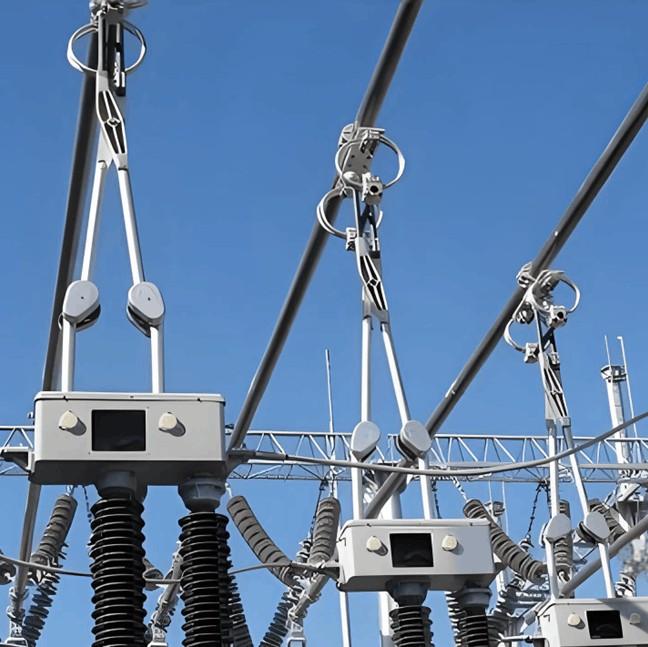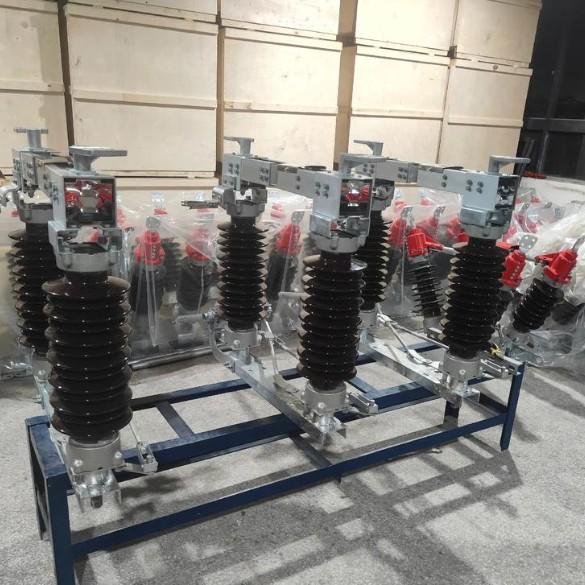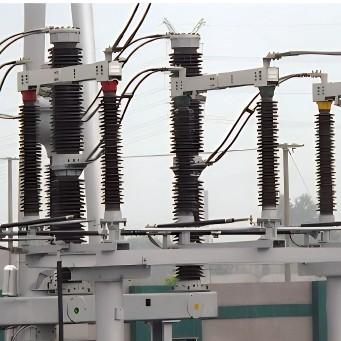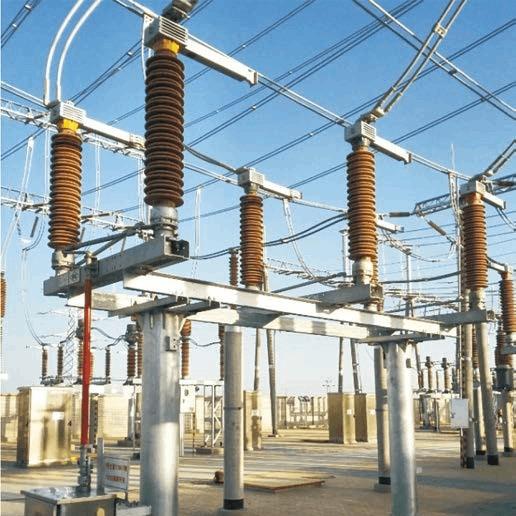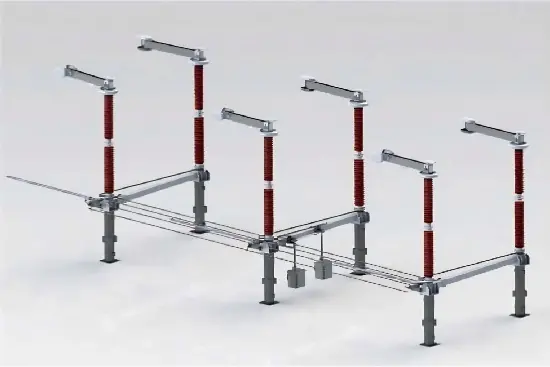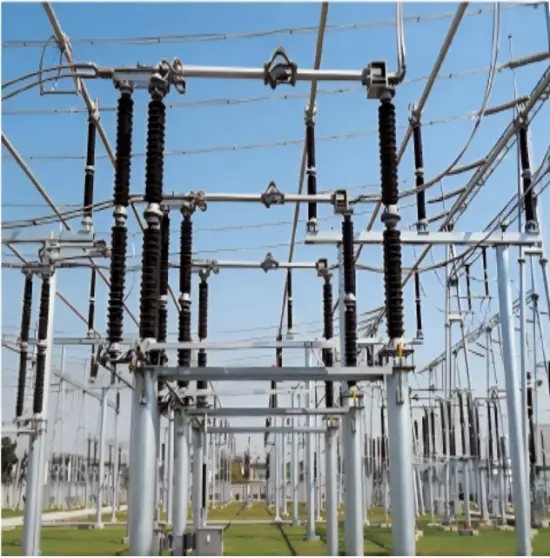
High-voltage disconnectors, also known as isolator switches or knife switches, feature a simple working principle and convenient operation. As commonly used high-voltage switching equipment, they significantly impact the operational safety of substations, demanding stringent reliability in practical applications. The remote online defect-elimination system for high-voltage disconnector contacts offers advantages such as ease of operation, low operating costs, and high stability, making it well-suited for online defect removal in the power industry.
1.Overview of High-Voltage Disconnectors
High-voltage disconnectors are most frequently used in substation electrical systems and power plants and constitute a key component of high-voltage switchgear. They must be used in conjunction with high-voltage circuit breakers.
The remote online laser-based defect-elimination system for disconnector contacts comprises a cleaning gun, water chiller, optical fiber, and laser source. A fully solid-state quasi-continuous-wave (QCW) laser is employed to deliver high-power, high-efficiency, and continuous laser output. This system utilizes high-performance semiconductor side-pumped modules with reflective chips to address potential hazards. The laser output power must be ≥1,000 W, and the fiber coupling efficiency must exceed 96%. Additional features include zero maintenance costs, compact size, and suitability for integration.
Energy-transmitting optical fibers are selected for their self-protective capability during energy transmission, with lengths typically ranging from 10 to 15 meters. Precision water-cooling units for the laser and optical path enable accurate temperature control and timely ambient temperature adjustments.
The primary function of high-voltage disconnectors is to provide safe electrical isolation during maintenance of high-voltage equipment and installations. They are not designed to interrupt load current, fault current, or short-circuit current, and should only be used for switching small capacitive or inductive currents. Consequently, they lack arc-quenching capabilities.
Based on installation location, high-voltage disconnectors are classified as indoor or outdoor types. By the number of insulating support columns, they are categorized as single-post, double-post, or triple-post. Voltage ratings must be selected according to specific equipment requirements.
These disconnectors provide a visible isolation gap to safely isolate high-voltage sources during maintenance, ensuring personnel safety. While capable of switching small currents, they lack dedicated arc-extinguishing devices and therefore cannot interrupt load or short-circuit currents.
2.Remote Online Laser-Based Defect Elimination System for Disconnector Contacts
Lasers offer high directionality and brightness, enabling rapid concentration of energy into a confined space. Laser cleaning fundamentally involves the interaction between laser radiation and contaminants, producing chemical and physical effects.
Research shows that surface contaminants adhere via capillary forces, electrostatic attraction, covalent bonding, and van der Waals forces—the latter three being particularly difficult to overcome. Laser cleaning disrupts these binding forces without damaging the underlying substrate.
Three primary laser cleaning mechanisms exist:
(1) Fragmentation and spallation: Microscopic contaminant particles absorb laser energy, expand rapidly, overcome surface adhesion forces, and fracture off the surface. The ultrashort laser pulse generates explosive shockwaves that accelerate particle detachment.
(2) Evaporation: Due to differing chemical compositions between the substrate and contaminants, their laser absorption rates vary. With appropriate laser type and pulse width selection, ~95% of laser energy reflects off the substrate, protecting it. Contaminants absorb ~90% of the energy, causing instantaneous temperature rise and vaporization, which removes them without substrate damage.
(3) Vibrational ejection: Short-pulse lasers induce ultrasonic vibrations through rapid thermal expansion. The resulting shockwaves fragment and eject particles.
The remote online defect-elimination system concentrates high energy within a precise spatial and temporal window. At the focal point, ionization causes micro-explosions that instantly strip away contaminants. The highly directional laser beam can be shaped into adjustable, non-uniform spot sizes. Laser energy intensity is precisely controlled to ensure instantaneous separation of contaminants from the substrate without damage.
3.Common Defects in High-Voltage Disconnectors During Operation
Defects often arise during operation—for example, dust accumulation due to poor contact, or formation of compound films on contact surfaces, increasing contact resistance. Analysis reveals that poor design, substandard components, and improper installation or adjustment all contribute to defects.
3.1 Component Corrosion
Prolonged exposure to rain, wind, and humidity causes corrosion of disconnector components. Some parts use galvanized coatings, but electrochemical reactions during operation can lead to severe rusting. Poor manufacturing processes further compromise quality and performance, accelerating corrosion. Severe rusting reduces mechanical transmission speed and may cause operational failure.
3.2 Incomplete Opening/Closing and Overheating
Improper opening or closing operations often result in defects. If contacts do not fully engage while the circuit remains energized, resistive heating occurs, potentially leading to burnout or safety incidents—impacting economic performance and power reliability.
Severe overheating at contact points (due to persistent current flow even when damaged) increases contact resistance, creating a vicious cycle: higher resistance → higher temperature → further resistance increase → contact damage.
3.3 Poor Sealing of Operating Mechanism Leading to Contact Damage
Most high-voltage disconnectors operate outdoors and are vulnerable to environmental factors. The operating mechanism serves as the power source; if corroded, it impairs functionality.
To mitigate this, operating mechanisms are housed in sealed enclosures during installation. However, poor sealing allows rainwater ingress—especially during wet seasons—causing internal rust. This compromises insulation of control components, leading to malfunctions. Increased contact resistance raises temperature, with greater current (e.g., >75% of rated current) exacerbating overheating and contact degradation.
3.4 Porcelain Insulator Fracture
Porcelain insulators are critical structural components. Fractures can collapse the conductive circuit and disable the disconnector. Causes include:
– Substandard manufacturing processes failing to ensure porcelain quality;
– Excessive mechanical force during handling by unskilled personnel.
4.Strategies for Remote Online Defect Elimination Systems
Since most defects stem from operator inexperience or flawed design, targeted corrective measures are essential.
4.1 Addressing Component Corrosion
Ensure strict quality control during procurement and construction. Conduct regular maintenance and inspections. In high-humidity regions, shorten inspection intervals based on environmental conditions. Severely corroded units must be replaced promptly.
4.2 Resolving Incomplete Closing and Overheating
Poor contact during closing often results from inadequate commissioning or non-compliant structural adjustments. Engage qualified technicians for on-site maintenance to ensure proper alignment and acceptable loop resistance.
Select contact materials based on conductivity and mechanical strength. Use anti-corrosion bolts. Clean contact surfaces thoroughly before adjusting insertion depth. Replace aged clamping springs that have lost tension, and remove surface contaminants to prevent resistance buildup and arcing.
4.3 Improving Sealing of Operating Mechanisms
Enhance sealing by installing gaskets on mechanism enclosures. Equip enclosures with humidity sensors and dehumidifiers. Activate dehumidification immediately upon detecting elevated moisture to prevent internal corrosion and insulation failure.
4.4 Preventing Porcelain Insulator Fracture
Enforce rigorous quality inspections during porcelain procurement. Handle insulators strictly per operational protocols to avoid excessive force. During routine patrols, inspect for cracks or fractures and replace defective units immediately.
5.Case Study: Online Defect Elimination System Implementation
A municipal hydropower plant—critical for flood control, power generation, ecological protection, and regional economic development—serves as a case study for applying the remote online defect-elimination system to substation high-voltage disconnectors.
Key practices include:
– Selecting disconnectors rated above 126 kV, avoiding single-arm folding designs or unproven spring-contact structures; prefer models with verified temperature-rise test reports.
– For units ≥252 kV, perform full assembly, dimensional adjustments, and marking before factory dispatch.
– For units ≥72.5 kV, conduct contact finger pressure tests and provide compliance certificates.
– During handover, verify silver-plating on both moving and stationary contacts: thickness >20 μm, hardness >120 HV.
– After installation, measure conductive loop resistance and compare against design and factory values; only commission if within tolerance.
– During operation, use infrared thermography to monitor conductive joints—especially under high-load or high-temperature conditions—and intervene promptly if anomalies are detected.
– During outage testing, adhere strictly to maintenance cycles. Test spring performance and contact circuits, replacing non-compliant parts. Re-verify contact pressure post-maintenance.
– Maintain inventory of spare parts and laser cleaning tools to enable rapid online defect remediation.
6.Conclusion
In summary, the remote online laser-based defect-elimination system effectively removes rust and contaminants from disconnector contacts, preventing overheating and burnout, reducing equipment wear, and enhancing power system stability. High-voltage disconnectors hold immense potential in modern power infrastructure—minimizing consumable use while ensuring reliable, stable grid operation.