Rola Breslayên Vakûmî yên Dabeşkarî yên Sistemanên Enerjiyê û Analîzî Ênberên Hesasan
Gava hesasan ên sistemanên dabeşkarî bihêsan, breslayên vakûmî yên dabeşkarî rola pêkhatî yên parastinê dike navbeyan kirina cihanên zêde û çarên kurtkirinê, ku amana xebitandin û karwerdina têkildanên enerjiyê. Pirsa e ku agahdarîya hêmane û xirabkirina yekêmî yên breslayên vakûmî yên guhertinê (MV) biguheztin, analîzî Ênberên herêmî bikin û serbestiya parastina efektîve dikarin werin hatine destpêkirin, ku amana pelandina dabeşkarîyan veqetandin û wan ji bo ekonomî û cemiyet beşdarîya mezin bike.
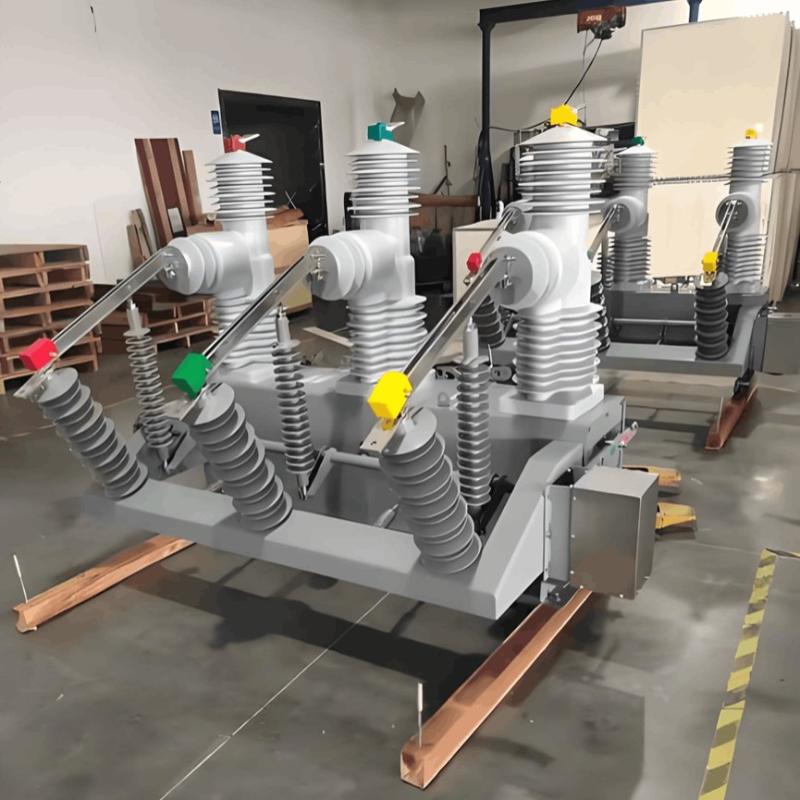
Breslaya vakûmî tipîkî derbas da ku bîrên mînawayên berdîne: mecana karke, birka keskirina kihani, sistemê kontrolî elektrik, destpêka izolate û bingeha baz.
Mecanan karke din dikarin bibajin bi rêndomê electromagnetic, spring-operated, permanent magnet, pneumatic, û hydraulic. Berdas li gor rengi mecane karke û keskirbir, breslayên vakûmî yan dibedan bi rêndomê integrated, suspended, fully enclosed modular, pedestal-mounted, û floor-standing.
Keskirbirê vakûmî ya ku breslaya vakûmî ya ku bêrbarê ye. Van bîrên mînawayên berdîne: envolopê izolate, shield, bellows, conductive rod, moving û fixed contacts, û end caps.
Bi tenê ku vakanîya navendî bimîne-ye, qayêna vakûmî bimîne-ye -tipîkî ji ber pressiyonê li jor 1.33×10⁻² Pa. Pêşketinên naverokî yên bêtir bi materialên, proseseke şînkerdan, struktur, mezaj û performansa keskirbiranên vakûmî sererast kirin.
Envolopê izolate tipîkî ji alumina ceramic û glass in. Envelopan ceramicê girêdayî yên mekanîkî û termal bêtir ne û heye ke îro wekî piştgirîn bikin. Contactê mobile li barê bin, bi conductive rod ve pirse. A guide sleeve ensures precise and smooth vertical movement.
Bi tenê ku contact wear bimîne-ye, dot marker ji barê navendîya keskirbirê ve girîn. Bi bînin li gor displacement of this marker relative to the lower end, degree of contact erosion can be estimated.
Pathê kihani û keskirbirê li gapê navendîya contactên mobile û fixed an. Metal components are supported and sealed by the insulating envelope, which is welded to the shield, contacts, and other metal parts to maintain vacuum integrity.
Shield stainless-steel, electrically floating and surrounding the contacts, plays a vital role: during current interruption, it captures metal vapor from the arc, preventing deposition on the insulator and preserving internal insulation strength.
Loss of vacuum is a critical yet often undetected fault. Many installations lack quantitative or qualitative vacuum monitoring equipment, complicating diagnosis.
Vacuum degradation shortens breaker lifespan, impairs current interruption capability, and may lead to catastrophic failure or explosion. Causes include:
Poor mechanical characteristics such as excessive overtravel, contact bounce, or phase asynchrony.
Excessive linkage travel during operation.
Manufacturing defects in the vacuum bottle (e.g., poor sealing or material flaws).
Leakage in the bellows due to fatigue or damage.
Many vacuum breakers use composite insulation, embedding the interrupter in an epoxy resin housing. However, if the high-voltage parts are not fully encapsulated, environmental factors can compromise insulation.
Heat generated during operation can further degrade insulation performance, increasing failure risk.
Prolonged contact bounce during closing and asynchronous opening/closing can result from:
Substandard mechanical performance of the breaker.
Defective insulating pull rods or support structures.
Misalignment between the contact plane and the breaker’s central axis.
After closing, the spring mechanism may fail to fully store energy due to:
Premature disconnection of the storage circuit caused by improper limit switch settings.
Gear slippage due to severe wear.
Aging of the storage motor.
High spring tension causing incomplete shaft travel.
Contact deformation: Soft contact materials can deform after repeated operations, leading to poor contact and phase loss.
Trip failure: Caused by insufficient trip latch engagement, pin slippage, low trip voltage, or poor auxiliary switch contact.
Close failure: Results from low closing voltage, deformed linkage plates, incorrect latch dimensions, wiring errors, or poor auxiliary switch contact.
Regular inspection of the vacuum bottle is essential. Use a vacuum tester for quantitative measurement or perform withstand voltage tests for qualitative assessment. If vacuum loss is detected, replace the interrupter and retest travel, synchronization, and bounce to ensure compliance.
Apply APG (Automated Pressure Gelation) technology and solid-sealed pole columns to encapsulate the interrupter and output terminals. This reduces size and shields against environmental effects.
Regularly test insulation performance and predict insulation lifespan using specialized equipment. Follow strict installation, commissioning, and maintenance procedures to prevent human error. Clean and inspect insulators and pull rods regularly to prevent dust-related failures.
Insert a flat washer between the insulating pull rod and transmission lever to reduce contact bounce. Adjust the vertical alignment of the contact end face to minimize bounce.
For asynchronous operation, use a switch characteristic tester to measure closing bounce time, three-phase operation times, and phase synchronization. Based on results, adjust the pull rod length within specified travel and overtravel limits to achieve synchronization.
Replace aging storage motors.
Improve assembly precision of tripping and interlocking components.
Enhance heat treatment of storage gears to prevent wear and slippage.
Enhance control circuit reliability by securing auxiliary switch contacts and optimizing linkage mechanisms to prevent deformation or misalignment. Ensure reliable wiring connections.
Maintain a clean operating environment and lubricate moving parts to prevent rust and contamination-induced failures.
For closing circuit faults, inspect the base-mounted auxiliary switch. Use a multimeter to check continuity at the secondary plug. If the plug is open, test continuity between the auxiliary switch terminals and the plug to locate the fault.
In summary, to ensure reliable operation of vacuum circuit breakers, enterprises and personnel must identify root causes of common faults—such as vacuum loss, insulation failure, contact bounce, spring storage issues, and maloperation—and implement effective preventive and corrective measures. Proactive maintenance and technical optimization are key to minimizing failures and enhancing the safety, efficiency, and longevity of substation systems.