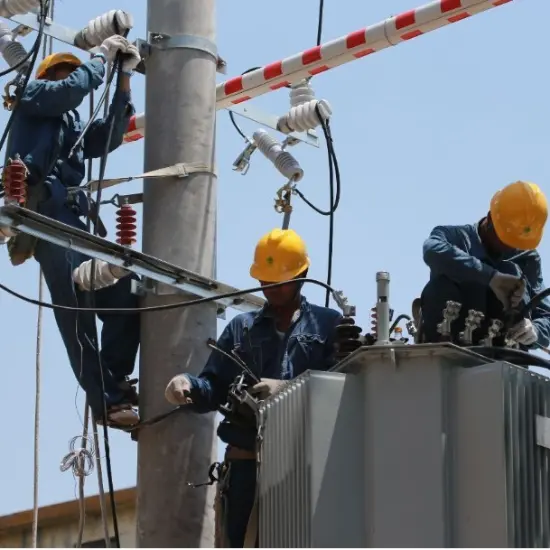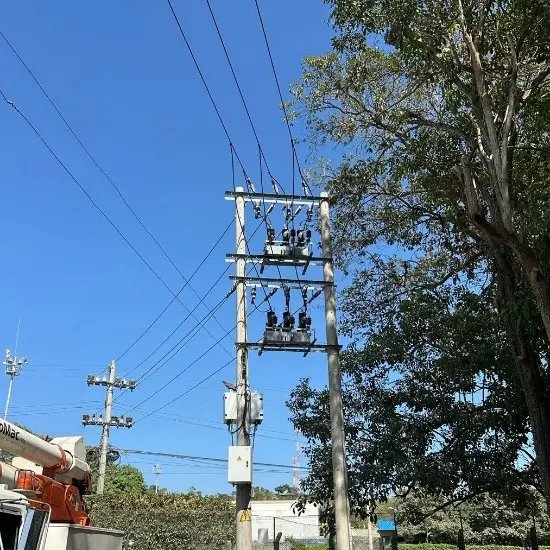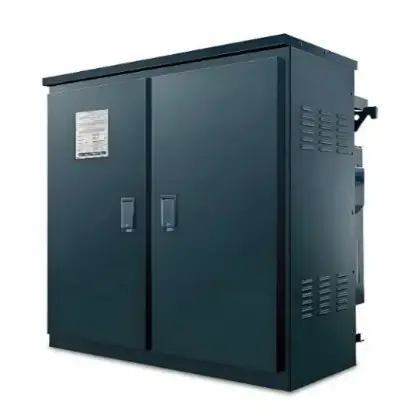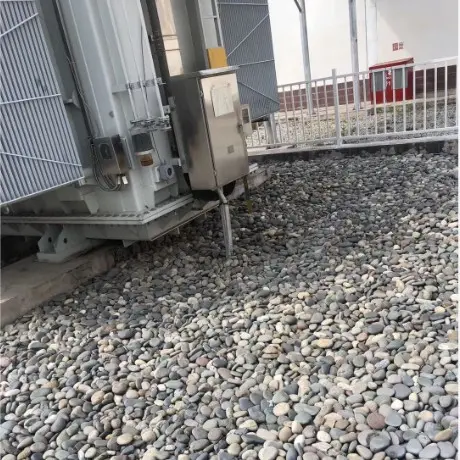
The primary wiring of transformers shall comply with the following regulations:
Supports and Cable Protection Conduits: The construction of supports and cable protection conduits for transformer incoming and outgoing lines shall conform to design document requirements. Supports must be firmly installed with elevation and horizontal deviations within ±5mm. Both supports and protection conduits shall have reliable grounding connections.
Rectangular Busbar Bending: When rectangular busbars are used for medium and low voltage connections of transformers, cold bending shall be performed. The curvature of multiple busbar strips shall be consistent. Busbar lapping shall comply with regulations specified in Sections 3 and 4 below.
Treatment of Contact Surfaces between busbars and electrical terminal connections shall conform to the following regulations:
For copper-to-copper contact surfaces: In outdoor environments, high-temperature and humid conditions, or indoor areas with corrosive gases, tin plating shall be applied.
For copper-to-aluminum contact surfaces: In dry indoor environments, copper conductors shall be tinned; for outdoor installations or indoor environments with relative humidity approaching 100%, copper-aluminum transition plates shall be used with the copper end tinned.
Steel-to-steel contact surfaces shall not be directly connected but shall be tinned or galvanized before connection.
Rectangular Busbar Lapping shall comply with the following regulations:
Lapping configuration shall conform to the specifications in Appendix C of DL/T 5759-2017; when busbars connect to equipment terminals, they shall comply with the current national standard "Standardization of Terminal Dimensions for High Voltage Apparatus" GB/T 5273.
When rectangular busbars are connected using bolted lapping, the distance from the connection point to the edge of the supporting clamp plate of the post insulator shall not be less than 50mm; the distance from the end of the upper busbar to the starting point of the flat bend of the lower busbar shall not be less than 50mm.
The diameter of bolt holes in busbar connections shall not exceed the bolt diameter by more than 1mm; bolt holes shall be perpendicular without skew, with center distance tolerance of ±0.5mm.
Busbar contact surfaces shall be flat and free of oxide films. For processed surfaces where cross-sectional area is reduced, copper busbars shall not exceed 3% of the original cross-section; aluminum busbars shall not exceed 5%.
Cable Connections: When cables are used for medium and low voltage connections, cable termination components and terminals shall comply with design document requirements. The connection between cable terminations and transformer lead connection posts shall be reliable, with clean, flat contact surfaces free of oxidation. For multiple cable incoming and outgoing connections, terminals shall be connected on both sides of the equipment connection posts, with contact area sufficient to meet current carrying capacity requirements.
Insulation Treatment: Exposed live parts should be insulated with heat-shrink sleeves or insulating tape wrapping.
Fireproof Sealing: Medium and low voltage cable protection conduits and plug-in busbar entry/exit points shall be properly sealed with fireproof materials.