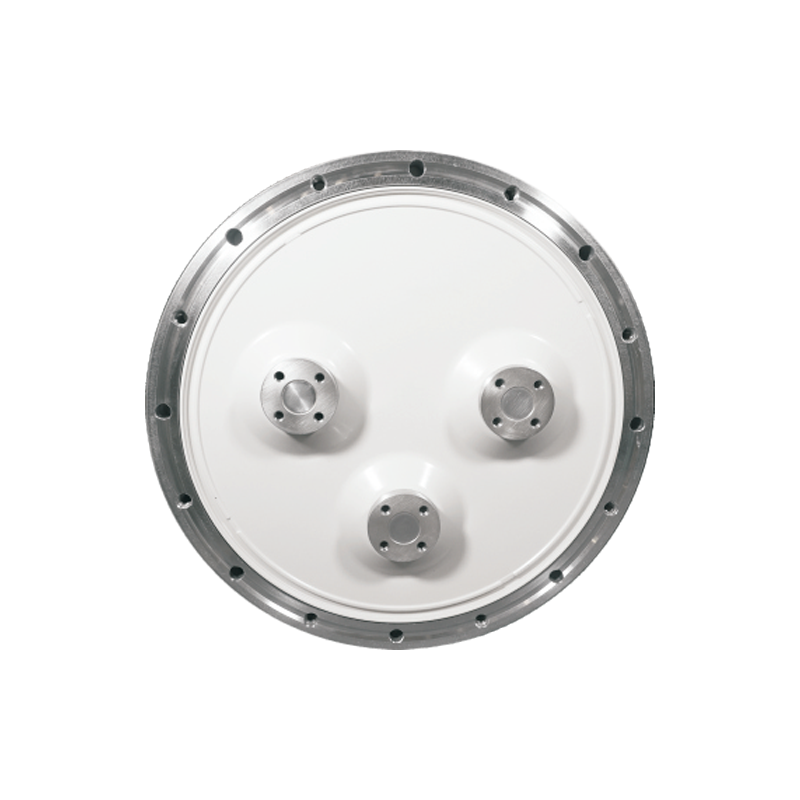
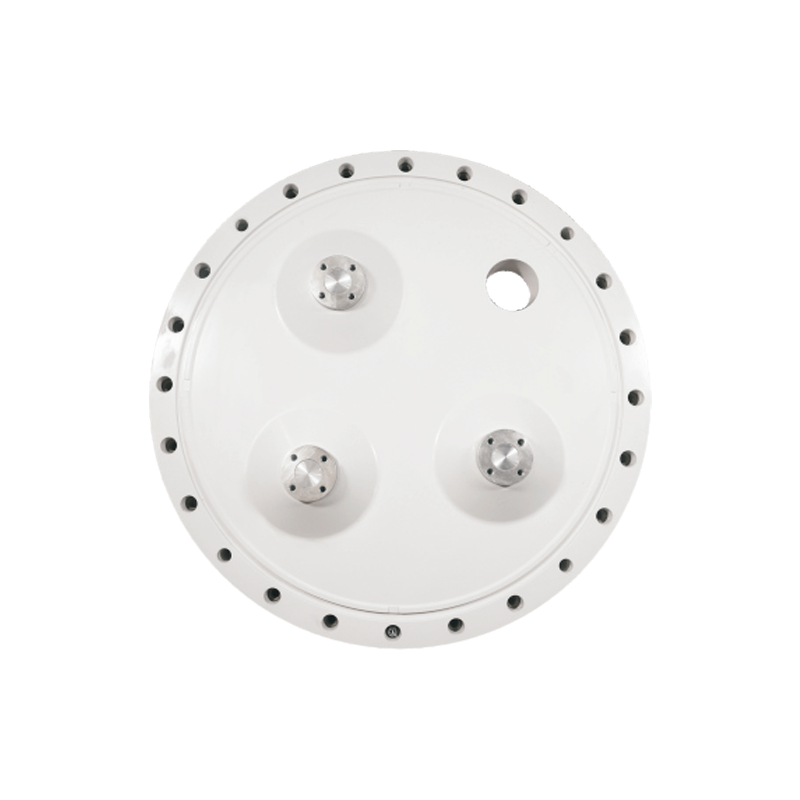
Three phase bowl insulators for 252kV and 363kV main busbars
Key attributes
| Brand | Switchgear parts |
| Model NO. | Three phase bowl insulators for 252kV and 363kV main busbars |
| Rated voltage | 363kV |
| Series | RN |
Product descriptions from the supplier
The three-phase bowl insulators (for main busbars) used in 252kV/363kV GIS equipment are the core components of high-voltage gas insulated switchgear, and their design must meet the insulation, mechanical, and environmental adaptability requirements under high voltage levels. The following is a comprehensive technical analysis:
1、 Design Features and Optimization
Structural Design
Adopting a three-phase common box structure, the electric field distortion is reduced by optimizing the geometric shape of the bowl insulator (such as the concave curvature radius), and the uniformity of the electric field between the three phases is improved by more than 20%
Cancel traditional metal shielding rings (such as 252kV products), reduce SF6 gas consumption by 15%, and avoid the risk of partial discharge
Materials and processes
Adding alumina or titanium dioxide fillers to epoxy resin composite materials, designing a gradient dielectric constant (ε=3.98-14.58), and increasing flashover voltage by 13.8%
3D printing combined with vacuum casting technology to achieve complex dielectric structures, with mechanical strength meeting 1.5 times the rated pressure water pressure test
2、 Performance parameters and validation
Electrical performance
252kV product power frequency withstand voltage 230kV, lightning impulse withstand voltage 550kV; 363kV product power frequency withstand voltage 300kV, lightning impulse withstand voltage 800kV
Partial discharge capacity ≤ 5pC, flashover voltage can still increase by 6.7% in the presence of metal foreign objects
Mechanical performance
Maximum deformation ≤ 0.45mm, interface stress below 70MPa, verified through hydraulic failure test
3、 Typical Applications and Fault Analysis
Application scenarios
Connection of 252kV/363kV GIS main busbar, such as urban substations, industrial power supply systems (such as automobile manufacturing plants, motor manufacturing industries)
Used in conjunction with isolation switches (such as GW22B-363D type) and grounding switches (such as JW10-550 type)
Fault statistics
The discharge caused by foreign objects in 252kV GIS faults accounts for 29%, and the failure rate of equipment that has been in operation for less than 5 years is as high as 89%
The risk of breakdown is significantly increased when metal shavings are arranged in the low potential region, and the partial discharge of sand particles is the highest
Note: Customization with drawings is available

Related Products
-
RNV-B1-12 GIS Sf6 Break Switch Circuit Breaker for Gas Insulated Switchgear
-
RNN-12 630A SF6 Gas Insulated Load Isolation Switch
-
RNN-12 SF6 Gas Insulated Load Isolation Switch (with Grounding)
-
RNV-A1-12D-1250A SF6 High Voltage Gas Insulated Inflatable Cabinet Circuit Breaker
-
24kV GIS Sf6 Break Switch Circuit Breaker for Gas Insulated Switchgear
-
24kV SF6 gas insulated load isolation switch (three position with isolation)
-
40.5kV Manual Operation Mechanism for Spring-Loaded Inlet of SF6 Gas-Insulated Switchgear
Related Knowledges
-
 Faults and Handling of Single-phase Grounding in 10kV Distribution LinesCharacteristics and Detection Devices for Single-Phase Ground Faults1. Characteristics of Single-Phase Ground FaultsCentral Alarm Signals:The warning bell rings, and the indicator lamp labeled “Ground Fault on [X] kV Bus Section [Y]” illuminates. In systems with a Petersen coil (arc suppression coil) grounding the neutral point, the “Petersen Coil Operated” indicator also lights up.Insulation Monitoring Voltmeter Indications:The voltage of the faulted phase decreases (in01/30/2026
 -
 Neutral point grounding operation mode for 110kV~220kV power grid transformersThe arrangement of neutral point grounding operation modes for 110kV~220kV power grid transformers shall meet the insulation withstand requirements of transformer neutral points, and shall also strive to keep the zero-sequence impedance of substations basically unchanged, while ensuring that the zero-sequence comprehensive impedance at any short-circuit point in the system does not exceed three times the positive-sequence comprehensive impedance.For 220kV and 110kV transformers in new constructi01/29/2026
 -
 Why Do Substations Use Stones, Gravel, Pebbles, and Crushed Rock?Why Do Substations Use Stones, Gravel, Pebbles, and Crushed Rock?In substations, equipment such as power and distribution transformers, transmission lines, voltage transformers, current transformers, and disconnect switches all require grounding. Beyond grounding, we will now explore in depth why gravel and crushed stone are commonly used in substations. Though they appear ordinary, these stones play a critical safety and functional role.In substation grounding design—especially when multiple gr01/29/2026
 -
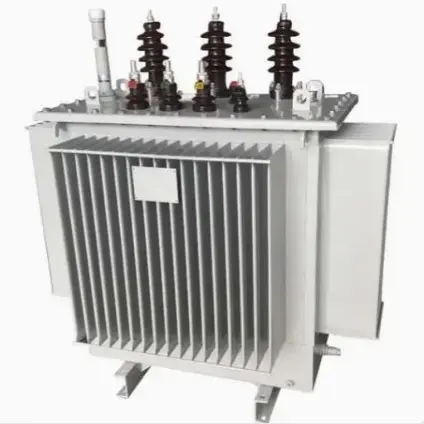 Why Must a Transformer Core Be Grounded at Only One Point? Isn't Multi-Point Grounding More Reliable?Why Does the Transformer Core Need to Be Grounded?During operation, the transformer core, along with the metal structures, parts, and components that fix the core and windings, are all situated in a strong electric field. Under the influence of this electric field, they acquire a relatively high potential with respect to ground. If the core is not grounded, a potential difference will exist between the core and the grounded clamping structures and tank, which may lead to intermittent discharge.I01/29/2026
 -
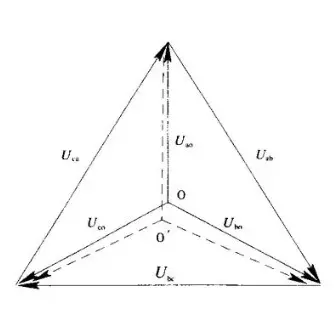 Understanding Transformer Neutral GroundingI. What is a Neutral Point?In transformers and generators, the neutral point is a specific point in the winding where the absolute voltage between this point and each external terminal is equal. In the diagram below, pointOrepresents the neutral point.II. Why Does the Neutral Point Need Grounding?The electrical connection method between the neutral point and earth in a three-phase AC power system is called theneutral grounding method. This grounding method directly affects:The safety, reliabilit01/29/2026
 -
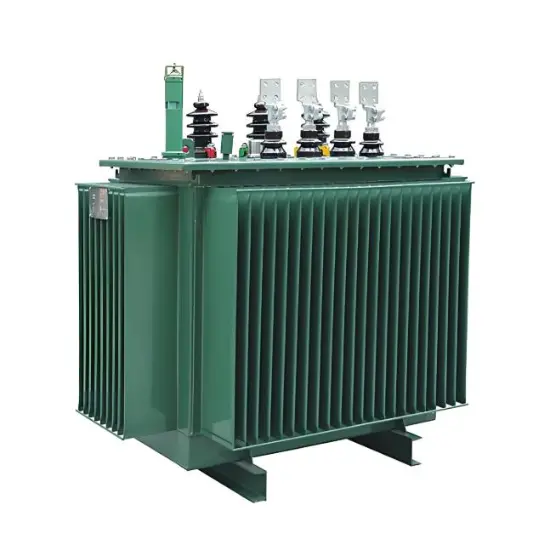 What’s the Difference Between Rectifier Transformers and Power Transformers?What is a Rectifier Transformer?"Power conversion" is a general term encompassing rectification, inversion, and frequency conversion, with rectification being the most widely used among them. Rectifier equipment converts input AC power into DC output through rectification and filtering. A rectifier transformer serves as the power supply transformer for such rectifier equipment. In industrial applications, most DC power supplies are obtained by combining a rectifier transformer with rectifier equ01/29/2026






