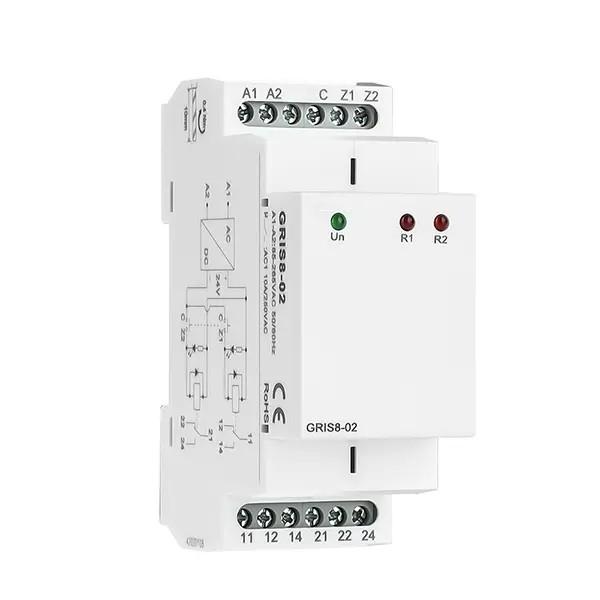
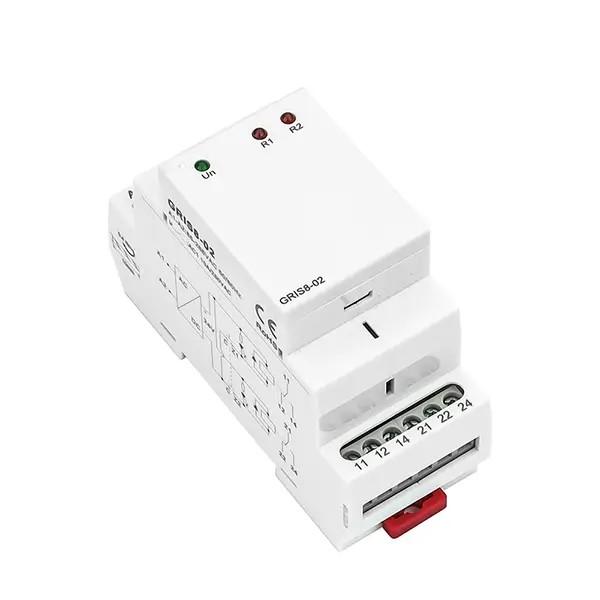
GRIS8-02 Isolated Relay
Key attributes
| Brand | Switchgear parts |
| Model NO. | GRIS8-02 Isolated Relay |
| Rated frequency | 45Hz-65Hz |
| Series | GRIS8 |
Product descriptions from the supplier
The GRIS8-02 Isolated Relay by GEYA is a high-performance isolation relay engineered for industrial automation and fire safety systems. With its advanced electrical isolation and versatile control capabilities, it is the go-to solution for HVAC systems, elevator controls, access control doors, and PLC interfaces. Its compact DIN rail mounting design ensures seamless integration into a wide range of control environments.
Voltage range: AC85-265V 45-65Hz
Burden: 3VA
Output: 2×SPDT
Switching voltage: 250VAC/24VDC
Current rating: 10A/AC1
Product Highlight:
Dual-Direction Isolation: Provides comprehensive isolation between input and output, minimizing the risk of system failures.
Superior Interference Resistance: Maintains stable operation even in high electromagnetic interference environments, ensuring system reliability.
Multi-Load Compatibility: Supports parallel control of multiple devices, meeting the demands of complex applications.
Millisecond Response Time: Delivers rapid switching for precise, real-time control.
Wide Temperature Adaptability: Operates flawlessly in extreme conditions, from -25°C to +70°C.
Intuitive Status Indicator: Built-in LED indicator for easy monitoring of relay status
| Model | GRIS8-02 |
| Function | Interface/ Control Relay |
| Supply terminals | A1-A2 |
| Voltage range | AC85-265V 45-65Hz |
| Burden | 3VA |
| Supply indication | green LED |
| Isolation voltage | |
| Supply I/P to I/P Switch | 4VAC |
| Supply I/P to O/P Switch | 4VAC |
| I/P Switch to Relay O/P | 4VAC |
| Output | 2 x SPDT |
| Current rating | 10A/AC1 |
| Switching voltage | 250VAC/24VDC |
| Min.breaking capacity DC | 500mW |
| Output indication | red LED |
| Mechanical life | 1*107 |
| Electrical life(AC1) | 1*105 |
| Operating temperature | -20℃~+55℃ |
| Storage temperature | -35℃~+75℃ |
| Mounting/DIN rail | Din rail EN/IEC 60715 |
| Protection degree | IP20 |
| Operating position | any |
| Overvoltage cathegory | III |
| Pollution degree | 2 |
| Max.cable size(mm²) | 1*25mm² or 2*1.5mm² 0.4N.m |
| Dimensions | 90mm×18mm×64mm |
| Weight | 120g |
| Standards | GB/T14048.5,IEC60947-5-1 |

Related Products
-
GRT6-B Single-Function Time Relay
-
GRT6-2T AC/DC 24-240V Double Time Delay Relay
-
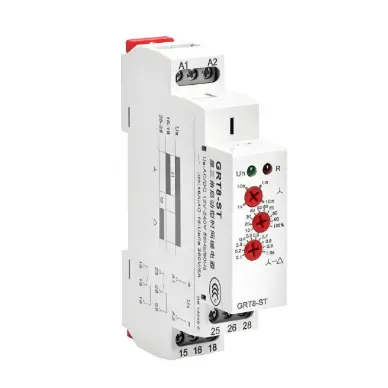
GRT8-ST Delay ON Star/Delta Timer Relay
-
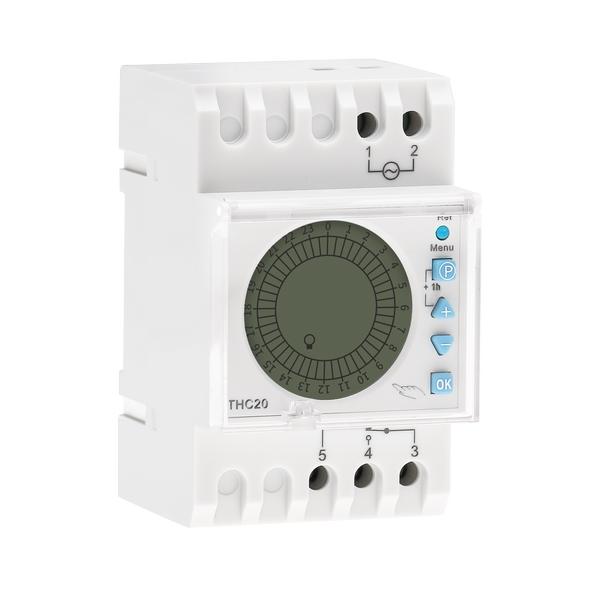
Digital Timer Switch THC 20-1C Weekly Programmable
-
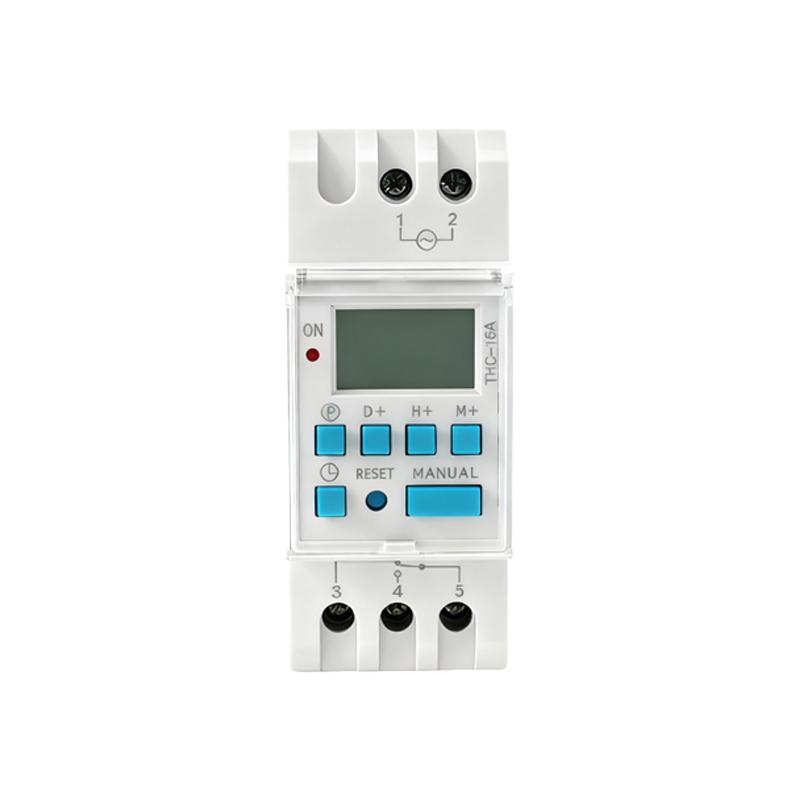
Digital Timer Switch THC 15A Programmable Periodic Timer
-
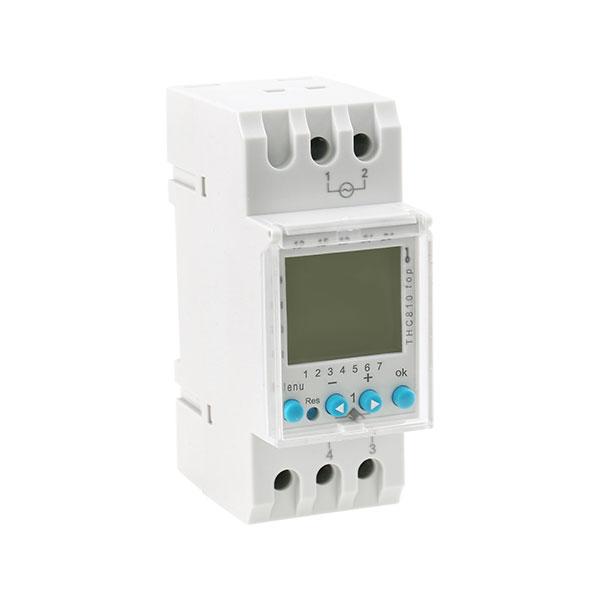
Digital Timer Switch THC 810 Weekly Programmable
-
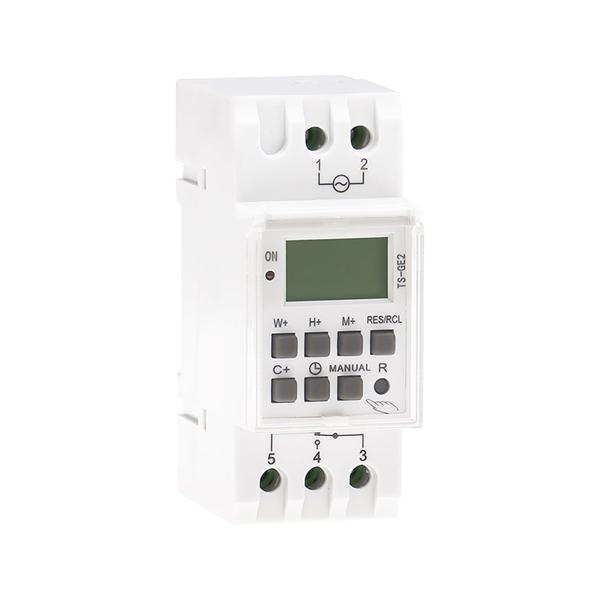
Digital Timer Switch TS-GE2 Programmable Periodic Timer
Related Knowledges
-
 Faults and Handling of Single-phase Grounding in 10kV Distribution LinesCharacteristics and Detection Devices for Single-Phase Ground Faults1. Characteristics of Single-Phase Ground FaultsCentral Alarm Signals:The warning bell rings, and the indicator lamp labeled “Ground Fault on [X] kV Bus Section [Y]” illuminates. In systems with a Petersen coil (arc suppression coil) grounding the neutral point, the “Petersen Coil Operated” indicator also lights up.Insulation Monitoring Voltmeter Indications:The voltage of the faulted phase decreases (in01/30/2026
 -
 Neutral point grounding operation mode for 110kV~220kV power grid transformersThe arrangement of neutral point grounding operation modes for 110kV~220kV power grid transformers shall meet the insulation withstand requirements of transformer neutral points, and shall also strive to keep the zero-sequence impedance of substations basically unchanged, while ensuring that the zero-sequence comprehensive impedance at any short-circuit point in the system does not exceed three times the positive-sequence comprehensive impedance.For 220kV and 110kV transformers in new constructi01/29/2026
 -
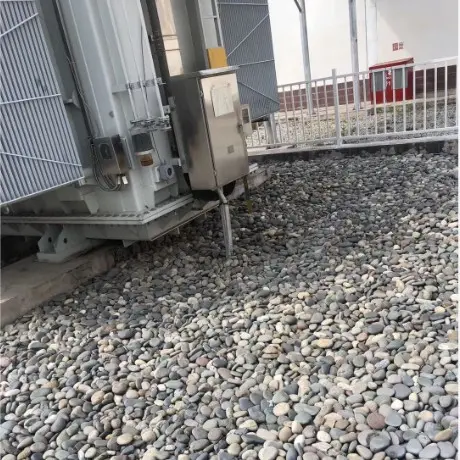 Why Do Substations Use Stones, Gravel, Pebbles, and Crushed Rock?Why Do Substations Use Stones, Gravel, Pebbles, and Crushed Rock?In substations, equipment such as power and distribution transformers, transmission lines, voltage transformers, current transformers, and disconnect switches all require grounding. Beyond grounding, we will now explore in depth why gravel and crushed stone are commonly used in substations. Though they appear ordinary, these stones play a critical safety and functional role.In substation grounding design—especially when multiple gr01/29/2026
 -
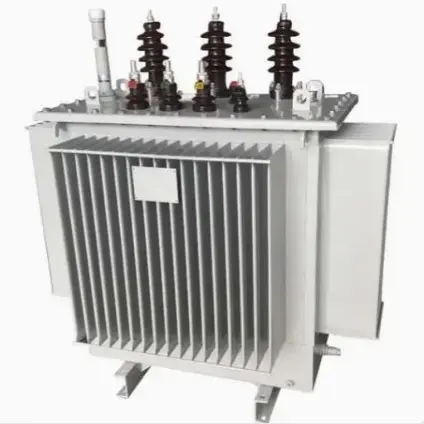 Why Must a Transformer Core Be Grounded at Only One Point? Isn't Multi-Point Grounding More Reliable?Why Does the Transformer Core Need to Be Grounded?During operation, the transformer core, along with the metal structures, parts, and components that fix the core and windings, are all situated in a strong electric field. Under the influence of this electric field, they acquire a relatively high potential with respect to ground. If the core is not grounded, a potential difference will exist between the core and the grounded clamping structures and tank, which may lead to intermittent discharge.I01/29/2026
 -
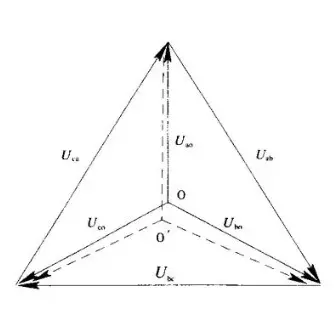 Understanding Transformer Neutral GroundingI. What is a Neutral Point?In transformers and generators, the neutral point is a specific point in the winding where the absolute voltage between this point and each external terminal is equal. In the diagram below, pointOrepresents the neutral point.II. Why Does the Neutral Point Need Grounding?The electrical connection method between the neutral point and earth in a three-phase AC power system is called theneutral grounding method. This grounding method directly affects:The safety, reliabilit01/29/2026
 -
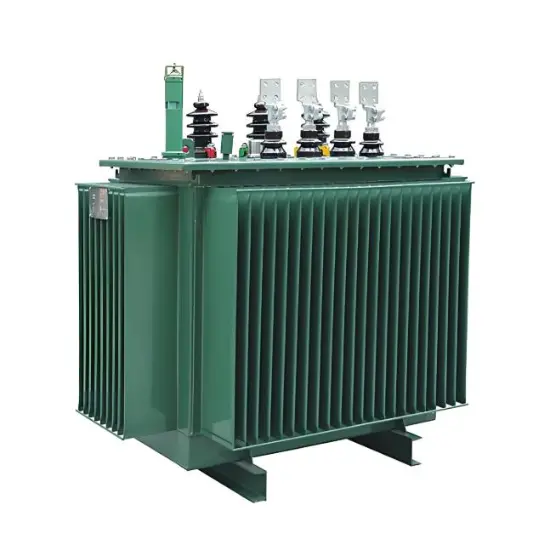 What’s the Difference Between Rectifier Transformers and Power Transformers?What is a Rectifier Transformer?"Power conversion" is a general term encompassing rectification, inversion, and frequency conversion, with rectification being the most widely used among them. Rectifier equipment converts input AC power into DC output through rectification and filtering. A rectifier transformer serves as the power supply transformer for such rectifier equipment. In industrial applications, most DC power supplies are obtained by combining a rectifier transformer with rectifier equ01/29/2026






