• Product
  • Suppliers
  • Manufacturers
  • Solutions
  • Free tools
  • Knowledges
  • Experts
  • Communities
Search


Improved Interlock Wiring for Isolator Safety

Echo
Echo
Field: Transformer Analysis
China

Interlocking the disconnector (isolator) control wiring with its associated circuit breaker can effectively prevent the inadvertent opening or closing of the disconnector under load. However, during operations involving bus-side and line-side disconnectors, human error may lead to an incorrect sequence of operations—an action strictly prohibited by switching principles and a known cause of power system accidents.

 To prevent such sequence errors, for substations and power plants that do not employ coded mechanical interlock (program lock) anti-misoperation systems, modifying the existing disconnector control wiring offers an effective solution to avoid misoperations and reduce unnecessary incidents.

1.Principle of Improved Disconnector Control and Interlocking Circuit
Auxiliary contacts of the disconnectors are inserted into their respective control and interlocking circuits: specifically, a normally closed (NC) auxiliary contact of the line-side disconnector is wired in series with the control circuit of the bus-side disconnector, while a normally open (NO) auxiliary contact of the bus-side disconnector is wired in series with the control circuit of the line-side disconnector.
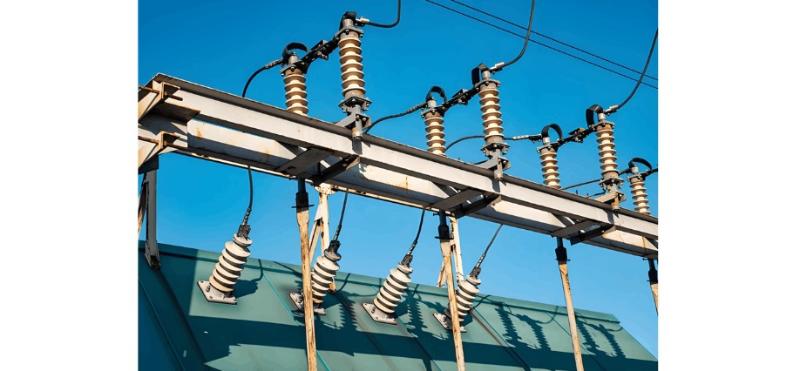
Switch Disconnectors..jpg

2.Disconnector Interlocking Wiring Using Electromagnetic Locks (Anti-Misoperation)

This improved wiring not only prevents load operations on disconnectors but also enforces compliance with established switching sequences, thereby eliminating violations of operational procedures.

  • During de-energization: After opening the circuit breaker, the line-side disconnector must be opened first; only then can the bus-side disconnector be opened.

  • During re-energization: With the circuit breaker in the open position, the bus-side disconnector must be closed first; only then can the line-side disconnector be closed.

3.Advantages of the Improved Wiring Scheme

  • The modified wiring retains all benefits of the original disconnector control circuit while primarily ensuring strict adherence to switching sequence rules, significantly reducing the risk of human-induced errors and associated accidents.

  • The design is simple, reliable, and cost-effective. It is suitable for disconnector control circuits employing electromagnetic anti-misoperation locks, as well as those using pneumatic, electric, or electro-hydraulic operating mechanisms.

  • In installations without coded program-lock anti-misoperation systems, this wiring effectively functions as a "soft" program lock, providing equivalent procedural enforcement through electrical interlocking.
Give a tip and encourage the author!
Recommended
Protection Logic Improvement and Engineering Application of Grounding Transformers in Rail Transit Power Supply Systems
1. System Configuration and Operating ConditionsThe main transformers at Zhengzhou Rail Transit’s Convention & Exhibition Center Main Substation and Municipal Stadium Main Substation adopt a star/delta winding connection with a non-grounded neutral point operation mode. On the 35 kV bus side, a Zigzag grounding transformer is used, connected to ground through a low-value resistor, and also supplies station service loads. When a single-phase ground short-circuit fault occurs on a line, a path
Echo
12/04/2025
Common Issues and Handling Measures for 145kV Disconnector Control Circuits
The 145 kV disconnector is a critical switching device in substation electrical systems. It is used in conjunction with high-voltage circuit breakers and plays an important role in power grid operation:First, it isolates the power source, separating equipment under maintenance from the power system to ensure personnel and equipment safety;Second, it enables switching operations to change the system operating mode;Third, it is used to interrupt small-current circuits and bypass (loop) currents.Re
Felix Spark
11/20/2025
What are the six operating principles of disconnect switches?
1. Operating Principle of the DisconnectorThe operating mechanism of the disconnector is connected to the active pole of the disconnector via a connecting tube. When the main shaft of the mechanism rotates 90°, it drives the insulating pillar of the active pole to rotate 90°. The bevel gears inside the base drive the insulating pillar on the other side to rotate in the opposite direction, thereby achieving opening and closing operations. The active pole, through inter-pole linkage tubes, drives
Echo
11/19/2025
36kV Disconnect Switch Selection Guide & Key Parameters
Selection Guidelines for 36 kV Disconnect SwitchesWhen selecting the rated voltage, ensure that the disconnect switch’s rated voltage is equal to or higher than the nominal voltage of the power system at the installation point. For example, in a typical 36 kV power network, the disconnect switch must have a rated voltage of at least 36 kV.For rated current, selection should be based on the actual long-term load current. Generally, the switch’s rated current must be no less than the maximum conti
James
11/19/2025
Related Products
Send inquiry
Download
Get the IEE Business Application
Use the IEE-Business app to find equipment, obtain solutions, connect with experts, and participate in industry collaboration anytime, anywhere—fully supporting the development of your power projects and business.