1. Product Overview
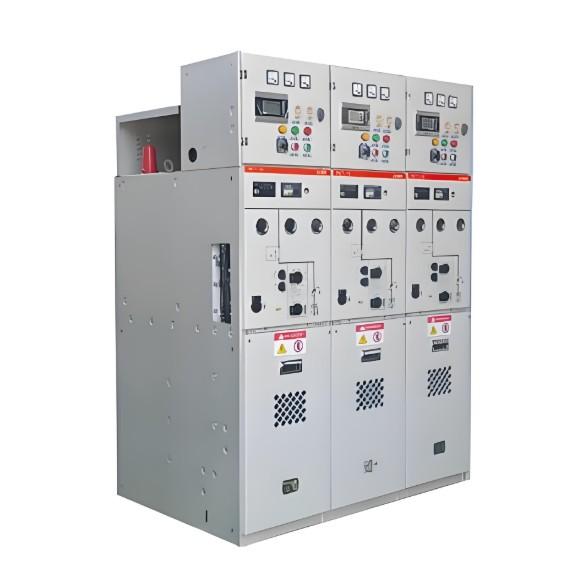
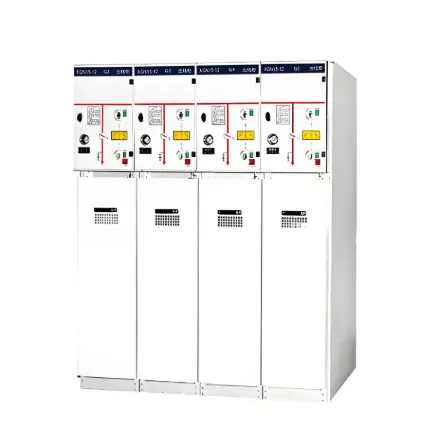
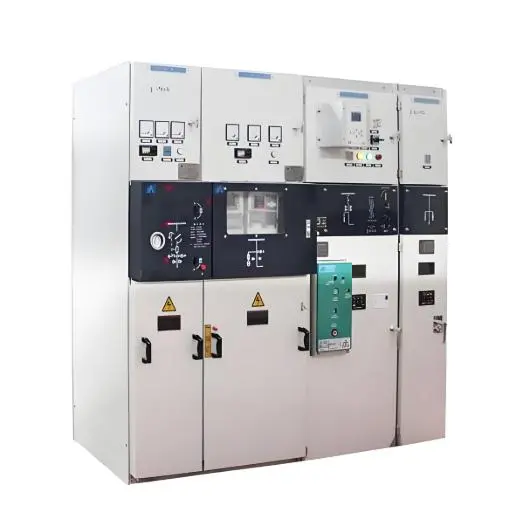
A Ring Main Unit (RMU) is an electrical apparatus composed of high-voltage switching equipment enclosed in a metal or non-metal insulated cabinet, or configured as modular compartments forming a ring-type power supply unit. Its core components typically include load switches and fuses, offering advantages such as simple structure, compact size, low cost, improved power parameters and performance, and enhanced power supply safety.
RMUs are widely used in distribution substations and prefabricated (container-type) transformer substations located at load centers, including urban residential communities, high-rise buildings, large public facilities, and industrial enterprises.
2. Working Principle and Applications
2.1 Ring Network Power Supply
To improve power supply reliability, allowing users to receive power from two directions, power grids are often interconnected into a closed loop—known as ring network Ring Network Supply.
In 10kV AC distribution systems for industrial plants, residential areas, ports, and high-rise buildings—where load capacities are generally moderate—the high-voltage circuits commonly employ load switches or vacuum contactors for control, combined with high-voltage fuses for protection. Such systems are typically referred to as ring network systems, and the switchgear used is commonly known as a Ring Main Unit.
The "ring" refers to a closed-loop distribution network: the main feeder forms a continuous loop, powered by one or more sources. From this loop, power is distributed through individual high-voltage switchgear units.
This configuration allows each distribution branch to draw power from either side of the loop:
If the left-side feeder fails, power is supplied from the right.
If the right-side feeder fails, power is supplied from the left.
Although the overall system may have a single power source, each branch effectively enjoys dual-source redundancy, significantly improving supply reliability.
Each outgoing circuit is equipped with a dedicated switchgear unit (outgoing switch cabinet), whose busbar also serves as part of the ring main. The entire ring is formed by connecting the busbars of all outgoing cabinets. Each such cabinet is called a Ring Main Unit.
Note: A standalone RMU does not inherently exhibit "ring" functionality; its benefits are realized only when integrated into a complete ring network.
2.2 Key Configuration
Since RMUs typically serve moderate loads (e.g., transformers up to 1250kVA), they do not require complex circuit breakers. Instead, they use simplified load switches combined with high-voltage fuses:
The load switch handles normal load current switching.
The fuse interrupts short-circuit currents.
Together, they replace the function of a circuit breaker—within certain capacity limits. This design reduces complexity, cost, and maintenance needs, making it ideal for infrequent operation scenarios.
Over time, due to widespread adoption, the term "RMU" has evolved beyond strict ring networks and now generally refers to any high-voltage switchgear using a load switch as the primary switching device.
2.3 Market Drivers and Advantages
RMUs have gained rapid popularity despite their relatively recent emergence, driven by:
The rise of medium- and small-capacity users (transformers ≤1250kVA).
Demand for stable, long-term power supply with infrequent switching.
Urban development requiring compact, oil-free electrical equipment in high-rise buildings (due to fire safety and space constraints).
RMUs meet these needs with:
Simple structure
High operational reliability and safety
Minimal maintenance
Low operating costs
Compared to circuit breaker-based switchgear, RMUs offer outstanding advantages. This demand has spurred innovation in smaller, higher-performance load switches, further advancing RMU technology. Today’s RMUs are not only high-performing but also standardized and series-produced, greatly expanding their application range.
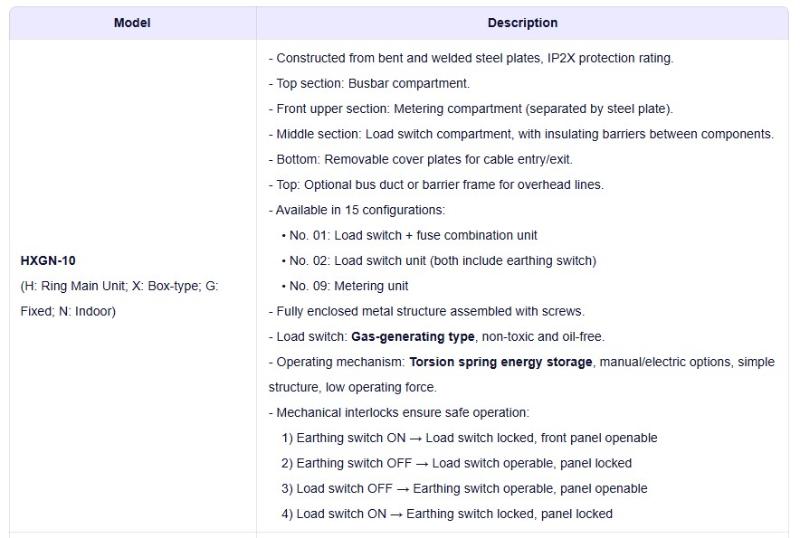
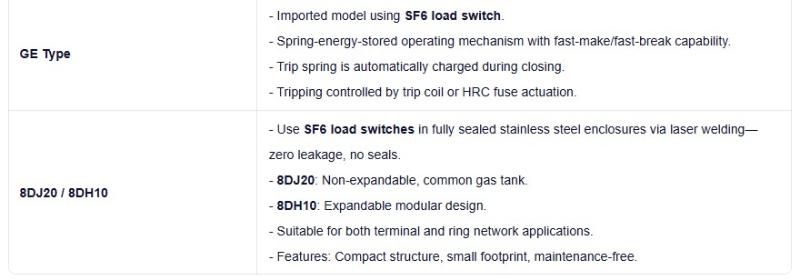
3. Common RMU Models
4. Protection Overview
4.1 Microprocessor-Based Protection Relay
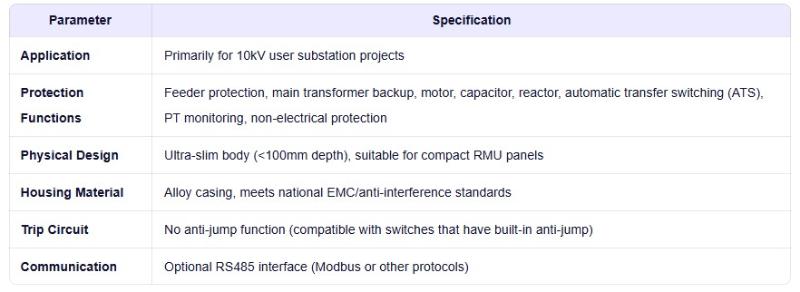
Modern RMUs increasingly adopt microprocessor-based protection relays—a high-tech automation product integrating protection, monitoring, control, and communication functions. Developed based on extensive domestic and international experience and tailored to China’s integrated automation systems, it is ideal for building intelligent switchgear.
Key features:
Built-in library of over 20 standard protection functions.
Comprehensive data acquisition for analog signals (voltage, current via CTs) and digital status signals.