• Product
  • Suppliers
  • Manufacturers
  • Solutions
  • Free tools
  • Knowledges
  • Experts
  • Communities
Search


Free Expert Guides on Power Systems, Circuit Design & Electrical Troubleshooting

Access free engineering resources from IEE Business—covering power design, circuit layout, equipment selection, and troubleshooting. Expert-developed guides help engineers, procurement, and project teams make better decisions. Stay ahead on smart grids, renewables, efficiency, and AI tools. Improve reliability, reduce downtime, and enhance outcomes with real-world solutions. Explore our knowledge hub today.
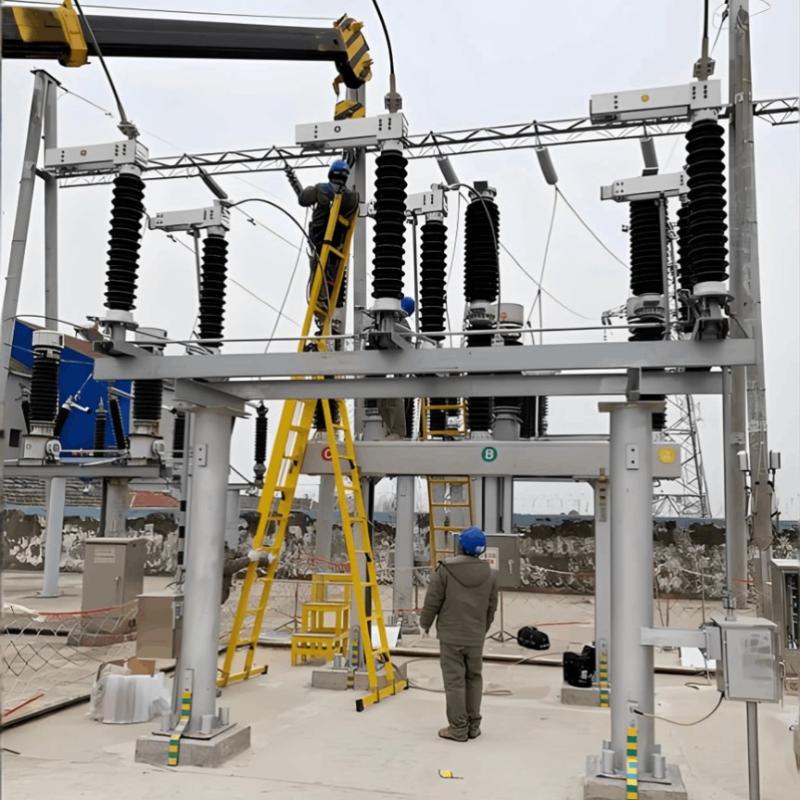
Why Do Disconnectors Overheat? Diagnosis & Fixes
Causes of Heating in Disconnectors Incomplete closing: This significantly reduces the current-carrying cross-sectional area, leading to increased contact resistance. Loose fasteners or degraded springs: Corrosion or overheating of the blade or contact springs reduces spring pressure; improper operating force may also cause misalignment of contact surfaces. Poor contact closure: Results in oxidation and contamination of contact surfaces; contacts may also be damaged by arcing during operation, an
11/13/2025
Consult
Tip
Consult
Tip
Analysis of Support Bracket Cracking in Outdoor High-Voltage Disconnectors at a Substation
The operational status and reliability of equipment within substations directly affect the safety and stability of the power grid. Most substation equipment consists of metal components made from various materials such as pure copper, carbon steel, and stainless steel. During long-term operation, performance degradation of these metallic materials often leads to equipment failures, posing significant risks to the safe and stable operation of substations.Outdoor high-voltage disconnectors are a p
11/13/2025
Consult
Tip
Consult
Tip
Motor-Operated Mechanism Control System for High-Voltage Disconnectors
High-voltage disconnectors require operating mechanisms with fast response and high output torque. Most current motor-driven mechanisms rely on a series of reduction components, yet motor-operated mechanism control systems effectively meet these requirements.1. Overview of the Motor-Operated Mechanism Control System for High-Voltage Disconnectors1.1 Basic ConceptThe motor-operated mechanism control system primarily refers to a system that employs a dual-loop PID control strategy to regulate moto
11/13/2025
Consult
Tip
Consult
Tip
Winter Maintenance Essentials for GW5-Type Disconnectors
In substations with voltage levels of 110 kV and below, the GW5-type disconnector is widely used due to its simple structure, reliable contact performance, and self-cleaning contact function. Every winter, the failure rate of abnormal heating in GW5-type disconnectors shows an upward trend. Therefore, improving winter maintenance practices for GW5-type disconnectors (hereinafter referred to as “disconnectors”) and promptly detecting and addressing overheating faults are of critical importance to
11/12/2025
Consult
Tip
Consult
Tip
Research on the Application of a Remote Online Defect Elimination System for High-Voltage Disconnector Contacts
High-voltage disconnectors, also known as isolator switches or knife switches, feature a simple working principle and convenient operation. As commonly used high-voltage switching equipment, they significantly impact the operational safety of substations, demanding stringent reliability in practical applications. The remote online defect-elimination system for high-voltage disconnector contacts offers advantages such as ease of operation, low operating costs, and high stability, making it well-s
11/11/2025
Consult
Tip
Consult
Tip
Application of High-Voltage Disconnectors in Traction Power Supply Systems
Traditional switches have become increasingly inadequate for the operational demands of modern traction power supply systems. The emergence of high-voltage disconnectors has effectively filled this gap. High-voltage disconnector systems optimize the structure of conventional switches, broaden their applicability, and place greater emphasis on fine details, thereby enhancing the safety and reliability of power systems during actual operation. Therefore, it is essential to analyze and study the ap
11/11/2025
Consult
Tip
Consult
Tip
Fault Handling of High-Voltage Disconnector Failure to Open at a 110 kV Substation
According to relevant regulations, high-voltage disconnectors are permitted to perform the following operations: Switching (opening/closing) normally operating potential transformers (PTs) and surge arresters; Switching the neutral grounding disconnector of a main transformer under normal operating conditions; Switching small-current loops to balance circulating currents.A high-voltage disconnector is an electrical component without arc-quenching capability. Therefore, it may only be operated wh
11/11/2025
Consult
Tip
Consult
Tip
Monitoring Technology for Open/Close Position of High-Voltage Disconnectors
In the context of high-speed operation of power systems, the opening and closing mechanism of high-voltage disconnectors in substations faces challenges such as complex operational procedures, large workloads, and low operational efficiency. With the advancement of image recognition technologies and sensor innovations, modern intelligent substations now demand higher technical standards for monitoring the open/close positions of high-voltage disconnectors during infrastructure development.The in
11/11/2025
Consult
Tip
Consult
Tip
Design of a Remote Monitoring and Fault Early-Warning System for High-Voltage Disconnectors
The operational status of high-voltage disconnectors directly impacts the safety and stability of power grids. Currently, the operation and maintenance (O&M) of high-voltage disconnectors face numerous challenges—traditional O&M methods are inefficient, slow to respond, and struggle to accurately predict faults. Against this backdrop, developing a remote monitoring and fault early-warning system for high-voltage disconnectors is of great significance.1. Overall Design of the Remote Monit
11/11/2025
Consult
Tip
Consult
Tip
Analysis of Corrosion Protection Technology in High-Voltage Disconnectors
High-voltage disconnectors are critical protective devices in industrial electrical systems. Typically installed both indoors and outdoors at worksites, these disconnectors are prone to corrosion from multiple factors during long-term operation. This paper analyzes corrosion protection technologies for high-voltage disconnectors based on natural environmental conditions, internal structural design, and protective coating strategies, aiming to support the stable and reliable operation of relevant
11/11/2025
Consult
Tip
Consult
Tip
Send inquiry
+86
Click to upload file

IEE Business will not sell or share your personal information.

Download
Get the IEE Business Application
Use the IEE-Business app to find equipment, obtain solutions, connect with experts, and participate in industry collaboration anytime, anywhere—fully supporting the development of your power projects and business.