• Product
  • Suppliers
  • Manufacturers
  • Solutions
  • Free tools
  • Knowledges
  • Experts
  • Communities
Search


Feeder Terminal Unit

  • Feeder Terminal Unit
  • Feeder Terminal Unit

Key attributes

Brand RW Energy
Model NO. Feeder Terminal Unit
Rated voltage 230V ±20%
Rated frequency 50/60Hz
Electric energy consumption ≤5W
Series RWK-55

Product descriptions from the supplier

Description

Description

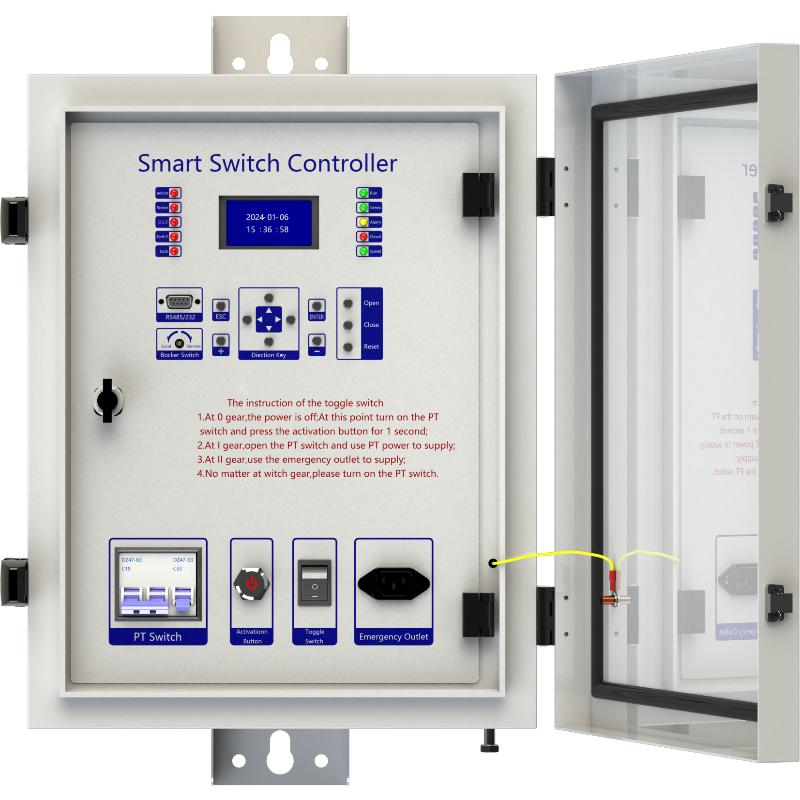
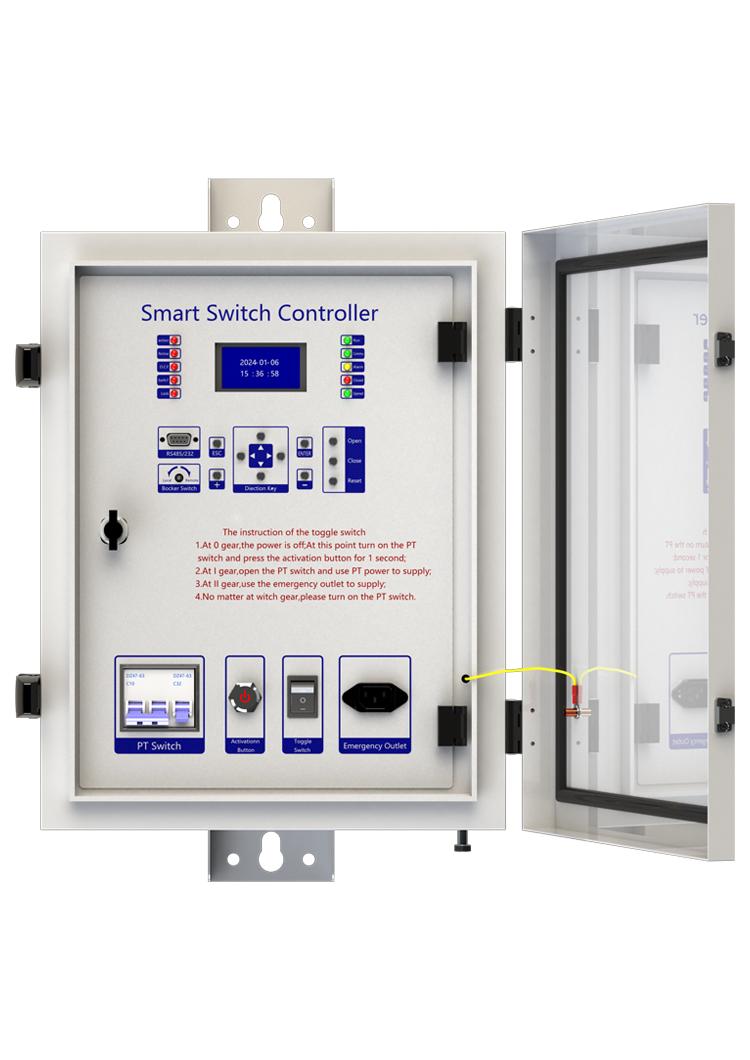
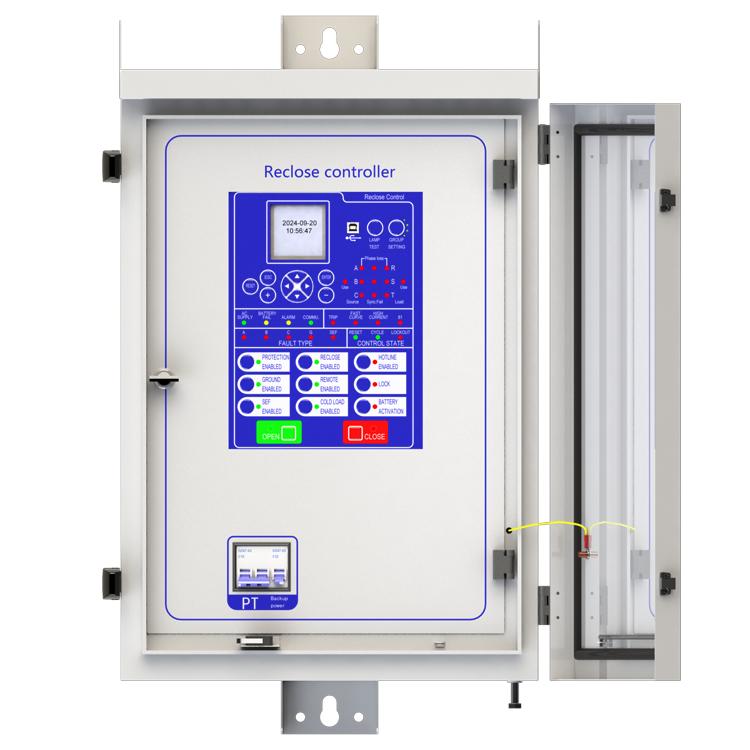
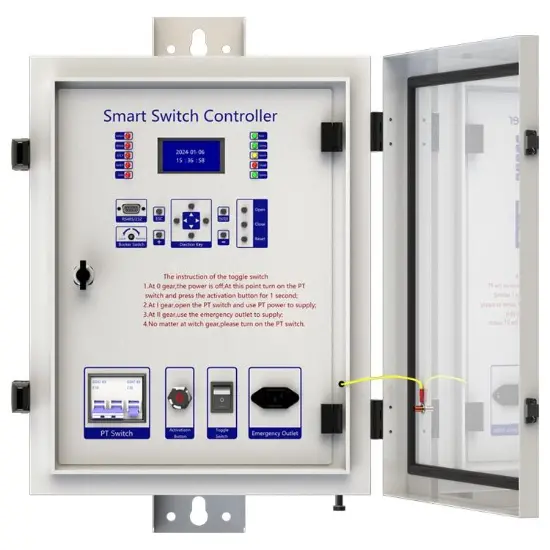
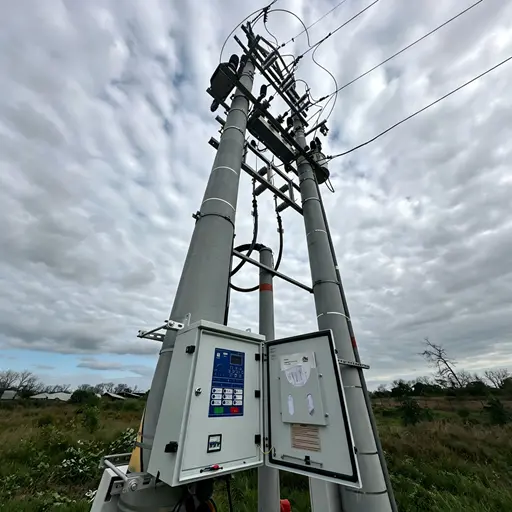
RWK-55 overhead line protection switch intelligent controller is medium voltage overhead line grid monitoring unit, it can be equipped with RCW(RVB) type vacuum circuit breaker for achieve of automatic monitoring, fault analysis and event records.

Its given to us a safety power grid for cutting line fault and automatic recovery operation and power automation.

 RWK-55 series is suitable for up to 35kV outdoor switchgear using, include: vacuum circuit breakers, oil circuit breakers and gas circuit breakers. RWK-55 intelligent controller is gathering with line protection, control, measurement and monitoring of voltage and current signals integrated automation and control devices outdoors.

RWK is an automatic management unit for single way/multi ways/ring network/two power sourcing, provided with all voltage and current signals and all functions. RWK-55 column switch intelligent controller supports: Wireless (GSM/GPRS/CDMA), Ethernet mode, WIFI, optical fiber, power line carrier, RS232/485, RJ45 and other forms of communication, and can access other station premises equipment (such as TTU, FTU, DTU, etc.).

Main function introduction

1. Protection relay functions:

1) 49 Thermal Overload,

2) 50 Three-section of Overcurrent (Ph.OC) ,

3) 50G/N/SEF Sensitive Earth Fault (SEF),

4) 27/59 Under/Over Voltage (Ph.OV/Ph.UV),

5) 51C Cold load pickup (Cold load).

2. Supervision functions: 

1) 60CTS CT Supervision,

2) 60VTS VT Supervision,

3. Control functions:

1) 86 Lockout,

2) 79 Auto reclose,.

3) circuit-breaker control,

4. Monitoring Functions:

1) Primary currents for Phases and Zero sequence current,

2) Primary PT Voltage,

3) Frequency,

4) Binary Input/Output status,

5) Trip circuit healthy/failure,

6) Time and date, 

7) Fault records,

8) Event records.

5. Communication functions:

a.  Communication interface: RS485X1,RJ45X1

b. Communication protocol: IEC60870-5-101; IEC60870-5-104; DNP3.0;  Modbus-RTU

c. PC software: RWK381HB-V2.1.3,The address of the information body can be edited and queried by PC software,

d. SCADA system: SCADA systems that support the four protocols shown in "b.”.

6. Data Storage functions:

1) Event Records,

2) Fault Records,

3) Measurands.

7. remote signaling remote measuring, remote controlling function can be customized address.

Technology parameters
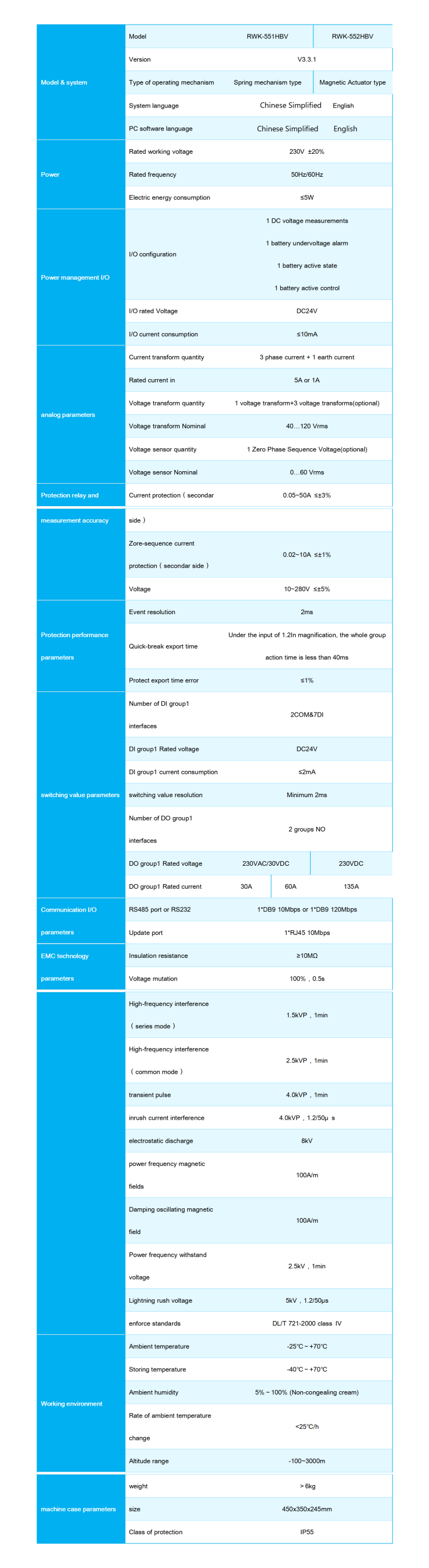
paramete.png

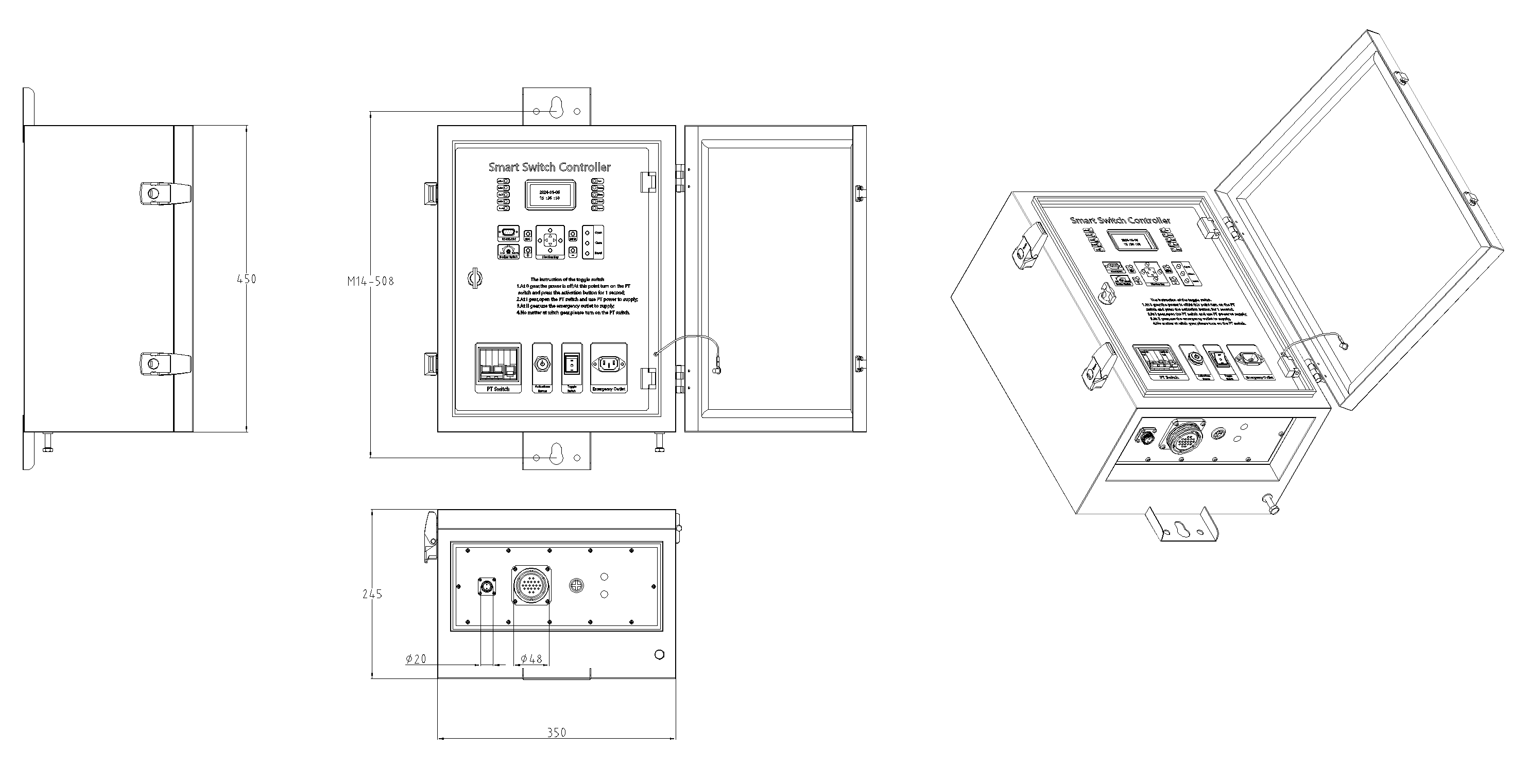
Device structure

RWK-55-尺寸Model.png

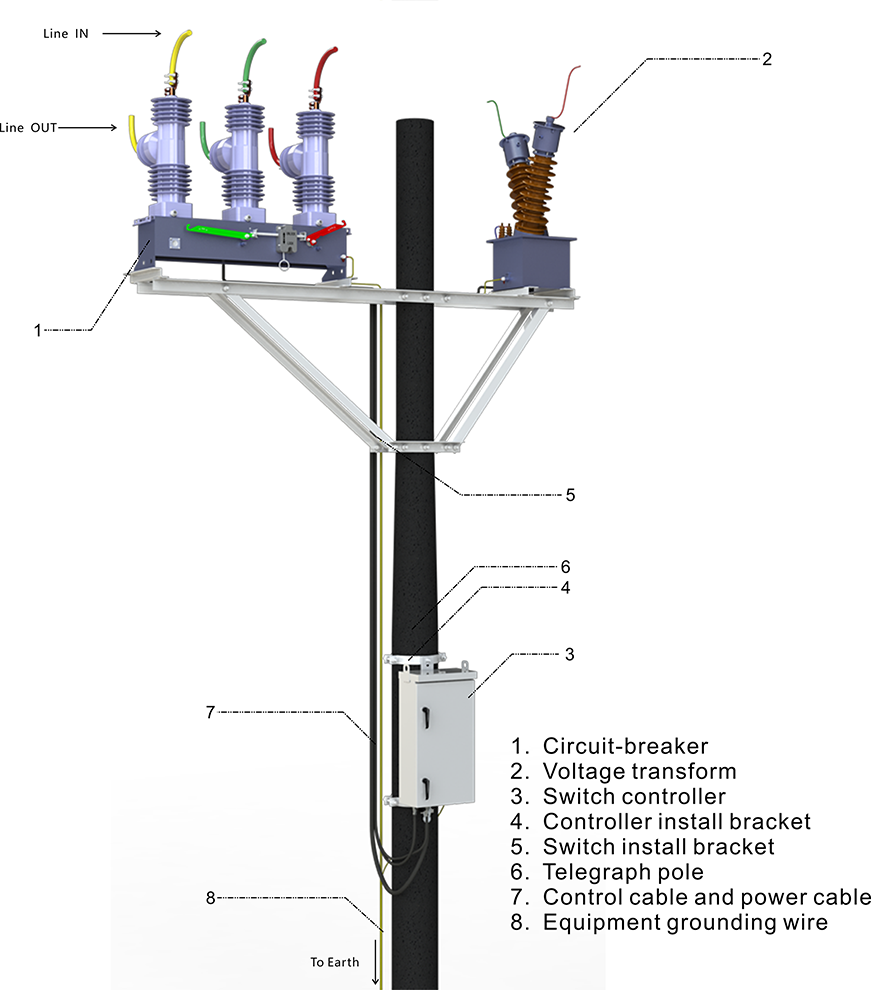
控制器的应用方案.png


About customization

The following optional functions are available: Power supply rated at 110V/60Hz,3 Voltage transform, 1 Zero phase sequence voltage sensor, cabinet heating defrosting device, 1 battery measurement, 1 battery activation management, GPRS communication module,1~2 signal indicators,1~4 protection pressure plates, the second voltage transformer, custom aviation socket signal definition.

For detailed customization, please contact the salesman.


Q: What does the line protection switch controller do?

A: It is mainly used to protect the line security. When the line is overloaded, short circuit and other abnormal conditions, the line protection switch controller can quickly detect these problems, and then automatically cut off the circuit, to prevent the line from being damaged by too much current, to avoid causing fire and other dangerous situations. Q: How does it detect a line anomaly?

A: It has a sophisticated current detection device inside. When the current in the line exceeds the set safe value, whether it is due to overload caused by too many appliances or short circuit caused by line fault, the detection device can sense the change in the current and trigger the controller action.

Q: Is the line protection switch controller durable?

A: Generally speaking, if it is a qualified product, it is more durable. The electronic components used are strictly screened, and the housing has good protection and can adapt to different environmental conditions, but it is also checked and maintained regularly to ensure that it works properly.
Documentation Resource Library
Restricted
RWK-55 Feeder Automatic Unit Installation drawing
Drawing
English
Consulting
Consulting
Restricted
RWK-55 Feeder Automatic Unit used manual
Operation manual
English
Consulting
Consulting
Restricted
RWK-55 Feeder Automatic Unit electrical drawing
Drawing
English
Consulting
Consulting
Public.
IEC60870-5-7 Communication protocol standard
Other
English
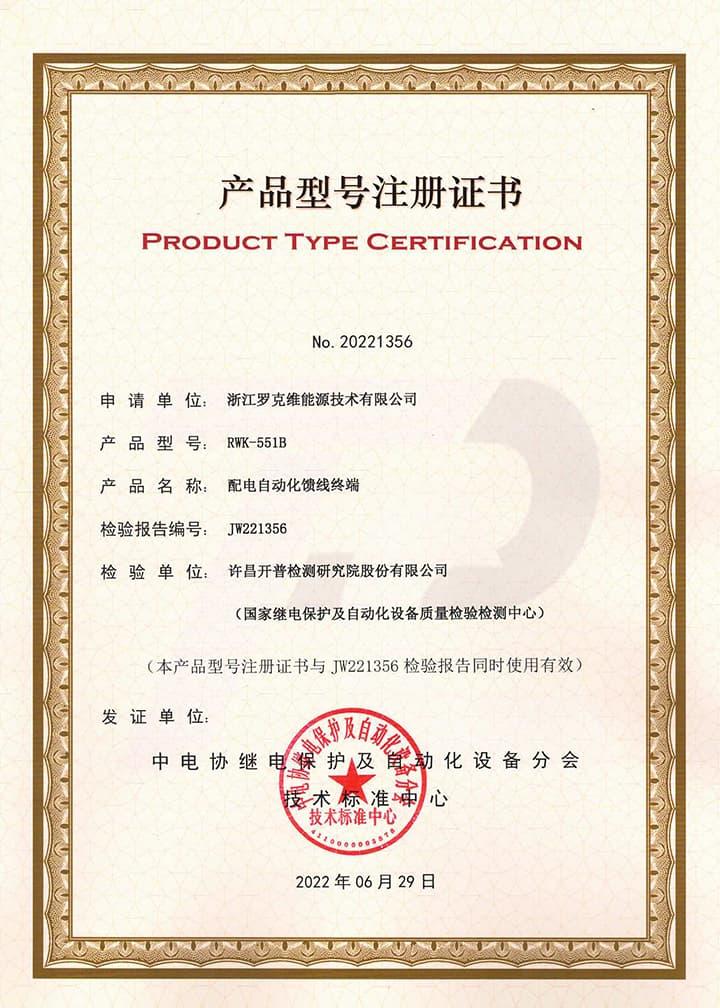
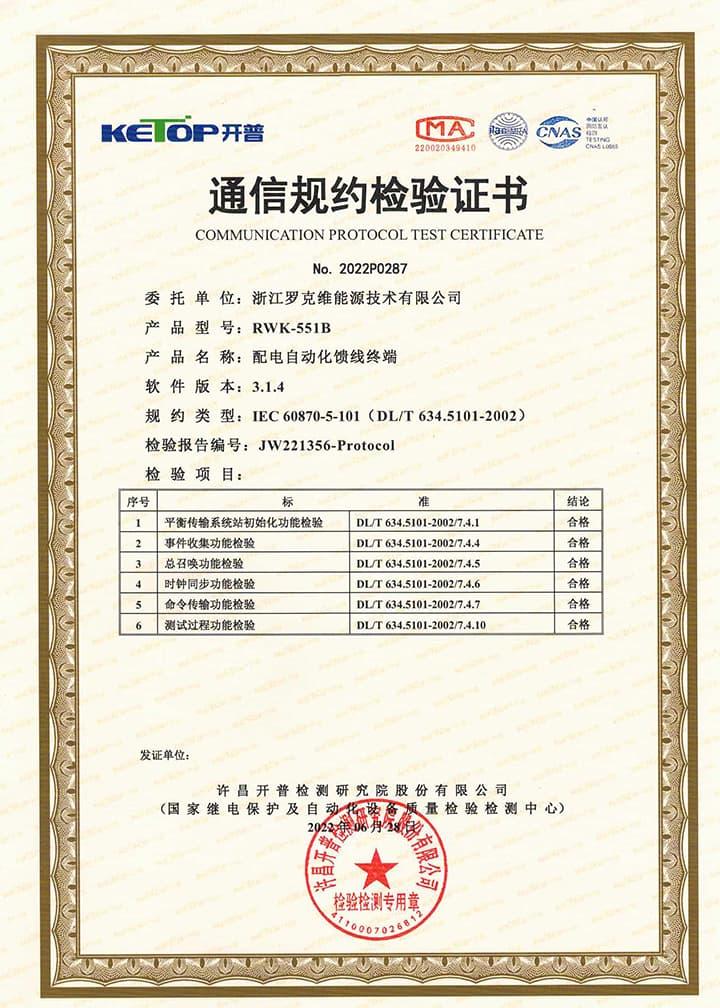
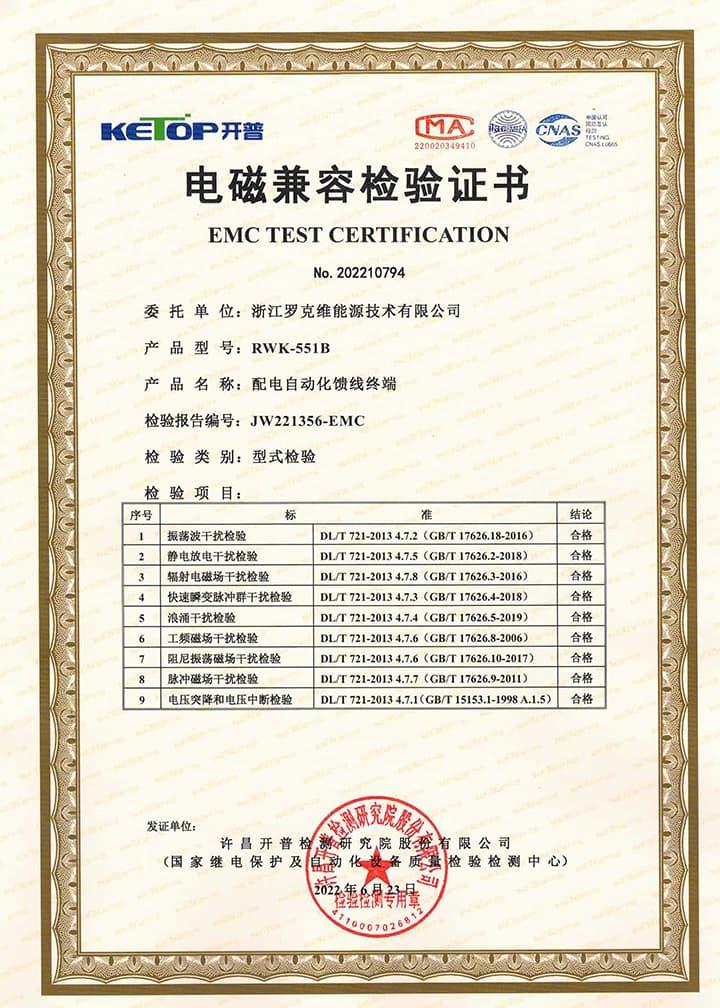
Certifcations
FAQ
Q: Can this device be connected to SCADA System or DMS?
A:

This device can connect to SCADA System and DMS, and you can connect the terminal to the server according to your local network conditions. This terminal supports CDMA (3G)/LTE (4G)/ NR(5G), ETH, fiber optic and other ways to access the network. You can also contact us directly, and we will provide you with a solution for distribution network automation.


Q: Could you explain more details about OC1, OC2, and OC3?
A:

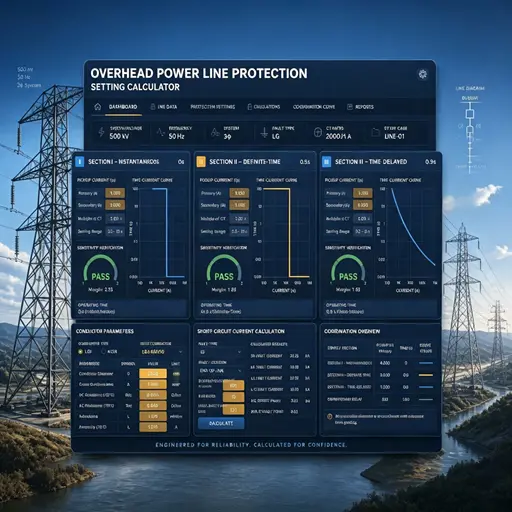
Three-Section Overcurrent Protection is a coordinated protection scheme widely used in power systems to detect and isolate faults (e.g., short circuits) while ensuring selective tripping. It consists of three stages with distinct operating characteristics based on current magnitude and time delay:

  1. Instantaneous Overcurrent Protection (Section I)

Function: Responds immediately to severe overcurrents exceeding a high-set threshold (e.g., 5–10 times the rated current).

Purpose: Rapidly clears close-in faults (near the protection device) to prevent equipment damage.

Key Feature: No intentional time delay (operates in milliseconds).

  1. Time-Delayed Overcurrent Protection (Section II)

Function: Triggers after a predefined short delay (e.g., 0.1–0.5 seconds) for moderate overcurrents (e.g., 2–5 times the rated current).

Purpose: Handles faults farther from the protection device, allowing downstream breakers to clear localized faults first (selectivity).

Coordination: Employs a time-graded scheme—higher fault currents (closer faults) trip faster, while lower currents (remote faults) trip slower.

  1. Backup Overcurrent Protection (Section III)

Function: Activates after a longer time delay (e.g., several seconds) for low-magnitude overcurrents (e.g., 1.2–2 times the rated current).

Purpose: Serves as a backup for primary protection (Sections I/II) and addresses overloads or persistent faults.

Characteristic: May use an inverse-time curve (trip time decreases as current increases).

Coordination Principle

The three sections work hierarchically:

Section I clears severe faults instantly.

Section II handles moderate faults with short delays, prioritizing system selectivity.

Section III provides backup protection, ensuring reliability if upstream protections fail.

This layered approach minimizes outage scope, balances speed and selectivity, and enhances grid stability.

Q: How should the communication function of this protective device be configured?
A:

This protection device supports 2-channel serial data communication, RS232 or RS485 bus, independent of each other. It can be configured separately. The configuration method is as follows:

  1. Enter the settings page: Edit → Para;
  2. Configure communication function on/off: Scroll down and find Comm1 Status set to 1, indicating it is turned on, and 0 indicates it is turned off. The default setting is open;
  3. Set communication baud rate: According to the baud rate configuration of RTU or protocol converter, the default value is 9600;
  4. Set communication protocol: There are four protocols to choose from, corresponding to setting 1 as IEC-60870-101, setting 2 as IEC-60870-104, setting 3 as DNP3.0, setting 4 as ModBus-RTU, default as IEC-60870-101;
  5. Set communication balance (only valid for multiple IEC-60870-101): Set 1 to IEC-60870-101 protocol balance mode and 0 to imbalance mode;
  6. Set the communication source address: Set the value to 1-65535, default value to 1;
  7. Set the target address for the report: set the value to 0-65535, default value to 1;
  8. Set active upload: 0 does not actively upload, 1 actively uploads, default value is 1;
  9. Save settings: After completing the settings, press the "Enter" key, enter the password 0099 (some models are 0077), press the "Enter" key again, and the screen will prompt "Save successful", indicating that the settings have been saved.

At this point, channel 1 has been established, and channel 2 is established in the same way as channel 1.

NOTE: 1. The product has been set to default settings before delivery to meet most usage scenarios. It is not recommended to make modifications or only modify controllable items (such as modifying communication protocols, configuring communication functions on/off, etc.) when it can be used normally

Know your supplier
Online store
On-time delivery rate
Response time
100.0%
≤4h
Company overview
Workplace: 30000m² Total staff: Highest Annual Export(usD): 100000000
Workplace: 30000m²
Total staff:
Highest Annual Export(usD): 100000000
Services
Business Type: Design/Manufacture/Sales
Main Categories: High Voltage Electrical Apparatus/Low Voltage Electrical Apparatus/Instrument meters/New energy/Tester/Robot
Whole life care manager
Whole-life care management services for equipment procurement, use, maintenance, and after-sales, ensuring safe operation of electrical equipment, continuous control, and worry-free electricity consumption.
The equipment supplier has passed platform qualification certification and technical evaluation, ensuring compliance, professionalism, and reliability from the source.

Related Products

Related Knowledges

  • Faults and Handling of Single-phase Grounding in 10kV Distribution Lines
    Characteristics and Detection Devices for Single-Phase Ground Faults1. Characteristics of Single-Phase Ground FaultsCentral Alarm Signals:The warning bell rings, and the indicator lamp labeled “Ground Fault on [X] kV Bus Section [Y]” illuminates. In systems with a Petersen coil (arc suppression coil) grounding the neutral point, the “Petersen Coil Operated” indicator also lights up.Insulation Monitoring Voltmeter Indications:The voltage of the faulted phase decreases (in
    01/30/2026
  • Neutral point grounding operation mode for 110kV~220kV power grid transformers
    The arrangement of neutral point grounding operation modes for 110kV~220kV power grid transformers shall meet the insulation withstand requirements of transformer neutral points, and shall also strive to keep the zero-sequence impedance of substations basically unchanged, while ensuring that the zero-sequence comprehensive impedance at any short-circuit point in the system does not exceed three times the positive-sequence comprehensive impedance.For 220kV and 110kV transformers in new constructi
    01/29/2026
  • Why Do Substations Use Stones, Gravel, Pebbles, and Crushed Rock?
    Why Do Substations Use Stones, Gravel, Pebbles, and Crushed Rock?In substations, equipment such as power and distribution transformers, transmission lines, voltage transformers, current transformers, and disconnect switches all require grounding. Beyond grounding, we will now explore in depth why gravel and crushed stone are commonly used in substations. Though they appear ordinary, these stones play a critical safety and functional role.In substation grounding design—especially when multiple gr
    01/29/2026
  • Why Must a Transformer Core Be Grounded at Only One Point? Isn't Multi-Point Grounding More Reliable?
    Why Does the Transformer Core Need to Be Grounded?During operation, the transformer core, along with the metal structures, parts, and components that fix the core and windings, are all situated in a strong electric field. Under the influence of this electric field, they acquire a relatively high potential with respect to ground. If the core is not grounded, a potential difference will exist between the core and the grounded clamping structures and tank, which may lead to intermittent discharge.I
    01/29/2026
  • Understanding Transformer Neutral Grounding
    I. What is a Neutral Point?In transformers and generators, the neutral point is a specific point in the winding where the absolute voltage between this point and each external terminal is equal. In the diagram below, pointOrepresents the neutral point.II. Why Does the Neutral Point Need Grounding?The electrical connection method between the neutral point and earth in a three-phase AC power system is called theneutral grounding method. This grounding method directly affects:The safety, reliabilit
    01/29/2026
  • What’s the Difference Between Rectifier Transformers and Power Transformers?
    What is a Rectifier Transformer?"Power conversion" is a general term encompassing rectification, inversion, and frequency conversion, with rectification being the most widely used among them. Rectifier equipment converts input AC power into DC output through rectification and filtering. A rectifier transformer serves as the power supply transformer for such rectifier equipment. In industrial applications, most DC power supplies are obtained by combining a rectifier transformer with rectifier equ
    01/29/2026

Related Solutions

  • Distribution automation systems solutions
    What are the difficulties in overhead line operation and maintenance?Difficulty one:Overhead lines of distribution network have wide coverage,complicatedterrain,many radiation branches and distributed power supply,resultingin "many line faults and difficulty in fault troubleshooting".Difficulty Two:Manual troubleshooting is time-consuming and laborious.Meanwhile,therunning current,voltage and switching state of the line cannot be graspedin real time,because of the lack of intelligent technical m
    04/22/2025
  • RW8000 DMS Distribution Management System Solutions
    OverviewNowadays, the development trend of power grid is intellectualization. As an important part of power grid, the power distribution system is very close to the customers and it has to run properly. The distribution management system (DMS)played an important role in it.Introduction:RW8000 power distribution management system (DMS) is designed for the smart grids. It is based on real-time application, centered on distribution network operation and management, focusing on the business process
    09/07/2023
  • High-Precision Electrical Parameter Monitoring System Solution
    1.Introduction​With the increasingly stringent requirements for power supply quality in high-end facilities such as precision manufacturing, medical diagnosis, and data centers, traditional power monitoring systems, due to their low sampling accuracy and weak data analysis capabilities, can no longer meet the demand for deep insight and precise management of power quality. In response, we are introducing a new generation ​High-Precision Electrical Parameter Monitoring System. With ​millisecond-l
    09/28/2025
Haven't found the right supplier yet? Let matching verified suppliers find you. Get Quotation Now
Haven't found the right supplier yet? Let matching verified suppliers find you.
Get Quotation Now
Send inquiry
+86
Click to upload file
Download
Get the IEE Business Application
Use the IEE-Business app to find equipment, obtain solutions, connect with experts, and participate in industry collaboration anytime, anywhere—fully supporting the development of your power projects and business.