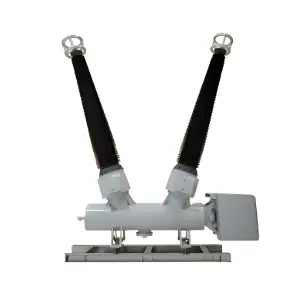
330kV 345kV 363 kV 380kV Dead tank SF6 circuit breaker supplier
Key attributes
| Brand | ROCKWILL |
| Model NO. | 363 kV Dead tank SF6 circuit breaker |
| Rated voltage | 363kV |
| Rated normal current | 4000A |
| Rated frequency | 50/60Hz |
| Series | LW |
Product descriptions from the supplier
Description
Pioneers in China's GIS tank circuit breaker industry. As the country's first source factory specializing in this field, we boast decades of technical accumulation and continuous innovation — ensuring reliable products while leading the way in R&D. Thanks to our outstanding reliability, we've been chosen for numerous major power projects.
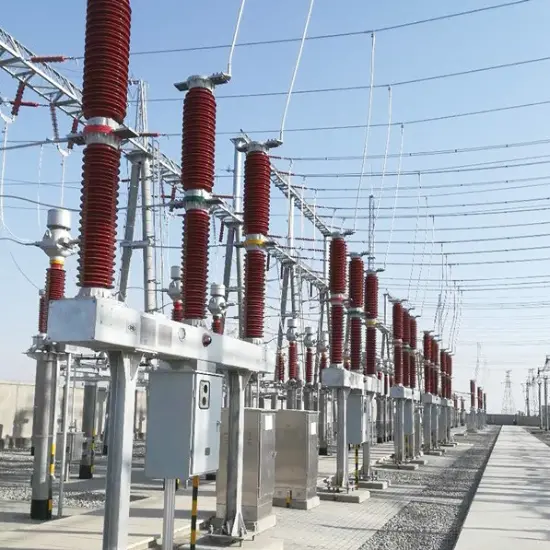
330kV 345kV 363 kV 380kV Dead tank SF6 circuit breaker are composed of components such as inlet/outlet bushings, current transformers, arc extinguishers, frames, and operating mechanisms. They can cut off rated current, fault current, or switch lines to control and protect power systems, widely used in power, metallurgy, mining, transportation, and utilities industries at home and abroad.
Main Features
Technical specifications
Among these, some SF6 tank circuit breakers cover non-standard voltage levels including 138kV, 225kV, 230kV, 245kV, 275kV, 330kV, 345kV, 400kV, 756kV, and 800kV (note: 145kV is a standard voltage level, adjusted for accuracy), with a rated short-circuit breaking current of 50kA or 63kA, and we offer customization services.
Serial number |
project |
parameters |
1 |
Rated voltage |
330kV 345kV 363kV 380kV |
2 |
Rated Current |
4000A |
3 |
Rated frequency |
50/60Hz |
4 |
Rated short-circuit breaking current |
50kA |
5 |
Rated short-circuit closing current |
130kA |
6 |
Rated short-time withstand current and duration |
50kA/3s |
7 |
Rated peak withstand current |
130kA |
8 |
Mechanical life |
M2 |
330kV/345kV/363kV/380kV Dead Tank SF6 Circuit Breaker - Operating Environment Conditions
Ambient Temperature:Standard range -30℃ ~ +40℃;optional -40℃ ~ +45℃ for extreme climates (equipped with anti-freezing heating components or high-temperature heat dissipation structure).
Altitude:≤ 1000m above sea level (standard configuration). For 1000m~2500m, insulation derating design is adopted to compensate for air insulation attenuation.
Relative Humidity:Monthly average ≤ 90% (at 25℃);daily average ≤ 95%;no persistent condensation on the tank body to avoid insulation degradation.
Wind Speed:Maximum sustained wind speed ≤ 34m/s (12-level wind);instantaneous gust ≤ 50m/s;structural design resists wind load and vibration.
Atmospheric Pollution:Suitable for pollution degree Class III (GB/T 16434) or equivalent IEC 60694 standards. For coastal salt fog or industrial corrosive areas, optional anti-corrosion coating (epoxy powder spraying) and sealed insulation assembly are available.
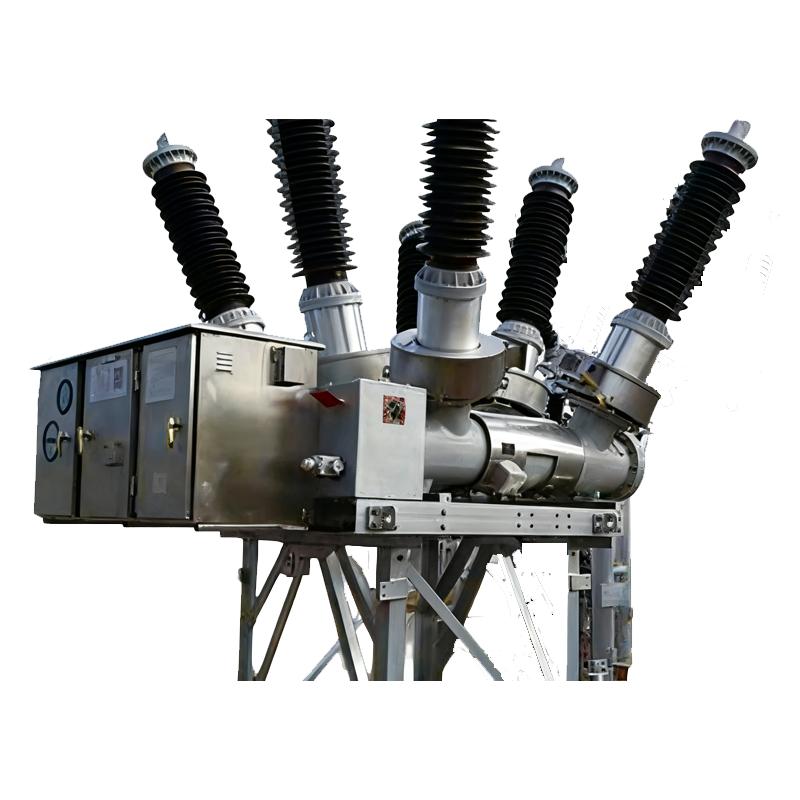
Integral Tank Structure:
-
Integral Tank Structure: The breaker's arc quenching chamber, insulating medium, and related components are sealed within a metal tank filled with an insulating gas (such as sulfur hexafluoride) or insulating oil. This forms a relatively independent and sealed space, effectively preventing external environmental factors from affecting the internal components. This design enhances the insulation performance and reliability of the equipment, making it suitable for various harsh outdoor environments.
Arc Quenching Chamber Layout:
-
Arc Quenching Chamber Layout: The arc quenching chamber is typically installed inside the tank. Its structure is designed to be compact, enabling efficient arc quenching within a limited space. Depending on different arc quenching principles and technologies, the specific construction of the arc quenching chamber may vary, but generally includes key components such as contacts, nozzles, and insulating materials. These components work together to ensure that the arc is quickly and effectively extinguished when the breaker interrupts the current.
Operating Mechanism:
-
Operating Mechanism: Common operating mechanisms include spring-operated mechanisms and hydraulic-operated mechanisms.
-
Spring-Operated Mechanism: This type of mechanism is simple in structure, highly reliable, and easy to maintain. It drives the opening and closing operations of the breaker through the energy storage and release of springs.
-
Hydraulic-Operated Mechanism: This mechanism offers advantages such as high output power and smooth operation, making it suitable for high-voltage and high-current class breakers.
The leakage rate of SF₆ gas must be controlled at an extremely low level, typically not exceeding 1% per year. SF₆ gas is a potent greenhouse gas, with a greenhouse effect 23,900 times that of carbon dioxide. If a leak occurs, it can not only cause environmental pollution but also lead to a decrease in the gas pressure within the arc quenching chamber, affecting the performance and reliability of the circuit breaker.
To monitor the leakage of SF₆ gas, gas leakage detection devices are typically installed on tank-type circuit breakers. These devices help to promptly identify any leaks so that appropriate measures can be taken to address the issue.
During the normal operation and interruption processes of a circuit breaker, SF₆ gas can decompose, producing various decomposition products such as SF₄, S₂F₂, SOF₂, HF, and SO₂. These decomposition products are often corrosive, toxic, or irritating, and therefore require monitoring.If the concentration of these decomposition products exceeds certain limits, it may indicate abnormal discharges or other faults within the arc quenching chamber. Timely maintenance and handling are necessary to prevent further damage to the equipment and to safeguard personnel health.
They are mainly suitable for 330kV and above high-voltage power transmission and transformation projects. Focus on three key points for selection: ① Voltage matching — Select the corresponding grade according to power grid standards: 345kV is compatible with the American standard system, and 363kV/380kV are suitable for special high-voltage working conditions; ② Key parameters — Short-circuit breaking current ≥50kA, and the rated SF6 pressure increases with voltage upgrade (about 0.75MPa for 380kV); ③ Scenario adaptation — For high-altitude/coastal areas, choose customized models with enhanced insulation and corrosion resistance, and a third-party type test report must be provided.
They are mainly suitable for 330kV and above high-voltage power transmission and transformation projects. Focus on three key points for selection: ① Voltage matching — Select the corresponding grade according to power grid standards: 345kV is compatible with the American standard system, and 363kV/380kV are suitable for special high-voltage working conditions; ② Key parameters — Short-circuit breaking current ≥50kA, and the rated SF6 pressure increases with voltage upgrade (about 0.75MPa for 380kV); ③ Scenario adaptation — For high-altitude/coastal areas, choose customized models with enhanced insulation and corrosion resistance, and a third-party type test report must be provided.

Related Products
-
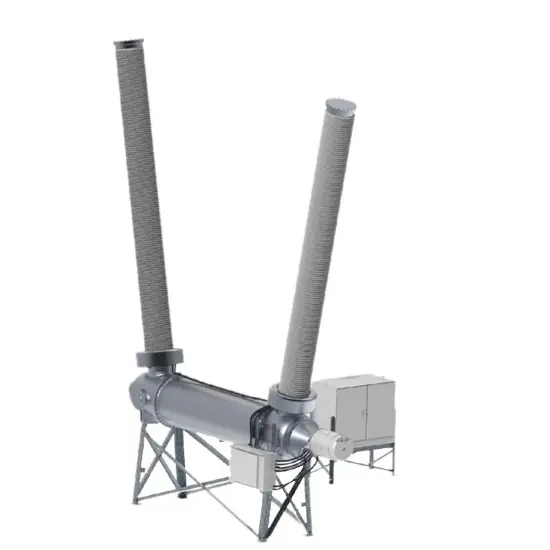
363kV 380kV 400kV 420kV Dead tank SF6 circuit breaker Original Manufacturer
-
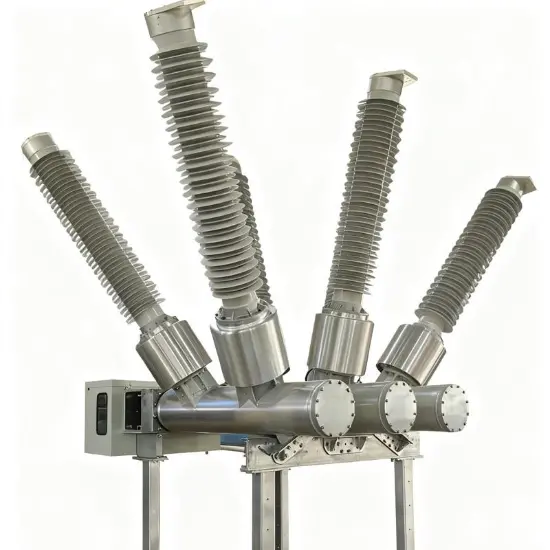
115kV 123kV 145KV 161kV 170kV Dead Tank SF6 Circuit Breaker Original Manufacturer
-
40.5kV 44kV 48.3kV 52kV 60kV 66kV Dead tank SF6 circuit breaker
-
Customization 24 kV/25.8 kV/27 kV/145kV/138kV/230kV or Other Dead tank SF6 Gas Circuit-Breaker
-
756kV 800kV 1050 kV 1100 kV 1150 kV 1200 kV dead tank SF6 circuit breaker source manufacturer
-
252kV outdoor self-energy power high voltage SF6 circuit breaker
-
126kV 145kV high voltage SF6 circuit breaker
Related Knowledges
-
 Faults and Handling of Single-phase Grounding in 10kV Distribution LinesCharacteristics and Detection Devices for Single-Phase Ground Faults1. Characteristics of Single-Phase Ground FaultsCentral Alarm Signals:The warning bell rings, and the indicator lamp labeled “Ground Fault on [X] kV Bus Section [Y]” illuminates. In systems with a Petersen coil (arc suppression coil) grounding the neutral point, the “Petersen Coil Operated” indicator also lights up.Insulation Monitoring Voltmeter Indications:The voltage of the faulted phase decreases (in01/30/2026
 -
 Neutral point grounding operation mode for 110kV~220kV power grid transformersThe arrangement of neutral point grounding operation modes for 110kV~220kV power grid transformers shall meet the insulation withstand requirements of transformer neutral points, and shall also strive to keep the zero-sequence impedance of substations basically unchanged, while ensuring that the zero-sequence comprehensive impedance at any short-circuit point in the system does not exceed three times the positive-sequence comprehensive impedance.For 220kV and 110kV transformers in new constructi01/29/2026
 -
 Why Do Substations Use Stones, Gravel, Pebbles, and Crushed Rock?Why Do Substations Use Stones, Gravel, Pebbles, and Crushed Rock?In substations, equipment such as power and distribution transformers, transmission lines, voltage transformers, current transformers, and disconnect switches all require grounding. Beyond grounding, we will now explore in depth why gravel and crushed stone are commonly used in substations. Though they appear ordinary, these stones play a critical safety and functional role.In substation grounding design—especially when multiple gr01/29/2026
 -
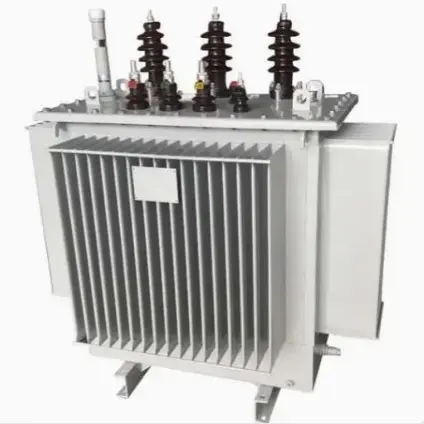 Why Must a Transformer Core Be Grounded at Only One Point? Isn't Multi-Point Grounding More Reliable?Why Does the Transformer Core Need to Be Grounded?During operation, the transformer core, along with the metal structures, parts, and components that fix the core and windings, are all situated in a strong electric field. Under the influence of this electric field, they acquire a relatively high potential with respect to ground. If the core is not grounded, a potential difference will exist between the core and the grounded clamping structures and tank, which may lead to intermittent discharge.I01/29/2026
 -
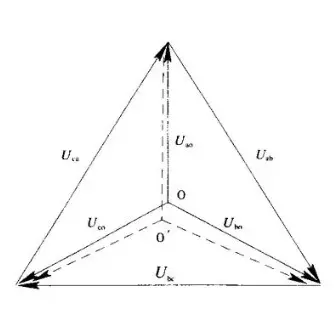 Understanding Transformer Neutral GroundingI. What is a Neutral Point?In transformers and generators, the neutral point is a specific point in the winding where the absolute voltage between this point and each external terminal is equal. In the diagram below, pointOrepresents the neutral point.II. Why Does the Neutral Point Need Grounding?The electrical connection method between the neutral point and earth in a three-phase AC power system is called theneutral grounding method. This grounding method directly affects:The safety, reliabilit01/29/2026
 -
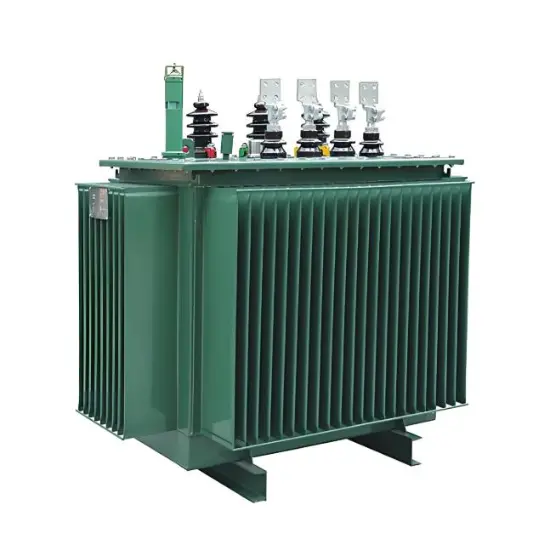 What’s the Difference Between Rectifier Transformers and Power Transformers?What is a Rectifier Transformer?"Power conversion" is a general term encompassing rectification, inversion, and frequency conversion, with rectification being the most widely used among them. Rectifier equipment converts input AC power into DC output through rectification and filtering. A rectifier transformer serves as the power supply transformer for such rectifier equipment. In industrial applications, most DC power supplies are obtained by combining a rectifier transformer with rectifier equ01/29/2026
Related Solutions
-
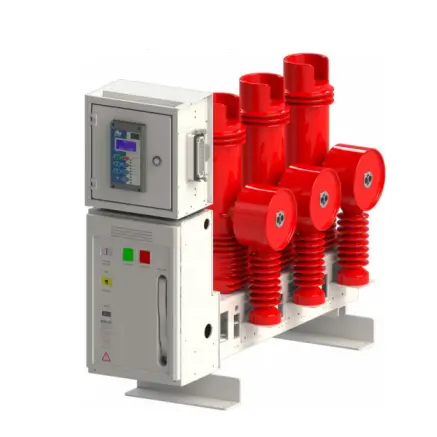 Intelligent Operation Solution for 12kV Vacuum Circuit Breakers: Integrating Real-time Monitoring & Lifetime OptimizationⅠ. Equipment Operation & MaintenanceIntelligent Monitoring System IntegrationMulti-parameter Real-time Monitoring: Embedded sensors (temperature, displacement, Hall effect current sensors) track contact temperature rise, mechanical characteristics (opening/closing speed, overtravel), coil current, and partial discharge signals. Data undergoes preprocessing via edge computing prior to cloud upload.Lifetime Prediction Model: Dynamically evaluates remaining lifespan using electrical wear data06/10/2025
 -
 SF6 Circuit Breaker Solutions for Outdoor Installation (Anti-Pollution & Seismic Resistance)I.Core Challenges in Outdoor InstallationIn high-voltage transmission and distribution systems, SF6 circuit breakers are exposed to complex outdoor environments for extended periods, facing the following critical issues:Pollution & Insulation DegradationDust, salt fog, and industrial pollutants in outdoor environments easily adhere to equipment surfaces. In coastal or industrial areas, pollution levels may reach Class IV, resulting in insufficient creepage distance and triggering flasho05/12/2025
 -
 12kV Indoor Vacuum Circuit Breaker Southeast Asia Solution: Anti-Corrosion Compact Design12kV Indoor Vacuum Circuit Breaker Southeast Asia Solution: Anti-Corrosion Compact DesignⅠ. Executive SummarySoutheast Asia faces rapidly growing electricity demand alongside environmental challenges including high temperatures, humidity, salt spray corrosion, and grid instability. This solution recommends Solid Insulated Pole-Mounted Vacuum Circuit Breakers (VCB) featuring high reliability, compact design, and smart monitoring. Tailored for tropical climates and industrial scenarios, it06/10/2025






