• Product
  • Suppliers
  • Manufacturers
  • Solutions
  • Free tools
  • Knowledges
  • Experts
  • Communities
Search


What Are the Transformer Voltage Regulation Methods and the Reasons for Installing Tap Changers on the High-Voltage Side?

Vziman
Vziman
Field: Manufacturing
China

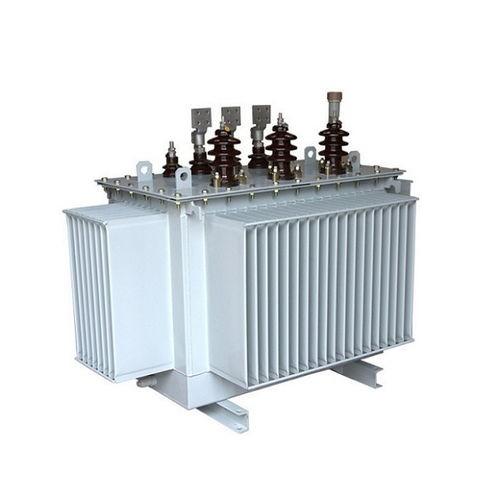
Transformer voltage regulation can be achieved through on-load tap changing (OLTC) and off-load tap changing:

On-load voltage regulation allows the transformer to adjust its tap position while in operation, thereby changing the turns ratio to regulate voltage. There are two methods: line-end regulation and neutral-point regulation. Line-end regulation involves placing the tap on the line end of the high-voltage winding, whereas neutral-point regulation places the tap on the neutral end of the high-voltage winding. Neutral-point regulation reduces the insulation requirements for the tap changer, offering technical and economic advantages, but requires the transformer neutral point to be solidly grounded during operation.

Off-load voltage regulation involves changing the tap position when the transformer is de-energized or during maintenance, adjusting the turns ratio to achieve voltage regulation.

Transformer tap changers are typically located on the high-voltage side for the following reasons:

  • The high-voltage winding is usually wound on the outer layer, making tap connections more accessible and easier to implement.

  • The current on the high-voltage side is lower, allowing smaller conductor cross-sections for tap leads and switching components, which simplifies design and reduces the risk of poor contact.

In principle, taps can be provided on either winding, but an economic and technical evaluation is required. For example, in large 500 kV step-down transformers, taps are often placed on the 220 kV side while the 500 kV winding remains fixed.
Give a tip and encourage the author!
Recommended
MVDC: Future of Efficient, Sustainable Power Grids
The Global Energy Landscape Is Undergoing a Fundamental Transformation toward a "fully electrified society," characterized by widespread carbon-neutral energy and the electrification of industry, transportation, and residential loads.In today’s context of high copper prices, critical mineral conflicts, and congested AC power grids, Medium-Voltage Direct Current (MVDC) systems can overcome many limitations of traditional AC networks. MVDC significantly enhances transmission capacity and efficienc
Edwiin
10/21/2025
Grounding Causes of Cable Lines and the Principles of Incident Handling
Our 220 kV substation is located far from the urban center in a remote area, surrounded primarily by industrial zones such as Lanshan, Hebin, and Tasha Industrial Parks. Major high-load consumers in these zones—including silicon carbide, ferroalloy, and calcium carbide plants—account for approximately 83.87% of our bureau’s total load. The substation operates at voltage levels of 220 kV, 110 kV, and 35 kV.The 35 kV low-voltage side mainly supplies feeders to ferroalloy and silicon carbide plants
Felix Spark
10/21/2025
Overhead Power Lines & Towers: Types, Design & Safety
Besides ultra-high voltage AC substations, what we encounter more frequently are power transmission and distribution lines. Tall towers carry conductors that leap across mountains and seas, stretching into the distance before reaching cities and villages. This is also an interesting topic—today, let's explore transmission lines and their supporting towers.Power Transmission and DistributionFirst, let’s understand how electricity is delivered. The electric power industry primarily consists of fou
Encyclopedia
10/21/2025
Automatic Reclosing Modes: Single, Three-Phase & Composite
General Overview of Automatic Reclosing ModesTypically, automatic reclosing devices are categorized into four modes: single-phase reclosing, three-phase reclosing, composite reclosing, and disabled reclosing. The appropriate mode can be selected based on load requirements and system conditions.1. Single-Phase ReclosingMost 110kV and higher transmission lines employ three-phase single-shot reclosing. According to operational experience, over 70% of short-circuit faults in high-voltage overhead li
Edwiin
10/21/2025
Send inquiry
Download
Get the IEE Business Application
Use the IEE-Business app to find equipment, obtain solutions, connect with experts, and participate in industry collaboration anytime, anywhere—fully supporting the development of your power projects and business.