
• Product
  • Suppliers
  • Manufacturers
  • Solutions
  • Free tools
  • Knowledges
  • Experts
  • Communities
Search


Outdoor Pole-Mounted Recloser: Close Failure and Open Failure – Causes and Solutions

Rockwill
Field: Manufacturing
10Year<
China
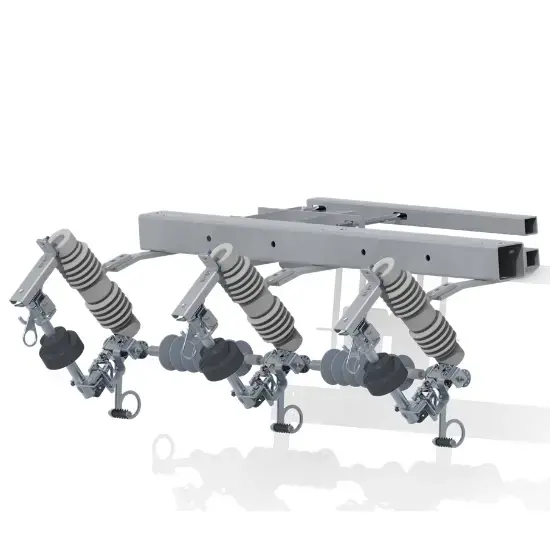
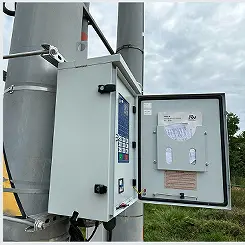
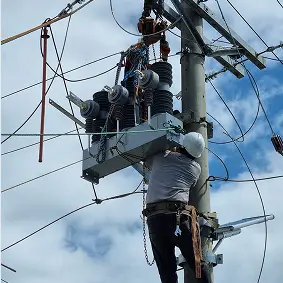
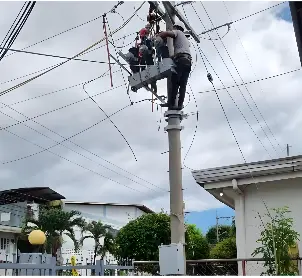
Outdoor pole-mounted reclosers are key devices in 10 kV–40.5 kV distribution networks for automatic fault isolation and supply restoration. Close failure and open failure are the two most common operational faults:
  • Close failure: After a close command is issued, the recloser fails to complete the closing operation.
  • Open failure: After fault current is detected or an open command is received, the recloser fails to open normally.

Both are related to control circuit or operating mechanism abnormalities, but open failure usually carries higher risk than close failure, as it may affect fault isolation and equipment safety.

iee-business

 Automatic Circuit Recloser (ACR)


I. Close Failure

Common Causes

  1. Auxiliary power abnormality – External power not connected, loose wiring, blown fuse, or MCB tripped, causing control circuit loss of supply.
  2. Insufficient energy storage – Spring energy-storage motor fault, or capacitor energy-storage unit aged/degraded capacity, resulting in inadequate closing energy.
  3. Close coil fault – Coil aged, damp, or burnt, unable to generate sufficient electromagnetic force.
  4. Output contact abnormality – Close-circuit output contacts poor contact, oxidised, or welded, preventing close command execution.
  5. Mechanical binding – Operating mechanism lubricant aged, rust, or component deformation, increasing motion resistance.

Solutions

  1. Check auxiliary power circuit; verify voltage, fuse, MCB, and wiring condition.
  2. Measure energy-storage capacitor capacity and charger output; replace capacitor if necessary.
  3. Test close coil resistance and insulation; replace promptly if damaged.
  4. Inspect close output contacts; address oxidation, looseness, or welding.
  5. Clean and lubricate operating mechanism; return to factory for overhaul if necessary.

II. Open Failure

Common Causes

  1. Open coil fault – Coil aged, damp, open-circuit, or burnt, unable to drive trip mechanism.
  2. Mechanical transmission seizure – Link deformation, pin corrosion, or fastener loosening, preventing open command transmission.
  3. SF₆ gas pressure insufficient (SF6 type) – Seal ageing causes gas leakage; when pressure falls below lockout value, operation circuit is locked out.
  4. Hydraulic mechanism leakage (hydraulic type) – Pipe joints, valve body, or seals leak oil, resulting in insufficient operating pressure.
  5. Control circuit abnormality – Open-circuit wiring loose, auxiliary switch poor contact, or controller output abnormal.

Solutions

  1. Test open coil resistance and insulation; replace promptly if damaged.
  2. Inspect mechanical transmission chain; correct deformed links, tighten loose parts, eliminate binding.
  3. For SF6 type: regularly monitor gas pressure; replenish gas or replace seals upon leakage detection; operation strictly prohibited when pressure below lockout value.
  4. For hydraulic type: locate leak points, replace seals, top up hydraulic oil if necessary.
  5. Check open control circuit, auxiliary switches, and controller output signals.

III. Commonalities and Differences Between Close Failure and Open Failure

Common Causes

  • Power and control circuit abnormalities – Both depend on auxiliary supply; power loss can affect both close and open.
  • Mechanical transmission issues – Binding, corrosion, link deformation can cause either close or open failure.
  • Coil faults – Close and open coils share similar failure modes: ageing, damp, overheating.
  • Auxiliary switch and contact abnormalities – Poor contact or position feedback anomalies affect operation circuit execution.

Key Differences

Comparison Item Close Failure Open Failure
Main manifestation Unable to close after close command issued Unable to open normally under fault or command
Severity Affects supply restoration May prevent fault isolation; higher risk
Handling priority Can be scheduled for planned maintenance Must be prioritised; shutdown for inspection if necessary
Typical triggers Insufficient energy storage, close coil fault, mechanical binding Open coil fault, SF6 pressure lockout, mechanical seizure
 
iee-business

 IV. Troubleshooting Logic

Follow the sequence below step by step to avoid blind disassembly:

  1. Check power supply – Verify auxiliary supply, fuse, MCB, and control circuit supply normal.
  2. Check energy storage – Confirm spring, capacitor, or hydraulic storage meets operating requirements.
  3. Check coils – Test close and open coil resistance, insulation, and action.
  4. Check mechanical mechanism – Inspect operating mechanism, links, pins, auxiliary switches for binding, deformation, or looseness.
  5. Check special media – SF6 type: check gas pressure and leakage; hydraulic type: check oil pressure and leakage.
  6. Check control signals – Verify controller output, protection contacts, communication, and position feedback. 

V. Summary

Close failure and open failure are mainly caused by auxiliary power abnormalities, insufficient energy storage, coil damage, mechanical binding, and control circuit faults. Close failure primarily affects supply restoration; open failure may impair fault isolation, posing higher safety risk.

Routine maintenance should focus on auxiliary power status, energy-storage device performance, close/open coil insulation, mechanical transmission flexibility, and SF₆ gas pressure or hydraulic pressure changes – achieving early detection and early rectification of hidden hazards.

Edited From: Garca

Give a tip and encourage the author!

Comments

Share your question or perspective
WhatsApp
Send inquiry
+86
Click to upload file
Download
Get the IEE Business Application
Use the IEE-Business app to find equipment, obtain solutions, connect with experts, and participate in industry collaboration anytime, anywhere—fully supporting the development of your power projects and business.
Login
or continue with
New here?
Register