What tests need to be conducted for load switches?
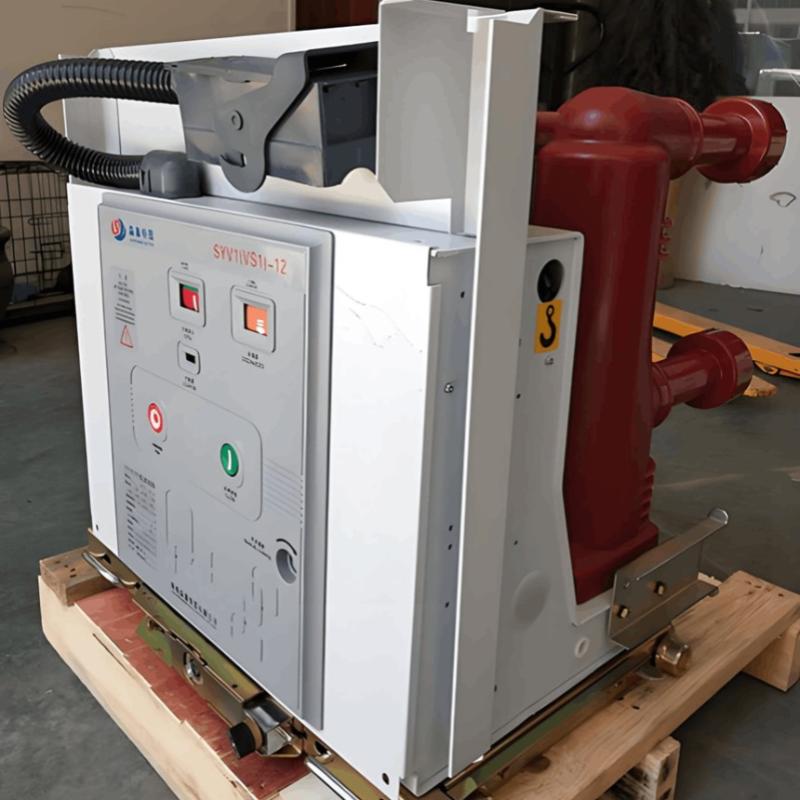
As a technician with years of on-site experience in power testing, I understand the importance and complexity of load switch testing. Below, I combine practical work experience to elaborate on the full process of load switch testing, from testing items and methods to equipment and procedural specifications.
I. Routine Electrical Performance Testing
(1) Loop Resistance Test
Loop resistance is a core indicator for evaluating a load switch's conductivity. I strictly follow GB/T 3804 and GB 1984 standards, using the DC voltage drop method with a test current of no less than 100A. For 10kV load switches, the standard values vary by current rating: ≤50μΩ at 630A and ≤20μΩ at 3150A.
During testing, I use a SW-100A dedicated loop resistance tester and carefully check that the test fixture makes good contact with the contacts. The test result should not exceed 120% of the factory value; exceeding this indicates poor contact or mechanical damage. I always conduct tests when temperatures are stable to avoid inaccuracies from sudden temperature changes.
(2) Power Frequency Withstand Voltage Test
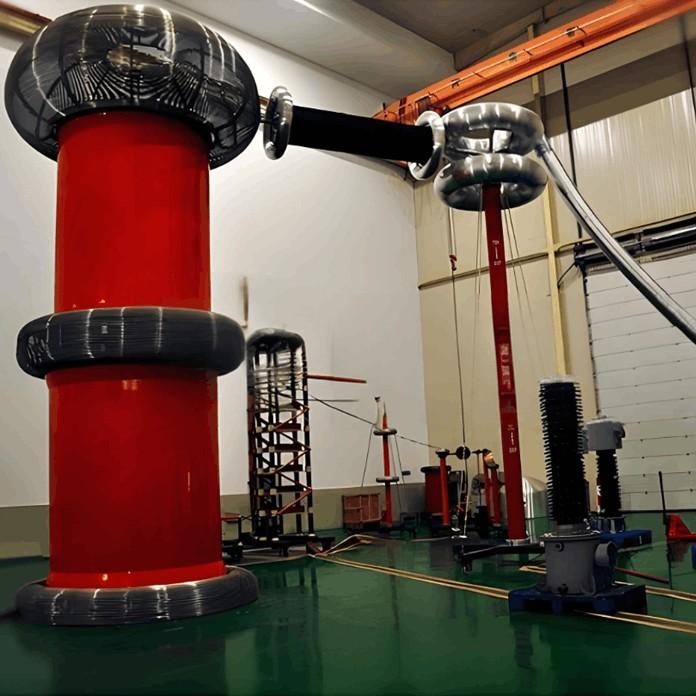
This test verifies the insulation strength of load switches. For 10kV switches, I apply 42kV/1min between phases and to ground, and 48kV/1min across the break, with leakage current ≤0.5mA.
For 24kV switches used in high-altitude environments, the withstand voltage is adjusted by altitude (7% increase in electrical clearance per 1000m). Using a WGD-40kV withstand voltage tester, I ensure the test voltage waveform is stable. If breakdown or flashover occurs, I immediately stop testing to troubleshoot and repair insulation defects.

(3) Active Load Current Breaking Test
This test evaluates the breaking capability of load switches per GB/T 3804. I conduct the test under rated active load conditions, typically at 100% of the rated current (e.g., 630A).
During the test, I monitor the transient recovery voltage (TRV) peak and time coordinates to ensure they meet design requirements. For E1-class switches (mechanical life ≥100,000 cycles), 10 breaking tests are required; E2 (≥300,000 cycles) and E3 (≥1,000,000 cycles) require 20 tests. These results are crucial for assessing long-term operational performance.
II. Mechanical Condition Testing
(1) Mechanical Life Test
Mechanical life is a key indicator of long-term reliability, classified as M1 (≥100,000 cycles) and M2 (≥300,000 cycles) per GB/T 3804.
I perform no-load opening/closing operations while using an SWT11 mechanical characteristic tester to record parameters like operation time, stroke, and speed until jamming or abnormal movement occurs. For frequently operated switches, I recommend semi-annual mechanical life tests to assess remaining service life.
(2) Opening/Closing Synchronism Test
Synchronism is critical for three-phase switch reliability. Per GB 1984-2003, opening synchronism should be ≤1/6 cycle of the rated frequency (3.3ms at 50Hz), and closing synchronism ≤1/4 cycle (5ms).
Using a high-precision mechanical characteristic tester, I record the time difference of three-phase contact operations. For switches with arcing contacts, I carefully distinguish between main and arcing contact signals to avoid misjudgment. If results exceed standards, I adjust or replace components in the operating mechanism.
(3) Contact Pressure and Wear Test
Contact pressure and wear directly affect conductivity. Conventional load switch contact pressure is typically ~200N, varying by type: plug-in switches (e.g., GW4, GW5) ≥130N per finger, clamp switches (e.g., GW6, GW16) ≥300N, and clapper switches (e.g., GN2 series) ≥200N.
Using a ZSKC-9000 contact pressure tester, I measure the contact pressure of each finger via simulated contact sensors. I also inspect wear: for vacuum switches, moving contact wear marks should not exceed 3mm, or replacement is needed. Comparing test results with factory records, I replace contacts if pressure drops by >20% or wear exceeds limits.
III. Insulation Performance Testing
(1) Insulation Resistance Test
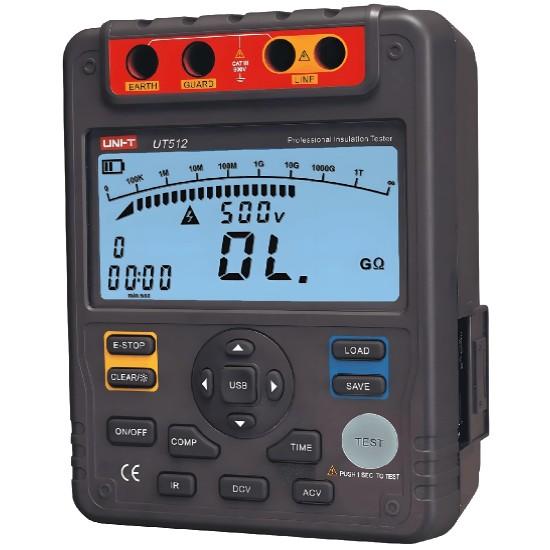
This foundational test uses a 2500V megohmmeter to measure inter-phase and ground insulation resistance (≥1000MΩ) and auxiliary circuit resistance (≥1MΩ for SF6 switches).I ensure the switch is open and isolated from the system during testing. If insulation resistance drops to <75% of the initial value, I suspect moisture or aging and conduct further inspections. I perform resistance tests before and after the withstand voltage test—if results differ by >30%, insulation defects are indicated.

(2) SF6 Gas Insulation Test
For SF6 switches, I test gas humidity (≤150μL/L in arc chambers, ≤300μL/L elsewhere), purity (≥97%), and tightness (≤10% pressure drop over 24h) using a GD-3000 detector and infrared spectrometer.Non-compliant results indicate leakage or contamination, requiring immediate action. I recommend semi-annual gas testing for in-service SF6 switches to maintain insulation stability.
(3) Partial Discharge (PD) Test for Solid Insulation
This tests epoxy and other solid insulations per GB/T 3906-2020: PD should be ≤20pC at 1.2× rated voltage for solid insulation, and ≤100pC for air insulation.Conducted in a fully shielded lab using a Haefely DDX-9101 PD tester with a PD-free transformer, exceeding limits indicates voids or defects in the insulation. I perform PD tests on new solid-insulated switches before commissioning to ensure quality.
IV. Special Environment Adaptability Testing
(1) High-Altitude Environment Test
Per GB/T 20626.1-2017, I adjust insulation levels for altitude: G2 (1000-2000m), G2.5 (2000-2500m), G3 (2500-3000m), G4 (3000-4000m), G5 (4000-5000m).Testing in a simulated altitude environment (e.g., 80kPa for 2000m), I verify electrical clearances (7% increase per 1000m) and creep distances (25% increase for pollution level 3). PD testing in simulation requires ≤10pC to prevent corona aging under low pressure.
(2) Extreme Cold Environment Test
For cold regions, I test low-temperature insulation resistance (-40°C: main circuit ≥0.4MΩ, auxiliary circuit ≥1MΩ) and operational performance.At -40°C, I verify opening/closing voltage and synchronism, checking for mechanical jamming. Quarterly cold tests are recommended for switches in long-term cold environments.
(3) High-Dust Environment Test
I test IP54+ protection per GB/T 4208 using a GD-1000 sand-dust chamber (8-hour test) and monitor heat dissipation with an infrared thermal imager (temperature rise ≤50K under full load).Tri-monthly tests are advised to clean dust and replace aging seals.
(4) Coastal Salt Spray Environment Test
Following ISO 9227, I conduct CASS (48h, 50°C, pH3.1-3.3) or neutral salt spray (480h) tests, then inspect for corrosion. Tightness is verified via pressure decay (≤10% drop in 24h) or helium mass spectrometry.Annual testing is recommended for coastal switches.
(5) Industrial Electromagnetic Interference (EMI) Environment Test
I perform EMC compatibility tests per GB/T 17626.2 (ESD ±8kV), GB/T 17626.3 (radiated immunity 10V/m), and GB/T 17626.12 (damped oscillating magnetic field 200A/m).
For high-frequency EMI, I test 3MHz, 10MHz, and 30MHz bands per IEC 61000-4-18, verifying bit error rate (≤10⁻⁶) and shielded cable grounding resistance (≤0.5Ω). Semi-annual EMC tests are advised for EMI-heavy environments.
(6) Photovoltaic-Storage-Charging Integrated Scenario Test
I use a protocol analyzer (e.g., Wireshark) to verify compatibility between energy storage PCS and charging piles (e.g., Modbus RTU). Dynamic load response tests simulate full-load operation of PV, storage, and charging to assess overload capability (120% rated current) and protection timing (PV inverter & PCS trip time difference ≤5ms).
V. Testing Tools and Equipment
(1) Loop Resistance Tester
Harmonic distortion (THD≤5%) and voltage fluctuation (≤2%) are measured at the point of common coupling using an APView400. Quarterly tests are recommended for integrated scenarios.
Models like SW-100A and SW-2000 use the DC voltage drop method with 100A+ current, featuring ≤0.1% error for precise measurements. I ensure tight fixture contact and select appropriate ranges for different current ratings.
(2) Mechanical Characteristic Tester
Devices like SWT11 and MOEORW-5180 measure opening/closing speed, synchronism, and contact pressure with ≤1% error. For switches with arcing contacts, I distinguish signal points to avoid misjudgment, keeping the sensor vertical to the switch body.
(3) SF6 Gas Detector
Models such as GD-3000 and SF6 purity testers measure humidity (±5% accuracy), purity (±0.5%), and pressure (±0.1%). I use dedicated sampling tubes to ensure representative gas samples for semi-annual testing.
(4) Partial Discharge Detector
High-sensitivity (1pC) testers like Haefely DDX-9101 and Siemens PD160 are used in shielded labs with PD-free transformers for pre-commissioning tests on new solid-insulated switches.