| Marca | ROCKWILL |
| Série | RHD |
| Tensão máxima nominal | 362kV |
| Corrente máxima nominal | 3150~5000 A |
| Tensão suportável de impulso atmosférico | 1175/1290 kV |
| Corrente nominal de interrupção em curto-circuito | 40~63 kA |
| Frequência nominal | 50/60 Hz |
Description
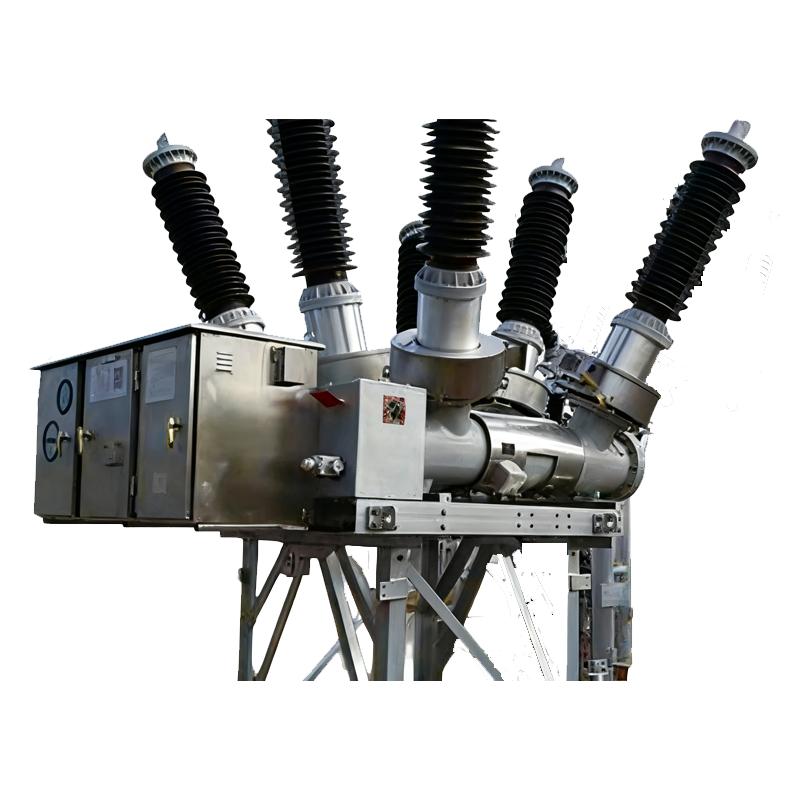
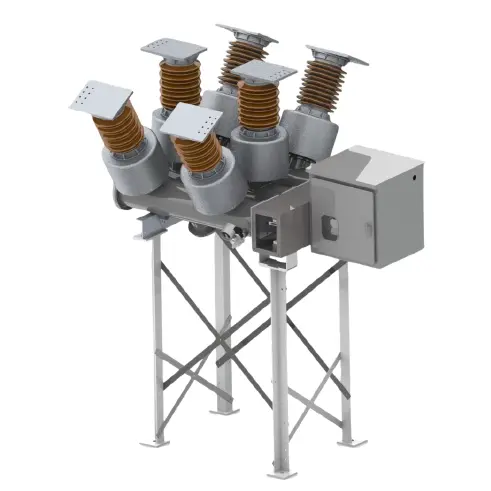
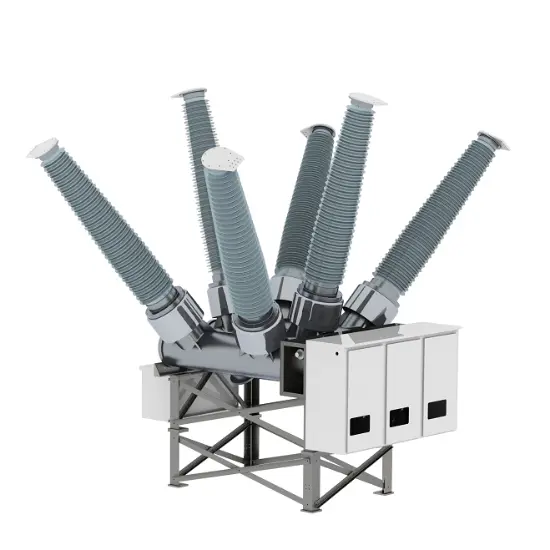
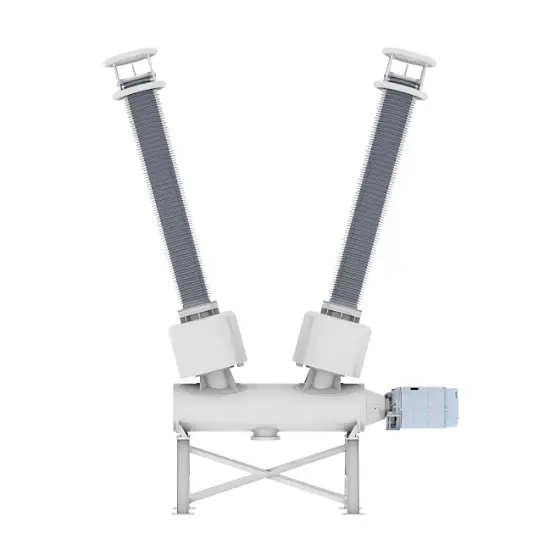
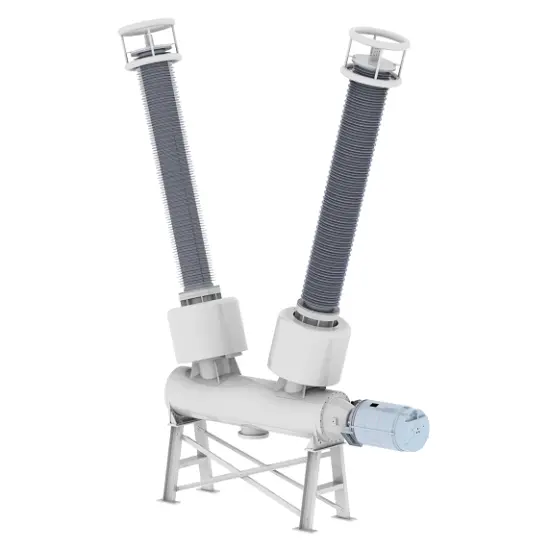
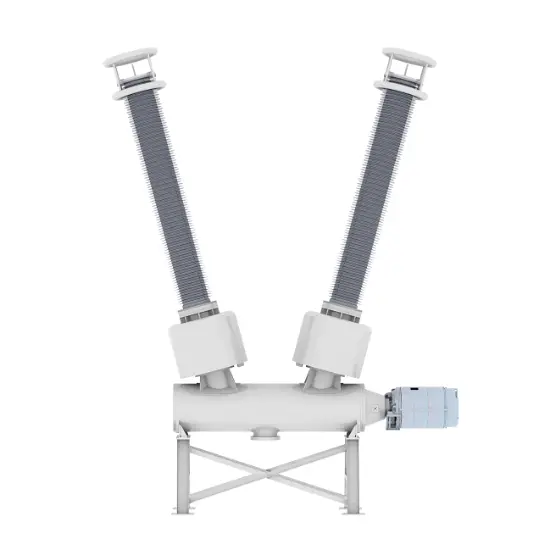
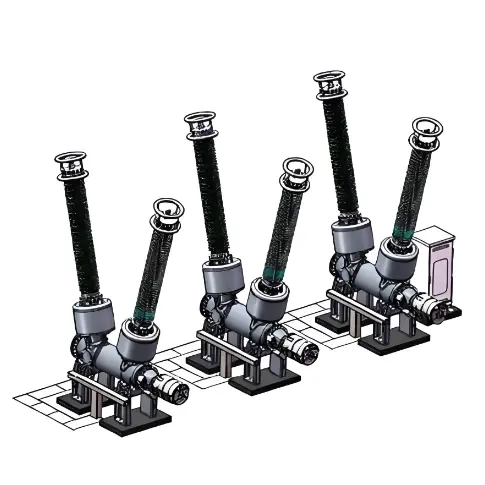
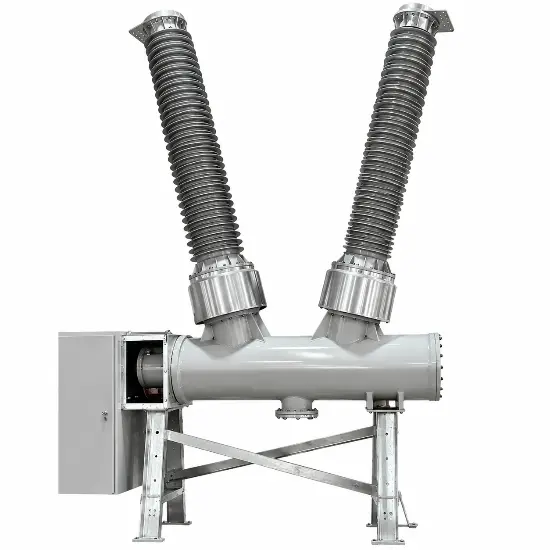
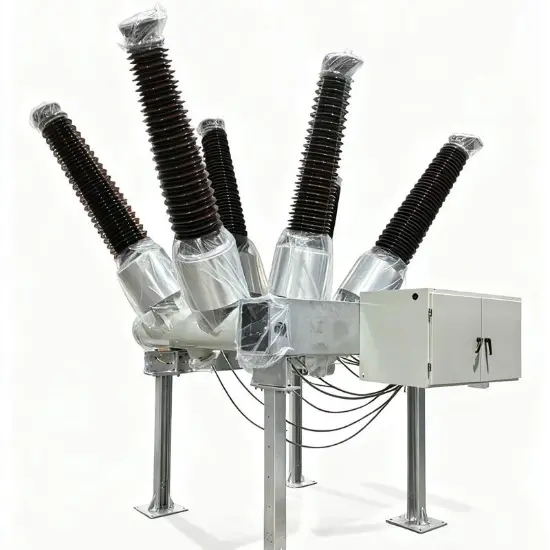
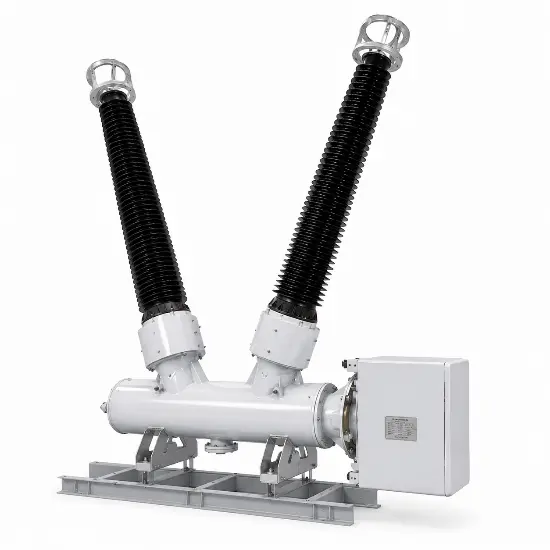
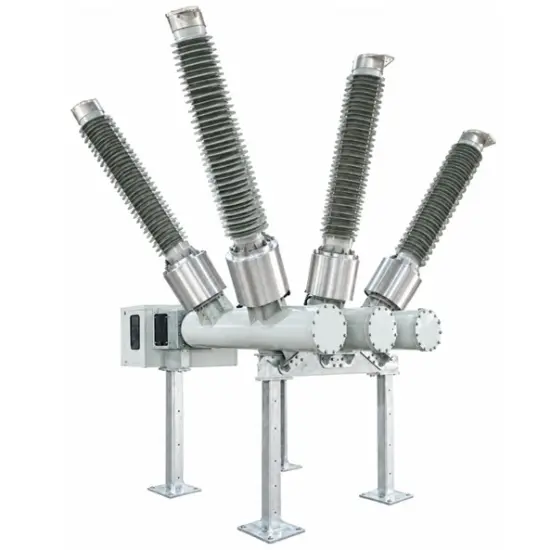
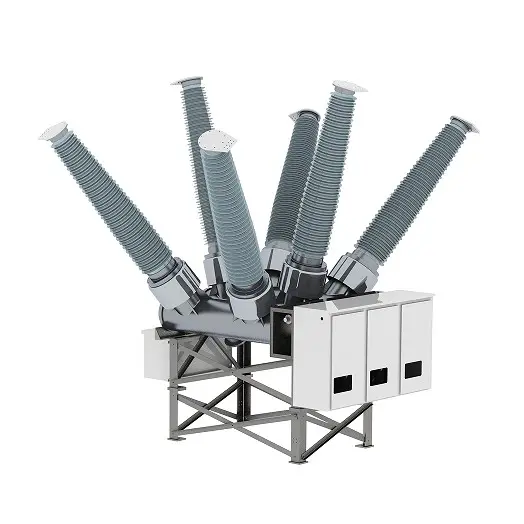
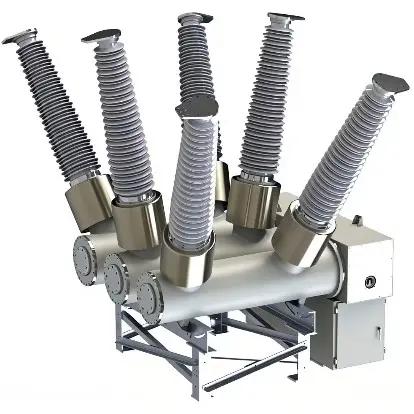
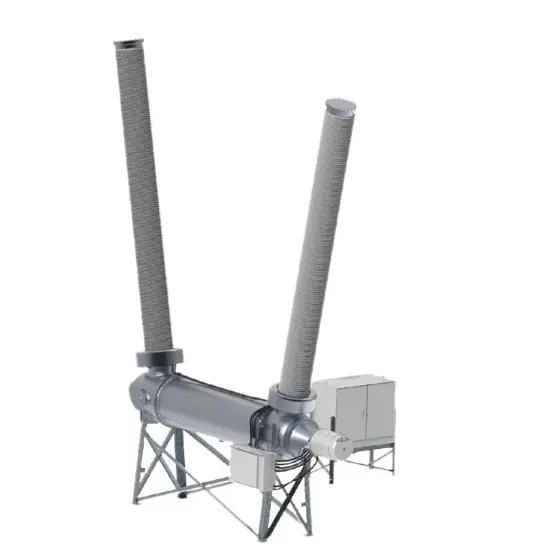
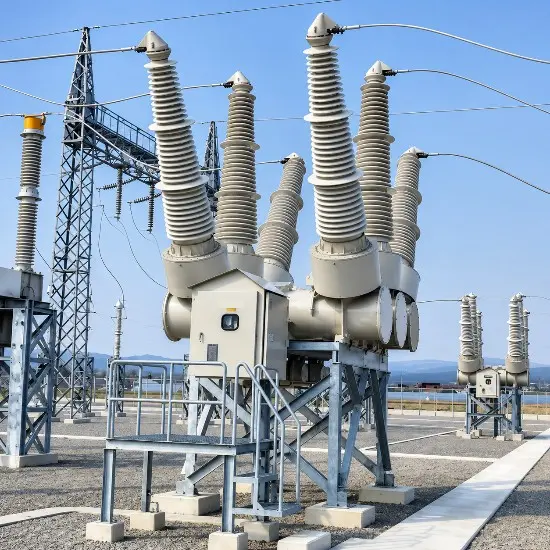
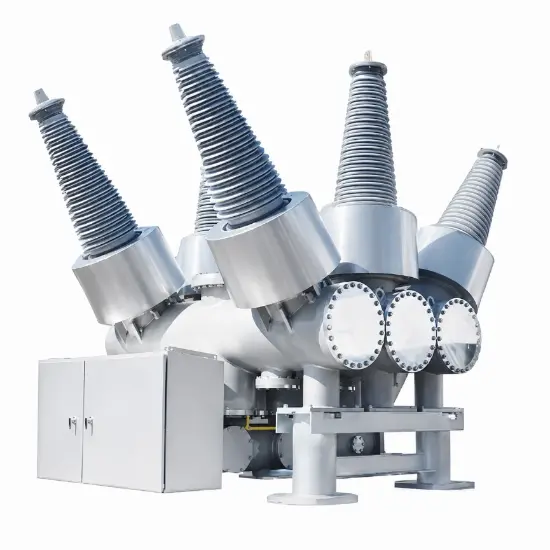
As China's first source factory specializing in GIS tank circuit breakers.225kV, 230kV, 245kV,252kV Outdoor Dead Tank SF6 Circuit Breaker is an outdoor (50Hz) high-voltage power transmission and transformation equipment, which is used to divide and combine rated working current, fault current or conversion lines to achieve protection, control and operation of the power system.
The circuit breaker arc extinguisher adopts the principle of double air chamber and double-action self-energy arc extinguishing, with compact structure, and its technical performance has reached the international level and the domestic advanced level, which is the replacement product of the traditional compressed sulfur hexafluoride circuit breaker. The product is composed of a circuit breaker, a current transformer and an inlet and outlet bushing, and is equipped with a full spring operating mechanism, which can not only carry out split-phase operation, but also realize three-phase electrical linkage.
The product has passed all type tests according to the IEC standards, and has the characteristics of excellent breaking ability, reliable insulation, strong flow capacity, and long electrical and mechanical life.
Main feature
Excellent breaking performance:The self-energy arc extinguishing chamber can meet all terminal short circuits, breaking near area faults, out-of-step faults, out-of-phase grounding faults and line charging currents, etc., with small electrical wear and low arc voltage. The rated short-circuit current can be interrupted 20 times in a row.
Reliable insulation and strong flow capacity:SF6 gas has superior insulation performance and simple and reliable insulation structure. There are few current-carrying contact parts, few contact points, and strong flow capacity.
The structure design is unique:The arc extinguisher has simple structure, few components, light weight, small operating work, high mechanical reliability, and a mechanical life of 10,000 times; The insulation structure of the product has been optimized and designed, which greatly reduces the amount of gas, is conducive to environmental protection, and the structural design is integrated and has strong seismic ability.
Easy to install, maintain and overhaul:The overall commissioning of the factory, rapid on-site assembly, and operation with an integrated spring mechanism, no oil leakage and air leakage, no daily energy storage monitoring requirements, so it is easy to maintain.
Technical specifications
Among these, some SF6 tank circuit breakers cover non-standard voltage levels including 225kV, 230kV, 245kV, 275kV, 330kV, 345kV, 400kV, 756kV, and 800kV, with a rated short-circuit breaking current of 50kA or 63kA, and offer customization services.
Name |
Unit |
Technical Parameters |
|
Rated Voltage |
kV |
252 |
|
Rated Current |
A |
4000 |
|
Rated Frequency |
Hz |
50/60 |
|
First - Pole - To - Clear Factor |
/ |
1.3 |
|
Rated Short - circuit Breaking Current |
kA |
50 |
|
Rated Short - time Withstand Current (Effective Value) |
kA/s |
50/3 |
|
Rated Peak Withstand Current |
kA |
125 |
|
1min Rated Power -frequency Withstand Voltage |
Phase - to - phase/Ground |
kV |
460 |
Break - port |
460(+146) |
||
Rated Lightning ImpulseWithstand (1.2/50μs Peak Value) |
Phase - to - phase/Ground |
1050 |
|
Break - port |
1050(+206) |
||
SF6 Gas (Gauge Pressure, 20 °C |
Rated Gas Pressure |
MPa |
0.60 |
Alarm Gas Pressure |
0.55±0.015 |
||
Lock - out Gas Pressure |
0.50±0.015 |
||
Rated operating sequence |
/ |
O - 0.3s - CO - 180s - CO |
|
Rated out - of - step breaking current |
kA |
12.5 |
|
Short - line - fault breaking current |
kA |
L90:45, L70:35 |
|
Out - of - phase grounding breaking current |
kA |
43.5 |
|
Rated line - charging breaking current |
A |
125 |
|
Number of breaking operations for rated short - circuit breaking current |
times |
20 |
|
Mechanical life |
times |
10000 |
|
Mechanism/operation mode |
/ |
Spring Operating Mechanism/Single - phase Operation |
|
Ambient Temperature:-30℃ ~ +40℃(standard configuration);optional -40℃ ~ +45℃ for extreme cold/hot regions (with special insulation and heating/cooling design).
Altitude:≤ 1000m above sea level(standard);for altitudes 1000m~2000m, insulation performance is enhanced by derating to ensure voltage resistance.
Relative Humidity:Monthly average ≤ 90%(at 25℃);daily average ≤ 95%;no condensation on the tank surface.
Wind Speed:Maximum sustained wind speed ≤ 34m/s(12-level wind);instantaneous gust ≤ 50m/s.
Atmospheric Conditions:Suitable for areas free of severe dust, corrosive gases(such as sulfur dioxide, ammonia), flammable gases, and conductive pollutants;for coastal or industrial areas with salt fog, optional anti-corrosion coating and sealed insulation structure are available.
Seismic Resistance:Seismic intensity ≤ 8 degrees;horizontal acceleration ≤ 0.2g, vertical acceleration ≤ 0.1g(conforms to GB/T 13540 or IEC 60068-2-57 standards).
Rainfall:Maximum rainfall intensity ≤ 100mm/h;no long-term heavy rain erosion on the upper casing.
Estrutura do Tanque Integral: A câmara de extinção de arco, o meio isolante e os componentes relacionados estão selados dentro de um tanque metálico preenchido com gás isolante (como hexafluoreto de enxofre) ou óleo isolante. Isso forma um espaço relativamente independente e selado, efetivamente impedindo que fatores ambientais externos afetem os componentes internos. Este design aumenta o desempenho de isolamento e a confiabilidade do equipamento, tornando-o adequado para vários ambientes externos adversos.
Disposição da Câmara de Extinção de Arco: A câmara de extinção de arco geralmente é instalada dentro do tanque. Sua estrutura é projetada para ser compacta, permitindo uma extinção de arco eficiente em um espaço limitado. Dependendo dos diferentes princípios e tecnologias de extinção de arco, a construção específica da câmara de extinção de arco pode variar, mas geralmente inclui componentes-chave como contatos, bocais e materiais isolantes. Esses componentes trabalham juntos para garantir que o arco seja rapidamente e efetivamente extinto quando o disjuntor interrompe a corrente.
Mecanismo de Operação: Mecanismos de operação comuns incluem mecanismos acionados por mola e mecanismos acionados hidraulicamente.
Mecanismo Acionado por Mola: Este tipo de mecanismo tem uma estrutura simples, é altamente confiável e fácil de manter. Ele impulsiona as operações de abertura e fechamento do disjuntor através do armazenamento e liberação de energia das molas.
Mecanismo Acionado Hidraulicamente: Este mecanismo oferece vantagens como alta potência de saída e operação suave, tornando-o adequado para disjuntores de classe de alta tensão e alta corrente.
A taxa de vazamento do gás SF₆ deve ser controlada em um nível extremamente baixo, normalmente não excedendo 1% por ano. O gás SF₆ é um gás de efeito estufa potente, com um efeito estufa 23.900 vezes maior que o do dióxido de carbono. Se ocorrer um vazamento, isso pode não apenas causar poluição ambiental, mas também levar a uma diminuição da pressão do gás dentro da câmara de extinção de arco, afetando o desempenho e a confiabilidade do disjuntor.
Para monitorar o vazamento do gás SF₆, dispositivos de detecção de vazamento de gás são geralmente instalados em disjuntores de tanque. Esses dispositivos ajudam a identificar prontamente quaisquer vazamentos para que medidas apropriadas possam ser tomadas para resolver o problema.
Durante o funcionamento normal e os processos de interrupção de um disjuntor, o gás SF₆ pode se decompor, produzindo diversos produtos de decomposição, como SF₄, S₂F₂, SOF₂, HF e SO₂. Esses produtos de decomposição são frequentemente corrosivos, tóxicos ou irritantes e, portanto, requerem monitoramento.Se a concentração desses produtos de decomposição exceder certos limites, isso pode indicar descargas anormais ou outras falhas dentro da câmara de extinção do arco. Manutenção e tratamento oportunas são necessárias para prevenir danos adicionais ao equipamento e proteger a saúde das pessoas.













 Login