Differences Between Fixed-Type and Withdrawable (Draw-Out) Vacuum Circuit Breakers
This article compares the structural characteristics and practical applications of fixed-type and withdrawable vacuum circuit breakers, highlighting functional differences in real-world deployment.
1.Basic Definitions
Both types are categories of vacuum circuit breakers, sharing the core function of interrupting current via a vacuum interrupter to protect electrical systems. However, differences in structural design and installation methods lead to significant variations in application scenarios.
2.Structural Composition
Fixed-Type Circuit Breaker
The breaker is directly mounted and permanently fixed within the switchgear frame. Components such as the vacuum interrupter, operating mechanism, and insulating supports are rigidly installed in a fixed position and cannot be moved. External connections are made via busbars or cables. After installation, disassembly requires manual removal of all connected parts, often necessitating a complete power shutdown.
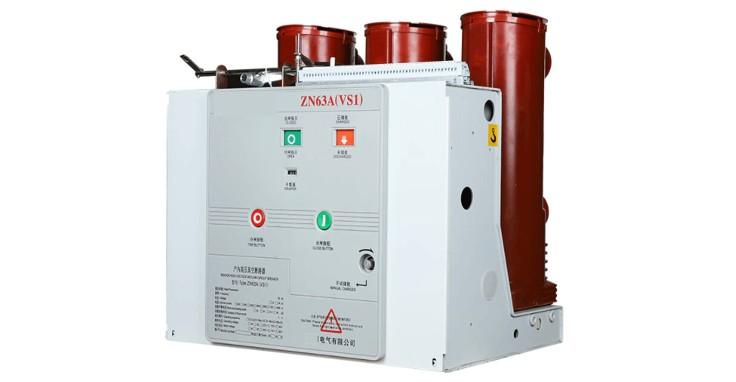
Withdrawable (Draw-Out) Type Circuit Breaker
The interrupter and operating mechanism are integrated into a movable module (called a "trolley" or "drawer"). The main unit is separable from its base. Equipped with wheels or rollers, the trolley runs along pre-installed steel rails in the switchgear. Plug-in moving contacts on the trolley align with fixed stationary contacts in the base. When pushed into position, mechanical interlocks ensure secure electrical connection; when withdrawn, the breaker is fully isolated from the live system.
Fixed-Type
Maintenance or component replacement must be performed under complete power shutdown. The process—power-off, disassembly, reassembly—requires strict adherence to standardized procedures and involves multiple personnel with rigorous anti-electrocution measures. Circuit downtime during fault diagnosis affects the entire system.
Withdrawable-Type
The draw-out design enables rapid isolation of the breaker. Typical procedure: disconnect control power and wiring → release mechanical interlock → manually operate the racking mechanism to slide the trolley along rails to an external maintenance position (fully disconnected from the main circuit). A single operator can complete the withdrawal within 15–30 minutes, minimizing downtime for non-faulted circuits.
Fixed-Type
Permanently installed in the switchgear, it requires robust mechanical protection against external impacts. However, replacement involves disconnecting upstream and downstream busbars, increasing the risk of human error. In N+1 redundancy configurations, additional spare cabinets or busbar transfer spaces are required, leading to higher equipment and space costs.
Withdrawable-Type
The modular design reduces fault response time. Spare trolleys or component kits can be quickly swapped into the bay during emergencies. A single breaker trolley can be used across multiple switchgear units (with standardized rail and plug-in interfaces), enabling independent configuration of main circuits and control systems. This reduces space redundancy requirements by 15–40%.
In harsh environments such as mines or chemical plants with high dust, moisture, or load, regular maintenance of rails and plug-in contacts is required, including enhanced sealing and calibration of insertion force to prevent deformation and maintain vacuum integrity. In contrast, the fixed-type’s stable connection offers slight advantages in extreme pollution conditions.
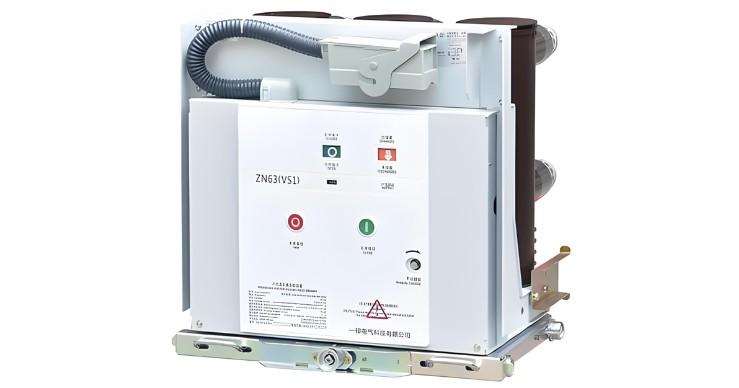
From a manufacturing perspective, the withdrawable type includes additional components—sliding rails, locking mechanisms, and modular contact systems—increasing material and processing costs by approximately 20–30% compared to fixed types. Small- to medium-sized manufacturers often prefer fixed-type breakers to control production costs, and some small utilities prioritize them due to budget constraints.
In civil applications for medium-voltage systems below 110 kV—such as commercial complexes or residential substations—fixed types are suitable where initial investment is limited and operating conditions are stable. In contrast, the fast-maintenance advantage of withdrawable types makes them ideal for facilities requiring high continuity of supply, such as steel mills and data centers.
In overseas construction projects with frequent equipment relocation, withdrawable designs are preferred to reduce installation time and complexity.
The choice between fixed and withdrawable types should balance user-specific factors: manpower availability, grid criticality, budget, and maintenance cycles. In high-risk disaster zones, fixed systems are often prioritized for long-term durability. In commercial and automated industrial environments, the operational efficiency of withdrawable designs is generally favored.