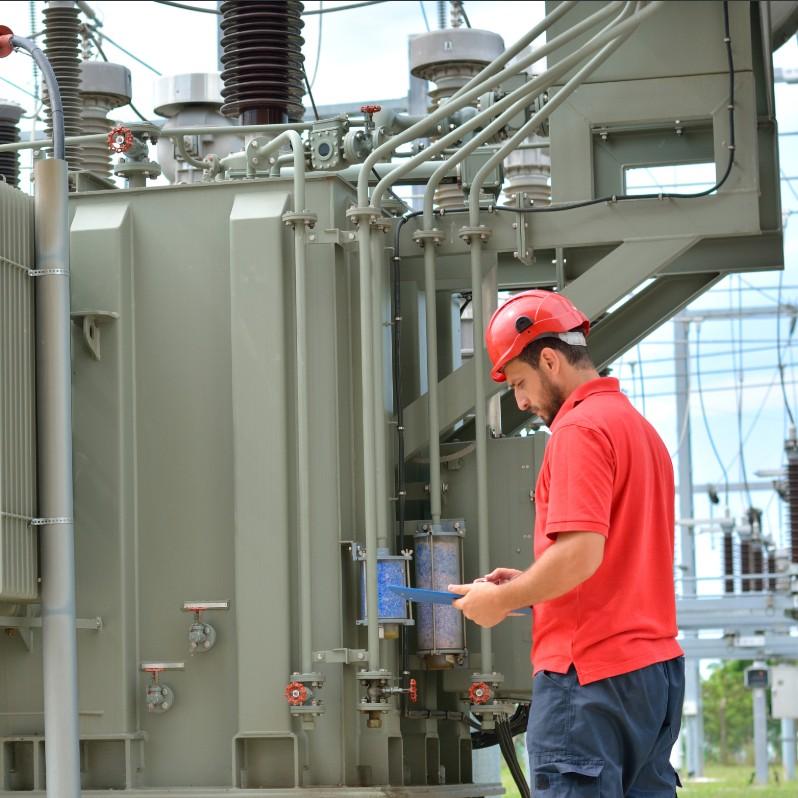
محولات التوزيع ذات المرحلة الواحدة، باعتبارها معدات تحويل الجهد وتوزيع الطاقة الهامة في نظام الكهرباء، تستخدم على نطاق واسع في شبكات الكهرباء الريفية والمناطق السكنية ذات الجهد المنخفض وأماكن تركز الأحمال ذات المرحلة الواحدة. ومع زيادة نسبة الأحمال ذات المرحلة الواحدة في شبكة التوزيع، ارتفعت معدلات الفشل في محولات التوزيع ذات المرحلة الواحدة. يعتبر التعرف والتعامل مع هذه الأعطال بشكل فوري مهمًا للغاية لضمان إمدادات الطاقة. وفقًا لأحدث الأبحاث، فإن الأعطال الشائعة في محولات التوزيع ذات المرحلة الواحدة تتركز بشكل أساسي في خمس فئات: أعطال ملفات السلك، تقادم العزل، تسرب الزيت، درجة حرارة غير طبيعية، وأعطال نقاط التوصيل ذات الجهد المنخفض. هذه الأعطال لا تعكر صفو العمل الطبيعي للمحول فحسب، بل قد تؤدي أيضًا إلى تلف المعدات وانقطاع إمدادات الطاقة. سيقوم هذا المقال بتحليل شامل للأسباب والخصائص وطرق التعامل مع مختلف الأعطال، مما يوفر توجيهًا عمليًا لفريق التشغيل والصيانة في نظام الكهرباء.
1. أعطال ملفات السلك
أعطال ملفات السلك هي أكثر أنواع الأعطال شيوعًا في محولات التوزيع ذات المرحلة الواحدة، بما في ذلك قصر الدائرة بين اللفائف، القطع، وأعطال التسرب الأرضي. غالبًا ما تكون ناجمة عن تقادم المواد العازلة، التلف الميكانيكي، أو عيوب التصنيع. يؤدي قصر الدائرة بين اللفائف إلى تسخين محلي داخل المحول، مما يسرع من تقادم العزل وقد يؤدي في النهاية إلى تلف ملف السلك كاملا. تظهر الأبحاث أن عندما يكون هناك قصر دائر خفيف في ملفات السلك، قد لا تعمل الأجهزة التقليدية مثل حماية الفرق والحماية الغازية في المراحل الأولى من العطل، مما يضع متطلبات أعلى على قدرة فريق التشغيل والصيانة على التعرف على الأعطال.
(1) أعراض العطل
(2) الإجراءات اللازمة
(3) استراتيجيات الوقاية
2. أعطال تقادم العزل
تقادم العزل هو ثاني أكثر الأعطال شيوعًا في محولات التوزيع ذات المرحلة الواحدة، بما في ذلك تقادم مواد العزل الصلبة وتدهور العزل الزيتي. يؤدي تقادم العزل إلى تقليل أداء العزل للمحول وتسريع تقادم المعدات بشكل عام. وفقًا للإحصائيات، يمكن أن يقصر العمر المتوقع المصمم (35-40 سنة) للمحول إلى حوالي 20 سنة، وهو أمر بارز بشكل خاص في المحولات التي تعمل لفترات طويلة في بيئات قاسية أو مع صيانة وتشغيل غير كافية.
(1) أعراض العطل

(2) طرق التعامل
(3) Strategies for Prevention
3. Oil Leakage Faults
Oil leakage is a frequent and harmful fault in single-phase distribution transformers. It accounts for more than 40% of the faults in power transformers, which will affect the insulation and heat dissipation performance, and cause equipment fire, pollution, and economic losses.
(1) Fault Manifestations
(2) Fault Causes
Aging/damage of seals, weld cracking, improper bushing installation, loose connections caused by vibration, oil tank rust, and abnormal oil pressure caused by a blocked breather.
(3) Handling Methods
(4) Prevention Strategies
4. Abnormal Temperature Faults
Abnormal temperature is a key fault type in single-phase distribution transformers, including winding overheating, local overheating of the iron core, and oil temperature rise. It is the "trigger" for faults such as insulation aging, oil leakage, and winding deformation. According to IEC standards, when the hottest spot temperature reaches 140°C, bubbles will be generated in the oil, which will reduce insulation or cause flashover, damaging the transformer.
(1) Fault Manifestations
(2) Fault Causes
Transformer overload, internal faults (winding/iron core short circuit), cooling system faults, high ambient temperature, insufficient oil volume due to poor sealing, and poor installation ventilation.
(3) Handling Methods
(4) Prevention Strategies
5. Low-voltage Tap Faults
Low-voltage tap faults are unique to single-phase distribution transformers, including poor contact, open circuits, and wrong connections. Because the low-voltage side mostly adopts a tap-off design (such as three/four taps), the connection quality directly affects the output voltage and operation stability, which is common in transformers with large load fluctuations and insufficient operation and maintenance.
(1) Fault Manifestations
(2) Fault Causes
Poor tap welding, oxidation of the contact surface, insecure installation, failure to restore connections during operation and maintenance, large contact resistance caused by a humid environment, and contact point wear caused by load fluctuations.
(3) Handling Methods
(4) Prevention Strategies

6. Application of Intelligent Monitoring Technology in Fault Diagnosis
With the development of the smart grid, the traditional diagnosis mode relying on manual experience and simple instruments has gradually been replaced by intelligent monitoring technology. The fault diagnosis system based on artificial intelligence can monitor the operation status in real-time, early-warn risks in advance, and improve the accuracy and efficiency of diagnosis.
(1) Mainstream Technologies
Infrared Sensing Temperature Measurement: With an accuracy of ±1°C, it can accurately detect abnormal temperatures.
Acoustic Signature Recognition Diagnosis: Analyze the frequency and characteristics of the operation sound to distinguish between normal and fault sounds.
Analysis of Dissolved Gases in Oil: Detect the content of characteristic gases to determine the type and degree of internal faults.
Machine Learning System: Integrate multiple parameters to establish a fault prediction model.
(2) Application Effects
After applying infrared temperature measurement, a power company increased the fault detection rate by 65% and shortened the processing time by 40%; acoustic signature recognition can detect winding faults 3 - 6 months in advance. The intelligent system can also locate faults and evaluate the severity, providing a basis for operation and maintenance decisions.
7. Maintenance and Prevention Measures for Single-phase Transformers
Most faults of single-phase distribution transformers are related to long-term operation, environment, and insufficient operation and maintenance. Establishing a scientific maintenance system and implementing preventive measures are the keys to reducing faults and extending service life.
(1) Daily Maintenance
(2) Classified Prevention
Winding Faults: Avoid overload and conduct regular insulation tests.
Insulation Aging: Operate at a controlled temperature and conduct regular oil quality detection.
Oil Leakage: Regularly check the seal and strengthen fixation in vibrating environments.
Abnormal Temperature: Optimize installation, ensure ventilation, and install temperature monitoring devices.
Tap Faults: Regularly check connections, use high-quality welding processes, and prevent moisture in humid environments.
(3) Standard Adaptation and Optimization
Select high-efficiency transformers according to GB20052 - 2020 to reduce losses and temperature rise; operate multiple units in parallel in high-load areas to reduce the load pressure on a single unit; strengthen environmental management to reduce external erosion.
8. Conclusions and Recommendations
The common faults of single-phase distribution transformers are interrelated, and most are caused by a single factor leading to multiple types of fault manifestations. Building a complete fault diagnosis system that integrates traditional experience and intelligent technology can improve the accuracy and efficiency of diagnosis.
Operation and Maintenance Management Recommendations
Monitoring System: Establish a comprehensive monitoring system for multiple parameters such as temperature, sound, and oil quality to master the status in real-time.
Environment Optimization: Optimize the installation position and method to reduce environmental impact.
Pre-maintenance Tests: Regularly conduct preventive tests (insulation resistance tests, oil quality detection, etc.) to identify hidden dangers.
Dynamic Adjustment: Adjust the operation mode and transformer capacity according to load changes.
Technology Upgrade: Adopt high-efficiency and intelligent monitoring equipment to improve efficiency and diagnosis ability.
The development of the smart grid helps the fault diagnosis and management of single-phase distribution transformers to move towards intelligence and refinement. It is recommended that power companies introduce new technologies and standards, build a big data health management system, realize early fault warning and precise diagnosis, and improve the reliability and economy of the distribution network.