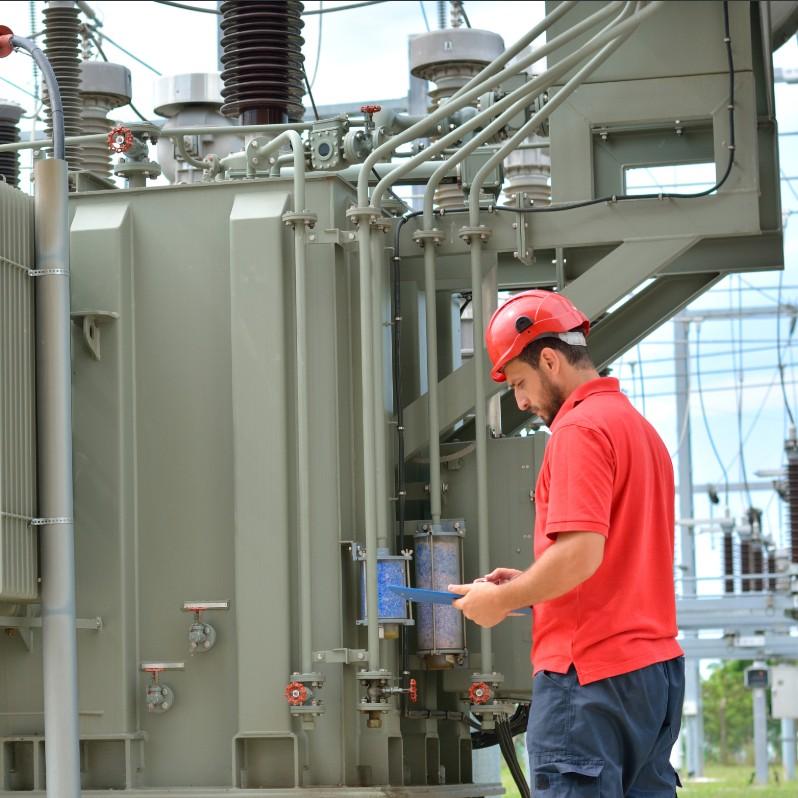
Ang mga single-phase distribution transformers, bilang mahalagang kagamitan para sa pagbabago ng tensyon at distribusyon ng enerhiya sa sistema ng kuryente, malawakang ginagamit sa mga rural na grid ng kuryente, mga low-voltage na residential na lugar, at mga lugar na may masusing single-phase na load. Sa patuloy na pagtaas ng proporsyon ng mga single-phase na load sa network ng distribusyon, ang rate ng pagkakasira ng mga single-phase na transformers ay dinadagdagan. Ang maagang pag-identify at pag-handle ng mga pagkakasirang ito ay may malaking kahalagahan para sa pagtaguyod ng mapagkakatiwalaang suplay ng kuryente. Ayon sa pinakabagong pagsusuri, ang karaniwang pagkakasira ng mga single-phase na distribution transformers ay pangunahing nakatuon sa limang kategorya: winding faults, insulation aging, oil leakage, abnormal temperature, at low-voltage tap faults. Ang mga pagkakasirang ito hindi lamang nagpapakilala ng interbensyon sa normal na operasyon ng transformer, maaari rin itong maging sanhi ng pinsala sa kagamitan at pagputol ng suplay ng kuryente. Ang artikulong ito ay magbibigay ng komprehensibong pagsusuri sa mga sanhi, katangian, at paraan ng pag-handle ng iba't ibang pagkakasira, nagbibigay ng praktikal na gabay para sa mga personnel ng operasyon at maintenance ng sistema ng kuryente.
1. Mga Winding Faults
Ang mga winding faults ay ang pinaka-karaniwang uri ng pagkakasira sa mga single-phase distribution transformers, kasama ang inter-turn short circuits, open circuits, at grounding faults ng mga winding. Kadalasan ito ay dulot ng pagtanda ng materyales ng insulasyon, mekanikal na pinsala, o pagkakamali sa paggawa. Ang isang inter-turn short circuit sa winding ay magdudulot ng lokal na sobrang init sa loob ng transformer, na nagpapabilis ng pagtanda ng insulasyon, at maaaring hantungan ng kabuuang pinsala ng winding. Ang pagsusuri ay nagpapakita na kapag may kaunting short circuit sa winding ng transformer, ang mga tradisyonal na aparato tulad ng differential protection at gas protection ay maaaring hindi gumana sa unang bahagi ng pagkakasira, na nagpapataas ng mga pamantayan sa kakayahan ng mga personnel ng operasyon at maintenance sa pag-identify ng pagkakasira.
(1) Pagpapakita ng Pagkakasira
(2) Paraan ng Pag-handle
(3) Strategiya ng Pag-iwas
2. Mga Insulation Aging Faults
Ang insulation aging ay ang pangalawang pinaka-karaniwang pagkakasira sa mga single-phase distribution transformers, kasama ang pagtanda ng solid na materyales ng insulasyon at ang pagkasira ng oil insulation. Ang insulation aging ay magpapababa ng kakayahan ng insulasyon ng transformer at magpapabilis ng kabuuang pagtanda ng kagamitan. Ayon sa estadistika, ito ay maaaring maikliin ang inilaan na serbisyo ng buhay (35 - 40 taon) ng transformer hanggang sa humigit-kumulang 20 taon, na partikular na prominent sa mga transformer na may mahabang-term na operasyon, sa harsh na kapaligiran, o may hindi sapat na operasyon at maintenance.
(1) Pagpapakita ng Pagkakasira

(2) Paraan ng Pag-handle
(3) Strategiya ng Pag-iwas
3. Mga Oil Leakage Faults
Ang oil leakage ay isang karaniwan at masamang pagkakasira sa mga single-phase distribution transformers. Ito ay umuuna sa mahigit 40% ng mga pagkakasira sa mga power transformers, na magpapabago sa insulasyon at kakayahan ng heat dissipation, at maaaring maging sanhi ng sunog, polusyon, at economic losses.
(1) Pagpapakita ng Pagkakasira
(2) Sanhi ng Pagkakasira
Aging/damage ng seals, weld cracking, improper bushing installation, loose connections dahil sa vibration, rust ng oil tank, at abnormal oil pressure dahil sa blocked breather.
(3) Paraan ng Pag-handle
(4) Strategiya ng Pag-iwas
4. Mga Abnormal Temperature Faults
Ang abnormal temperature ay isang key fault type sa mga single-phase distribution transformers, kasama ang winding overheating, local overheating ng iron core, at oil temperature rise. Ito ang "trigger" para sa mga fault tulad ng insulation aging, oil leakage, at winding deformation. Ayon sa IEC standards, kapag ang pinakamainit na spot temperature ay umabot sa 140°C, maaaring mag-generate ng bubbles sa langis, na magpapababa ng insulasyon o maaaring maging sanhi ng flashover, na nagpapinsala sa transformer.
(1) Pagpapakita ng Pagkakasira
(2) Sanhi ng Pagkakasira
Overload ng transformer, internal faults (winding/iron core short circuit), cooling system faults, mataas na ambient temperature, insufficient oil volume dahil sa poor sealing, at poor installation ventilation.
(3) Paraan ng Pag-handle
(4) Strategiya ng Pag-iwas
5. Mga Low-voltage Tap Faults
Ang mga low-voltage tap faults ay natatanging naroroon sa mga single-phase distribution transformers, kasama ang poor contact, open circuits, at wrong connections. Dahil ang low-voltage side kadalasang gumagamit ng tap-off design (tulad ng three/four taps), ang kalidad ng koneksyon ay direktang nakakaapekto sa output voltage at estabilidad ng operasyon, na karaniwan sa mga transformers na may malaking pagbabago ng load at hindi sapat na operasyon at maintenance.
(1) Pagpapakita ng Pagkakasira
(2) Sanhi ng Pagkakasira
Poor tap welding, oxidation ng contact surface, insecure installation, failure to restore connections during operation and maintenance, large contact resistance caused by a humid environment, and contact point wear caused by load fluctuations.
(3) Paraan ng Pag-handle
(4) Strategiya ng Pag-iwas

6. Application of Intelligent Monitoring Technology in Fault Diagnosis
With the development of the smart grid, the traditional diagnosis mode relying on manual experience and simple instruments has gradually been replaced by intelligent monitoring technology. The fault diagnosis system based on artificial intelligence can monitor the operation status in real-time, early-warn risks in advance, and improve the accuracy and efficiency of diagnosis.
(1) Mainstream Technologies
Infrared Sensing Temperature Measurement: With an accuracy of ±1°C, it can accurately detect abnormal temperatures.
Acoustic Signature Recognition Diagnosis: Analyze the frequency and characteristics of the operation sound to distinguish between normal and fault sounds.
Analysis of Dissolved Gases in Oil: Detect the content of characteristic gases to determine the type and degree of internal faults.
Machine Learning System: Integrate multiple parameters to establish a fault prediction model.
(2) Application Effects
After applying infrared temperature measurement, a power company increased the fault detection rate by 65% and shortened the processing time by 40%; acoustic signature recognition can detect winding faults 3 - 6 months in advance. The intelligent system can also locate faults and evaluate the severity, providing a basis for operation and maintenance decisions.
7. Maintenance and Prevention Measures for Single-phase Transformers
Most faults of single-phase distribution transformers are related to long-term operation, environment, and insufficient operation and maintenance. Establishing a scientific maintenance system and implementing preventive measures are the keys to reducing faults and extending service life.
(1) Daily Maintenance
(2) Classified Prevention
Winding Faults: Avoid overload and conduct regular insulation tests.
Insulation Aging: Operate at a controlled temperature and conduct regular oil quality detection.
Oil Leakage: Regularly check the seal and strengthen fixation in vibrating environments.
Abnormal Temperature: Optimize installation, ensure ventilation, and install temperature monitoring devices.
Tap Faults: Regularly check connections, use high-quality welding processes, and prevent moisture in humid environments.
(3) Standard Adaptation and Optimization
Select high-efficiency transformers according to GB20052 - 2020 to reduce losses and temperature rise; operate multiple units in parallel in high-load areas to reduce the load pressure on a single unit; strengthen environmental management to reduce external erosion.
8. Conclusions and Recommendations
The common faults of single-phase distribution transformers are interrelated, and most are caused by a single factor leading to multiple types of fault manifestations. Building a complete fault diagnosis system that integrates traditional experience and intelligent technology can improve the accuracy and efficiency of diagnosis.
Operation and Maintenance Management Recommendations
Monitoring System: Establish a comprehensive monitoring system for multiple parameters such as temperature, sound, and oil quality to master the status in real-time.
Environment Optimization: Optimize the installation position and method to reduce environmental impact.
Pre-maintenance Tests: Regularly conduct preventive tests (insulation resistance tests, oil quality detection, etc.) to identify hidden dangers.
Dynamic Adjustment: Adjust the operation mode and transformer capacity according to load changes.
Technology Upgrade: Adopt high-efficiency and intelligent monitoring equipment to improve efficiency and diagnosis ability.
The development of the smart grid helps the fault diagnosis and management of single-phase distribution transformers to move towards intelligence and refinement. It is recommended that power companies introduce new technologies and standards, build a big data health management system, realize early fault warning and precise diagnosis, and improve the reliability and economy of the distribution network.