• Product
  • Suppliers
  • Manufacturers
  • Solutions
  • Free tools
  • Knowledges
  • Experts
  • Communities
Search


Application of Grounding Transformers in Generator Neutral Grounding Resistor Cabinets

Echo
Echo
Field: Transformer Analysis
China

When the capacitive current of a generator is slightly large, a resistor must be added at the generator neutral point to avoid power-frequency overvoltage that could damage the motor insulation during a ground fault. The damping effect of this resistor reduces the overvoltage and limits the ground fault current. During a single-phase ground fault of the generator, the neutral-to-ground voltage equals the phase voltage, typically several kilovolts or even above 10 kV. Therefore, this resistor must have a very high resistance value, which is economically expensive.

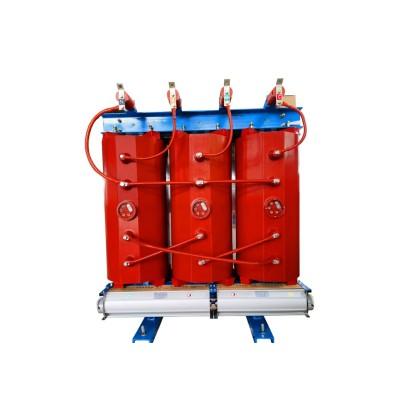
In general, a large high-value resistor is not directly connected between the generator neutral point and ground. Instead, a combination of a small resistor and a grounding transformer is used. The primary winding of the grounding transformer is connected between the neutral point and ground, while a small resistor is connected to the secondary winding. According to the formula, the impedance reflected to the primary side equals the secondary-side resistance multiplied by the square of the transformer turns ratio. Thus, with a grounding transformer, a small resistor can function as a high-value resistor.
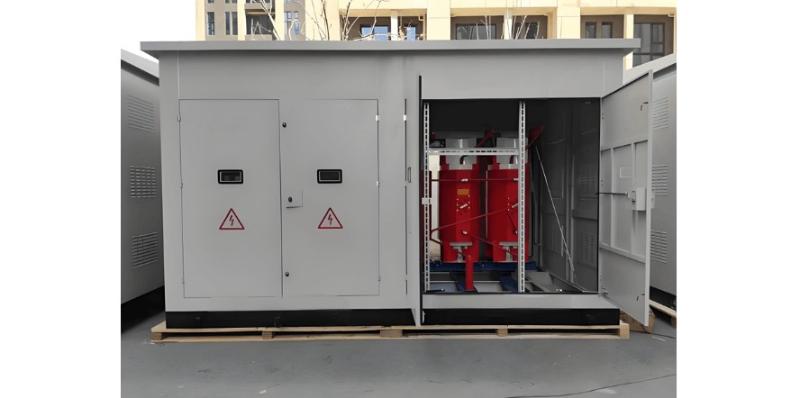
Grounding earthing Transformer.jpg

During a generator ground fault, the neutral-to-ground voltage (equal to the voltage applied across the primary winding of the grounding transformer) induces a corresponding voltage on the secondary winding, which can be used as a basis for ground fault protection—i.e., the grounding transformer can extract zero-sequence voltage.

The rated primary voltage of the transformer is 1.05 times the generator phase voltage, and the rated secondary voltage is 100 volts. It is easy to connect a resistor to the secondary winding, and a 100 V resistor is readily available. Although the reflected ground fault current on the primary side becomes large due to the transformer ratio, a generator ground fault should trigger immediate tripping and shutdown, so the current duration is very short, resulting in minimal thermal effects, which poses no problem.

Give a tip and encourage the author!
Recommended
Protection Logic Improvement and Engineering Application of Grounding Transformers in Rail Transit Power Supply Systems
1. System Configuration and Operating ConditionsThe main transformers at Zhengzhou Rail Transit’s Convention & Exhibition Center Main Substation and Municipal Stadium Main Substation adopt a star/delta winding connection with a non-grounded neutral point operation mode. On the 35 kV bus side, a Zigzag grounding transformer is used, connected to ground through a low-value resistor, and also supplies station service loads. When a single-phase ground short-circuit fault occurs on a line, a path
Echo
12/04/2025
Brief Discussion on the Selection of Grounding Transformers in Booster Stations
Grounding transformers, commonly referred to as "grounding transformers" or simply "grounding units," operate under no-load conditions during normal grid operation and experience overload during short-circuit faults. Based on the filling medium, they are commonly categorized into oil-immersed and dry-type types; based on phase count, they can be either three-phase or single-phase grounding transformers.A grounding transformer artificially creates a neutral point for connecting a grounding resist
James
12/04/2025
What are the differences between a grounding transformer and a conventional transformer?
What is a Grounding Transformer?A grounding transformer, abbreviated as "grounding transformer," can be classified into oil-immersed and dry-type according to the filling medium; and into three-phase and single-phase grounding transformers according to the number of phases.Difference Between Grounding Transformers and Conventional TransformersThe purpose of a grounding transformer is to create an artificial neutral point for connecting an arc suppression coil or resistor when the system is conne
Echo
12/04/2025
Analysis of Causes for Grounding Transformer Protection Misoperation
In China's power system, the 6 kV, 10 kV, and 35 kV grids generally adopt a neutral-point ungrounded operation mode. The distribution voltage side of main transformers in the grid is usually connected in delta configuration, which provides no neutral point for connecting grounding resistors. When a single-phase ground fault occurs in a neutral-point ungrounded system, the line-to-line voltage triangle remains symmetrical, causing minimal disruption to user operations. Moreover, when the capaciti
Felix Spark
12/04/2025
Related Products
Send inquiry
Download
Get the IEE Business Application
Use the IEE-Business app to find equipment, obtain solutions, connect with experts, and participate in industry collaboration anytime, anywhere—fully supporting the development of your power projects and business.