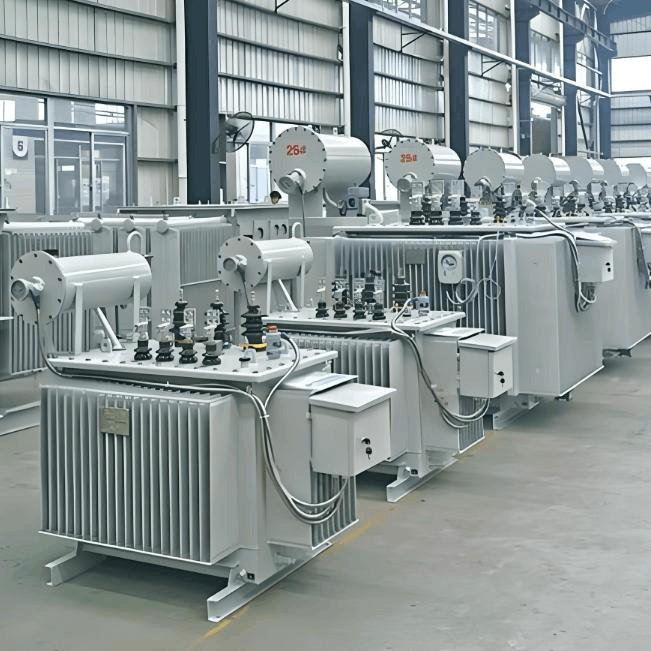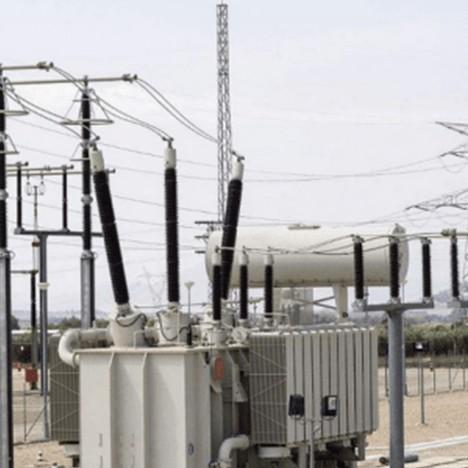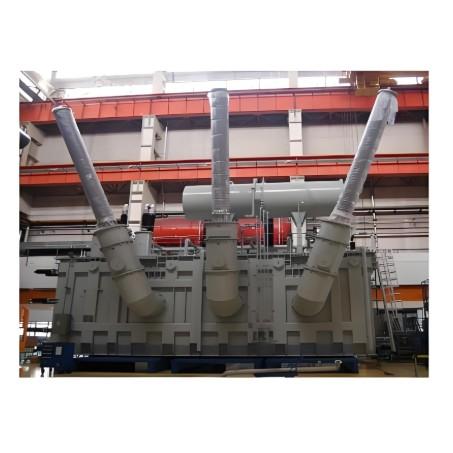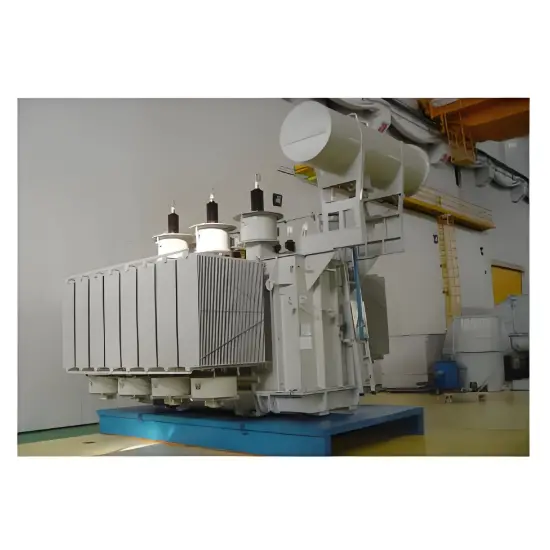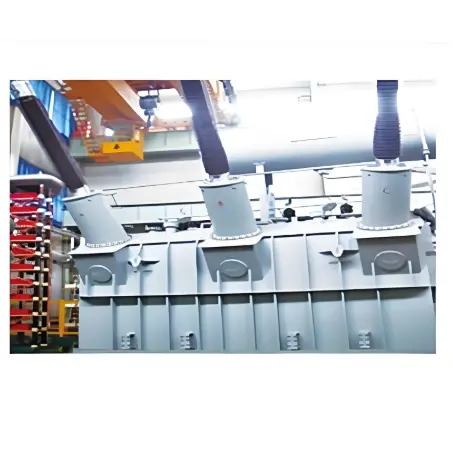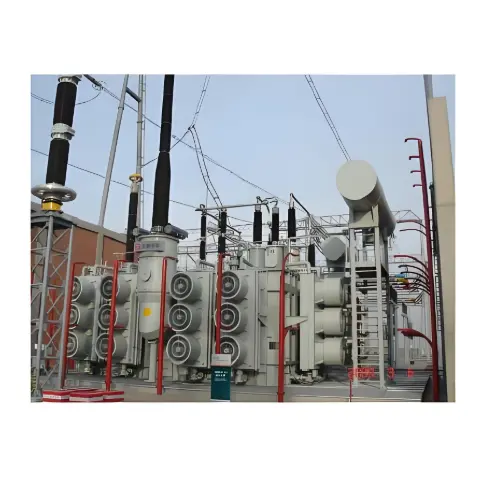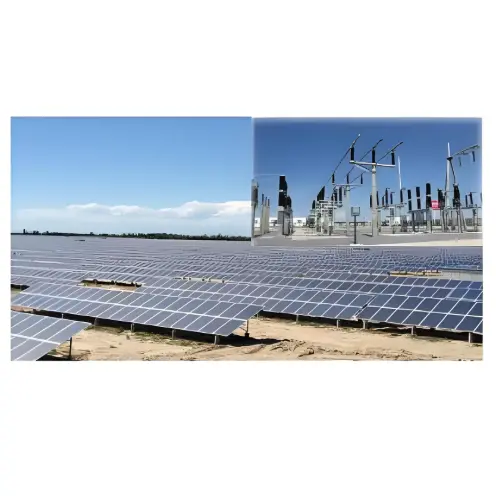
Power transformers are core primary equipment in power systems that realize electrical energy transmission and voltage conversion. Through the principle of electromagnetic induction, they convert AC power of one voltage level to another or multiple voltage levels. In the transmission and distribution process, they play a critical role in "step-up transmission and step-down distribution," while in energy storage systems, they perform voltage step-up and step-down functions, ensuring efficient power transmission and safe end-use.
1. Classification of Power Transformers
Power transformers are key primary equipment in substations, with their main function being to increase or decrease the voltage of electrical energy in power systems to facilitate rational transmission, distribution, and utilization of electricity. Power transformers in supply and distribution systems can be classified from different perspectives.
By Function: Divided into step-up transformers and step-down transformers. In long-distance transmission and distribution systems, step-up transformers are used to increase the relatively low voltage generated by generators to higher voltage levels. For terminal substations that directly supply various users, step-down transformers are employed.
By Phase Number: Classified as single-phase transformers and three-phase transformers. Three-phase transformers are widely used in substations of power supply and distribution systems, while single-phase transformers are generally used for dedicated small-capacity single-phase equipment.
By Winding Conductor Material: Divided into copper-wound transformers and aluminum-wound transformers. In the past, most factory substations in China used aluminum-wound transformers, but now low-loss copper-wound transformers, especially large-capacity copper-wound transformers, have gained wider application.
By Winding Configuration: Three types exist: two-winding transformers, three-winding transformers, and autotransformers. Two-winding transformers are used in places requiring transformation of one voltage; three-winding transformers are used where two voltage transformations are needed, featuring one primary winding and two secondary windings. Autotransformers are mostly used in laboratories for voltage regulation.
By Cooling Method and Winding Insulation: Classified as oil-immersed transformers and dry-type transformers. Oil-immersed transformers offer better insulation and heat dissipation performance, lower cost, and easier maintenance, making them widely adopted. However, due to the flammability of oil, they are not suitable for flammable, explosive, or high-safety-requirement environments. Dry-type transformers feature simple structure, small size, light weight, and are fireproof, dustproof, and moisture-resistant. They are more expensive than oil-immersed transformers of the same capacity and are widely used in high fire-safety locations, especially in substations within large buildings, underground substations, and energy storage systems.
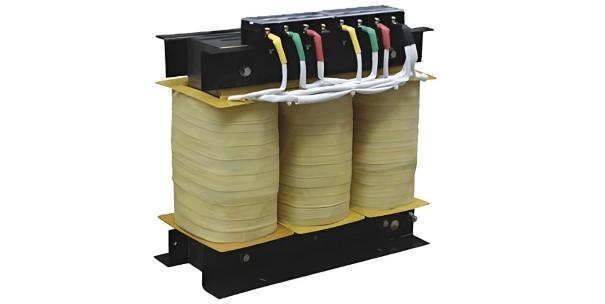
2. Power Transformer Models and Connection Groups
Capacity Standards: Currently, China adopts the IEC-recommended R10 series to determine power transformer capacities, where capacity increases in multiples of R10=¹⁰√10=1.26. Common ratings include 100kVA, 125kVA, 160kVA, 200kVA, 250kVA, 315kVA, 400kVA, 500kVA, 630kVA, 800kVA, 1000kVA, 1250kVA, 1600kVA, 2000kVA, 2500kVA, and 3150kVA. Transformers below 500kVA are considered small-sized, those between 630~6300kVA are medium-sized, and those above 8000kVA are large-sized.
Connection Groups: The connection group of a power transformer refers to the type of connection method used for the primary and secondary windings and the corresponding phase relationship between the primary and secondary line voltages. Common connection groups include Yyn0, Dyn11, Yzn11, Yd11, and YNd11. For 6~10kV distribution transformers (with secondary voltage of 220/380V), Yyn0 and Dyn11 are the two commonly used connection groups.
Yyn0 Connection Group: The phase relationship between primary and corresponding secondary line voltages resembles the position of hour and minute hands at zero o'clock (12 o'clock). The primary winding uses star connection, while the secondary winding uses star connection with a neutral line. The 3n-th harmonic currents possibly present in the circuit will be injected into the common high-voltage grid. Additionally, the neutral line current is specified not to exceed 25% of the phase line current. Therefore, this connection method is unsuitable for applications with severely unbalanced loads or prominent 3n-th harmonics. However, the Yyn0 connection group requires lower insulation strength for the primary winding (compared to Dyn11), resulting in slightly lower manufacturing costs. In TN and TT systems, Yyn0 connection group transformers can be selected when the neutral line current caused by single-phase unbalanced current does not exceed 25% of the secondary winding's rated current, and the current in any phase does not exceed the rated current at full load.
Dyn11 Connection Group: The phase relationship between primary and corresponding secondary line voltages resembles the position of hour and minute hands at 11 o'clock. In Dyn11 connection groups, circulating currents form in the primary winding, preventing injection into the public grid and providing suppression of higher-order harmonics. The secondary winding uses star connection with a neutral line, and according to specifications, the neutral line current is allowed to reach up to 75% of the phase current. Therefore, its ability to handle single-phase unbalanced currents is far greater than that of Yyn0 connection group transformers. For modern power supply systems with rapidly increasing single-phase loads, especially in TN and TT systems, Dyn11 connected transformers have been vigorously promoted and widely applied.
3. Application of Transformers in Energy Storage Systems
The core role of transformers in energy storage systems is voltage transformation and energy transmission adaptation, ensuring voltage level matching between energy storage batteries, converters/inverters, and the power grid/loads, thereby enabling efficient and safe charging and discharging of energy.
Grid Connection: Working with Power Conversion Systems (PCS), transformers step up the AC voltage output from PCS to grid level (such as 10kV/35kV) for grid connection, or step down grid voltage to PCS-compatible levels during discharge. They also provide DC isolation to prevent DC components from being injected into the grid.
Internal Power Distribution: In large-scale energy storage power stations, transformers serve as station transformers, stepping down high-voltage grid voltage to low voltage (such as 0.4kV) to provide stable power for energy storage battery clusters, PCS auxiliary systems, monitoring equipment, and other components.
User-Side/Microgrid Applications: For user-side energy storage, transformers can convert the output voltage of energy storage systems to levels compatible with user loads, directly supplying power to loads. In microgrids, they can also flexibly regulate voltage to adapt to energy interactions between different types of distributed power sources and loads.