• Product
  • Suppliers
  • Manufacturers
  • Solutions
  • Free tools
  • Knowledges
  • Experts
  • Communities
Search


Free Expert Guides on Power Systems, Circuit Design & Electrical Troubleshooting

Access free engineering resources from IEE Business—covering power design, circuit layout, equipment selection, and troubleshooting. Expert-developed guides help engineers, procurement, and project teams make better decisions. Stay ahead on smart grids, renewables, efficiency, and AI tools. Improve reliability, reduce downtime, and enhance outcomes with real-world solutions. Explore our knowledge hub today.
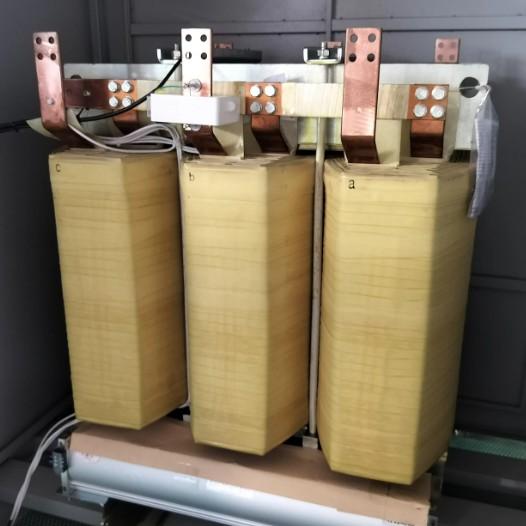
Analysis and Remedial Measures for Insulation Failures in Power Transformers
The Most Widely Used Power Transformers: Oil-Immersed and Dry-Type Resin TransformersThe two most widely used power transformers today are oil-immersed transformers and dry-type resin transformers. The insulation system of a power transformer, composed of various insulating materials, is fundamental to its proper operation. A transformer's service life is primarily determined by the lifespan of its insulating materials (oil-paper or resin).In practice, most transformer failures result from damag
12/16/2025
Consult
Tip
Consult
Tip
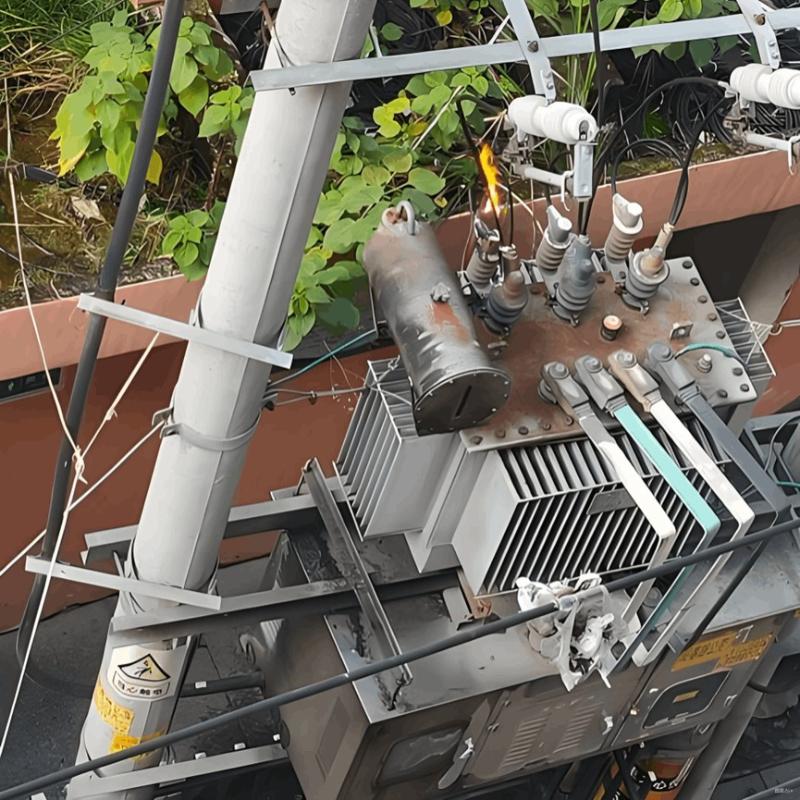
H59/H61 Transformer Failure Analysis and Protection Measures
1.Causes of Damage to Agricultural H59/H61 Oil-Immersed Distribution Transformers1.1 Insulation DamageRural power supply commonly uses a 380/220V mixed system. Due to the high proportion of single-phase loads, H59/H61 oil-immersed distribution transformers often operate under significant three-phase load imbalance. In many cases, the degree of three-phase load imbalance far exceeds the limits permitted by operational regulations, causing premature aging, deterioration, and eventual failure of th
12/08/2025
Consult
Tip
Consult
Tip
Hazard Points in Transformer Operation and Their Prevention Measures
The main hazard points in transformer operation are: Switching overvoltages that may occur during the energizing or de-energizing of no-load transformers, endangering transformer insulation; No-load voltage rise in transformers, which may damage transformer insulation.1. Preventive Measures Against Switching Overvoltages During No-Load Transformer SwitchingGrounding the transformer neutral point is primarily aimed at preventing switching overvoltages. In 110 kV and higher large-current grounding
12/04/2025
Consult
Tip
Consult
Tip
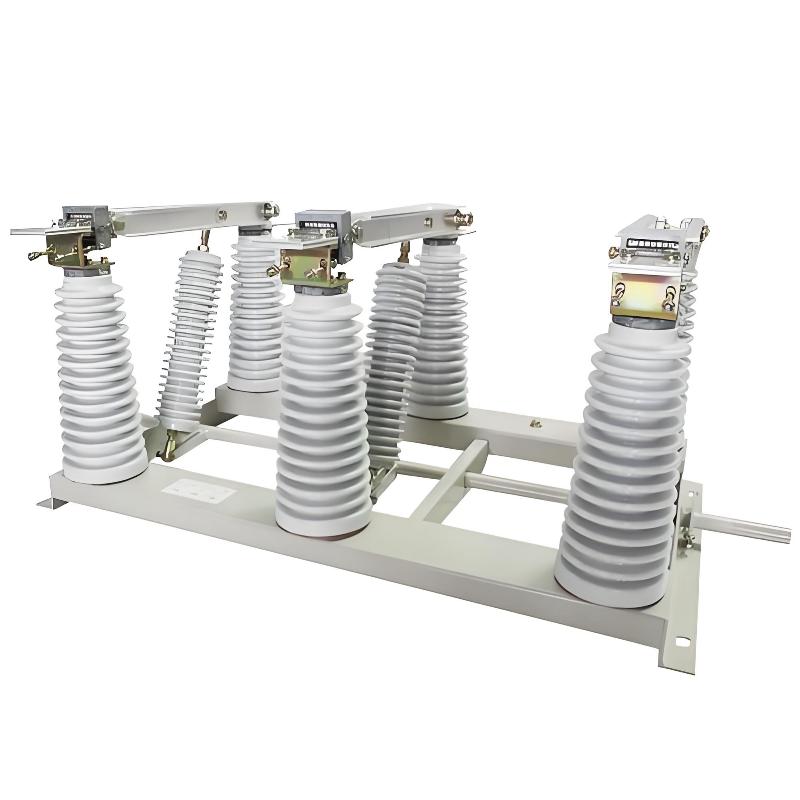
Common Issues and Handling Measures for 145kV Disconnector Control Circuits
The 145 kV disconnector is a critical switching device in substation electrical systems. It is used in conjunction with high-voltage circuit breakers and plays an important role in power grid operation:First, it isolates the power source, separating equipment under maintenance from the power system to ensure personnel and equipment safety;Second, it enables switching operations to change the system operating mode;Third, it is used to interrupt small-current circuits and bypass (loop) currents.Re
11/20/2025
Consult
Tip
Consult
Tip
Preventing & Resolving Catenary Switch Failures in Rail
"Faults of catenary isolating switches" are common failures in current traction power supply operations. These faults frequently result from mechanical failures of the switch itself, control circuit malfunctions, or remote control function failures, leading to refusal-to-operate or unintended operation of the isolating switch. Therefore, this paper discusses common faults of catenary isolating switches during current operations and the corresponding handling methods after fault occurrence.1.Comm
11/10/2025
Consult
Tip
Consult
Tip
Safe Response to Isolator Mechanical & Electrical Failures
The following are methods for handling accidents and abnormalities related to isolating switches:(1) If an isolating switch fails to operate (refuses to open or close), take the following steps:① For mechanically operated isolating switches that fail to open or close, check whether the circuit breaker is open, whether the mechanical interlock of the isolating switch has been released, whether the transmission mechanism is jammed, and whether the contacts are rusted or welded. Gently wiggle the o
11/10/2025
Consult
Tip
Consult
Tip
Key Operating Procedures for Opening and Closing Isolating Switches and Handling Interlock Failures
When performing switching operations, operating personnel must carefully verify that the circuit breaker is indeed in the open position. For three-pole interlocked isolating switches, all three phases must move simultaneously, with a maximum allowable vertical discrepancy of no more than 3 mm, before any opening or closing operation of the isolating switch is permitted.1. Key Points for Closing an Isolating SwitchFor manual operation, operating personnel should first remove the interlock pin bef
11/10/2025
Consult
Tip
Consult
Tip
Causes of Failure in Off-Circuit (De-energized) Tap Changers
I. Faults in Off-Circuit (De-energized) Tap Changers1. Causes of Failure Insufficient spring pressure on tap changer contacts, uneven roller pressure reducing effective contact area, or inadequate mechanical strength of the silver-plated layer leading to severe wear—ultimately burning out the tap changer during operation. Poor contact at tap positions, or poor connections/welding of leads, unable to withstand short-circuit current surges. Incorrect tap position selection during switching, causin
11/05/2025
Consult
Tip
Consult
Tip
What fire prevention measures are available for power transformer failures?
Failures in power transformers are commonly caused by severe overload operation, short circuits due to winding insulation degradation, aging of transformer oil, excessive contact resistance at connections or tap changers, failure of high- or low-voltage fuses to operate during external short circuits, core damage, internal arcing in oil, and lightning strikes.Since transformers are filled with insulating oil, fires can have severe consequences—ranging from oil spraying and ignition to, in extrem
11/05/2025
Consult
Tip
Consult
Tip
What are the causes of dielectric withstand failure in vacuum circuit breakers?
Causes of Dielectric Withstand Failure in Vacuum Circuit Breakers: Surface contamination: The product must be thoroughly cleaned before dielectric withstand testing to remove any dirt or contaminants.Dielectric withstand tests for circuit breakers include both power-frequency withstand voltage and lightning impulse withstand voltage. These tests must be performed separately for phase-to-phase and pole-to-pole (across the vacuum interrupter) configurations.Circuit breakers are recommended to be t
11/04/2025
Consult
Tip
Consult
Tip
Send inquiry
+86
Click to upload file

IEE Business will not sell or share your personal information.

Download
Get the IEE Business Application
Use the IEE-Business app to find equipment, obtain solutions, connect with experts, and participate in industry collaboration anytime, anywhere—fully supporting the development of your power projects and business.