• Product
  • Suppliers
  • Manufacturers
  • Solutions
  • Free tools
  • Knowledges
  • Experts
  • Communities
Search


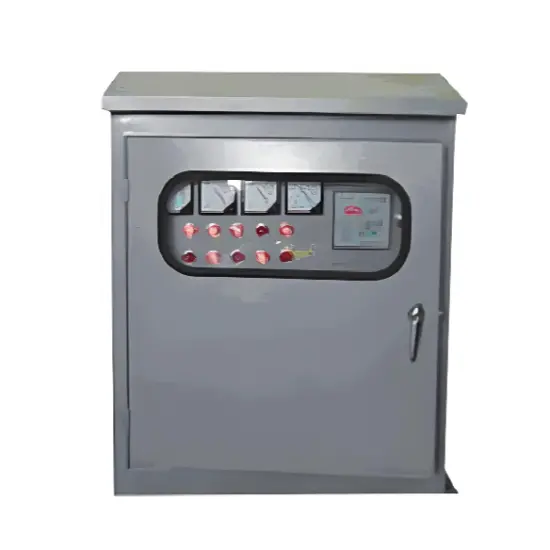
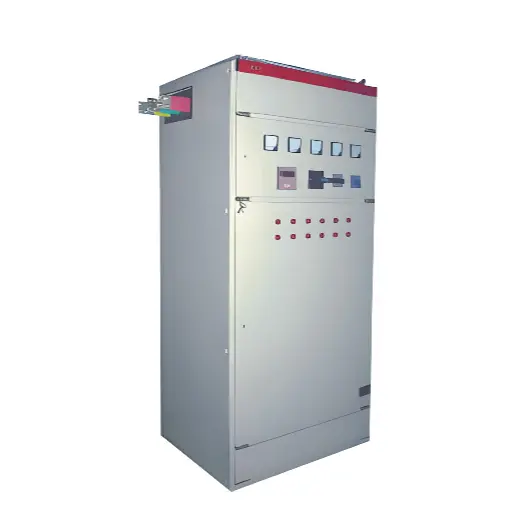
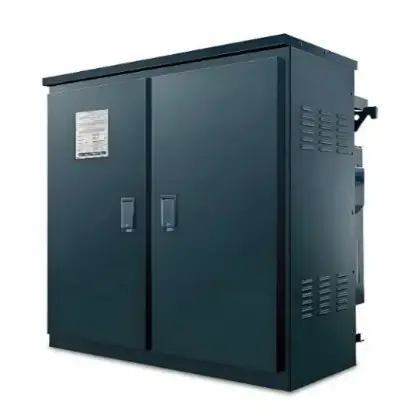
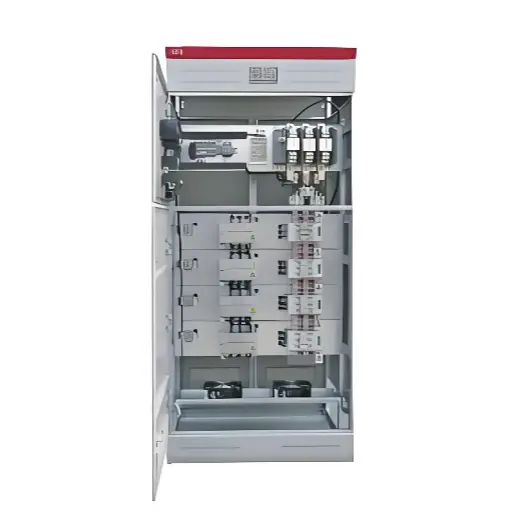
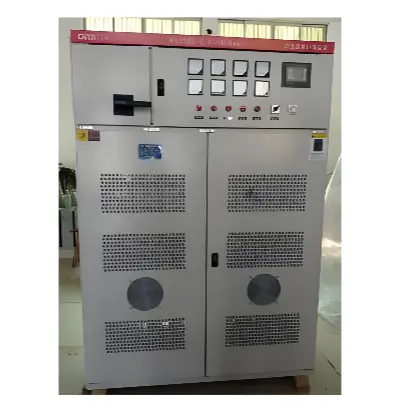
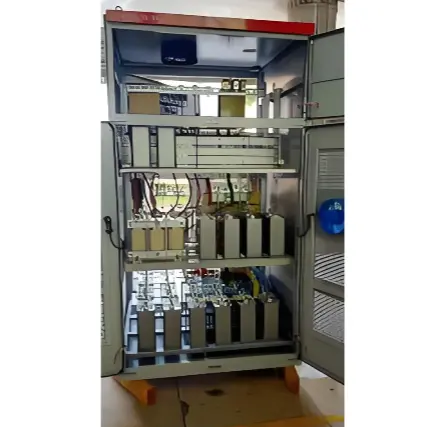
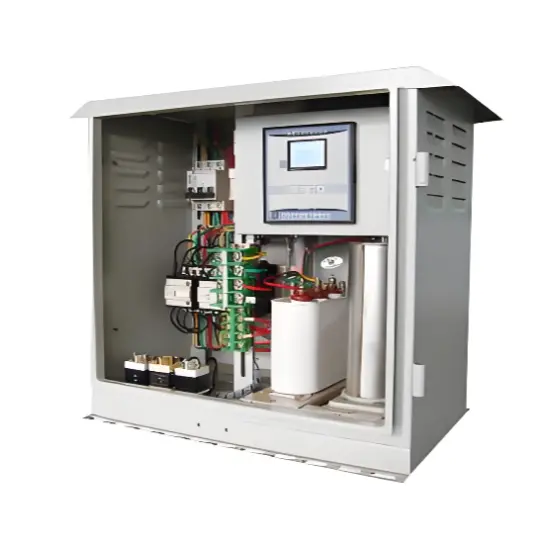
Low-Voltage Dynamic Reactive Power Compensation System

  • Low-Voltage Dynamic Reactive Power Compensation System
  • Low-Voltage Dynamic Reactive Power Compensation System
  • Low-Voltage Dynamic Reactive Power Compensation System

Key attributes

Brand Rw Energy
Model NO. Low-Voltage Dynamic Reactive Power Compensation System
Rated voltage 400V
Rated frequency 50/60Hz
Series HYTBBDL

Product descriptions from the supplier

Description

Description

In power distribution systems where the load varies frequently, the required reactive power compensation also changes dynamically. Traditional fixed-type compensation devices are no longer able to meet the compensation demands of such applications.

The HYTBBD Low-Voltage Dynamic Reactive Power Compensation System is specifically engineered for variable-load environments. It automatically tracks load variation in real time and provides fast-response reactive power compensation to maintain the power factor at an optimal level at all times.

Designed with a modular architecture, the system supports flexible configuration, easy installation, convenient maintenance, and seamless future expansion. Its performance-to-cost ratio is highly competitive, making it suitable for a wide range of industrial power networks requiring dynamic compensation capability.

Model Code Description

Example: HYTBBDL-0.4-□/□W-P7

Code Description
P Reactor
H Harmonic filter branch
W Outdoor cabinet structure
Number of capacitor groups
□ kvar Rated reactive compensation capacity
0.4 kV System voltage level
Type 2 L: Filter compensation / W: Line compensation
Type M Standard type (M), typically omitted
Type 1 J: Static / D: Dynamic
HYTBBD Dynamic reactive power compensation unit

Application Fields

The HYTBBD dynamic reactive power compensation system is suitable for industries with large variations in inductive load, such as metallurgy, machinery, mining, building materials, petrochemical, municipal facilities, and other power distribution systems with strong load fluctuation.

Main Functions

  • Compensates reactive power demand in real time and improves system power factor
  • Enhances transformer and line utilization efficiency, reducing equipment investment
  • Reduces power losses in transformers and transmission lines
  • Improves overall power quality and voltage stability
  • Limits harmonic current to ensure capacitor reliability and extend service life
  • Decreases THDv and suppresses harmful harmonic content
  • Ensures safe and long-term stable operation especially for high-inductive loads

Performance Features

  • High compensation accuracy with fast response
  • Modular design: high expansion capability, compact structure, high reliability and cost-efficiency
  • Excellent heat dissipation: modular structure with strengthened ventilation channels, ensuring low-temperature operation and longer component lifespan
  • Surge resistance and anti-harmonic design
  • High operation reliability and low maintenance cost
  • Comprehensive protection functions: over-current, over-voltage, under-voltage, short circuit, harmonic overload, capacitor fault, etc.
  • Advanced capacitor switching logic providing smooth compensation without shocks

Working Principle

The HYTBBD system adopts advanced control algorithms with real-time sampling of reactive demand.
According to system load variation, the controller intelligently switches capacitor groups using dynamic switching devices.It suppresses inrush current and harmonic resonance, prevents over-voltage during capacitor engagement, enhances switching smoothness, and significantly reduces capacitor stress during operation.

The optimized switching extends capacitor service life while ensuring the power factor remains within the optimal range.

Technical Specifications

Item Specification
Rated voltage AC380V ~ AC1140V ±15%
Rated frequency 50Hz / 60Hz ±4%
Target power factor ≥ 0.95
Rated capacity per group 15–60 kvar (dynamic switching)
Operation mode Continuous
Cabinet installation Floor-standing
Environmental temp. -10°C ~ +45°C
Relative humidity ≤95%, non-condensing
Altitude ≤4000m (above 2000m derating applies)
Protection level IP30

Selection Requirements

To correctly configure the system, please provide:
  • System operating parameters: voltage level, load characteristics, target PF
  • Existing reactive compensation conditions and harmonic situation
  • Transformer rating and load variation pattern
  • If harmonic suppression is needed: harmonic content and filtering requirements
  • Installation structure and compensation mode (fixed + dynamic if applicable)
Know your supplier
Online store
On-time delivery rate
Response time
100.0%
≤4h
Company overview
Workplace: 30000m² Total staff: Highest Annual Export(usD): 100000000
Workplace: 30000m²
Total staff:
Highest Annual Export(usD): 100000000
Services
Business Type: Design/Manufacture/Sales
Main Categories: High Voltage Electrical Apparatus/Low Voltage Electrical Apparatus/Instrument meters/New energy/Tester/Robot
Whole life care manager
Whole-life care management services for equipment procurement, use, maintenance, and after-sales, ensuring safe operation of electrical equipment, continuous control, and worry-free electricity consumption.
The equipment supplier has passed platform qualification certification and technical evaluation, ensuring compliance, professionalism, and reliability from the source.

Related Products

Related Knowledges

  • Main Transformer Accidents and Light Gas Operation Issues
    1. Accident Record (March 19, 2019)At 16:13 on March 19, 2019, the monitoring background reported a light gas action of No. 3 main transformer. In accordance with the Code for Operation of Power Transformers (DL/T572-2010), operation and maintenance (O&M) personnel inspected the on-site condition of No. 3 main transformer.On-site confirmation: The WBH non-electrical protection panel of No. 3 main transformer reported a Phase B light gas action of the transformer body, and the reset was ineff
    02/05/2026
  • Faults and Handling of Single-phase Grounding in 10kV Distribution Lines
    Characteristics and Detection Devices for Single-Phase Ground Faults1. Characteristics of Single-Phase Ground FaultsCentral Alarm Signals:The warning bell rings, and the indicator lamp labeled “Ground Fault on [X] kV Bus Section [Y]” illuminates. In systems with a Petersen coil (arc suppression coil) grounding the neutral point, the “Petersen Coil Operated” indicator also lights up.Insulation Monitoring Voltmeter Indications:The voltage of the faulted phase decreases (in
    01/30/2026
  • Neutral point grounding operation mode for 110kV~220kV power grid transformers
    The arrangement of neutral point grounding operation modes for 110kV~220kV power grid transformers shall meet the insulation withstand requirements of transformer neutral points, and shall also strive to keep the zero-sequence impedance of substations basically unchanged, while ensuring that the zero-sequence comprehensive impedance at any short-circuit point in the system does not exceed three times the positive-sequence comprehensive impedance.For 220kV and 110kV transformers in new constructi
    01/29/2026
  • Why Do Substations Use Stones, Gravel, Pebbles, and Crushed Rock?
    Why Do Substations Use Stones, Gravel, Pebbles, and Crushed Rock?In substations, equipment such as power and distribution transformers, transmission lines, voltage transformers, current transformers, and disconnect switches all require grounding. Beyond grounding, we will now explore in depth why gravel and crushed stone are commonly used in substations. Though they appear ordinary, these stones play a critical safety and functional role.In substation grounding design—especially when multiple gr
    01/29/2026
  • Why Must a Transformer Core Be Grounded at Only One Point? Isn't Multi-Point Grounding More Reliable?
    Why Does the Transformer Core Need to Be Grounded?During operation, the transformer core, along with the metal structures, parts, and components that fix the core and windings, are all situated in a strong electric field. Under the influence of this electric field, they acquire a relatively high potential with respect to ground. If the core is not grounded, a potential difference will exist between the core and the grounded clamping structures and tank, which may lead to intermittent discharge.I
    01/29/2026
  • Understanding Transformer Neutral Grounding
    I. What is a Neutral Point?In transformers and generators, the neutral point is a specific point in the winding where the absolute voltage between this point and each external terminal is equal. In the diagram below, pointOrepresents the neutral point.II. Why Does the Neutral Point Need Grounding?The electrical connection method between the neutral point and earth in a three-phase AC power system is called theneutral grounding method. This grounding method directly affects:The safety, reliabilit
    01/29/2026
Haven't found the right supplier yet? Let matching verified suppliers find you. Get Quotation Now
Haven't found the right supplier yet? Let matching verified suppliers find you.
Get Quotation Now
Send inquiry
+86
Click to upload file
Download
Get the IEE Business Application
Use the IEE-Business app to find equipment, obtain solutions, connect with experts, and participate in industry collaboration anytime, anywhere—fully supporting the development of your power projects and business.