• Product
  • Suppliers
  • Manufacturers
  • Solutions
  • Free tools
  • Knowledges
  • Experts
  • Communities
Search


Continuous / Step voltage regulation step voltage regulator 6kV 6.35kV 11kV 15kV 22kV 33kV – IEEE

  • Continuous / Step voltage regulation step voltage regulator 6kV 6.35kV 11kV 15kV 22kV 33kV – IEEE

Key attributes

Brand ROCKWILL
Model NO. Continuous / Step voltage regulation step voltage regulator 6kV 6.35kV 11kV 15kV 22kV 33kV – IEEE
Rated voltage 11kV
Rated frequency 50/60Hz
Phases Single-phase
Series RVR

Product descriptions from the supplier

Description

Product Overview

As a pioneer and the first source factory in China's voltage regulator industry, we have been deeply rooted in the sector for decades, accumulating profound technical expertise. Leveraging top-tier R&D capabilities and a mature manufacturing system, our products have gained widespread market trust with reliability and performance that far exceed industry standards.

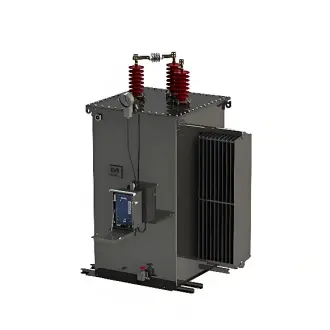
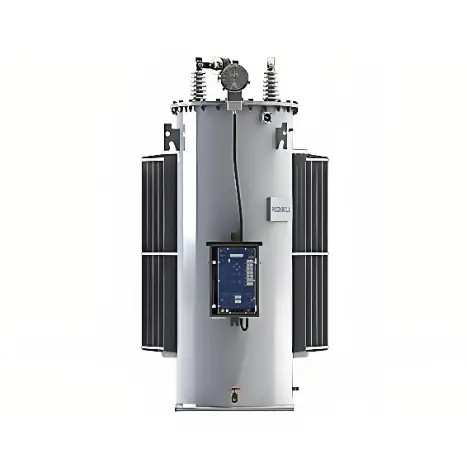
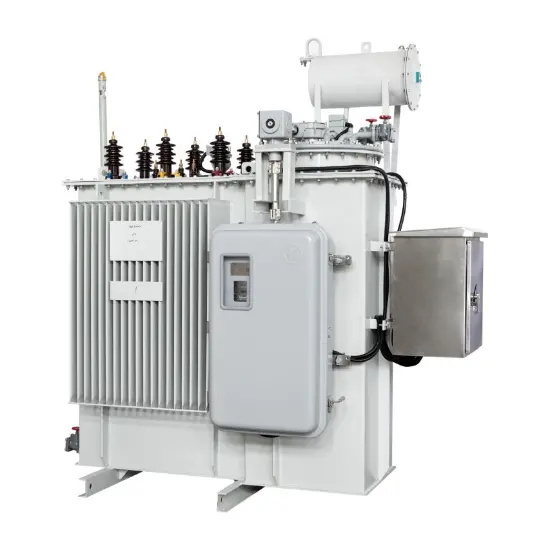
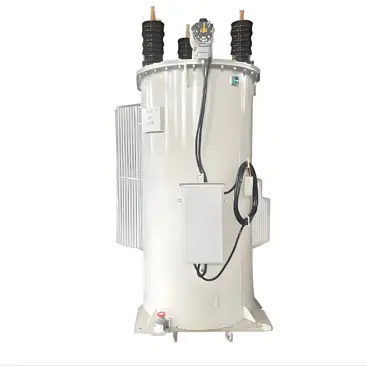
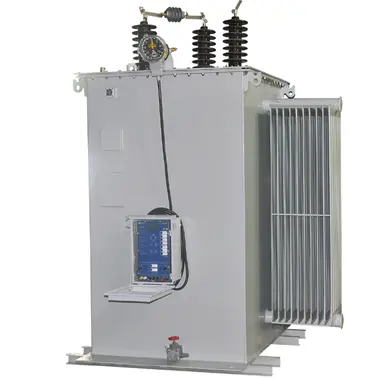
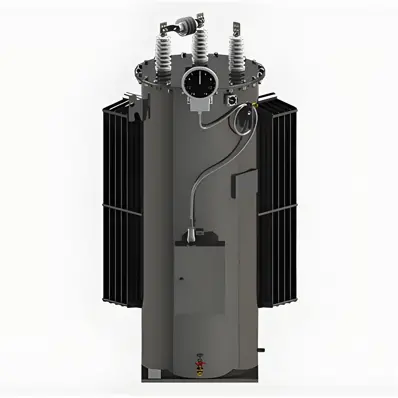
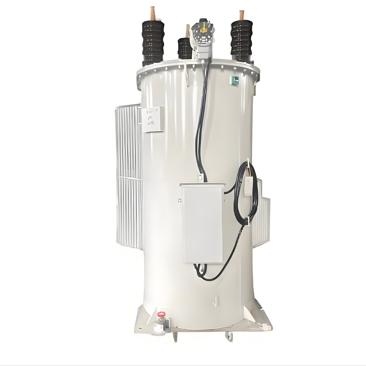
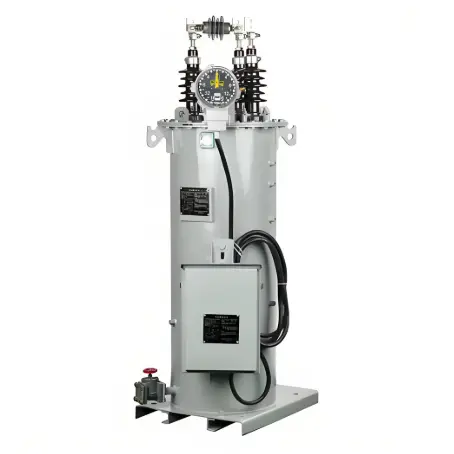
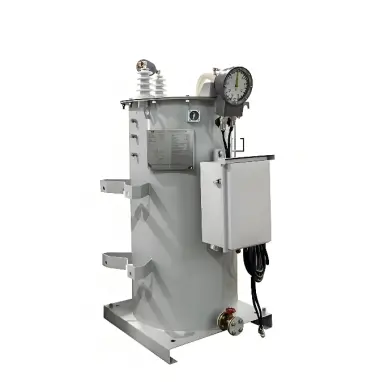
The RVR-1 single-phase step voltage regulator is an oil-immersed autotransformer with an integrated on-load tap changer, designed to automatically stabilize distribution line voltage. It offers ±10% regulation in 32 fine steps (approximately 0.625% each), ensuring consistent voltage across varying load conditions.

Voltage ratings range from 2,500V (60 kV BIL) to 19,920V (150 kV BIL), with current capacities from 50A to 1665A and kVA ratings from 38.1 to 1000. The unit is compatible with both 50Hz and 60Hz systems and can be pole-mounted, pad-mounted, or installed in substations.

Product Features

Precise Step Voltage RegulationOffers a ±10% wide voltage adjustment range, achieved through 32 automatic and precise tap positions—each calibrated to approximately 0.625%. This fine-step design enables real-time response to grid voltage fluctuations, ensuring the output voltage is stabilized within a high-precision range, effectively compensating for line voltage drops and meeting the strict voltage quality requirements of industrial and commercial loads.

Intelligent Digital ControllerFeatures a high-performance programmable digital controller with user-friendly configuration options. Supports optional GPRS/GSM/Bluetooth communication protocols for seamless remote monitoring, parameter adjustment, and fault diagnosis. Built-in data logging functionality automatically records key operating parameters (e.g., voltage, current, tap position, fault codes) with timestamped records, facilitating maintenance analysis and system optimization for enhanced operational efficiency.

Flexible Installation ConfigurationsDesigned for versatile deployment across power system scenarios:

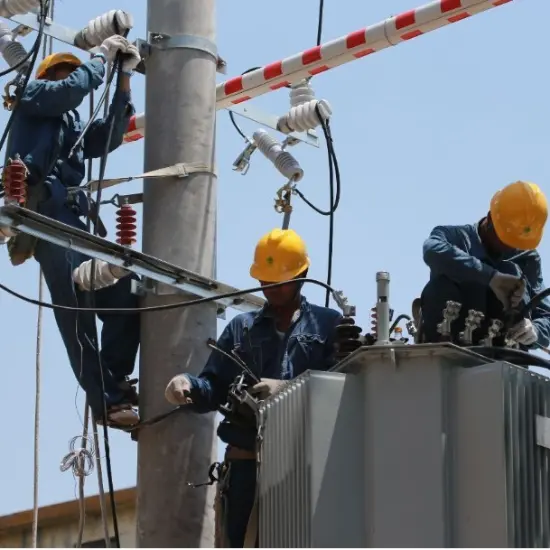
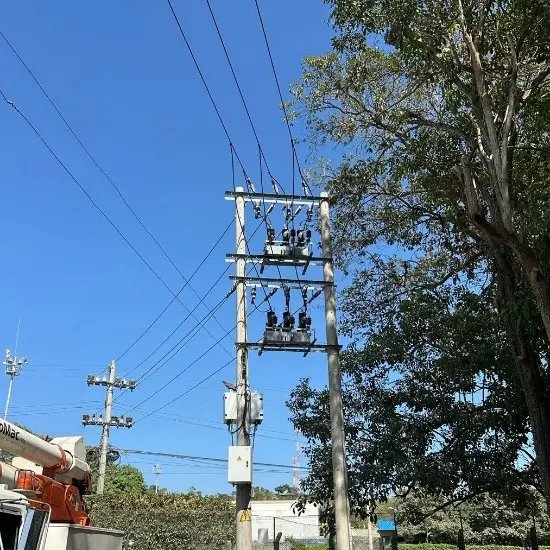
  • Pole mounting: Compatible with standard utility poles via dedicated mounting brackets, ideal for overhead distribution lines (e.g., rural power grids, industrial park feeders);

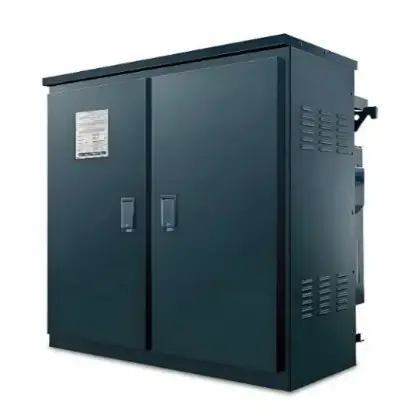
  • Pad-mount installation: Equipped with a robust ground-mounted base for stable placement in outdoor open areas or near load centers;

  • Substation mounting: Optional elevating platforms available for integration into substation equipment layouts, adapting to indoor or outdoor substation environments.


    All installation options comply with power industry safety standards, ensuring easy assembly and reliable operation in diverse conditions.

Technical Specifications

Available voltage ratings include 50Hz (6kV, 6.35kV, 11kV, 15kV, 22kV, 33kV) and 60Hz (7.62kV, 13.8kV, 14.4kV, 19.92kV, 34.5kV). Custom voltage ratings are available upon request.

Parameter

Specification

Model No.

RVR-1

Rated Voltage

7.62 kV

Voltage Regulation Range

±10% (Boost/Buck)

Tap Steps

32 steps (approx. 0.625% per step)

Phase

Single-phase

Rated Frequency

50 Hz / 60 Hz

Rated Current

50 A - 1665 A

Rated Capacity (kVA)

38.1 - 1000 kVA

BIL (Basic Impulse Level)

60 - 150 kV

Transformer Type

Oil-immersed autotransformer with on-load tap changer

Cooling Method

ONAN (Oil Natural Air Natural)

Winding Type

Two-winding Transformer

Core Shape

Ring type

50Hz

Voltage

(kV)

Current

(A)

Capacity

(kVA)

BIL (kV)

Power Frequency Withstand Voltage (kV)

Insulation Class

6/6.35

50

30/32

75/95

28

A

100

60/64

150

90/95

200

120/127

300

180/191

400

240/254

500

300/318

600

360/381

11

50

55

100

110

150

165

200

220

300

330

400

440

500

550

600

660

15

50

75

125/150

50

100

150

150

225

200

300

300

450

400

600

500

750

22

50

110

100

220

150

330

200

440

300

660

33

50

165

170/200

70

100

330

150

495

200

660

250

825

300

990

Key Advantages

  • Certified Quality
    ISO9001 & ISO14001 certified; each unit is fully type-tested before delivery

  • Robust & Reliable
    Built for harsh environments with minimal maintenance requirements

  • Flexible Packaging Options
    Export-grade seaworthy wooden boxes available in single or double-unit formats to reduce shipping cost

  • Professional Support
    Fast pre-sales response, real-time production updates, and long-term after-sales service

Application Scenarios

  • Rural & Urban Distribution Networks
    Compensates for voltage drops along long feeder lines

  • Industrial Zones
    Ensures voltage stability for large machinery and sensitive equipment

  • Renewable Energy Integration
    Maintains voltage stability in grids with wind or solar input

  • Substation Use
    Enhances voltage control across secondary distribution systems
Documentation Resource Library
Restricted
6kV to 34.5kV Single Phase Automatic Voltage Regulator Brochure
Catalogue
English
Consulting
Consulting
FAQ
Q: How do IEEE standards impact the selection of 33kV step voltage regulators?
A:

IEEE C57.15/C57.116 standards define critical requirements for 33kV regulators:

  • Testing Rigor: Mandates lightning impulse withstand (110kV) and temperature rise tests (55°C max)

  • Safety Protocols: Requires pressure relief devices and fault current withstand (25kA/2s)

  • Performance Metrics: Specifies ±0.5% voltage accuracy and 96% minimum efficiency at 50-100% load

  • Compliance Value: IEEE-certified models ensure grid compatibility and simplify utility approval processes
    These standards directly correlate to 20% longer service life and 35% reduced maintenance costs in field deployments.

Q: What is the difference between continuous and step voltage regulation in step voltage regulators?
A:

Step voltage regulators offer two distinct voltage correction methods:

  • Step Regulation: Adjusts voltage in fixed increments (typically ±10% range in 0.625-1.25% steps) using tap changers. Ideal for stable grids where precision adjustments are sufficient.

  • Continuous Regulation: Provides smooth, stepless correction through electronic power conversion. Perfect for volatile grids with frequent fluctuations (e.g., renewable integration zones).
    All models (6kV-33kV) comply with IEEE C57.15 standards, with step versions featuring 32-position tap changers and continuous versions maintaining ±1% output accuracy under all load conditions.
Know your supplier
Online store
On-time delivery rate
Response time
100.0%
≤4h
Company overview
Workplace: 108000m²m² Total staff: 700+ Highest Annual Export(usD): 150000000
Workplace: 108000m²m²
Total staff: 700+
Highest Annual Export(usD): 150000000
Services
Business Type: Design/Manufacture/Sales
Main Categories: High Voltage Electrical Apparatus/Electric transformer
Whole life care manager
Whole-life care management services for equipment procurement, use, maintenance, and after-sales, ensuring safe operation of electrical equipment, continuous control, and worry-free electricity consumption.
The equipment supplier has passed platform qualification certification and technical evaluation, ensuring compliance, professionalism, and reliability from the source.

Related Products

Related Knowledges

  • Main Transformer Accidents and Light Gas Operation Issues
    1. Accident Record (March 19, 2019)At 16:13 on March 19, 2019, the monitoring background reported a light gas action of No. 3 main transformer. In accordance with the Code for Operation of Power Transformers (DL/T572-2010), operation and maintenance (O&M) personnel inspected the on-site condition of No. 3 main transformer.On-site confirmation: The WBH non-electrical protection panel of No. 3 main transformer reported a Phase B light gas action of the transformer body, and the reset was ineff
    02/05/2026
  • Faults and Handling of Single-phase Grounding in 10kV Distribution Lines
    Characteristics and Detection Devices for Single-Phase Ground Faults1. Characteristics of Single-Phase Ground FaultsCentral Alarm Signals:The warning bell rings, and the indicator lamp labeled “Ground Fault on [X] kV Bus Section [Y]” illuminates. In systems with a Petersen coil (arc suppression coil) grounding the neutral point, the “Petersen Coil Operated” indicator also lights up.Insulation Monitoring Voltmeter Indications:The voltage of the faulted phase decreases (in
    01/30/2026
  • Neutral point grounding operation mode for 110kV~220kV power grid transformers
    The arrangement of neutral point grounding operation modes for 110kV~220kV power grid transformers shall meet the insulation withstand requirements of transformer neutral points, and shall also strive to keep the zero-sequence impedance of substations basically unchanged, while ensuring that the zero-sequence comprehensive impedance at any short-circuit point in the system does not exceed three times the positive-sequence comprehensive impedance.For 220kV and 110kV transformers in new constructi
    01/29/2026
  • Why Do Substations Use Stones, Gravel, Pebbles, and Crushed Rock?
    Why Do Substations Use Stones, Gravel, Pebbles, and Crushed Rock?In substations, equipment such as power and distribution transformers, transmission lines, voltage transformers, current transformers, and disconnect switches all require grounding. Beyond grounding, we will now explore in depth why gravel and crushed stone are commonly used in substations. Though they appear ordinary, these stones play a critical safety and functional role.In substation grounding design—especially when multiple gr
    01/29/2026
  • Why Must a Transformer Core Be Grounded at Only One Point? Isn't Multi-Point Grounding More Reliable?
    Why Does the Transformer Core Need to Be Grounded?During operation, the transformer core, along with the metal structures, parts, and components that fix the core and windings, are all situated in a strong electric field. Under the influence of this electric field, they acquire a relatively high potential with respect to ground. If the core is not grounded, a potential difference will exist between the core and the grounded clamping structures and tank, which may lead to intermittent discharge.I
    01/29/2026
  • Understanding Transformer Neutral Grounding
    I. What is a Neutral Point?In transformers and generators, the neutral point is a specific point in the winding where the absolute voltage between this point and each external terminal is equal. In the diagram below, pointOrepresents the neutral point.II. Why Does the Neutral Point Need Grounding?The electrical connection method between the neutral point and earth in a three-phase AC power system is called theneutral grounding method. This grounding method directly affects:The safety, reliabilit
    01/29/2026

Related Solutions

  • Intelligent Operation Solution for 12kV Vacuum Circuit Breakers: Integrating Real-time Monitoring & Lifetime Optimization
    Ⅰ. Equipment Operation & MaintenanceIntelligent Monitoring System Integration​Multi-parameter Real-time Monitoring: Embedded sensors (temperature, displacement, Hall effect current sensors) track contact temperature rise, mechanical characteristics (opening/closing speed, overtravel), coil current, and partial discharge signals. Data undergoes preprocessing via edge computing prior to cloud upload.​Lifetime Prediction Model: Dynamically evaluates remaining lifespan using electrical wear data
    06/10/2025
  • SF6 Circuit Breaker Solutions for Outdoor Installation (Anti-Pollution & Seismic Resistance)
    I.Core Challenges in Outdoor Installation​In high-voltage transmission and distribution systems, SF6 circuit breakers are exposed to complex outdoor environments for extended periods, facing the following critical issues:​Pollution & Insulation Degradation​Dust, salt fog, and industrial pollutants in outdoor environments easily adhere to equipment surfaces. In coastal or industrial areas, pollution levels may reach ​Class IV, resulting in insufficient creepage distance and triggering ​flasho
    05/12/2025
  • 12kV Indoor Vacuum Circuit Breaker Southeast Asia Solution: Anti-Corrosion Compact Design
    12kV Indoor Vacuum Circuit Breaker Southeast Asia Solution: Anti-Corrosion Compact DesignⅠ. Executive Summary​Southeast Asia faces rapidly growing electricity demand alongside environmental challenges including high temperatures, humidity, salt spray corrosion, and grid instability. This solution recommends ​Solid Insulated Pole-Mounted Vacuum Circuit Breakers (VCB)​​ featuring ​high reliability, ​compact design, and ​smart monitoring. Tailored for tropical climates and industrial scenarios, it
    06/10/2025
Related Free tools
Haven't found the right supplier yet? Let matching verified suppliers find you. Get Quotation Now
Haven't found the right supplier yet? Let matching verified suppliers find you.
Get Quotation Now
Send inquiry
+86
Click to upload file
Download
Get the IEE Business Application
Use the IEE-Business app to find equipment, obtain solutions, connect with experts, and participate in industry collaboration anytime, anywhere—fully supporting the development of your power projects and business.