• Product
  • Suppliers
  • Manufacturers
  • Solutions
  • Free tools
  • Knowledges
  • Experts
  • Communities
Search


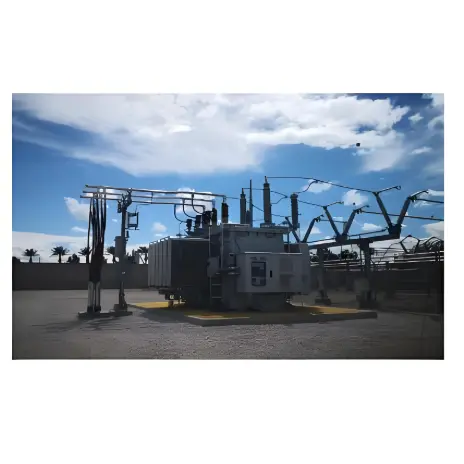
33MVA138kV transformer for electrical transmission

  • 33MVA138kV transformer for electrical transmission

Key attributes

Brand ROCKWILL
Model NO. 33MVA138kV transformer for electrical transmission
Rated frequency 50/60Hz
Series S (F)

Product descriptions from the supplier

Description

Description of 110kV Transmission Transformer

A 110kV Transmission Transformer is a medium-to-high voltage power transformer designed for regional electricity transmission and distribution networks. It serves as a critical link between high-voltage transmission grids (e.g., 220kV/500kV) and local distribution systems, stepping down voltage from 110kV to lower levels (typically 10kV/35kV) for industrial, commercial, and residential use. Widely deployed in substations, industrial parks, and urban/rural areas, it ensures stable power supply, reduces transmission losses over medium distances, and supports reliable grid operation.

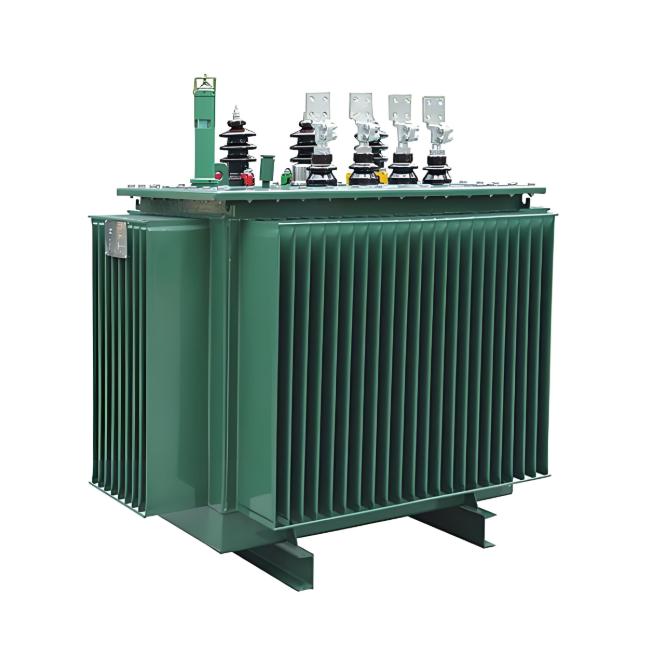
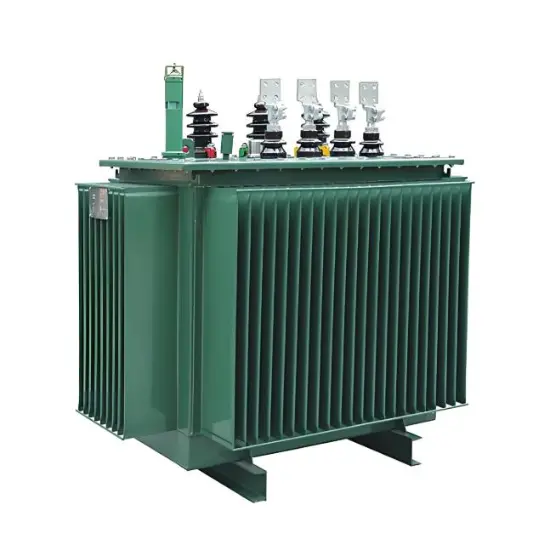
  • 3-ph, 33MVA138kV Transformer 

Features of 110kV Transmission Transformer

  • Optimal Voltage Level: Balances transmission efficiency and infrastructure cost, making it ideal for medium-distance power delivery (up to 100km) while minimizing voltage drop and energy loss.

  • High Efficiency & Low Loss: Adopts advanced materials (e.g., amorphous alloy cores, low-resistance copper windings) to reduce no-load and load losses, meeting or exceeding international standards (e.g., IE3 efficiency class).

  • Robust Construction: Designed to withstand environmental stresses (e.g., temperature variations, humidity, pollution) with sealed tanks, corrosion-resistant coatings, and moisture-proof insulation systems.

  • Flexible Configuration: Available in various types (e.g., oil-immersed, dry-type), with options for on-load or off-circuit tap changers to regulate output voltage under fluctuating loads.

  • Safety & Reliability: Equipped with protective devices (e.g., overcurrent/overvoltage relays, temperature sensors) and fail-safe mechanisms to prevent malfunctions and ensure continuous operation.

  • Compact Design: Space-efficient footprint for easy installation in urban substations or confined spaces, often featuring noise-reducing enclosures to meet environmental regulations.

  • Smart Grid Compatibility: Integrated with IoT sensors for real-time monitoring of temperature, oil quality, and partial discharges, enabling predictive maintenance and remote diagnostics.

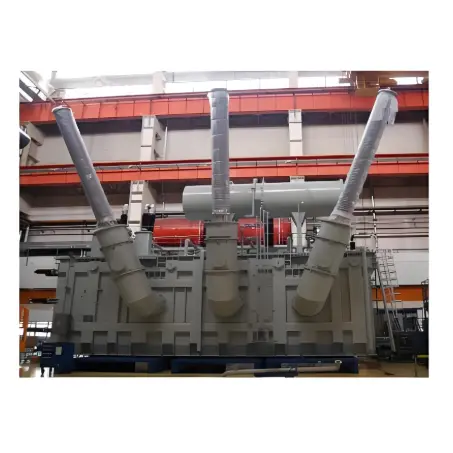
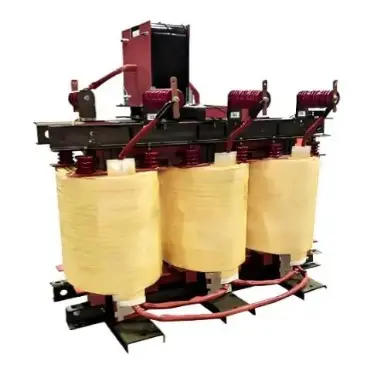
3-ph, 160MVA138kV Transformer

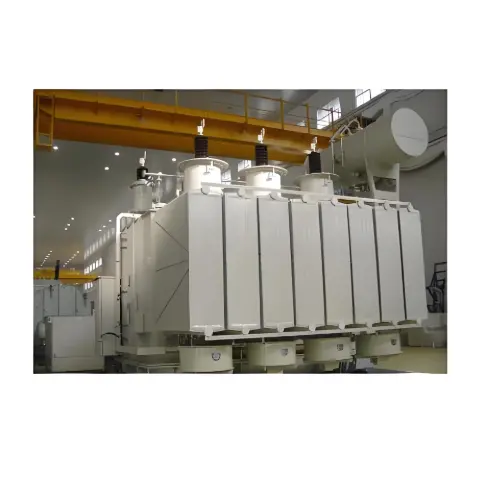
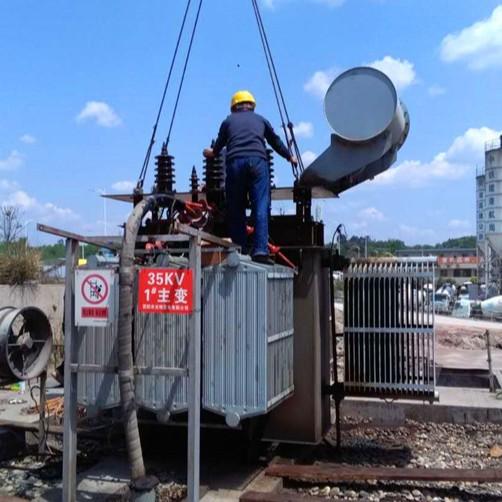
80MVA132kV Transformer


FAQ for
Q: What are the main classification dimensions of power transformers in international and domestic standards, and what are the specific types?
A:
The core classification dimensions of power transformers include insulation and cooling methods, voltage functions, and core structures. The specific types under each dimension are as follows:
  • By insulation and cooling method: Divided into liquid-insulated (oil-immersed) and dry-type. Oil-immersed transformers are the mainstream type for power transmission, suitable for voltages up to 345kV and above, with standardized cooling methods such as ONAN (Oil Natural Air Natural), ONAF (Oil Natural Air Forced), and OFAF (Oil Forced Air Forced). Dry-type transformers are mainly used for indoor or specific industrial applications, typically for lower voltages (up to 35kV), although some special types are available for higher voltages.
  • By voltage function: Including step-up, step-down, and autotransformers. Step-up transformers are used in power plants to increase generator voltage to transmission voltage (e.g., 13.8kV to 345kV). Step-down transformers are used in substations to reduce transmission voltage for sub-transmission or distribution (e.g., 345kV to 132kV or 34.5kV). Autotransformers are used to connect systems with fixed voltage ratios, offering efficiency advantages in transmission grids (e.g., 400kV/220kV applications).
  • By core structure: Divided into core type and shell type. Core-type transformers have windings surrounding the core limbs (common in EHV applications). Shell-type transformers have the core surrounding the windings.
Know your supplier
Online store
On-time delivery rate
Response time
100.0%
≤4h
Company overview
Workplace: 108000m²m² Total staff: 700+ Highest Annual Export(usD): 150000000
Workplace: 108000m²m²
Total staff: 700+
Highest Annual Export(usD): 150000000
Services
Business Type: Design/Manufacture/Sales
Main Categories: High Voltage Electrical Apparatus/Electric transformer
Whole life care manager
Whole-life care management services for equipment procurement, use, maintenance, and after-sales, ensuring safe operation of electrical equipment, continuous control, and worry-free electricity consumption.
The equipment supplier has passed platform qualification certification and technical evaluation, ensuring compliance, professionalism, and reliability from the source.

Related Products

Related Knowledges

  • What’s the Difference Between Rectifier Transformers and Power Transformers?
    What is a Rectifier Transformer?"Power conversion" is a general term encompassing rectification, inversion, and frequency conversion, with rectification being the most widely used among them. Rectifier equipment converts input AC power into DC output through rectification and filtering. A rectifier transformer serves as the power supply transformer for such rectifier equipment. In industrial applications, most DC power supplies are obtained by combining a rectifier transformer with rectifier equ
    01/29/2026
  • How to Judge, Detect and Troubleshoot Transformer Core Faults
    1. Hazards, Causes, and Types of Multi-Point Grounding Faults in Transformer Cores1.1 Hazards of Multi-Point Grounding Faults in the CoreUnder normal operation, a transformer core must be grounded at only one point. During operation, alternating magnetic fields surround the windings. Due to electromagnetic induction, parasitic capacitances exist between the high-voltage and low-voltage windings, between the low-voltage winding and the core, and between the core and the tank. The energized windin
    01/27/2026
  • Analysis of Four Major Power Transformer Burnout Cases
    Case OneOn August 1, 2016, a 50kVA distribution transformer at a power supply station suddenly sprayed oil during operation, followed by burning and destruction of the high-voltage fuse. Insulation testing revealed zero megohms from the low-voltage side to ground. Core inspection determined that damage to the low-voltage winding insulation had caused a short circuit. Analysis identified several primary causes for this transformer failure:Overloading: Load management has historically been a weak
    12/23/2025
  • Commissioning Test Procedures for Oil-Immersed Power Transformers
    Transformer Commissioning Tests Procedures1. Non-Porcelain Bushing Tests1.1 Insulation ResistanceSuspend the bushing vertically using a crane or support frame. Measure the insulation resistance between the terminal and the tap/flange using a 2500V insulation resistance meter. The measured values should not deviate significantly from factory values under similar environmental conditions. For capacitor-type bushings rated 66kV and above with voltage sampling small bushings, measure the insulation
    12/23/2025
  • Purpose of Pre-Commissioning Impulse Testing for Power Transformers
    No-Load Full-Voltage Switching Impulse Testing for Newly Commissioned TransformersFor newly commissioned transformers, besides conducting necessary tests according to handover test standards and protection/secondary system tests, no-load full-voltage switching impulse tests are typically performed before official energization.Why Perform Impulse Testing?1. Check for Insulation Weaknesses or Defects in the Transformer and Its CircuitWhen disconnecting a no-load transformer, switching overvoltages
    12/23/2025
  • What are the classification types of power transformers and their applications in energy storage systems?
    Power transformers are core primary equipment in power systems that realize electrical energy transmission and voltage conversion. Through the principle of electromagnetic induction, they convert AC power of one voltage level to another or multiple voltage levels. In the transmission and distribution process, they play a critical role in "step-up transmission and step-down distribution," while in energy storage systems, they perform voltage step-up and step-down functions, ensuring efficient pow
    12/23/2025

Related Solutions

  • Implementation Scheme for Installing Lightning Arresters or Voltage Transformers in Gas-Insulated Ring Main Units
    According to insulation type, ring main units (RMUs) can be categorized as gas-insulated or air-insulated. The former installs primary circuit components in a sealed metal enclosure filled with low-pressure gas (primarily SF₆ or mixed gases) as the insulating medium, using cable terminals for incoming and outgoing lines. Due to superior insulation, compact size, and modular design, they are widely used in 10kV outdoor distribution substations and prefabricated transformer stations. However, thei
    08/16/2025
  • High-Temperature Insulating Material Solution for Electric Furnace Transformers
    Background & Challenge​Electric furnaces operate for extended periods under harsh conditions involving high temperatures, dust, etc. Traditional transformer insulation materials experience accelerated aging in these environments, leading to insulation failure, reduced lifespan, and even unplanned furnace shutdowns, significantly impacting production efficiency.​Core Strategy​Implement a dual-pronged approach to ensure transformer reliability and long-term operation under extreme high tempera
    08/09/2025
  • Eco-Friendly Electric Furnace Transformer Solutions
    Eco-Friendly Electric Furnace Transformer Solutions​Eco-friendly electric furnace transformers have become key equipment driving the green transformation of the electric furnace smelting industry. This solution, through innovative design and strict material selection, establishes an environmentally friendly system covering the product's entire life cycle:​Core Eco-Material Applications:​​​Halogen-Free Flame-Retardant Insulation Materials:​​ Fully adopts halogen-free materials such as ceramifiabl
    08/09/2025
Related Free tools
Haven't found the right supplier yet? Let matching verified suppliers find you. Get Quotation Now
Haven't found the right supplier yet? Let matching verified suppliers find you.
Get Quotation Now
Send inquiry
+86
Click to upload file
Download
Get the IEE Business Application
Use the IEE-Business app to find equipment, obtain solutions, connect with experts, and participate in industry collaboration anytime, anywhere—fully supporting the development of your power projects and business.