• Product
  • Suppliers
  • Manufacturers
  • Solutions
  • Free tools
  • Knowledges
  • Experts
  • Communities
Search


4 Transformer Inspection Methods: Visual, Olfactory, Tactile & Auditory Checks

Oliver Watts
Field: Inspection and testing
China

Common Transformer Inspection Methods for Safe & Reliable Operation

Transformers are essential electrical devices that transfer energy between circuits by electromagnetic induction, stepping voltage up or down to minimize power losses during transmission. For instance, industrial plants often receive electricity at 10 kV, which is then stepped down via transformers to usable low-voltage levels.

To ensure transformers operate safely and efficiently, regular inspection is critical. Below are four widely used transformer inspection methods—visual, olfactory, tactile, and auditory—that help detect early signs of failure and prevent costly downtime.

1. Visual Inspection Method

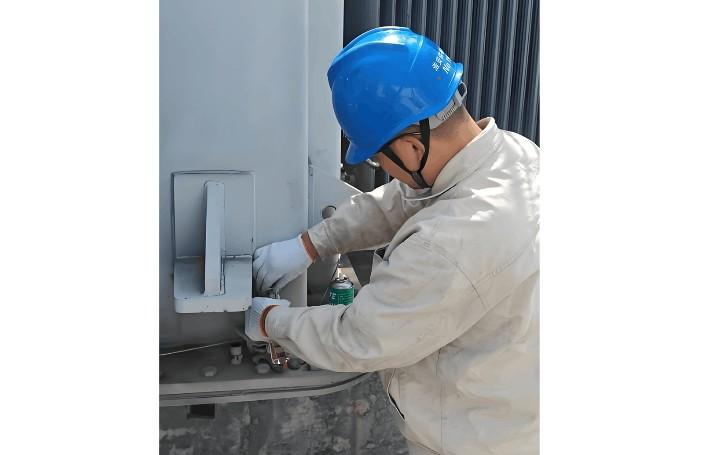
Look for visible signs of damage or wear

The visual inspection is the most common and straightforward technique. Operators examine accessible parts of energized or de-energized equipment for abnormalities such as:

  • Discoloration or scorch marks

  • Cracks, deformation, or loose components

  • Oil leakage (in oil-filled transformers)

  • Broken conductors or frayed wiring

  • Flashover traces, corrosion, dust buildup, or foreign objects

Regular visual checks during routine maintenance can catch issues before they escalate into major failures.
tranaformer inspect.jpg

2. Olfactory Inspection Method (Smell Test)

Detect overheating through unusual odors

When insulation materials overheat—due to overload, poor connections, or aging—they emit a distinct, acrid smell (often described as “burnt plastic” or “ozone”). Experienced technicians can identify this odor during patrols. If detected, immediately investigate nearby components to locate the overheated area and determine the root cause.

⚠️ Note: Never rely solely on smell—always follow up with thermal imaging or electrical testing.

3. Tactile Inspection Method (Touch Test)

Use touch cautiously to assess temperature

Never touch live high-voltage equipment, including operating transformers or arc suppression coil grounding systems—this poses severe electric shock risks.

However, for de-energized and properly grounded equipment, a brief hand touch can help detect abnormal heat on enclosures or terminal blocks. Similarly, secondary components (e.g., control relays, terminal strips) may be checked for unexpected warmth or vibration using this method—only when safe and permitted by safety protocols.

4. Auditory Inspection Method (Hearing Test)

Listen for abnormal sounds

A healthy transformer emits a steady, low-frequency “hum” caused by magnetostriction in the core under AC excitation. This sound should be consistent in pitch and rhythm.

Be alert for warning noises such as:

  • Loud buzzing or rattling

  • Crackling or popping (indicating arcing or partial discharge)

  • Intermittent or irregular humming

Trained personnel can often pinpoint fault types—like winding looseness, core faults, or insulation breakdown—just by analyzing changes in sound patterns.

Pro Tip: Combine these basic inspection methods with advanced tools like infrared thermography, dissolved gas analysis (DGA), and vibration monitoring for comprehensive transformer health assessment.

By implementing these simple yet effective inspection techniques, facilities can enhance transformer reliability, extend service life, and avoid unplanned outages in power distribution systems.
Give a tip and encourage the author!

Recommended

What’s the Difference Between Rectifier Transformers and Power Transformers?
What is a Rectifier Transformer?"Power conversion" is a general term encompassing rectification, inversion, and frequency conversion, with rectification being the most widely used among them. Rectifier equipment converts input AC power into DC output through rectification and filtering. A rectifier transformer serves as the power supply transformer for such rectifier equipment. In industrial applications, most DC power supplies are obtained by combining a rectifier transformer with rectifier equ
01/29/2026
How to Judge, Detect and Troubleshoot Transformer Core Faults
1. Hazards, Causes, and Types of Multi-Point Grounding Faults in Transformer Cores1.1 Hazards of Multi-Point Grounding Faults in the CoreUnder normal operation, a transformer core must be grounded at only one point. During operation, alternating magnetic fields surround the windings. Due to electromagnetic induction, parasitic capacitances exist between the high-voltage and low-voltage windings, between the low-voltage winding and the core, and between the core and the tank. The energized windin
01/27/2026
Distribution Equipment Transformer Testing, Inspection, and Maintenance
1.Transformer Maintenance and Inspection Open the low-voltage (LV) circuit breaker of the transformer under maintenance, remove the control power fuse, and hang a “Do Not Close” warning sign on the switch handle. Open the high-voltage (HV) circuit breaker of the transformer under maintenance, close the grounding switch, fully discharge the transformer, lock the HV switchgear, and hang a “Do Not Close” warning sign on the switch handle. For dry-type transformer maintenance: first clean the porcel
12/25/2025
Analysis of Four Major Power Transformer Burnout Cases
Case OneOn August 1, 2016, a 50kVA distribution transformer at a power supply station suddenly sprayed oil during operation, followed by burning and destruction of the high-voltage fuse. Insulation testing revealed zero megohms from the low-voltage side to ground. Core inspection determined that damage to the low-voltage winding insulation had caused a short circuit. Analysis identified several primary causes for this transformer failure:Overloading: Load management has historically been a weak
12/23/2025
Related Products
Send inquiry
+86
Click to upload file
Download
Get the IEE Business Application
Use the IEE-Business app to find equipment, obtain solutions, connect with experts, and participate in industry collaboration anytime, anywhere—fully supporting the development of your power projects and business.