Innovative & Common Winding Structures for 10kV High-Voltage High-Frequency Transformers

1.Innovative Winding Structures for 10 kV-Class High-Voltage High-Frequency Transformers
1.1 Zoned and Partially Potted Ventilated Structure
Two U-shaped ferrite cores are mated to form a magnetic core unit, or further assembled into series/series-parallel core modules. Primary and secondary bobbins are mounted on the left and right straight legs of the core, respectively, with the core mating plane serving as the boundary layer. Windings of the same type are grouped on the same side. Litz wire is preferred for winding material to reduce high-frequency losses.
Only the high-voltage winding (or primary) is fully potted with epoxy resin. A PTFE sheet is inserted between the primary and the core/secondary to ensure reliable insulation. The secondary surface is wrapped with insulating paper or tape.
By retaining ventilation channels (gaps between windings and between secondary windings on the left and right legs) and gaps between magnetic cores, this design significantly improves heat dissipation while reducing weight and cost, all while maintaining dielectric strength—making it suitable for ≥10 kV isolation applications.
1.2 Modular Design and Grounded Litz Wire Electric Field Shielding
High-voltage and low-voltage winding modules are separately potted and then assembled onto the core unit. Air gaps are maintained between modules to facilitate assembly and cooling, and damaged modules can be individually replaced during faults, enhancing maintainability.
Grounded Litz wire-based electric field shielding layers are introduced on both inner and outer sides of the high-voltage winding. This confines the high-frequency electric field primarily within the high-dielectric-strength epoxy-potted region, significantly reducing partial discharge (PD) risk without requiring excessive winding spacing solely for electric field suppression.
The Litz wire shielding layer can be left open-circuited with single-point grounding, achieving electric field shaping while avoiding significant eddy current losses. Ventilation channels are preserved between windings and the core, enabling semi-ventilated cooling and miniaturization simultaneously.
1.3 Segmented Winding and Electric Field Shaping
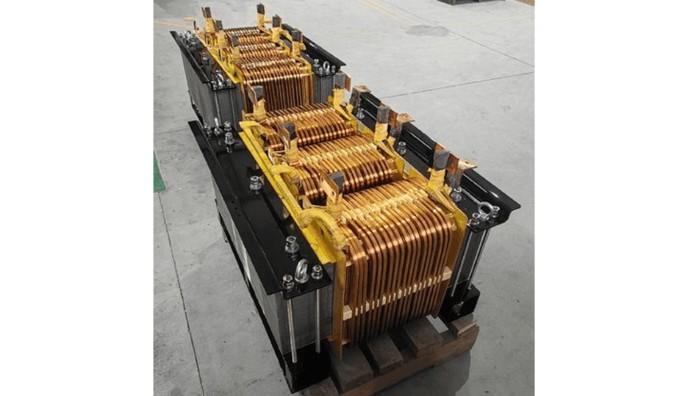
Coaxial sleeves and segmentation ribs are added to the insulating bobbin, allowing primary and secondary windings to be interleaved in “segment groups.” This greatly reduces inter-layer voltage gradients and equivalent parasitic capacitance, suppressing conducted EMI and improving voltage distribution uniformity.
The number of segments n and layer count are determined via analytical or empirical formulas (e.g., n = −15.38·lg k₁ − 18.77, where k₁ is the minimum value among primary/secondary self-capacitance and mutual capacitance ratios), achieving an optimal trade-off among volume, leakage inductance, and parasitic capacitance—ideal for high-power, high-voltage, high-frequency operation.
1.4 Composite Windings and Integrated Water Cooling
The core is divided into two winding zones. A composite winding approach is used: the first composite winding (e.g., primary) is wound from inner to outer layers with leads reserved; then, in the second zone, the second composite winding (e.g., secondary) is wound in reverse using the reserved leads. This expands inter-layer gaps and reduces residual charge, enhancing high-voltage reliability and lifespan.
Relief slots are machined on the outer core wall to integrate non-contact water-cooling channels, improving thermal performance without risking mechanical damage during assembly. Composite insulation uses PI/PTFE laminates arranged in a stepped configuration to ensure adequate creepage distance and high-quality potting fill.
1.5 Novel Winding Techniques and Loss Control Pathways
PDQB (Power Differential Quadrature Bridge) winding technology is introduced: through optimized winding topology and layout, skin and proximity effects—and thus high-frequency losses—are significantly suppressed. This achieves coupling efficiency >99.5% in reported cases, along with 10 kV isolation capability, controllable leakage inductance, and low distributed capacitance—making it suitable for customized 30–400 kW, 4–50 kHz high-voltage high-frequency applications.
2. Common Winding Structures for 10 kV-Class High-Voltage High-Frequency Transformers
2.1 Basic Winding Configurations and Application Scenarios
Multi-layer cylindrical: Mature manufacturing process; easy to insert inter-layer insulation and cooling channels; suitable for medium-to-high voltage continuous windings.
Multi-segment layered: Multiple axial segments separated by insulating paper rings; effectively reduces inter-layer voltage gradient and field concentration; commonly used in HV windings to mitigate partial discharge.
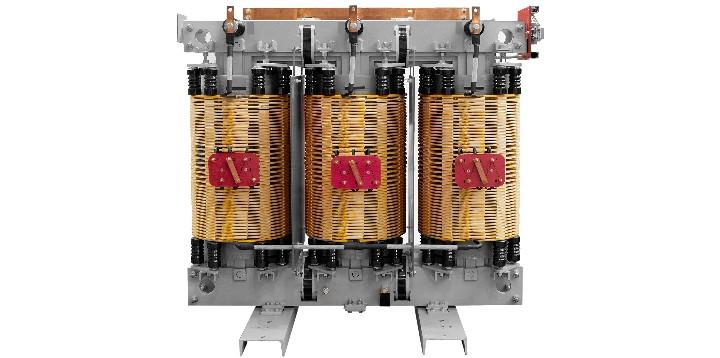
Continuous (disc-type): Composed of multiple disc sections stacked axially; offers good mechanical strength and thermal performance; suitable for high-capacity/higher-voltage applications.
Double-disc: Two discs per group, connected in series/parallel; ideal for high-current or special-purpose HV windings.
Helical: Single/double/quadruple helix; simple structure; suitable for high-current LV windings or on-load tap-changing windings; limited in turn count.
Aluminum foil cylindrical: One turn per layer using aluminum foil; high space utilization and automation-friendly; suitable for small-to-medium HV windings.
These are standard HV winding structures in power transformers and are often adapted or improved for 10 kV-class high-voltage high-frequency transformers to enhance insulation and thermal performance.
2.2 Typical Winding Layouts and Processes for High-Voltage High-Frequency Applications
Concentric cylindrical (layered) arrangement: HV winding inside, LV outside (or vice versa); multi-layer design with inter-layer insulation to distribute high potential differences; segmented layout may be used to optimize electric field distribution and PD performance.
Segmentation and interleaving: HV winding divided into multiple coils and arranged in staggered/segmented fashion to reduce inter-layer voltage gradient and parasitic capacitance, suppress conducted EMI, and improve voltage uniformity.
Faraday and electrostatic shielding: Copper foil or conductive layers placed between primary/secondary or around windings, grounded at a single point, to reduce common-mode capacitance and coupling noise; shielding must match winding width and avoid sharp edges that could puncture insulation.
Conductor and current density optimization: Litz wire, stranded conductors, or copper foil are preferred for HV/high-current secondaries to suppress skin/proximity effects, reduce AC resistance (Rac) and copper loss; current density (J) and temperature rise are controlled within window and safety regulation limits.
Insulation and creepage design: Use of barriers, end margins, sleeved terminals, and combined inter-layer/inter-winding insulation; creepage distance and clearance are designed according to pollution degree and voltage class; vacuum impregnation/potting may be applied to enhance dielectric strength and thermal conductivity.
These layout and process considerations are closely tied to balancing insulation level, parasitic parameters, and power rating—key to achieving reliable 10 kV isolation in engineering practice.
2.3 Implementation Methods for High-Voltage Secondary Output (Strongly Dependent on Winding Structure)
Voltage multiplier rectification: Multi-stage voltage doubling on the rectifier side significantly reduces voltage stress and parasitic capacitance per winding stage, easing insulation design. However, it is sensitive to load transients/short circuits and prone to surge currents. In practice, no more than two stages are typically used, requiring current-limiting and protection strategies.
Series/parallel combination: The secondary is split into multiple coil packs, which are internally or post-rectifier connected in series/parallel to achieve desired voltage/power. All packs share the same magnetic circuit, facilitating modular design and voltage balancing—ideal for high-power output.
Both methods require integrated design with winding segmentation, shielding, and insulation windows to balance voltage stress, efficiency, EMI, and thermal performance.
2.4 Structural Selection Guidelines (Quick Engineering Reference)
Prioritizing electric field uniformity and PD control: Prefer segmented or continuous (disc-type) HV windings, combined with Faraday shielding, end margins, and barriers; vacuum impregnation/potting recommended when necessary.
Prioritizing high current and low copper loss: Use Litz wire or copper foil for secondary; employ interleaved or sandwich winding internally to minimize leakage inductance and Rac; reinforce outer shielding and insulation.
Prioritizing assembly and maintainability: Adopt modular secondary coil packs with series/parallel connections for easy voltage balancing, testing, and fault isolation; select voltage multiplier rectification (≤2 stages) or series/parallel combination on the rectifier side based on power and transient requirements.