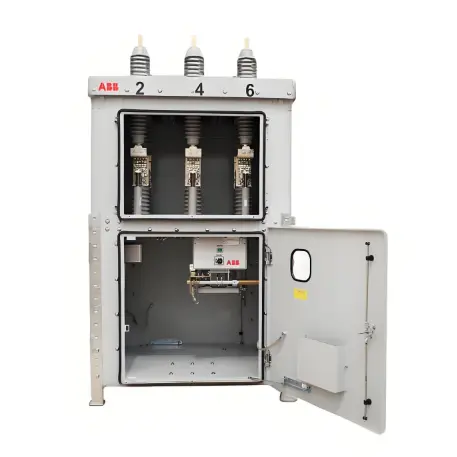
Low-Voltage Air Circuit Breakers vs. Vacuum Circuit Breakers: Structure, Performance and Application
Low-voltage air circuit breakers, also known as universal or molded frame circuit breakers (MCCBs), are designed for AC voltages of 380/690V and DC voltages up to 1500V, with rated currents ranging from 400A to 6300A or even 7500A. These breakers use air as the arc-quenching medium. The arc is extinguished through arc elongation, splitting, and cooling by an arc chute (arc runner). Such breakers can interrupt short-circuit currents of 50kA, 80kA, 100kA, or up to 150kA.
Main Components and Functionality
Operating Mechanism: Located at the front of the breaker, it provides the necessary speed for contact separation and closure. Fast contact motion helps stretch and cool the arc, facilitating extinction.
Intelligent Trip Unit: Mounted beside the operating mechanism, this is the "brain" of the low-voltage circuit breaker. It receives current and voltage signals via sensors, calculates electrical parameters, and compares them with preset LSIG protection settings:
L: Long-time delay (overload protection)
S: Short-time delay (short-circuit protection)
I: Instantaneous (instant trip)
G: Ground fault protection
Based on these settings, the trip unit signals the mechanism to open the breaker under overloads or short circuits, providing comprehensive protection.
Arc Chamber and Terminals: Located at the rear, the arc chamber contains the contacts and arc chute. The lower three-phase outgoing terminals are equipped with:
Electronic current sensors (for signal input to the trip unit)
Electromagnetic current transformers (CTs) (to supply operating power to the trip unit)
The operating mechanism typically has a mechanical life of less than 10,000 operations.
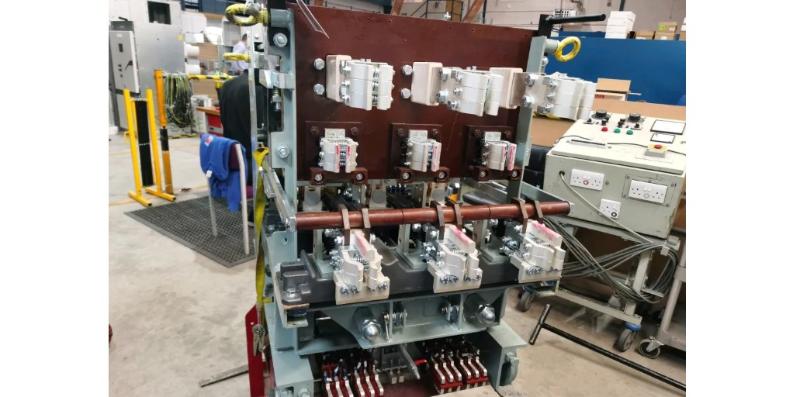
Evolution from Air to Vacuum Interruption
Historically, medium-voltage air circuit breakers existed but were bulky, had limited breaking capacity, and produced significant arc flash (non-zero arc), making them unsafe and impractical.
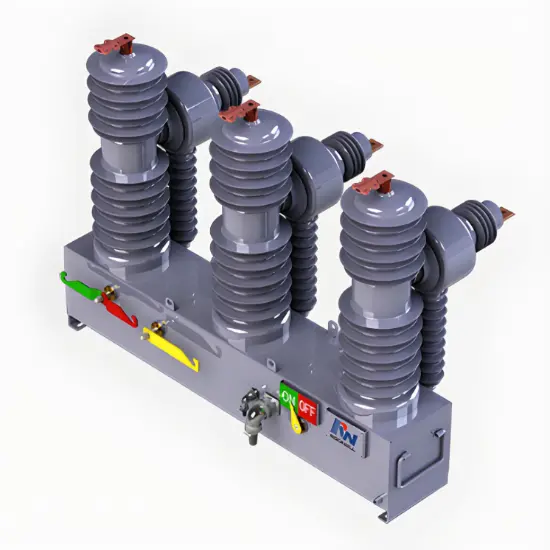
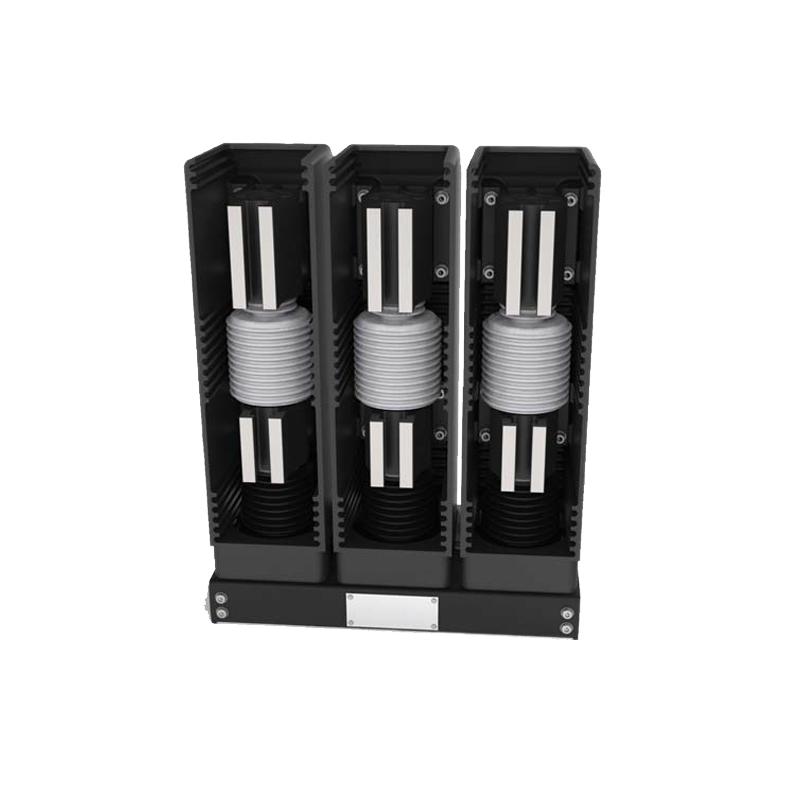
In contrast, vacuum circuit breakers (VCBs) share a similar overall layout: the operating mechanism at the front, and the interrupter at the rear. However, the interrupter uses a vacuum interrupter (or "vacuum bottle"), which is structurally similar to an incandescent light bulb — a sealed glass or ceramic envelope evacuated to a high vacuum.
In a vacuum:
Only a small contact gap is needed to meet insulation and withstand voltage requirements.
The arc is rapidly extinguished due to the absence of ionizable medium and the efficient diffusion of metal vapor.
Applications of Vacuum Circuit Breakers
Vacuum circuit breakers have developed rapidly and are now widely used across low-voltage, medium-voltage, and high-voltage systems:
Low-Voltage VCBs: Typically rated at 1.14kV, with rated currents up to 6300A and short-circuit breaking capacity up to 100kA.
Medium-Voltage VCBs: Most common in the 3.6–40.5kV range, with currents up to 6300A and breaking capacity up to 63kA. Over 95% of medium-voltage switchgear now uses vacuum interruption.
High-Voltage VCBs: Single-pole interrupters have reached 252kV, and 550kV vacuum circuit breakers have been achieved through series-connected interrupters.
Key Design Differences
Unlike air circuit breakers that use contact springs, vacuum circuit breakers require the operating mechanism to:
Provide sufficient opening and closing speed
Ensure adequate contact pressure
This contact pressure must remain sufficient even after up to 3mm of contact wear, to reliably carry the rated current and withstand the peak short-time current during faults.
Advantages of Vacuum Circuit Breakers
High reliability and safety
Immune to environmental conditions (dust, humidity, altitude)
Zero arc flash (no external arcing)
Compact size and long maintenance intervals
These advantages make vacuum breakers ideal for use in hazardous environments such as chemical plants, coal mines, oil & gas facilities, where explosion risks and fire safety are critical.
Real-World Case Study: Vacuum vs. Air Breaker Performance Under Fault
A large chemical plant installed two circuit breakers — one air circuit breaker and one vacuum circuit breaker — in identical circuit configurations and subjected them to the same fault conditions.
The circuit was a tie configuration, where the power sources on either side of the breaker were out of synchronization. This resulted in a transient voltage across the contact gap approaching twice the rated voltage, leading to breaker failure.
Results:
Air Circuit Breaker:
Suffered complete destruction. The breaker unit’s enclosure ruptured, and adjacent switchgear on both sides was severely damaged. Extensive reconstruction and replacement were required.
Vacuum Circuit Breaker:
The failure was significantly less violent. After replacing the vacuum interrupter and cleaning the arc by-products (soot) from the breaker and compartment, the switchgear was restored to service quickly.
Conclusion
Vacuum circuit breakers demonstrate superior fault containment, safety, and reliability compared to air breakers, especially under severe transient overvoltages. Their sealed vacuum interrupters prevent arc propagation, minimizing damage and downtime.
In explosive or flammable environments such as chemical plants and coal mines, the arc-free operation and robust performance of vacuum circuit breakers provide a clear technological and safety advantage.