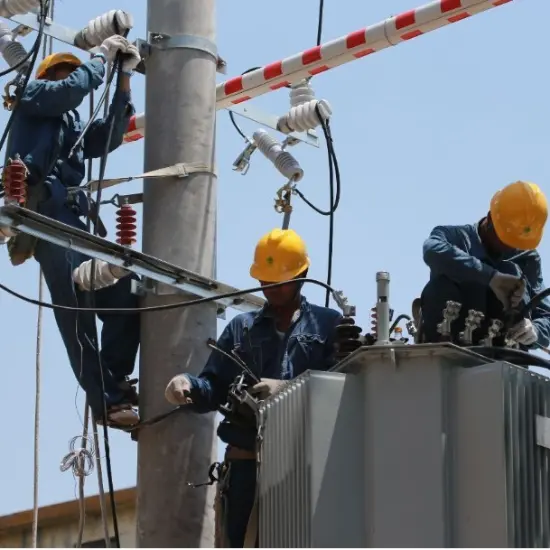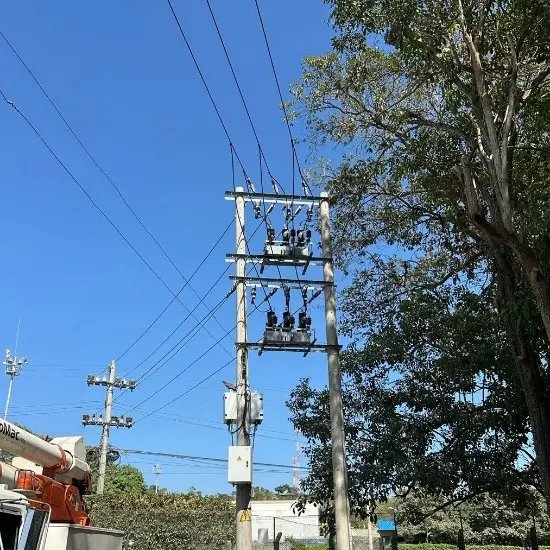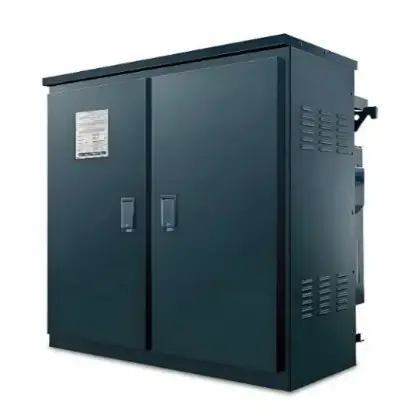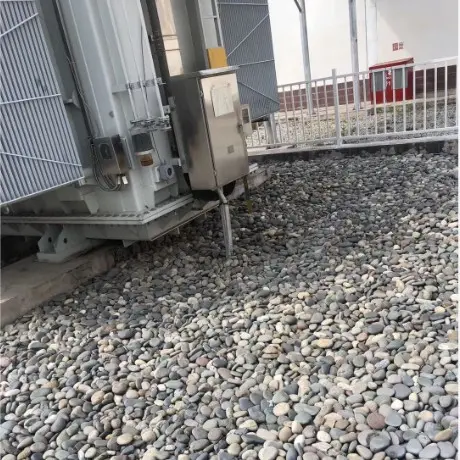
Ang atong substation sa 220 kV nahimutang sa layo gikan sa sentro ngadto sa isla, gibulag ug sa primarya industriyal nga mga zonal sama sa Lanshan, Hebin, ug Tasha Industrial Parks. Ang mga major nga high-load consumers sa mga zonal niini—kasama ang silicon carbide, ferroalloy, ug calcium carbide plants—naghahatag og mahigit 83.87% sa total nga load sa atong bureau. Ang substation nagoperasyon sa mga voltage levels nga 220 kV, 110 kV, ug 35 kV.
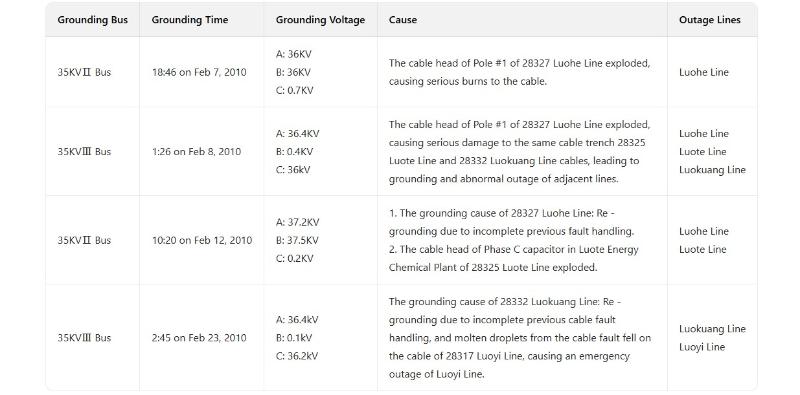
Ang 35 kV low-voltage side pangunaa nga naghahatag og feeders sa ferroalloy ug silicon carbide plants. Ang mga energy-intensive nga factories naa duol sa substation, resulta mao ang heavy loads, short feeder lines, ug severe pollution. Ang mga feeders naa sa kabuokan connected pinaagi sa cables, sharing a common cable trench. Kini nagresulta og significant risks sa substation kung adunay line fault. Ang paper na niini gi-analyze ang causes sa 35 kV line faults ug gitumong ang corresponding countermeasures. Sa Pebrero 2010, ang 220 kV substation sa atong bureau naka-experience og frequent grounding faults sa 35 kV II bus ug 35 kV III bus, as detailed in Table 1.
1 Analysis of Grounding Causes in Cable Lines
Sumala sa atong bureau’s 2010 statistics sa cable incidents, ang main causes sa cable line failures mao kini:
Temperature effects: Sa mga facilities sama sa Sanyou Chemical, ang high temperatures sa furnace transformers ug cable terminations nagresulta sa insulation breakdown. Naka-occur kini sa mahigit 18 incidents, requiring the fabrication of 15 cable terminations.
High cable density in cable trenches: Sa Rongsheng Yinbei Ferroalloy Plant, ang manhole covers nagsilip ug nangabot sa cables sa trench, causing short circuits ug fires nga naaffect sa uban pang plants’ cables. A total of 51 cable splices were made.
Severe customer overloading: Ang mga plants sama sa Huanghe Ferroalloy, Pengsheng Metallurgy, Lingyun Chemical, ug Rongsheng Yinbei Ferroalloy nag-operate sa cables sa long-term overload conditions, accelerating cable aging ug increasing temperatures. Especially during hot summers, thermal stress caused insulation breakdown in cables and terminations, requiring approximately 50 cable terminations.
Mechanical damage: Ang excavators sa construction ug earthworks nangabot sa cables, causing fractures ug insulation damage. A total of 25 cable terminations and splices were made.
Cable quality issues: Ang mga defects sama sa air bubbles in insulation o broken shielding sa manufacturing nagresulta sa 9 accidents, requiring 9 cable terminations and splices.
Damage during cable laying: Ang excessive pulling tension sa long cable runs nagresulta sa scraping sa sharp objects, resulting in 13 cable damage incidents.
Poor cable termination workmanship: Ang insufficient technical expertise ug improper procedures sa installation nagresulta sa moisture ingress in cable insulation. A total of 16 cable splices and terminations were fabricated.
Surface discharge on cable terminations: Ang heavy pollution gikan sa high-energy-consuming plants nagresulta sa contaminants settling on cable equipment. Ang dirty cable termination surfaces, combined with rain or humid weather, caused surface flashover, damaging insulation and leading to breakdowns. In such cases, 13 cable terminations were replaced.
2 Principles for Handling Cable Grounding Faults
Adunay standard procedures sa handling sa 35 kV cable grounding faults. Pero sa atong bureau, ang mga voltage-level lines primarya nga nagsilbi sa high-energy consumers sa large individual capacities (minimum 12,500 kVA), direct supply loads, heavy loading, ug high currents.
Ang sudden load shedding nagresulta sa significant grid disturbances. Moreover, ang cable grounding faults dili easy locate, ug prolonged fault duration nag-increase sa risks. If not addressed promptly, such faults can endanger grid safety, placing higher demands on dispatchers. Ang uban nga 35 kV customers coal mines o chemical plants—classified as critical users. Ang power outages para sa mga users naa potential mag-lead sa casualties, fires, o explosions. Therefore, ang customers categorized as general or critical, sumala sa following handling principles:
Para sa general customers (mainly silicon carbide and ferroalloy plants), once a faulted line is identified, contact the customer immediately to disconnect the load and de-energize the faulty line promptly. For non-cooperative customers, enforce load shedding with warning measures.
Para sa critical customers sama sa coal mines ug chemical plants, instruct them to transfer loads to backup power sources. If no backup exists, prepare for outage before taking the faulty line out of service.
Given the strong overload capability of smelting furnaces, for substations and lines operating under long-term heavy load, if current exceeds 90% of the current transformer rating, enhance monitoring, notify customers to reduce load, and implement a three-step process: notification → warning → forced load shedding, to ensure equipment safety.
For customers with frequent cable failures, require enhanced line inspections and regular maintenance during scheduled outages, performed by qualified professional contractors to ensure reliable operation.
Strict quality control from the source: For dedicated-line customers, require submission of all relevant documentation to the dispatch center and signing of a "Dispatch Agreement" before commissioning. Customers without a signed agreement or with incomplete/inadequate documentation shall not be connected to the grid.
For cable trenches with excessive and dense cabling, recommend limiting cable numbers to prevent fault propagation and minimize incident escalation.
3 Conclusion
Ang safe grid operation requires not only careful dispatching and dedication but also proficient use of legal tools to protect both personnel and equipment. Especially when dealing with power customers, the "Dispatch Agreement" must be fully utilized to regulate customer behavior, ensure proper operation, and prevent disputes. It is essential to understand customer line characteristics, load profiles, capacities, and usage patterns in daily operations, enabling swift, accurate, and decisive fault response, and ensuring the safe and stable operation of the power grid.